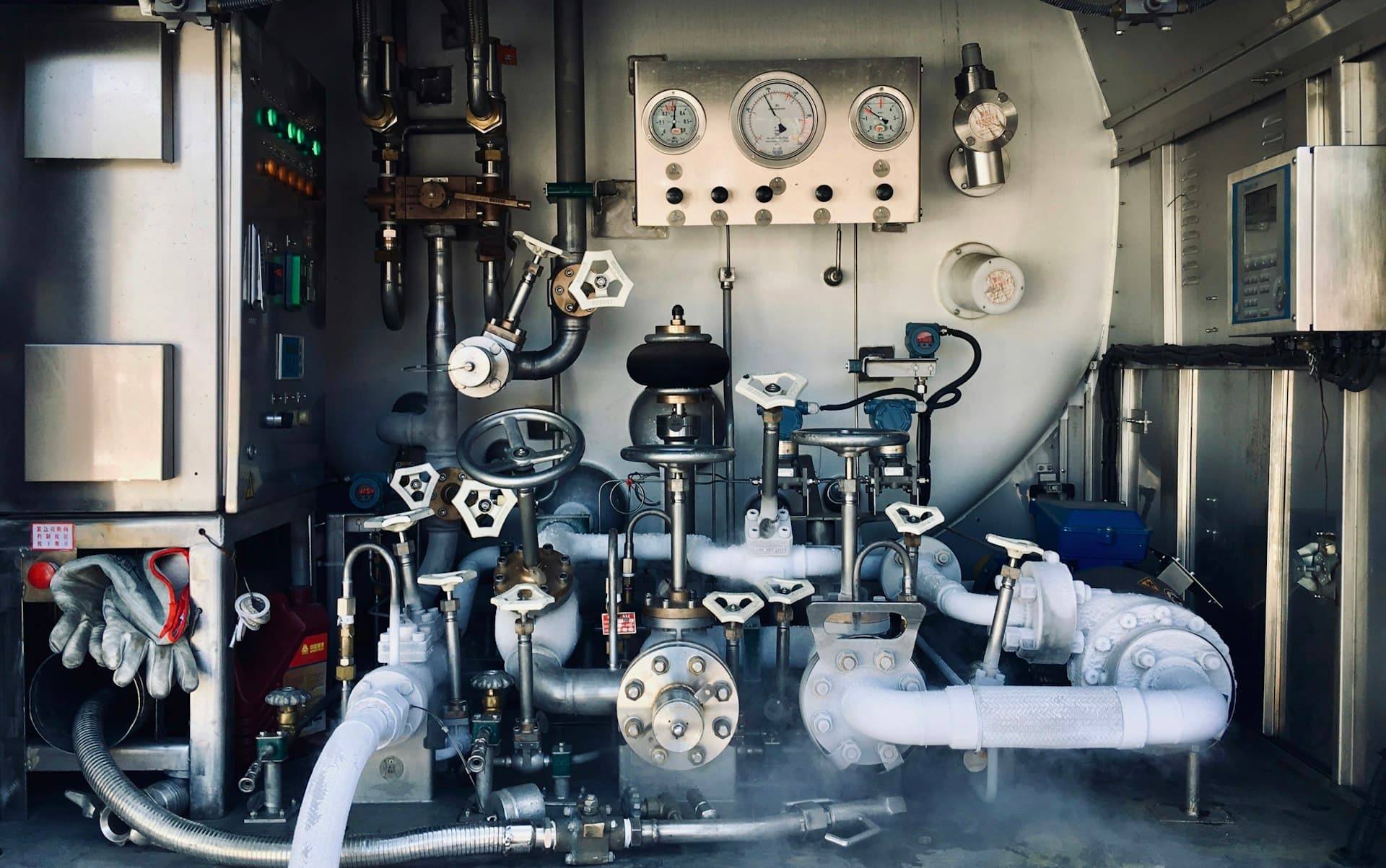
Skipping a water treatment pilot project risks a $2M to $15M full-scale build that fails commissioning. Here is how to structure, scope, and use pilot data to defend CAPEX approval.
A water treatment pilot project is the single most cost-effective insurance policy available before committing to a full-scale build. Plants that skip piloting and proceed directly to a $5M to $20M capital investment based on desktop modelling alone face a failure rate of roughly 30% at commissioning, according to industry engineering surveys, with remediation costs commonly adding 25 to 40% to the original contract value. When a primary keyword like water treatment pilot project surfaces in a CAPEX approval package, it signals that the project team has done the work to de-risk the investment rather than outsourcing the risk to a commissioning engineer on site.
The contrarian reality is this: most pilot failures are not technology failures. They are scope failures. The pilot was too short, the feed water samples were not representative of seasonal variation, the data package was too thin to survive a HAZOP review, or the vendor ran the pilot on equipment sized two orders of magnitude smaller than the full-scale train. A well-scoped pilot does not just validate that the technology works. It produces the membrane flux, fouling rate, chemical consumption, and reject handling data that drives defensible CAPEX and OPEX modelling.
This guide covers how to scope, run, and extract full commercial value from a water treatment pilot project: from feed water characterisation through bench-scale testing to full pilot unit operation, gate reviews, and the data hand-off to the procurement team. It is written for the capital projects lead who needs to defend the spend to a CFO, the plant operations manager who will live with the result for 20 years, and the sustainability team that needs assured water recovery rates before committing to ESG disclosures.
## The decision in brief
- Pilot before the $5M to $20M build. If you run a properly scoped water treatment pilot project before committing to a $5M to $20M full-scale build, you can expect to reduce commissioning risk by 60 to 80% on a mid-scale industrial project. - Cut remediation exposure by $500,000 to $3M. The same properly scoped pilot can be expected to cut remediation exposure by $500,000 to $3M on a mid-scale industrial project. - Characterise the feed water properly. The biggest cost-of-doing-nothing is a full-scale membrane system that operates at 55 to 65% of design recovery because the feed water characterisation was insufficient.
That under-recovering system generates an additional $150,000 to $400,000 per year in chemical, energy, and reject disposal OPEX for the life of the asset.
## Why piloting is not optional for complex water matrices
A desktop feasibility study can tell you whether a technology is theoretically applicable. Only a water treatment pilot project run on your actual feed water, under your actual operating conditions, can tell you whether the technology performs at the cost and reliability level your business requires. For straightforward applications with a well-characterised, stable feed, piloting may genuinely be optional. For everything else, skipping it is a decision to transfer risk from the design phase to the commissioning phase, where fixing mistakes costs three to five times more.
The threshold is roughly this: if your feed water TDS exceeds 1,500 mg/L, if scaling indices suggest a Langelier Saturation Index above +1.5, if the feed contains organics above 10 mg/L TOC, or if you are targeting effluent quality better than 50 mg/L TSS for regulated discharge, a pilot is not a nice-to-have. It is the only route to a defensible design basis. The [EPA Water Research guidelines on treatment evaluation](dofollow:https://www.epa.gov/water-research) reflect this: pilot-scale testing is explicitly recommended before full-scale implementation of novel or site-specific treatment trains.
A pattern that recurs in industrial installations is the "clean water assumption" trap. A vendor proposes an RO system based on a single grab sample taken during a low-load production period. The pilot is skipped or shortened to four weeks in summer. Full-scale commissioning happens in January, when the feed water carries five times the suspended solids load from upstream biological activity. The membranes foul within six weeks. Recovery drops from the designed 75% to below 50%. Remediation: $400,000 in pre-treatment retrofitting and a six-month production impact. The cost of a proper 26-week pilot would have been $180,000 to $250,000.
## Phase 1: Feed water characterisation and baseline sampling
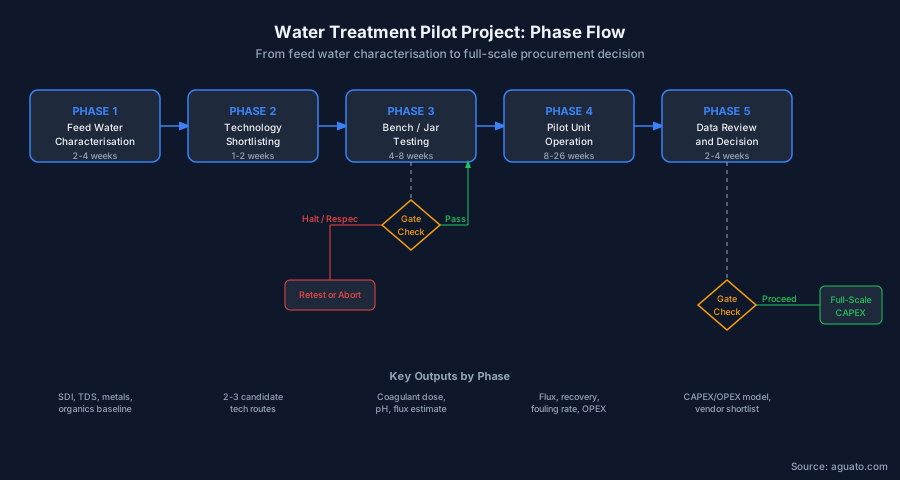
Feed water characterisation is the foundation of every subsequent decision in a water treatment pilot project and the phase that is most commonly under-invested. Two to four weeks of sampling, analysed to a comprehensive physical-chemical-microbiological panel, determines which technology routes are viable, which are marginal, and which can be ruled out before a vendor is ever invited to quote.
The minimum analytical panel for an industrial feed water includes: turbidity, colour, pH, alkalinity, hardness (total, calcium, magnesium), TDS, TSS, SDI (Silt Density Index) at 15 minutes, TOC, COD, BOD, iron, manganese, silica, chlorides, sulphates, nitrates, ammonia, and a full microbiology screen including heterotrophic plate count, total coliforms, and Legionella sp. if the water enters any open system. For applications targeting [ultrapure water production](/resources/ultrapure-water-production) or pharmaceutical-grade output, endotoxin and conductivity to USP grade must be added. If PFAS contamination is a live concern in your catchment, a targeted PFAS screen is essential before technology selection.
Sampling must capture seasonal variation. A single two-week campaign in spring will miss the high-turbidity runoff events of autumn or the biological bloom peaks of late summer that can double TOC loading. Where seasonal sampling is not possible within the project timeline, consult your water utility or upstream process operations team for historical data and supplement with worst-case scenario modelling. [Engaging a specialist at /consulting-services](/consulting-services) at this stage pays back multiples at the technology selection gate: a senior process engineer reviewing the data baseline typically identifies one or two technology dead-ends that would otherwise survive into a costly bench test campaign.
The output of Phase 1 is a feed water characterisation report with a statistical summary (mean, P90, P95 values for every parameter), a seasonal variation model, and a preliminary technology screening matrix. This document becomes the controlled baseline against which all pilot performance data is benchmarked.
## Phase 2: Technology shortlisting and bench-scale testing
With a characterised feed water in hand, the next step is narrowing the technology field from a long list of candidates to two or three routes worth investing in a full pilot unit. Bench-scale testing (sometimes called jar testing or coupon testing) costs $15,000 to $60,000 and eliminates dead-end routes before committing to a pilot unit that may cost $80,000 to $250,000 to procure and operate.
For membrane-based routes, bench testing establishes candidate flux rates and fouling propensity using flat-sheet coupon test cells. For [membrane fouling prevention](/resources/membrane-fouling-prevention), a bench fouling test run over 72 to 96 hours at candidate flux rates, with interim cleaning cycles, provides the normalized flux decline rate that drives membrane area sizing for the full-scale train. If flux declines more than 20% within the first 48 hours without chemical cleaning, the pre-treatment specification is almost certainly insufficient.
For coagulation-flocculation-sedimentation routes, jar testing establishes optimal coagulant type, dose (typically 5 to 80 mg/L of alum or ferric salts), and pH control range. For [chemical dosing control systems](/resources/chemical-dosing-control-systems), the bench phase is where the dose-response curve is built and the pH-window for optimal floc formation is confirmed. Running this on real site water rather than spiked tap water typically shifts the optimal dose by 15 to 30% compared to generic literature values.
The bench phase also serves as a vendor-neutral checkpoint. If you are comparing an RO route against a [nanofiltration](/resources/nanofiltration) route for partial desalination, running parallel bench tests gives the capital projects team independent data to challenge vendor performance claims. Vendors who decline to participate in a vendor-neutral bench programme are telling you something important.
[cta:nepti-dark]
## Phase 3: Pilot unit design, sizing, and procurement
The sizing ratio between pilot and full-scale plant is the most consequential decision in the pilot programme design. Too small and the hydraulics do not replicate full-scale behaviour. Too large and the pilot cost overshoots the budget without adding proportional data quality.
The generally accepted rule for membrane systems is a minimum of 1:100 scale (1% of full-scale capacity), with 1:50 as the preferred ratio for systems where scaling or fouling is the primary risk. For a full-scale RO plant targeting 500 m3/day, a pilot unit treating 5 to 10 m3/day is the minimum viable scope. At less than 1:100, the boundary effects in the pressure vessel distort flux distribution and fouling pattern, making scale-up uncertain. The [WHO Guidelines for Drinking-Water Quality](dofollow:https://www.who.int/publications/i/item/9789240045064) emphasise that pilot systems must replicate the full treatment train including pre-treatment and post-treatment steps, not just the primary separation stage.
Pilot unit procurement has two primary routes: rent or buy. For a 16 to 26 week pilot on a $5M to $20M full-scale project, rental from a specialist skid supplier typically costs $8,000 to $18,000 per month including consumables and remote monitoring. Ownership of a custom pilot skid runs $80,000 to $250,000 but retains residual value for future projects. The rental route is almost always correct for a single-site, single-technology pilot. Ownership becomes rational when the organisation runs three or more pilots per year or intends to use the skid as a permanent small-scale test loop after full-scale commissioning.
Pilot unit design must include: full instrumentation for online monitoring of pressure, flow, conductivity, turbidity, and pH at every process stage; sample ports at a minimum of five locations; a data logger with 1-minute resolution and remote access; chemical dosing capability for pre-treatment and CIP; and a reject/concentrate handling system that replicates the full-scale disposal route. Omitting any of these elements creates data gaps that will be challenged at the CAPEX approval gate.
The right answer on pilot scope depends heavily on your feed water variability and the full-scale CAPEX at stake. [Post your project on Aguato](/post-project) and qualified pilot testing specialists will scope the trade-off against your actual numbers and available budget.
## Phase 4: Pilot operation, data collection, and gate reviews
Pilot operation is not a passive activity. The plant manager who treats the pilot unit as a vendor's responsibility and checks in monthly will end up with a data package that either underperforms because the vendor optimised for clean results, or fails at the CAPEX gate because the operations team cannot vouch for its integrity.
Minimum pilot duration varies by technology risk. For conventional filtration and coagulation systems with a well-characterised feed, 8 to 12 weeks provides sufficient data to establish steady-state performance and one complete CIP or backwash cycle audit. For reverse osmosis systems on variable or moderate-scaling feed waters, 16 to 20 weeks is the minimum defensible duration. For [zero liquid discharge](/resources/zero-liquid-discharge) or biological treatment systems, 24 to 26 weeks is the accepted industry standard, as these systems require multiple start-up/shutdown cycles and a seasonal feed variation window to generate representative data.
The data collection protocol must specify: sampling frequency (minimum daily grab samples for key parameters during normal operation; continuous online logging for conductivity, turbidity, pressure differential); CIP protocol and chemical consumption records; membrane replacement or media change records; energy consumption metering; and a non-conformance log where any deviation from the design operating window is recorded with root cause and corrective action. This non-conformance log becomes one of the most valuable documents in the final data package because it demonstrates that the operations team understands the failure modes and has a mitigation strategy.
Gate reviews should be built into the pilot schedule at three points: after the first two weeks (sanity check on process stability and data quality), at the midpoint (decision on whether to extend, modify, or stop), and at the end (go/no-go for full-scale procurement). The midpoint gate is the most important and the most commonly skipped. A pattern that recurs in well-run capital programmes is the engineering team catching a pre-treatment deficiency at the midpoint gate that would have resulted in a fouled membrane array six months into full-scale operation. Catching it at the midpoint adds four weeks to the pilot; missing it adds 18 months to the full-scale remediation.
## Failure scenarios and what they cost
Understanding how water treatment pilot projects fail is as important as understanding how to run them well. The failure modes below represent the most frequent root causes in industrial and municipal water treatment capital programmes.
Failure 1: Unrepresentative feed water sampling. Decision: sample during a benign operating period, skip seasonal variation. Operational outcome: full-scale membrane array fails within 12 months as autumn turbidity spikes overwhelm pre-treatment capacity. Quantified cost: $600,000 to $1.2M in pre-treatment retrofit, plus 6 to 12 months at 60% design recovery. Correct decision: 90-day sampling campaign covering two seasonal transitions, with P95 values driving the design basis.
Failure 2: Scale-down distortion. Decision: pilot at 1:500 scale to minimise cost. Operational outcome: scaling behaviour and hydraulic distribution in full-scale pressure vessels does not match pilot data; full-scale commissioning achieves only 55% of designed flux. Quantified cost: $800,000 in additional membrane area, plus $250,000 in remediation engineering. Correct decision: minimum 1:100 scale, with full replication of pre-treatment and post-treatment train.
Failure 3: Vendor-operated pilot without independent oversight. Decision: allow the vendor to run the pilot autonomously, accept the final report. Operational outcome: vendor operates pilot at consistently optimal conditions (steady feed, manual interventions not disclosed), masking three fouling events. Full-scale plant under real operating conditions sees 40% higher CIP frequency than piloted. OPEX impact: $120,000 to $200,000/year in additional chemical spend. Correct decision: independent analytical oversight with split samples sent to a third-party laboratory, and a non-conformance log maintained by the client's operations team.
Failure 4: Insufficient pilot duration for biological systems. Decision: run an MBR pilot for 8 weeks to meet a project timeline. Operational outcome: biomass never fully acclimatises to site-specific feed characteristics; mixed liquor suspended solids (MLSS) at full scale do not stabilise for five months, during which effluent quality fails permit limits. Regulatory penalty: $80,000 to $300,000. Correct decision: minimum 20 to 24 weeks for any biological treatment system, with MLSS stability as a gate criterion.
## Comparison: pilot scope vs. technology risk
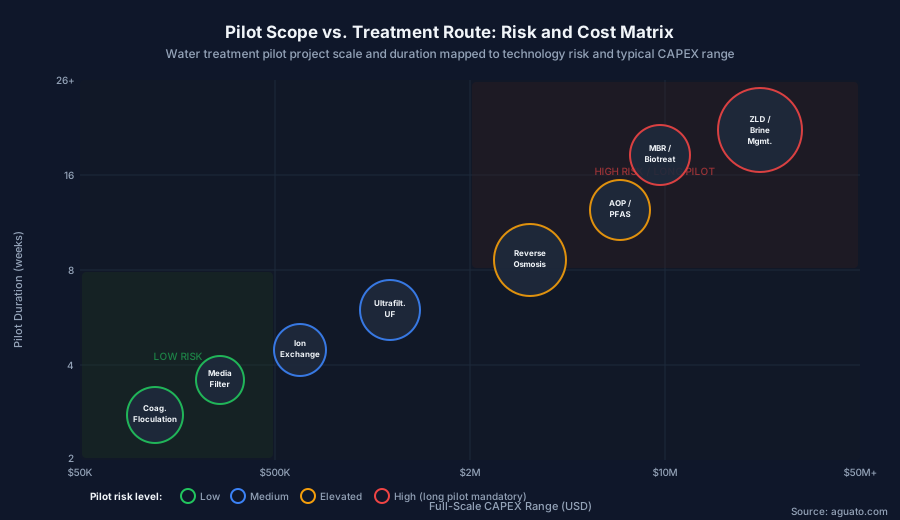
The table below maps technology route to recommended pilot duration, typical pilot cost, full-scale CAPEX range, and the data risk of under-piloting. Use it as a first-pass scoping reference before engaging vendors.
| Technology Route | Min. Pilot Duration | Typical Pilot Cost | Full-Scale CAPEX | Risk if Skipped | Best For | |---|---|---|---|---|---| | Coagulation-Flocculation + Media Filtration | 8 to 12 weeks | $25,000 to $60,000 | $200,000 to $1.5M | Medium: dose optimisation gap | High-turbidity surface water, pre-treatment | | Ultrafiltration (UF) | 12 to 16 weeks | $50,000 to $120,000 | $500,000 to $5M | Medium-High: fouling rate uncertainty | Pre-treatment to RO, TSS removal | | Reverse Osmosis (RO) | 16 to 20 weeks | $80,000 to $180,000 | $1M to $15M | High: scaling, recovery, OPEX error | Desalination, water reuse, ultrapure | | Nanofiltration (NF) | 12 to 16 weeks | $60,000 to $140,000 | $800,000 to $8M | High: selectivity and fouling gap | Partial softening, organics removal | | MBR / Biological Treatment | 20 to 26 weeks | $100,000 to $250,000 | $2M to $20M | Very High: biomass failure, permit risk | Industrial wastewater, reuse to process | | Zero Liquid Discharge (ZLD) | 20 to 26 weeks | $150,000 to $350,000 | $5M to $50M+ | Critical: crystalliser scaling, energy OPEX | Brine management, zero discharge compliance | | Advanced Oxidation (AOP) / PFAS | 16 to 24 weeks | $100,000 to $280,000 | $1.5M to $15M | Very High: reaction kinetics, sludge gen. | PFAS, micropollutants, colour removal |
The correct pilot scope for your project depends on your feed matrix, your discharge permit targets, and the full-scale CAPEX at stake. [Post your project on Aguato](/post-project) and qualified water treatment engineers will review the scope and flag the technology-specific risks before you commit to a vendor.
## How to use pilot data to build the CAPEX case
A well-run water treatment pilot project produces a data package that is worth far more than a validated treatment design. It is the primary instrument for compressing uncertainty in a CAPEX model and the document that gives a CFO or investment committee the confidence to approve a multi-million dollar water infrastructure spend.
The CAPEX model built from pilot data should include, at minimum: membrane area or media volume requirements calculated from the piloted flux/loading rate with a 15% safety factor; chemical consumption rates for pre-treatment, primary treatment, and CIP/backwash expressed in kg/m3 of treated water; energy consumption in kWh/m3 with a breakdown by process stage; reject/concentrate volume as a percentage of feed, with disposal cost model; planned maintenance frequency and consumable replacement schedule; and a 20-year OPEX projection at the P75 performance percentile (not the mean, not the best-case). A [water treatment plant design](/resources/water-treatment-plant-design) that is built from P75 pilot data rather than mean pilot data will overperform its design basis more than 75% of the time. That is the number that earns board sign-off.
Equally important is what the pilot data package tells you about what NOT to do. A pilot that reveals that a single-pass RO achieves only 60% recovery on your feed water is not a failure. It is a $3M to $8M saving compared to discovering the same thing at commissioning. A pattern that recurs in capital programmes that successfully navigate CAPEX approval is that the data package explicitly addresses the three scenarios where the full-scale plant might underperform, with quantified cost exposure and mitigation steps. Committees approve spend when they see that the project team has already war-gamed the downside.
For [how to choose industrial water treatment](/resources/how-to-choose-industrial-water-treatment) options across multiple technology routes, the pilot data package also provides the vendor-neutral performance benchmarks that make a competitive procurement defensible. If your RFP specifies a membrane flux of 25 LMH at 75% recovery based on independently-piloted data, a vendor who cannot meet that specification cannot simply claim it is a conservative design basis.
## Regulatory and permitting value of a pilot data package
Regulators increasingly require pilot data as a condition of permit applications for industrial water discharge or water abstraction at significant scale. In jurisdictions where the [EU Water Framework Directive](dofollow:https://environment.ec.europa.eu/topics/water/water-framework-directive_en) or US EPA NPDES permit process applies, a defensible pilot data package can reduce permit review timescales by 30 to 60% and significantly reduce the risk of permit conditions that restrict operational flexibility.
For [industrial wastewater treatment](/resources/industrial-wastewater-treatment) applications where the discharge quality target is set by permit, the pilot data package serves a dual purpose: it validates that the treatment technology achieves the permit limit under worst-case feed conditions, and it provides the regulator with enough confidence in the technology performance to grant a compliance schedule rather than an immediate compliance obligation. The difference between a 12-month and a 24-month compliance schedule is typically worth $500,000 to $2M in avoided capital acceleration costs.
ESG and sustainability teams have an additional incentive to ensure pilot data quality. Water recovery rates and wastewater volume reduction figures from a validated pilot can be used directly in Scope 3 water accounting and in ESG disclosures under GRI 303 (Water and Effluents). A pilot that demonstrates 85% water recovery on a feed stream that currently goes to drain creates a quantified water intensity reduction figure that can be reported to investors. Contested or unreproducible pilot data is a liability in that context.
The permitting value of pilot data is highest when: the analytical data chain from feed sampling through pilot operation to final effluent monitoring is fully documented with laboratory accreditation evidence; the non-conformance log demonstrates that worst-case performance events were captured and addressed rather than excluded; and the pilot was overseen by a qualified process engineer independent of the primary technology vendor. Third-party oversight is not bureaucratic overhead. It is the audit trail that makes the data package defensible under regulatory scrutiny.
For site-specific regulatory guidance on what your pilot data package needs to contain, a specialist in the [consulting services](/consulting-services) category can advise on jurisdiction-specific permit requirements and the data density needed to accelerate your application.
## Selecting and briefing pilot vendors
The vendor selection process for a water treatment pilot project deserves as much rigour as the full-scale plant procurement. Pilot vendors are not interchangeable, and the lowest-cost pilot quotation frequently produces the lowest-quality data package.
The briefing document sent to candidate vendors should specify: feed water characterisation data (the full analytical panel from Phase 1); target effluent quality with permit-limit references; proposed pilot duration and data collection frequency; gate review schedule and client oversight requirements; independent analytical requirements (split samples, third-party laboratory); performance reporting format; and contractual provisions for data ownership, non-conformance reporting, and remediation obligations if the pilot skid fails prematurely.
Vendors should be evaluated on: relevant references at comparable feed water quality and treatment complexity; in-house versus subcontracted analytical capability; pilot skid instrumentation specification; remote monitoring capability; and their approach to non-conformance events. A vendor who proposes a 10-week pilot on a ZLD application, or who does not offer independent analytical oversight as standard, is misaligned with the project risk profile regardless of their unit price.
The [most efficient water solution](/resources/most-efficient-water-solution) for your site may not come from the vendor who quotes the lowest pilot cost. It comes from the vendor who produces a data package that accurately represents the full-scale performance envelope, including the failure modes. Budget $80,000 to $350,000 for the pilot programme as a line item in the project CAPEX approval, framed as risk-reduction spend with a quantified downside that justifies the investment.
For a [water treatment plant design](/resources/water-treatment-plant-design) that needs to survive both a regulator review and a 20-year operational lifecycle, the pilot data package is not a project deliverable. It is the project's most valuable asset.
## FAQ
### How long does a water treatment pilot project take?
Pilot duration ranges from 8 weeks for simple filtration applications to 26 weeks for complex membrane, biological, or ZLD systems. The correct duration is set by the technology risk profile and the feed water variability. A conventional media filtration pilot on a stable groundwater feed can establish steady-state performance in 8 to 10 weeks. An RO or nanofiltration system on a variable industrial effluent needs 16 to 20 weeks to capture at least two operating cycles and a CIP performance window. Any biological treatment or ZLD application should be piloted for a minimum of 20 to 24 weeks to capture biomass acclimatisation or crystalliser scaling behaviour. Shortening the pilot to meet a project timeline is the most common route to a CAPEX approval that cannot be defended when full-scale performance falls short.
### How much does a water treatment pilot project cost?
Pilot costs typically run $25,000 to $350,000 depending on technology complexity and duration, representing 1 to 3% of full-scale CAPEX on a well-scoped project. Coagulation-filtration pilots on a short timeline sit at the low end ($25,000 to $60,000). Full RO system pilots with independent analytical oversight run $80,000 to $180,000. ZLD or advanced oxidation pilots, which require specialised instrumentation and extended duration, reach $150,000 to $350,000. The benchmark to present to a CFO is not the pilot cost in isolation but the ratio of pilot spend to the remediation cost avoided. On a $10M build, a $150,000 pilot that prevents a $600,000 commissioning failure delivers a 4x return before the full-scale plant produces a single litre.
### What data should a water treatment pilot data package contain?
A complete pilot data package contains feed water characterisation (minimum 90-day sampling campaign with P95 values), process performance data (flux/loading, recovery, permeate quality, pressure differentials), chemical consumption records, energy metering, CIP or backwash protocol records, a non-conformance log, and a 20-year OPEX model built from P75 performance percentile values. The data should be presented in a format that allows an independent engineer to reproduce the CAPEX and OPEX calculations. Regulatory submissions additionally require a full laboratory accreditation chain for all analytical data. Avoid data packages where the vendor has excluded non-conformance events or presents only mean performance metrics without distribution statistics.
### When is a water treatment pilot project not necessary?
A full pilot unit test may not be necessary when: the application uses a technology with more than five directly comparable reference installations at equivalent feed water quality and scale; the feed water is extensively characterised (multiple years of utility data); the full-scale CAPEX is below $500,000; and the vendor provides performance warranties backed by financial penalties. Even in these cases, bench-scale jar testing or coupon testing is still advisable to confirm dose optimisation and fouling propensity. The risk threshold for skipping a pilot sits highest for simple, well-proven technologies (conventional softening, UV disinfection on clean feed) and lowest for novel technology combinations, site-specific feed water chemistry, and applications targeting regulatory discharge limits. See the [UV vs chlorination disinfection comparison](/resources/uv-vs-chlorination-disinfection) for an example of a well-characterised technology route where piloting is typically optional.
### How do I write a pilot project brief for a water treatment vendor?
A pilot project brief should specify: full feed water characterisation data, target effluent quality with permit references, pilot duration and minimum scale (1:100 of full-scale capacity), data collection frequency, gate review schedule, independent analytical requirements, performance reporting format, and contractual provisions for data ownership. The brief should also require the vendor to provide a pilot-specific risk register identifying the three most likely failure modes and their mitigation. Vendors who respond with a generic pilot methodology document rather than a site-specific response to your brief are demonstrating that they are not treating the pilot as a design-basis-generating programme. The [ISO 16075 series on water reuse projects](dofollow:https://www.iso.org/standard/69005.html) provides a useful structural framework for the data quality and documentation requirements in a formal pilot programme.
### What is the difference between a bench test and a pilot plant test?
Bench tests (jar tests, coupon tests, column tests) use laboratory-scale equipment to screen technology options and establish preliminary operating parameters at a cost of $5,000 to $30,000. They provide directional data on dose optimisation, fouling propensity, and treatment feasibility, but cannot replicate full-scale hydraulics, fouling distribution, or long-term performance. Pilot plant tests use skid-mounted equipment at 1:100 to 1:10 scale and run for 8 to 26 weeks to generate the steady-state performance data needed for full-scale design. The two are not alternatives; they are sequential stages in a robust technology evaluation programme. Skipping the bench phase and going directly to pilot increases the risk of running an expensive pilot on a technology route that a $20,000 jar test campaign would have eliminated in two weeks.
### How should pilot results be incorporated into an RFP for full-scale procurement?
Pilot data should be incorporated into the full-scale RFP as a performance specification with guaranteed values based on the piloted P75 data, not vendor-submitted performance claims. The RFP should specify: minimum membrane flux in LMH at a defined recovery %; maximum CIP frequency based on piloted fouling rate; maximum chemical consumption in kg/m3 treated water; guaranteed permeate quality with permit-limit references; and energy consumption in kWh/m3. Vendors should be required to guarantee these values with liquidated damages provisions tied to the OPEX model. This approach converts the pilot data package from a design input into a procurement instrument and forces vendors to price against a known performance baseline rather than an optimistic proposal. The [consulting-services](/consulting-services) category on Aguato connects you with specialists who can translate your pilot data into a defensible RFP specification.