What separates compliant industrial wastewater treatment from regulatory disasters, covering treatment stages, discharge limits, technology selection, and the failure modes that repeat across every sector.
Industrial effluent is not diluted sewage. The chemistry is fundamentally different, BOD5:COD ratios as low as 0.1 to 0.2 in refractory streams, heavy metals at concentrations that kill biological treatment within hours, pH swings from 2 to 12 within a single shift. For the broader compliance and balance-sheet framing, contaminant classes, sector-specific cost benchmarks, the multi-million-dollar enforcement events that drive the asymmetric risk pricing, see [the industrial water pollution guide](/resources/industrial-water-pollution). Stricter discharge consent limits, sector-specific BAT obligations under the EU Industrial Emissions Directive, and a legal framework that attaches personal liability to environmental managers make industrial wastewater treatment a materially different engineering and compliance problem from municipal sewage treatment. The jurisdiction-by-jurisdiction map of those consent regimes, and how each one shapes plant design, is set out in our [industrial wastewater discharge regulations guide](/resources/industrial-wastewater-discharge-regulations).
Non-compliance has severe and well-documented consequences. Environmental regulators prosecute not only for consent exceedances but for absent risk assessments and inadequate documentation. Director-level liability, unlimited fines, and, in cases involving public health harm, criminal prosecution are all live outcomes. The most common route to non-compliance is not technology failure, it is inadequate effluent characterisation at project initiation, leading to a treatment train that was never designed for the actual wastewater it receives.
This article covers the three-stage treatment framework, the discharge limits regulators actually enforce, technology selection by contaminant type, and the failure modes that generate the majority of industrial wastewater non-compliances. For the operational order in which a plant actually runs, pre-treatment through sludge handling, with engineering parameters at each step, see the [step-by-step industrial wastewater treatment process walkthrough](/resources/industrial-wastewater-treatment-process).
## Why Industrial Wastewater Is Not Municipal Wastewater
Industrial effluent is not diluted sewage. The chemistry is fundamentally different, the variability is higher, and the regulatory requirements are frequently stricter. Treating an industrial wastewater project as a scaled-up municipal problem is the most expensive mistake an engineer can make.
Municipal wastewater has a predictable composition: predominantly domestic sewage with well-characterised biodegradability ratios (BOD5:COD typically 0.5 to 0.6), nutrient profiles, and hydraulic patterns. Industrial wastewater can have BOD5:COD ratios as low as 0.1 to 0.2 (indicating high refractory organics), toxic metals at concentrations that kill biological treatment within hours, pH swings from 2 to 12 within a single shift, and solvent loads that require explosion-proof electrical classification throughout the treatment plant.
The [EU Industrial Emissions Directive](dofollow:https://environment.ec.europa.eu/topics/industrial-emissions_en) requires installations covered by the IED to apply Best Available Techniques (BAT) for effluent treatment, defined in sector-specific BAT Reference Documents (BREFs). BAT conclusions set emission limit values that are typically 30 to 50% stricter than general surface water consent limits. Demonstrating BAT compliance requires detailed documentation of technology selection rationale, not just end-of-pipe monitoring data.
Most industrial wastewater compliance failures stem from inadequate effluent characterisation at project initiation, not technology selection failures. The wrong data leads to the wrong process design, and no amount of operational optimisation fixes a fundamentally undersized or incorrectly configured treatment train.
## The Three-Stage Treatment Framework
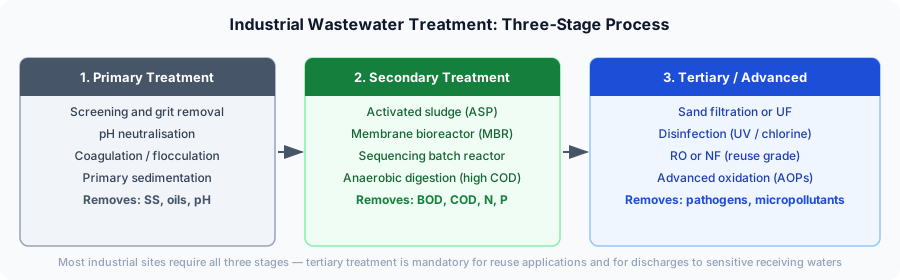
Industrial wastewater treatment is structured around three sequential stages, each targeting a different class of pollutant:
Primary treatment targets settleable and floatable solids, free oils and greases, and pH correction. Technologies include coarse and fine screening (removing rags, fibres, large solids), primary settlement (lamella or conventional clarifiers with 2 to 4 hours hydraulic retention time), dissolved air flotation (DAF) for free oil and suspended FOG removal, and pH correction using acid or alkali dosing to pH 6 to 9 ahead of biological treatment. Primary treatment alone rarely achieves consent, it is feed conditioning for secondary treatment. For the offshore variant of the same sequence, hydrocyclones and induced gas flotation handling primary separation on a weight-constrained deck, see the [offshore produced water treatment guide](/resources/offshore-produced-water-treatment).
Secondary treatment is the biological core. For biodegradable industrial effluent (BOD5:COD > 0.4), activated sludge or its variants (SBR, MBBR, MBR) achieve 85 to 95% BOD removal and 70 to 85% COD removal. The critical design parameters are hydraulic retention time (HRT, typically 6 to 24 hours for industrial flows), sludge retention time (SRT, 10 to 20 days for full nitrification), mixed liquor suspended solids (MLSS, 3 to 6 g/L for CAS), and dissolved [oxygen](/elements/oxygen) (target 2 to 3 mg/L throughout aeration zone). For low-biodegradability effluent, anaerobic pre-treatment followed by aerobic polishing is often more cost-effective, anaerobic digestion of high-COD effluent (>2,000 mg/L) generates biogas at 0.35 m3 CH4 per kg COD removed, partially offsetting treatment energy costs.
Tertiary treatment polishes the secondary effluent to meet stringent consent limits or enable water recycle. Technologies include sand filtration or [ultrafiltration pre-treatment](/resources/ultrafiltration) for TSS polishing to below 10 mg/L, nutrient removal (chemical phosphorus precipitation, nitrification-denitrification for nitrogen), UV disinfection for pathogen removal, activated carbon for residual dissolved organics, and reverse osmosis for final TDS or trace contaminant removal where water reuse is the target. Any RO stage at the tertiary step produces a high-TDS reject stream, so plan the [brine management and disposal](/resources/brine-management-disposal) route before committing to the recovery rate.
## Discharge Consent Limits: What Regulators Actually Expect
Discharge consent limits are set by the environmental regulator based on receiving water quality objectives, dilution ratios, and sector-specific BAT conclusions. They are not negotiated, they are imposed, and exceedance triggers enforcement action.
Typical consent parameters for direct discharge to surface water include BOD (10 to 30 mg/L), COD (75 to 150 mg/L), TSS (30 to 60 mg/L), pH (6 to 9), ammonia (1 to 5 mg NH3-N/L), and total [phosphorus](/elements/phosphorus) (1 to 2 mg/L in sensitive catchments). Sector-specific consent may add metals (copper, zinc, nickel at <0.1 to 1 mg/L depending on sector), specific organics, or temperature limits.
For discharge to foul sewer (trade effluent consent), limits are set by the sewerage undertaker and are typically less strict than direct discharge, but the operator still pays volumetric and strength charges (typically $0.63, $1.90/m3 plus COD and TSS load charges), so reducing effluent strength has direct financial benefit beyond compliance.
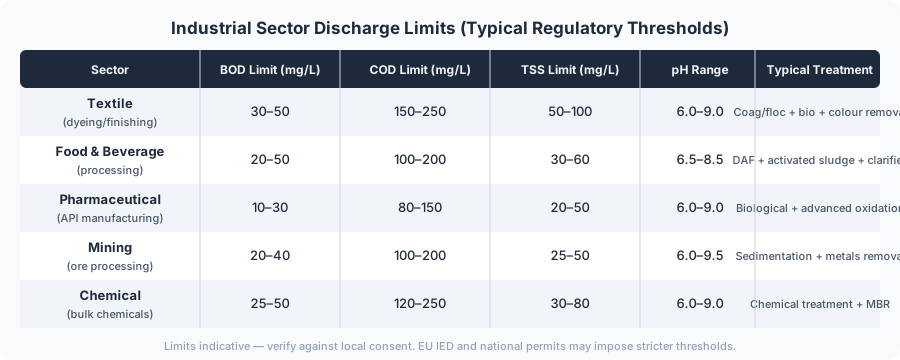
The [Water Research, industrial MBR performance](dofollow:https://www.sciencedirect.com/journal/water-research) literature documents numerous case studies where MBR-based treatment systems achieve consistent consent compliance at BOD < 5 mg/L and TSS < 5 mg/L even on variable industrial feeds, where conventional activated sludge produces frequent exceedances due to poor settling characteristics (bulking sludge). The trade-off is higher CAPEX (20 to 40% premium) and higher energy cost (0.3 to 0.8 kWh/m3 additional for membrane aeration and permeate pumping).
[cta:nepti-dark]
## Technology Selection: Matching Process to Contaminant
Technology selection must start with a complete characterisation of the effluent: flow rate and hydraulic profile (hourly, daily, seasonal), BOD5, COD, TSS, TKN, TP, metals, pH, temperature, and any site-specific parameters (solvents, endocrine disruptors, pharmaceuticals). Without this data, any treatment design is guesswork dressed up as engineering.
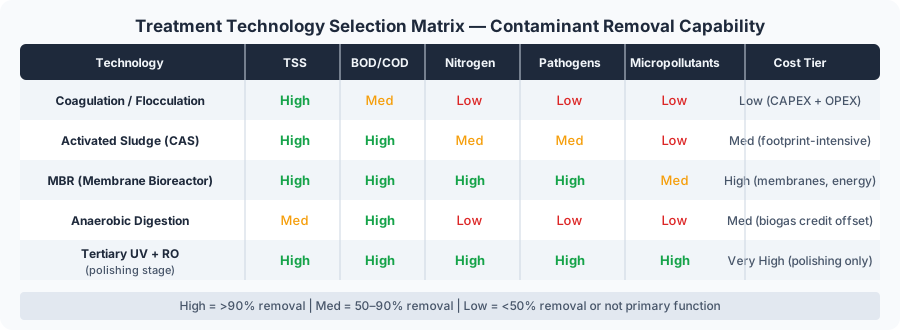
Coagulation and flocculation are cost-effective for high-TSS effluent with colloidal solids that do not settle unaided. Iron-based coagulants (FeCl3, FeSO4) or aluminium-based coagulants (aluminium sulphate, PAC) are selected based on pH window and downstream phosphorus limits. Coagulation achieves 70 to 90% TSS removal and 40 to 70% COD removal for colloidal-heavy streams. It does not achieve BOD removal from truly dissolved organics.
Activated sludge (CAS) is the standard for biodegradable industrial effluent. It is robust, well-understood, and achieves consistent performance when SRT and DO are properly managed. The failure mode, bulking sludge caused by filamentous bacteria, is predictable and preventable through selector zone design and SRT management. Do not design CAS without a biological treatability study (BOD5:COD ratio, toxicity screen, nitrification rate) on actual effluent samples.
Membrane Bioreactor (MBR) combines biological treatment with membrane filtration to deliver consistently high-quality effluent even on variable loads. MBR is the correct choice when: consent limits are strict (BOD < 10 mg/L, TSS < 5 mg/L), footprint is constrained (MBR requires 30 to 50% less footprint than CAS for equivalent capacity), or water reuse is the objective (MBR permeate is suitable direct RO feed). [Use Nepti to characterise your effluent](/nepti) before committing to MBR, the economics only work above a certain effluent COD loading.
Anaerobic digestion (AD) is appropriate for high-strength effluent (COD > 2,000 mg/L) from food processing, brewing, dairy, and pharmaceutical sectors. At these strengths, AD produces sufficient biogas to offset 50 to 100% of the plant's energy consumption. The effluent from AD still requires aerobic polishing, AD alone will not meet discharge consent. Design HRT carefully: undersizing the digester is the most common cause of AD process instability.
## Where Industrial Wastewater Projects Fail
Inadequate characterisation. The most common and most preventable failure. A 3-month sampling programme covering all process variations is the minimum for credible design. Projects designed on single-point samples or literature averages consistently underperform.
Biological treatment toxicity. Introducing intermittent high-concentration solvent, biocide, or metal slug loads to an activated sludge system without equalization and pH correction kills the biomass. Recovery takes 4 to 8 weeks during which the plant is in persistent non-compliance. Equalization tank sizing and chemical dosing for pH and toxicity buffering must be based on the worst-case influent scenario, not the average.
Underestimated solids handling. The sludge produced by primary and secondary treatment is a major cost centre. Dewatered sludge at 20 to 25% dry solids requires licensed disposal, and disposal costs have increased 40 to 60% in the UK over the past 5 years due to landfill tax and agricultural land restrictions. Projects that do not model sludge production and disposal costs accurately will find actual OPEX significantly exceeds design estimates.
Consent variation not obtained. Commissioning a new or expanded treatment plant without obtaining an updated discharge consent is a prosecutable offence. Consent applications take 3 to 6 months in England and Wales (EPR permit variation), and failure to submit early enough has left multiple industrial facilities operating under a temporary consent breach while permits are processed.
Inadequate process control. Automated dosing based on flow-proportional control (pH, coagulant, oxygen scavenger) is standard practice. Facilities that rely on manual dosing adjustment based on shift observations consistently fail to meet consent during production changes and shift transitions, precisely when effluent quality is most variable.
To find [qualified wastewater treatment providers](/providers) who have delivered compliant systems in your sector, use the Aguato platform.
## Building a Compliant Treatment System
A compliant industrial wastewater treatment system is built on four foundations:
Accurate characterisation: Commission a dedicated sampling and analysis programme before engaging a treatment technology vendor. The data set should cover minimum 3 months, capturing all process conditions. The [EPA Effluent Guidelines](dofollow:https://www.epa.gov/eg) and EU BREFs both require evidence-based technology selection, characterisation data is the evidence.
Robust process design: Design for worst-case conditions, not average conditions. Hydraulic peak flows, maximum pollutant concentrations, and minimum temperatures should all be design inputs. The treatment system must perform at consent under these conditions, not just under typical operating conditions.
Integrated monitoring and control: SCADA-connected online monitoring of key parameters (pH, flow, conductivity, turbidity, COD surrogate like TOC or UV absorbance) with automated dosing response is now standard practice. Manual monitoring alone is insufficient for variable industrial effluent.
Documented compliance evidence: Maintain a continuous record of influent and effluent quality, chemical dosing, maintenance activities, and any non-compliance events with root cause and corrective action. Regulators inspect records, not just effluent quality. A technically excellent treatment plant with poor documentation is still an enforcement risk.
If your project is in early stages, [post your treatment challenge](/post-project) to receive proposals from treatment specialists with sector-specific experience. Reading across related topics on [Aguato Insider](/resources) will also help you frame the right technical brief.
## FAQ
### What is the difference between BOD and COD in industrial wastewater?
BOD (Biochemical Oxygen Demand) measures the oxygen consumed by biological oxidation of organic matter over 5 days (BOD5). COD (Chemical Oxygen Demand) measures the total oxygen demand from all oxidisable material, including compounds that are not biologically degradable. The BOD5:COD ratio is the key biodegradability indicator: ratios above 0.4 indicate readily biodegradable effluent suitable for biological treatment; ratios below 0.2 indicate high refractory content requiring chemical oxidation, adsorption, or advanced treatment. Most industrial consent conditions specify both parameters independently.
### Do I need planning permission for an industrial wastewater treatment plant?
Planning permission requirements depend on the scale and location of the installation. In the UK, most industrial wastewater treatment plants require planning permission (development of operational land) and an environmental permit (discharge consent or trade effluent consent). Pre-application discussions with both the local planning authority and Environment Agency or equivalent regulator are strongly recommended before design commences, as permit conditions can materially influence plant layout and technology selection.
### How does an MBR differ from a conventional activated sludge plant?
An MBR replaces the secondary clarifier in a conventional activated sludge plant with ultrafiltration or microfiltration membranes. This allows operation at much higher MLSS (8,000 to 15,000 mg/L versus 2,000 to 4,000 mg/L in CAS), which increases biological loading per unit volume and reduces footprint by 30 to 50%. The membrane provides an absolute physical barrier, so effluent TSS is consistently below 1 mg/L regardless of sludge settleability. The trade-off is higher CAPEX (membrane modules), higher energy (membrane aeration), and the need for membrane cleaning and eventual membrane replacement.
### What happens when my consent is exceeded?
A consent exceedance must be reported to the regulator under environmental permit conditions (typically within 24 hours of detection). The environmental permit holder must investigate the cause, implement immediate remediation, and submit a corrective action plan. Enforcement responses range from advisory letters for first-time minor exceedances to formal enforcement notices, financial penalties, or prosecution for repeat or serious failures. The Environment Agency in England can impose civil penalties up to $315,000 for significant permit breaches without prosecution.
### Can industrial wastewater be reused rather than discharged?
Yes, and this is increasingly the objective in water-stressed regions and for industries with high raw water costs. Tertiary-treated industrial wastewater can be recycled for cooling tower makeup, landscape irrigation, toilet flushing, or, after reverse osmosis polishing, process water reuse. MBR followed by RO is the standard treatment train for high-quality industrial water reuse, achieving TDS below 50 mg/L and microbiological quality suitable for most process applications. The economics of reuse versus discharge depend on local raw water costs, discharge charges, and capital cost of the treatment upgrade. Where discharge is not permitted or water recovery targets exceed 95%, [zero liquid discharge treatment](/resources/zero-liquid-discharge) eliminates the effluent stream entirely through evaporation and crystallisation.
### How long does it take to commission an industrial wastewater treatment plant?
Biological treatment systems require 4 to 8 weeks of seeding and acclimatisation before achieving stable performance. MBR systems typically achieve stable operation within 6 to 8 weeks of seeding. Chemical treatment systems (coagulation, pH correction) can achieve stable operation within days. Total project timelines from design completion to stable operation are typically 12 to 18 months for new-build plants including procurement, civil construction, mechanical and electrical installation, commissioning, and biological start-up.