HVAC water treatment is a legal obligation under L8, not an optional maintenance service. This guide covers what regulators require, how cooling tower and closed system treatment programmes work, and where programmes fail.
HVAC water treatment is a statutory obligation, not a best practice recommendation. In the UK, the [HSE ACoP L8](dofollow:https://www.hse.gov.uk/pubns/priced/l8.pdf) places a legal duty on every organisation operating cooling towers, evaporative condensers, or hot and cold water services to identify Legionella risk, implement a written control scheme, and maintain documented evidence of compliance. Failure to comply is prosecutable regardless of whether any cases of Legionnaires' disease have occurred, the Health and Safety Executive has prosecuted organisations for inadequate risk assessments and missing records alone. Fines for corporate defendants range from $13,000 to over $1.25 million, and individual responsible persons face unlimited fines and imprisonment under the Corporate Manslaughter Act 2007 where negligence contributed to a fatality.
These are not theoretical risks. There have been prosecutions, convictions, and fatalities in the UK resulting from inadequate HVAC water treatment. The pattern is consistent: either no treatment programme existed, or a programme existed on paper but was not being implemented and verified by a competent person. Negligence is the common cause, not bad luck, not unforeseeable circumstances.
This article covers what a legally compliant HVAC water treatment programme looks like across the main system types, cooling towers, closed heating and chilled circuits, where programmes fail, and how to assess whether your current provider is delivering what the regulations require.
## Why HVAC Water Treatment Is a Legal Requirement
HVAC water treatment is not a best practice recommendation, it is a statutory obligation for any organisation that operates cooling towers, evaporative condensers, or hot and cold water services in commercial or industrial premises.
The legal framework in the UK is anchored in the [HSE ACoP L8, Legionella control](dofollow:https://www.hse.gov.uk/pubns/priced/l8.pdf), which sets out the duty holder's obligations under the Control of Substances Hazardous to Health (COSHH) Regulations 2002. L8 requires every duty holder with a Legionella risk to: identify and assess sources of risk, implement a written control scheme, implement and manage the scheme, keep records, and appoint a responsible person with authority and competence to oversee the programme.
Failure to comply does not require a Legionella outbreak to trigger prosecution. The Health and Safety Executive prosecutes duty holders for inadequate risk assessments, missing records, and absence of control measures, independent of whether any cases of Legionnaires' disease have occurred. Fines for L8 non-compliance range from $13,000 to over $1.25 million for corporate defendants, and individual responsible persons face unlimited fines and imprisonment under the Corporate Manslaughter and Corporate Homicide Act 2007 where negligence contributed to a fatality.
Legionella pneumophila, the primary causative organism, grows in water systems at temperatures between 20°C and 45°C, with peak growth at approximately 37°C. HVAC systems create these conditions routinely: cooling tower water temperatures during summer operation, poorly insulated pipework, storage tanks with stratification, and dead legs at the end of distribution branches. The principal control strategy is threefold: temperature control (hot water above 60°C, cold below 20°C), water treatment chemistry (biocides, scale/corrosion inhibitors), and physical management (cleaning, flushing, and system modifications to eliminate stagnation).
Most HVAC Legionella incidents are entirely preventable. They result from either no water treatment programme at all, or a programme that exists on paper but is not being implemented and verified. For the statutory and technical framework governing Legionella risk assessment specifically, including the written scheme requirements and competency obligations, see our [Legionella risk assessment guide](/resources/legionella-risk-assessment).
## Cooling Tower Water Treatment
Cooling towers are the highest-risk water systems in the built environment for Legionella because they operate at temperatures ideal for bacterial growth, aerosolise water into the breathing zone, and concentrate dissolved minerals through evaporation, creating conditions that support biofilm development. For the full engineering detail on cooling tower chemistry, dosing calculations, and blowdown control, see the [cooling tower water treatment guide](/resources/cooling-tower-water-treatment).
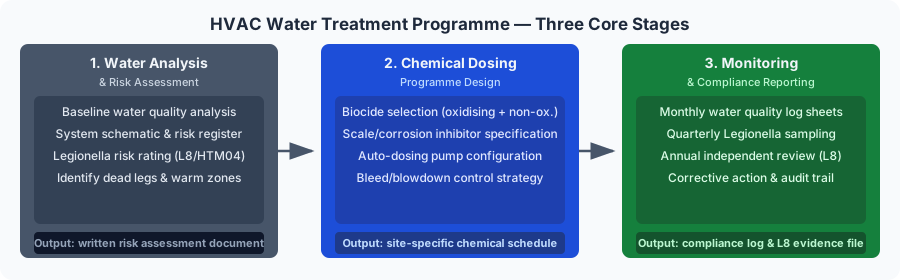
A compliant cooling tower water treatment programme requires four elements operating simultaneously:
Scale and corrosion inhibition: As water evaporates in the cooling tower, dissolved minerals concentrate. At 3 cycles of concentration (CoC), TDS triples from the makeup water level. Without scale inhibition, calcium carbonate deposits on heat exchanger surfaces (reducing efficiency) and on fill media (blocking airflow). Standard chemical programmes use phosphonate-based scale inhibitors (PBTC, HEDP, or blended products) at 5 to 20 mg/L active, with corrosion inhibitors (molybdate, azole compounds) to protect [copper](/elements/copper) and steel metallurgy simultaneously.
Biocide programme: Scale and corrosion inhibitors alone do not control microbiological growth. A biocide programme must address both planktonic bacteria (free-swimming, measured by routine water analysis) and sessile biofilm (attached to surfaces, measured by surface hygiene sampling or ATP bioluminescence). An effective programme uses two complementary biocides in rotation: an oxidising biocide (sodium hypochlorite, BCDMH, or stabilised oxidants) and a non-oxidising biocide (isothiazolinone blends, DBNPA, or glutaraldehyde) to prevent resistance development. Rotation every 3 to 6 months is standard.
Blowdown control: Concentration factor is managed by continuous or timed blowdown (automatic bleed) triggered by conductivity measurement. Target conductivity for most cooling towers is 1,500 to 2,500 µS/cm depending on makeup water quality and chemical programme. Running above the target increases scale and corrosion risk; running below wastes chemical and water.
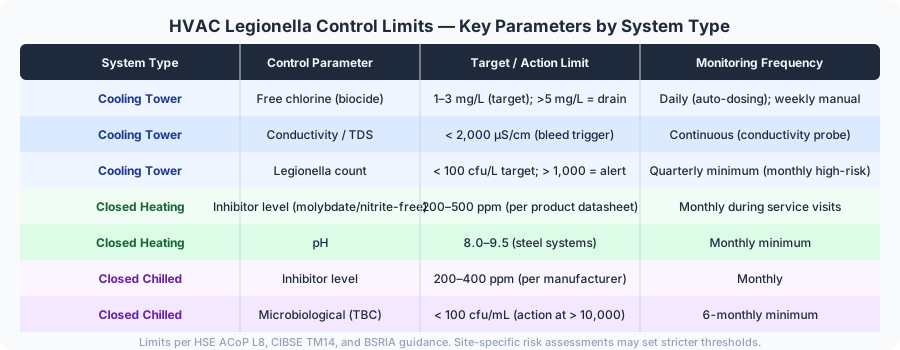
Monitoring and recording: L8 requires documented evidence of monitoring. Minimum monitoring for a cooling tower is: weekly on-site checks (visual inspection, free biocide level, pH, conductivity, inhibitor residual), monthly laboratory analysis (corrosion coupons, microbiological counts, full chemical analysis), and quarterly Legionella testing. Monthly Legionella sampling is required for towers identified as higher risk.
[Use Nepti to assess your system risk](/nepti) if you are unsure whether your current programme meets L8 requirements.
## Closed System Water Treatment
Closed heating and chilled water systems circulate the same water continuously with minimal evaporation or dilution. Their treatment challenges are different from cooling towers: the primary risks are internal corrosion (causing system failure), microbiological growth (including Legionella in stagnant sections), and scale deposits on heat exchanger surfaces. Where the plant room also includes steam or hot water boilers, note that boiler water chemistry operates under different parameters, see the [boiler water treatment guide](/resources/industrial-boiler-water-treatment) for the full treatment programme for steam and high-temperature hot water systems.
Closed system treatment uses a combined scale and corrosion inhibitor formulated for the specific metallurgy of the system. The key principles:
Initial fill chemistry: A new or refurbished closed system must be pre-treated with a system cleaner to remove flux residues, mill scale, and construction debris before being dosed with inhibitor. Commissioning a new closed system without a pre-treatment clean consistently leads to premature inhibitor depletion and accelerated corrosion.
Inhibitor selection: For steel-dominant systems, molybdate-based inhibitors (200 to 500 mg/L as Mo) or nitrite-free phosphonate blends are standard. Nitrite inhibitors were historically common but are increasingly avoided due to nitrosamine formation risk and microbial metabolism of nitrite by nitrite-oxidising bacteria. For mixed metallurgy systems with copper components, azole compounds (benzotriazole or tolyltriazole) are added specifically to protect copper surfaces.
pH control: The optimal pH for closed steel systems is 8.0 to 9.5, alkaline enough to suppress corrosion but not so high as to precipitate inhibitor components or attack aluminium components. pH above 10.5 attacks aluminium heat exchangers. pH below 7.5 accelerates general corrosion of steel pipework.
Microbiological control: Closed systems are not inherently microbiologically controlled. Bacterial growth occurs in stagnant sections, tank bottoms, and poorly circulated areas. Routine biocide doses (DBNPA or isothiazolinone at recommended concentrations) every 3 to 6 months as part of planned maintenance prevents biofilm development.
For applications requiring [water softening](/resources/industrial-water-softener) of the system makeup water to reduce hardness entering closed circuits, this must be specified as part of the overall water management plan, not as a separate standalone decision.
[cta:nepti-dark]
## Chemical Treatment Programmes
The [ASHRAE Standard 188, Legionellosis risk management](dofollow:https://www.ashrae.org/technical-resources/bookstore/ansi-ashrae-standard-188-2018-legionellosis-risk-management-for-building-water-systems) provides the North American framework for HVAC water treatment, while L8 and CIBSE TM14 govern UK practice. Both frameworks converge on the same technical requirements: chemical treatment must be site-specific, performance must be monitored, and records must be maintained.
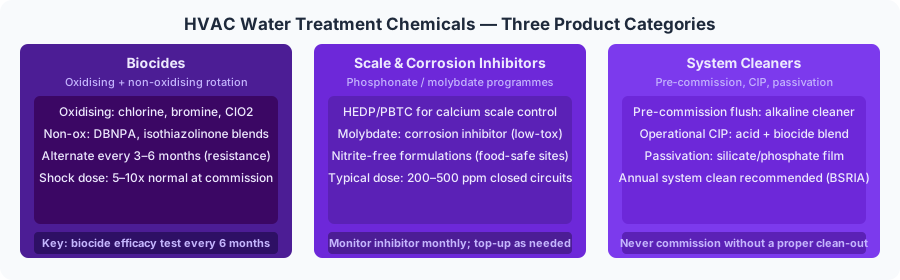
A complete HVAC chemical treatment programme covers three product categories working in combination:
Biocides control the microbiological population. Oxidising biocides act rapidly against planktonic bacteria but are consumed by organic matter and may be neutralised by reducing conditions. Non-oxidising biocides penetrate biofilm more effectively and are more persistent. The most effective programmes deploy both categories, typically weekly or fortnightly oxidant dosing with monthly non-oxidant shock doses. Biocide efficacy should be verified annually by comparing routine microbiological counts with the programme provider's stated performance claims. For a detailed comparison of chlorination, UV, and ozone as disinfection technologies, including dose requirements and DBP risks, see our guide to [industrial water disinfection](/resources/industrial-water-disinfection).
Scale and corrosion inhibitors protect metallic surfaces and maintain heat transfer efficiency. Product selection must be validated for the specific water chemistry (particularly pH, hardness, and TDS) and metallurgy. A product performing well in a soft water site may not provide adequate protection in a hard water site without dosage adjustment.
System cleaners serve two functions: pre-commission clean-out removes construction debris and flux residues that would otherwise deplete inhibitor and seed the system with corrosion initiation sites; operational CIP (clean-in-place) removes biofilm and deposits from operating systems as part of scheduled maintenance. Annual system cleaning is recommended by BSRIA BG 50 for closed systems and is mandatory for cooling towers under L8.
## Where HVAC Water Treatment Programmes Fail
Programme exists on paper only. The most common failure mode. A chemical treatment contract is in place, monitoring records are completed (sometimes retrospectively), but actual biocide residuals are consistently out of specification and no corrective action is taken. Regulators check records during inspection, but L8 enforcement actions frequently follow incidents where the records showed acceptable results and the actual system chemistry did not.
No dose verification. Many HVAC water treatment programmes rely on dosing volumes (litres of product added per month) rather than residual measurements (mg/L of active biocide measured in system water). Dose volume tells you what was added; residual measurement tells you what is present. In a system with high organic load, continuous oxidant demand may consume biocide faster than dosing rate, leaving zero residual despite correct dosing records. Measure residuals, not volumes.
Chemical dosing bypassed during system works. Pipework modifications, heat exchanger replacements, and plant room works frequently interrupt chemical dosing without notification to the water treatment contractor. Re-commissioning after any system works must include system flushing, inhibitor re-dosing, and microbiological verification, not just reconnecting the dosing pump.
Incomplete risk assessment. A risk assessment that does not identify all water-containing systems, does not assess all relevant risk factors (temperature stratification, dead legs, infrequent use, aerosol potential), or is outdated following system modifications, is not L8-compliant. The risk assessment must be reviewed at minimum every 2 years or following any significant change to the system or its use.
Wrong biocide selection. Using a single biocide type long-term without rotation allows adapted strains to establish. Several documented Legionella outbreaks have occurred in systems with continuous biocide dosing where the organism had adapted to the specific biocide. Rotation of biocide type is not optional, it is a core resistance management strategy.
[Wastewater treatment](/resources/industrial-wastewater-treatment) implications overlooked. Cooling tower blowdown containing biocides and inhibitor chemicals must be discharged in compliance with trade effluent consent. Phosphonate inhibitors may require declaration on the trade effluent consent if phosphorus limits apply to the receiving sewer.
## Selecting the Right Provider
HVAC water treatment is a regulated service. Under L8, the duty holder must appoint a competent contractor, one with demonstrable knowledge of Legionella control, relevant professional accreditations, and documented track record.
Key indicators of a competent HVAC water treatment provider:
Accreditations: UKAS-accredited Legionella testing laboratory for microbiological analysis, Legionella Control Association (LCA) membership, and Water Management Society (WMS) affiliation for UK providers. ISO 9001 quality management certification for the service company.
Risk assessment quality: A site-specific written risk assessment that identifies all water systems, ranks risk, and proposes a proportionate control scheme. Generic template risk assessments that are not tailored to your systems are a regulatory red flag.
Monitoring reports: Monthly reports that include actual measurement values (not just "pass/fail"), trend analysis, and specific corrective action recommendations when parameters are out of specification.
Emergency response: A 24-hour response commitment for Legionella action levels, with a clear escalation protocol that includes immediate notification to the duty holder and regulator if action thresholds are exceeded.
The [CIBSE Guidance, water treatment for building services](dofollow:https://www.cibse.org/knowledge-research/knowledge-portal/water-treatment-for-building-services-systems-tm14-2016) sets out detailed technical requirements for HVAC water treatment that can be used to evaluate provider proposals.
To find and compare [HVAC water treatment providers](/providers) with verified credentials, use the Aguato platform. For projects at procurement stage, [post your project](/post-project) to receive competitive proposals from accredited providers in your area.
## FAQ
### Is Legionella water testing a legal requirement?
Yes, for cooling towers operating under L8, quarterly Legionella testing is the minimum statutory requirement, with monthly testing recommended for higher-risk systems. For closed systems and hot and cold water services, Legionella testing frequency is determined by the risk assessment, but annual testing as a minimum is standard practice for systems rated as medium or higher risk. The tests must be conducted by a UKAS-accredited laboratory using the ISO 11731 method.
### What is the correct free chlorine level in a cooling tower?
The target residual for free [chlorine](/elements/chlorine) (sodium hypochlorite or equivalent oxidising biocide) in a cooling tower is typically 1 to 3 mg/L as measured in the system water. Below 0.5 mg/L, biocidal efficacy is insufficient for reliable Legionella control. Above 5 mg/L, chlorine is corrosive to system metallurgy and may breach trade effluent consent limits in blowdown. pH must be maintained at 7.0 to 8.0 for chlorine to remain effective, at pH above 8.5, the proportion of effective hypochlorous acid (HOCl) drops sharply and efficacy falls despite acceptable residual readings.
### How often should closed system water be analysed?
Closed heating and chilled water systems should have a full chemical and microbiological analysis conducted annually at minimum, with inhibitor residual and pH checked monthly during planned maintenance visits. New or refilled systems should be analysed after initial treatment and again at 4 to 6 weeks after commission to verify inhibitor stability and microbial control. Systems that have had pipework modifications or heating/cooling plant replacements should be re-sampled within 4 weeks of returning to service.
### What is the Legionella action level for a cooling tower?
Under UK guidance (L8 and CIBSE TM14): less than 100 CFU/L is the target operating range. At 100 to 999 CFU/L, the programme should be reviewed and corrective action taken (increased biocide dose, check distribution). At 1,000 CFU/L or above, immediate action is required: notify management and water treatment contractor, increase dosing, and resample within 48 hours. At 10,000 CFU/L or above, the tower should be taken out of service for emergency disinfection and the Health and Safety Executive should be notified.
### Can I manage HVAC water treatment in-house without a contractor?
Technically yes, but in practice the combination of technical competence required, laboratory analysis needs, and liability exposure makes in-house management appropriate only for larger organisations with a dedicated in-house water hygiene team. The responsible person must be competent under L8, this means formal training (City & Guilds 6084, BOHS W3/P901, or equivalent), demonstrated knowledge of Legionella control, and access to UKAS-accredited laboratory services. Most organisations find that the liability and competence requirement makes an external accredited contractor more practical and cost-effective than attempting in-house management.
### How does HVAC water treatment interact with water softening?
[Water softening](/resources/industrial-water-softener) of cooling tower makeup water significantly reduces scale formation rates, allows operation at higher cycles of concentration (lower blowdown, less water and chemical waste), and reduces scale inhibitor demand. The trade-off is the chloride introduced by ion exchange regeneration: softening increases the chloride content of the makeup water, which increases corrosion risk to stainless steel and copper components if not managed through inhibitor chemistry adjustment. For hard water sites (above 300 mg/L CaCO3), makeup water softening almost always delivers net economic benefit in cooling tower applications when the full water and chemical savings are modelled.