Zero liquid discharge eliminates wastewater disposal but at significant capital and energy cost. This guide covers ZLD technology options, cost benchmarks, the industries where it's justified, and the cases where it's oversold.
Zero liquid discharge is one of the most discussed and most misunderstood concepts in industrial water treatment. The term describes a wastewater management strategy where all process water is recovered for reuse and no liquid effluent is discharged to drain, sewer, or watercourse. The only output is a solid or semi-solid waste, typically a salt cake or filter cake, for landfill disposal or, in favourable cases, commercial sale.
ZLD achieves genuine environmental benefit: it eliminates discharge risk, removes dependency on effluent discharge consents, and in water-scarce regions returns 95 to 99% of process water to productive use. It also carries the highest CAPEX and OPEX of any wastewater treatment strategy. The regulatory and commercial case for ZLD must be compelling and quantified before it is specified, it is not an aspirational target, it is an expensive engineering decision.
The [EPA effluent limitation guidelines](dofollow:https://www.epa.gov/eg) drive ZLD adoption in sectors such as power generation, mining, and textile processing where discharge standards have tightened to the point where conventional treatment cannot meet consent requirements cost-effectively.
## What Zero Liquid Discharge Actually Means
ZLD does not mean zero waste, it means zero liquid waste. The solid salt cake produced by a ZLD system still requires disposal, and the energy required to convert concentrated brine into dry solids is substantial. A ZLD facility on a 1,000 m³/day industrial effluent stream might consume 500 to 1,500 kW of electrical power continuously, and that power bill is a permanent OPEX commitment for the lifetime of the plant.
The definition matters because "ZLD" is sometimes applied loosely to systems that achieve very high water recovery (90 to 96%) but still discharge a small concentrated brine stream. These hybrid approaches, [reverse osmosis](/resources/reverse-osmosis-systems) plus a brine concentrator without a crystalliser, are not technically ZLD but deliver most of the compliance benefit at 30 to 50% lower OPEX. For many sites, this is the correct answer, and calling it "ZLD" overstates the engineering commitment required.
True ZLD requires a crystalliser, the final stage that converts concentrated brine (20 to 25% TDS) into solid salt crystals. Without a crystalliser, the system produces a concentrated liquid that still requires disposal, typically as a classified waste.
## The ZLD Technology Stack
A full ZLD system integrates four process stages, each adding cost and complexity:
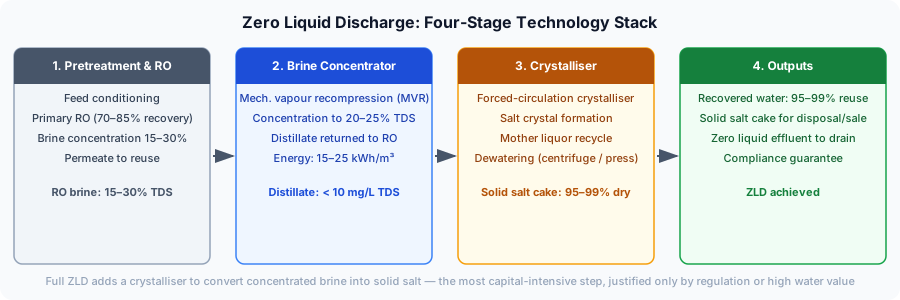
Stage 1, Primary RO: standard brackish water RO operating at 70 to 85% recovery, producing a brine at 15 to 30 g/L TDS. The permeate goes directly to process reuse or further polishing, see the [industrial water purification guide](/resources/industrial-water-purification) for the post-ZLD treatment steps required to reach process-quality specifications. This stage is the most capital-efficient part of the ZLD train, recovering the bulk of the water at the lowest energy cost ($0.15 to 0.40/m³).
Stage 2, Brine concentrator: a mechanical vapour recompression (MVR) evaporator that concentrates the RO brine from 15 to 30 g/L to 200 to 250 g/L TDS. The MVR mechanism recompresses steam driven off during evaporation and uses it as the heat source, making the process significantly more energy-efficient than conventional single-effect evaporation. Energy consumption is 15 to 25 kWh/m³ of feed to the concentrator, approximately 5 to 10x the energy cost of RO, a gap explained in full in our guide to [desalination energy consumption by technology](/resources/desalination-energy-consumption).
Stage 3, Crystalliser: a forced-circulation crystalliser that takes the concentrated brine from the concentrator and drives further evaporation until salt crystals form. The slurry is dewatered by centrifuge or filter press to produce a solid cake. This is the most energy-intensive and mechanically complex stage, it operates with hot corrosive liquors at near-saturation, and materials selection (duplex stainless steel, titanium, or lined vessels) is critical to achieving acceptable plant life.
Stage 4, Solid handling: the dewatered salt cake is typically 95 to 99% dry solids. In sodium chloride-dominated streams from certain industries (desalination, food processing), the cake has commercial value as road-grade or industrial salt. In mixed-ion industrial streams, it is classified waste requiring licensed disposal.
## ZLD Cost Benchmarks: CAPEX, OPEX, and the 20-Year NPV
The cost differential between ZLD and conventional wastewater treatment is significant at every scale. These benchmarks cover the full technology spectrum:
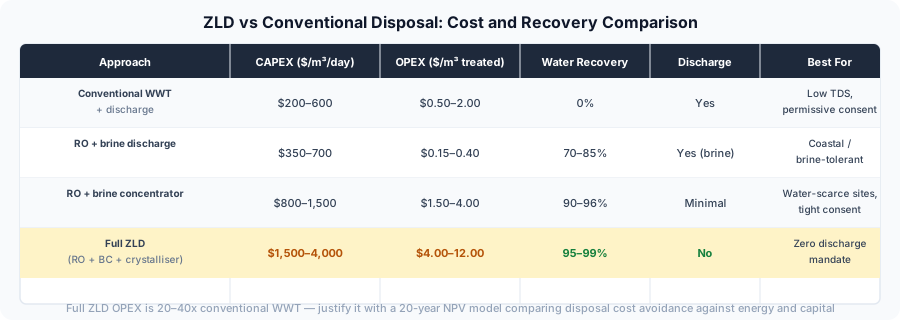
The OPEX figure of $4.00 to 12.00/m³ for full ZLD is the number that most often terminates ZLD projects at feasibility stage. For a facility treating 500 m³/day of process water, that is a running cost of $730,000, $2,190,000 per year, before capital repayment. Against this, the avoided disposal cost for the equivalent liquid effluent (typically $0.50 to 3.00/m³ for industrial effluent hauling and licensed disposal) rarely closes the gap without a regulatory mandate.
The only reliable way to evaluate ZLD viability is a 20-year NPV model comparing the ZLD scenario against the best conventional alternative, incorporating:
- CAPEX for each option (including pretreatment, civils, and controls) - Annual OPEX at projected energy prices - Avoided disposal cost (current contract rate plus projected escalation) - Water savings value (replacement water cost at the site) - Carbon cost of energy consumption (if relevant to reporting obligations) - Regulatory risk, the probability and cost impact of tightening discharge consents over the project life
[Use Nepti to model brine chemistry](/nepti) and simulate ZLD train performance against your specific feed water before commissioning a full feasibility study.
[cta:nepti-dark]
## Industries Where ZLD Is Justified
ZLD is genuinely the right answer in a limited set of circumstances. The common thread is either a regulatory mandate that makes liquid discharge impossible, or an economic case where water recovery value exceeds the substantial OPEX.
Power generation (thermal and steam cycle plants): ZLD is mandated or strongly incentivised in several markets for power plant cooling blowdown and flue gas desulphurisation (FGD) wastewater. FGD wastewater contains chlorides, heavy metals, and selenium at concentrations that cannot be cost-effectively treated by conventional biological treatment. In the US, the EPA's Effluent Limitations Guidelines for Steam Electric Power Plants drove significant ZLD adoption from 2020 onwards.
Semiconductor and electronics manufacturing: ultra-pure wastewater streams from fab processes contain high-value metals (copper, nickel) and must achieve near-complete recovery to avoid both regulatory penalties and loss of valuable materials. ZLD is standard practice at advanced semiconductor fabs.
Mining and mineral processing (inland sites): mine drainage in arid inland regions often has no viable discharge route. ZLD is the only compliant option where surface water resources are scarce or where acid mine drainage volumes exceed the land application capacity of evaporation ponds.
Textile dyeing (tightening discharge standards in Asia): water colour, COD, and salt content in textile effluent exceed discharge standards in many Indian and Chinese provinces. ZLD was mandated in several Indian textile clusters from 2015 onwards, implementation has been variable, but the regulatory direction is clear.
Post your ZLD project](/post-project) to receive proposals from engineering firms with direct ZLD project experience, the technology gap between a credible ZLD designer and a general wastewater contractor is substantial.
## Where ZLD Projects Fail
ZLD failure modes are costly and some are irreversible. The four most common patterns:
1. Crystalliser materials failure Decision made: duplex stainless steel specified for the crystalliser body to save 20% on initial CAPEX versus titanium-clad vessels. Feed water contained chloride concentrations at the upper operating limit. Outcome: stress corrosion cracking in the heat exchanger bundle within 18 months. Repair cost: $400,000. Full replacement required at year 3. Correct decision: metallurgy must be specified for maximum projected chloride concentration, not average, ZLD systems concentrate feed contaminants to extreme levels, and materials that are acceptable in feed water conditions fail in crystalliser conditions.
2. Energy cost underestimation Decision made: feasibility study modelled energy at current contracted rate; no sensitivity analysis on energy price escalation. Outcome: a 40% rise in industrial electricity prices over 5 years converted a marginally viable ZLD project into a severe financial burden. OPEX increased by $380,000/year at a 500 m³/day facility. Correct decision: model ZLD OPEX at current, 1.5x, and 2x energy price. If the project does not survive the 2x case, the regulatory mandate must be very strong to proceed.
3. Scaling on the brine concentrator heat exchangers Decision made: antiscalant programme designed for RO feed conditions; brine concentrator scaling chemistry not independently evaluated. Outcome: calcium sulphate scaling on concentrator heat exchangers within 6 months, requiring acid cleaning every 4 weeks and reducing annual availability to 78%. Target was 95%. Correct decision: brine concentrator and crystalliser require dedicated antiscalant and scale management programmes based on the concentrated brine chemistry, not the feed water chemistry.
4. Regulatory requirements narrower than assumed Decision made: ZLD specified based on a draft regulatory standard that was subsequently modified before implementation. Final consent was achievable with brine discharge at 50 g/L TDS. Outcome: $3.2M of additional investment in crystalliser stage delivered no compliance benefit over a brine concentrator alone. Correct decision: confirm final regulatory requirements with the consenting authority before crystalliser stage commitment. Regulatory trajectory is relevant, but current signed consent is the only bankable basis for investment.
The [Desalination journal, brine management and ZLD technologies](dofollow:https://www.sciencedirect.com/journal/desalination) provides comprehensive coverage of brine management technologies and their real-world performance limits.
## The Decision Framework: ZLD vs Alternatives
The ZLD decision is not a technology question, it is a regulatory and economic question. Apply this framework before specifying any ZLD system:
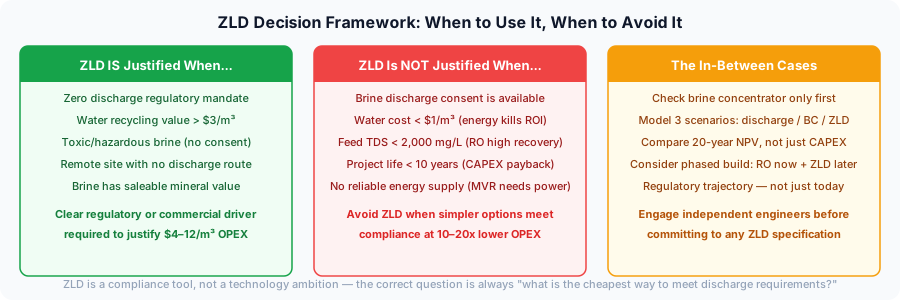
Step 1: Establish the discharge constraint. What is the current and projected future consent for liquid discharge? If a consent is available at acceptable TDS and flow, the ZLD case is weak unless water scarcity or water value arguments override.
Step 2: Calculate the cost of water avoidance. What does replacement water cost at this site? If freshwater cost is above $3/m³, recovered water has significant value. If freshwater is below $1/m³, the water recovery argument does not support ZLD economics.
Step 3: Model three scenarios. Run full lifecycle cost models for: (a) conventional treatment + discharge, (b) RO + brine concentrator, (c) full ZLD. Compare on 20-year NPV, not CAPEX alone.
Step 4: Assess regulatory trajectory. Is the current consent under review? What is the direction of travel in this jurisdiction? A regulatory risk factor, even if not currently mandated, can justify moving to the brine concentrator stage now with crystalliser civil foundations ready for future addition.
Step 5: Check phasing. Can you build RO now and add the brine concentrator or crystalliser as a funded second phase? Phased construction avoids committing full ZLD CAPEX in advance of crystallisation of regulatory requirements, a significant risk mitigation in uncertain regulatory environments.
Engaging [qualified ZLD system providers](/providers) who have independently operated, not just installed, ZLD plants is essential. The gap between theoretical performance and operating reality in ZLD systems is wider than in almost any other water treatment technology.
## FAQ
### What is the difference between ZLD and near-ZLD?
True ZLD produces no liquid effluent, only solid waste. Near-ZLD (sometimes called high-recovery or minimum liquid discharge) achieves 90 to 96% water recovery but still discharges a small concentrated brine stream, typically 4 to 10% of the feed volume at very high TDS (50 to 200 g/L). Near-ZLD costs roughly 30 to 50% less than full ZLD in OPEX because it eliminates the crystalliser stage. For most sites, near-ZLD provides the compliance benefit required, and true ZLD is only warranted when the consenting authority will accept no liquid discharge whatsoever.
### How much energy does a ZLD system consume?
A full ZLD system consuming feed water at 500 m³/day will typically use 300 to 800 kW of continuous electrical power, equivalent to $260,000, $700,000/year at $0.10/kWh. The brine concentrator (MVR evaporator) consumes the majority at 15 to 25 kWh/m³ of brine feed. Optimised MVR designs with heat integration can reduce this to 10 to 15 kWh/m³, but cannot approach the energy efficiency of membrane processes. ZLD is intrinsically energy-intensive because evaporation is a phase-change process, physics, not engineering, sets the minimum energy floor.
### What happens to the salt cake from a ZLD crystalliser?
The salt cake from a ZLD crystalliser is classified as industrial waste unless it meets commercial specifications for a specific end market. Sodium chloride-dominated cakes from food processing or desalination can sometimes be sold as road de-icing salt or industrial process salt, but purity requirements are strict. Mixed-ion industrial cakes (containing sulphates, heavy metals, or organics) are classified hazardous waste in most jurisdictions and require licensed disposal at higher cost. Waste disposal costs for ZLD salt cake typically add $0.50 to 2.00/m³ treated to OPEX, this must be included in the economic model.
### Is ZLD possible for high-COD industrial effluents?
High-COD streams (above 5,000 mg/L COD) require [industrial wastewater treatment](/resources/industrial-wastewater-treatment), biological pretreatment before RO and ZLD stages, the RO membranes cannot tolerate high organic loading. Typical ZLD trains for high-COD industrial wastewater (textile, food, pharmaceutical) include biological treatment (MBR or activated sludge) before RO, which substantially increases CAPEX and land area. The biological stage also produces a secondary sludge waste stream that must be managed separately. In these cases, ZLD CAPEX can reach $3,000 to 6,000/m³/day, significantly above the ranges quoted for treated or relatively clean industrial feeds.
### Which countries mandate ZLD for industrial dischargers?
ZLD or near-ZLD is mandated or strongly incentivised in: India (textile, sugar, and distillery sectors in notified industrial clusters since 2015 to 2018), China (coal mining, power generation, and petrochemical sectors in water-stressed provinces), United States (steam electric power plants under EPA ELG 2015 rule, with ZLD as BAT for certain waste streams), and Israel and Middle East (where freshwater scarcity makes water recovery economically compelled regardless of regulation). Regulatory frameworks are evolving, the [Water Research, zero liquid discharge review](dofollow:https://www.sciencedirect.com/journal/water-research) tracks technology performance against regulatory requirements across jurisdictions.
### How long does a ZLD system take to design and build?
A well-scoped ZLD project from feasibility study to commissioning typically takes 24 to 48 months for industrial-scale systems. Feasibility (6 to 9 months), basic engineering (6 to 12 months), detailed design and procurement (9 to 12 months), construction (12 to 18 months), and commissioning (3 to 6 months) run partially in parallel. Crystalliser procurement is typically the long-lead item, specialist fabricators operate on 18 to 24 month order books. Budget contingency of 15 to 25% above base CAPEX estimate is standard for ZLD projects due to the materials and process complexity. For technically challenging briefs, Aguato can route the scoping phase through [specialist review with Brine Consulting](/resources/aguato-brine-consulting-collaboration) before providers are engaged.