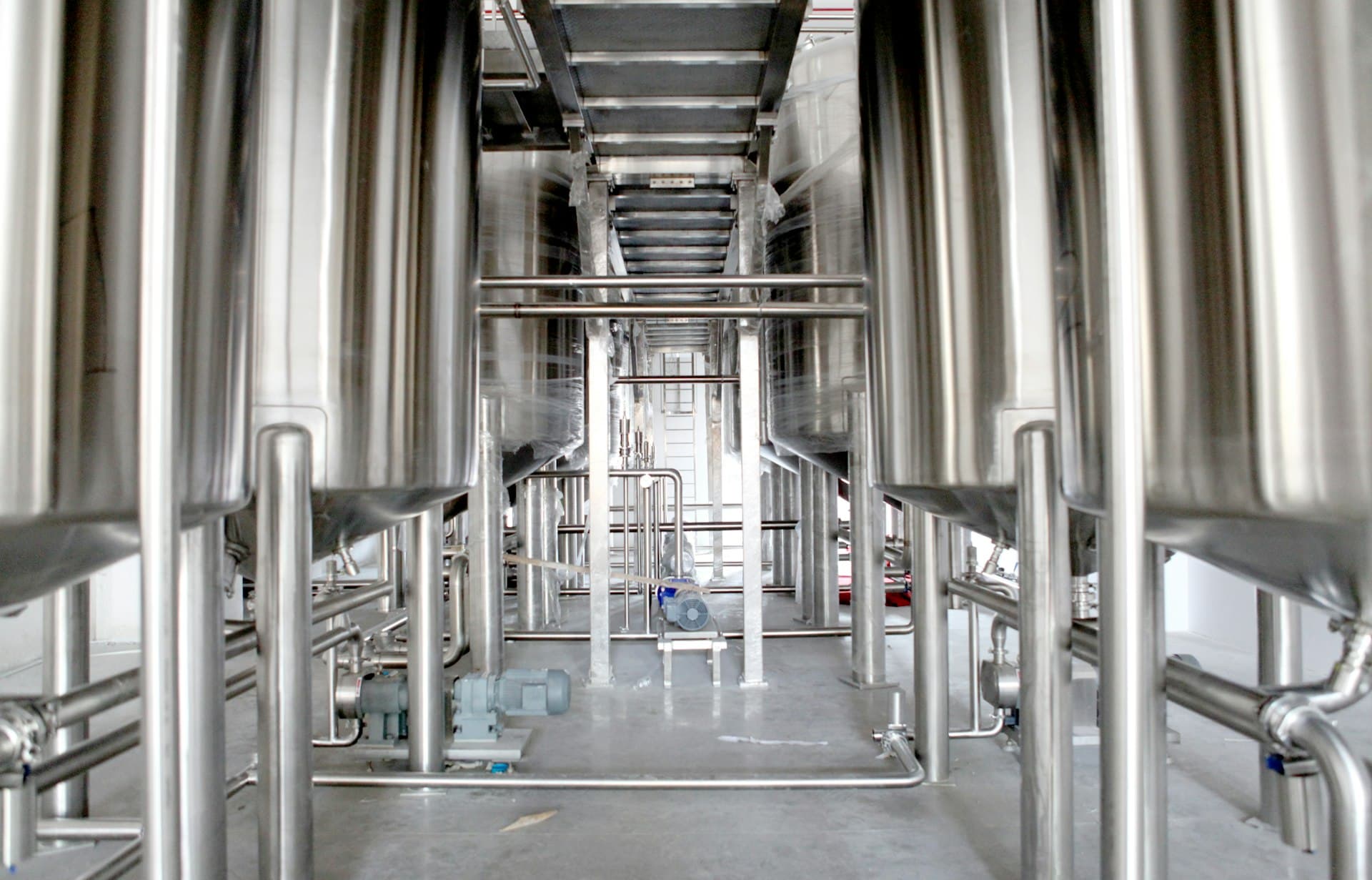
High-purity water is a critical utility in pharmaceutical, semiconductor, power generation, and electronics manufacturing. This guide covers deionisation, electrodeionisation (EDI), mixed-bed polishing, and the operational discipline required to maintain water purity specifications.
High-purity water is not a luxury specification, it is a critical utility whose failure mode is product contamination, process disruption, or regulatory non-compliance. In pharmaceutical manufacturing, a WFI (Water for Injection) system that falls out of specification shuts down production immediately. In semiconductor fabrication, ultrapure water (UPW) quality directly determines device yield, particles and ions at parts-per-trillion concentrations damage wafer surfaces during cleaning and rinsing. The same logic governs medical-grade water: [dialysis water treatment](/resources/dialysis-water-treatment) runs under AAMI/ISO limits where an endotoxin or chloramine excursion harms patients directly rather than merely scrapping a batch.
The [USP Purified Water and WFI monographs](dofollow:https://www.usp.org/sites/default/files/usp/document/harmonization/gen-method/stage_6_monograph_2_august_2016.pdf) define the specification parameters for pharmaceutical water, conductivity, TOC, microbial content, endotoxins, that represent the regulatory minimum for these applications. Industrial systems that produce high-purity water for other uses (power generation, electronics, laboratory supply) reference equivalent standards such as SEMI F63 for UPW and BS EN 12952 for high-pressure boiler feedwater.
What all these specifications have in common is that they define the water by what is not present, not by what is. High-purity water system design is the systematic removal of every class of contaminant, dissolved ions, organics, particles, microorganisms, and dissolved gases, to concentrations measured in parts per billion or below. No single technology achieves this alone.
## What High-Purity Water Actually Requires
The challenge of high-purity water production is sequential and cumulative. Each purification stage addresses a different class of contaminant; removing one class in isolation while leaving others yields water that passes one specification test but fails others.
The four contamination classes that must be addressed:
1. Dissolved ions (TDS): removed by reverse osmosis (bulk removal) followed by ion exchange or EDI (polishing to below 0.1 µS/cm). RO alone achieves 95 to 99.5% TDS removal; the residual 0.5 to 5% must be removed by ion exchange to reach pharmaceutical or semiconductor specifications.
2. Organic matter (TOC): removed by activated carbon (adsorption of chlorinated organics and THMs), RO (rejection of higher-molecular-weight organics), and UV 185 nm photooxidation (destruction of remaining trace organics to CO2 and water). TOC below 500 µg/L is required for Purified Water (PW); below 1 µg/L for semiconductor UPW.
3. Microorganisms and endotoxins: controlled by UV 254 nm disinfection (inactivation of vegetative cells), 0.2 µm membrane filtration (physical removal), and system design that prevents biofilm formation (continuous recirculation, dead-leg elimination, hot-water sanitisation). For a full comparison of UV, chlorination, and ozone as disinfection technologies, including log reduction performance and chemical residual considerations, see the [industrial water disinfection guide](/resources/industrial-water-disinfection).
4. Dissolved gases (CO2, O2): removed by membrane degassing or vacuum degassing for applications where dissolved gas content affects process quality. CO2 at concentrations above 1 mg/L suppresses pH and raises conductivity, a concern for pharmaceutical water where conductivity specification is tight.
## The Purification Train: From Feed Water to WFI Grade
A pharmaceutical or high-purity water system is not designed as individual components, it is designed as an integrated train where the output specification of each stage is the design input for the next:
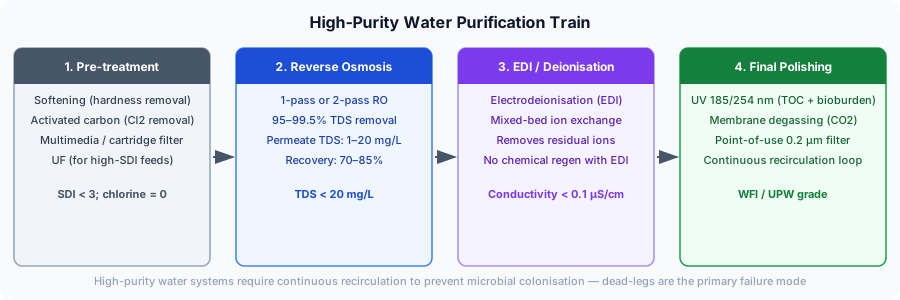
Pre-treatment stage removes the feed water components that would damage or rapidly exhaust the RO membranes and ion exchange resins: suspended solids (multimedia/cartridge filtration), hardness (softening, essential to prevent carbonate scaling on RO membranes), and chlorine (activated carbon or sodium bisulphite, polyamide membranes are destroyed by free chlorine above 0.1 mg/L). [UF pre-treatment](/resources/ultrafiltration) is appropriate for high-SDI feeds (surface water, well water with high biological activity).
RO stage provides the bulk dissolved solids removal, typically 95 to 99.5% in a single pass, or 99.5 to 99.9% in a two-pass configuration. Two-pass RO is standard for pharmaceutical applications where the primary RO permeate feeds the secondary stage. The second pass rejects the small fraction of ions that passed the first membrane, producing permeate at 1 to 5 µS/cm suitable as feed to EDI or ion exchange.
Two-pass RO also provides a second barrier against biological contamination and organic breakthrough, critical in pharmaceutical applications where downstream ion exchange resins can harbour bacteria if the RO permeate contains significant nutrients.
Ion polishing stage removes residual dissolved ions from the RO permeate to achieve conductivity below 0.1 µS/cm (pharmaceutical) or 0.056 µS/cm (18.2 MOhm·cm, semiconductor UPW). This stage is either electrodeionisation (EDI, continuous, no chemical regeneration) or mixed-bed ion exchange (MBIX, batch, chemical regeneration). The choice between them depends on flow rate, purity requirement, operational context, and capital versus operating cost trade-offs.
Final polishing addresses the microbiological and organic contamination that the membrane stages do not eliminate. UV at 185 nm destroys dissolved organics (TOC reduction); UV at 254 nm inactivates microorganisms. Membrane degassing removes CO2 and dissolved oxygen. Point-of-use 0.2 µm filters are the final barrier at each process connection point. Continuous recirculation of the distribution loop at flow velocities above 1 m/s prevents biofilm formation, dead-legs, low-velocity zones, and dead-end branches are the primary colonisation sites in high-purity water systems.
## Deionisation vs Electrodeionisation: The Right Choice
The ion polishing stage is where the design choice has the greatest impact on operating cost, operational complexity, and chemical handling requirements:
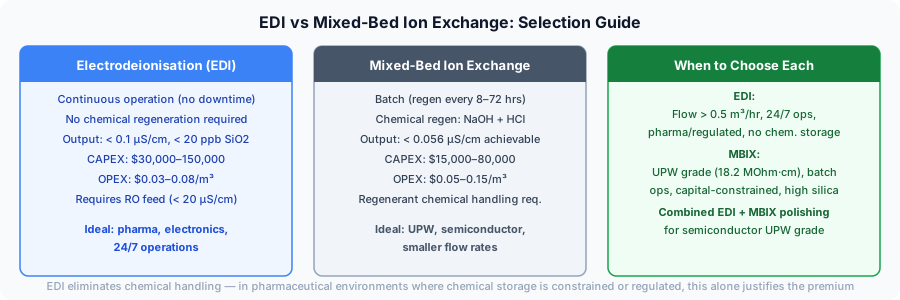
Electrodeionisation (EDI) is a continuous process that combines ion exchange resin with an electrical field to continuously regenerate the resin in situ. Ions are driven by the electric field through ion-selective membranes and removed in a concentrate stream (typically 5 to 10% of feed flow). EDI requires no chemical regeneration, no NaOH, no HCl, and produces consistently high-purity water at below 0.1 µS/cm without the service interruptions associated with batch regeneration cycles.
For pharmaceutical manufacturing, where chemical storage and handling are subject to strict GMP controls, EDI's elimination of regeneration chemicals is a significant operational benefit. The OPEX advantage over MBIX narrows for pharmaceutical applications because the regulatory overhead of managing chemical storage is partly offset by the validation burden for the EDI module itself.
Mixed-bed ion exchange (MBIX) uses a bed of mixed cation and anion exchange resins to remove residual ions by exchange, cations traded for H+, anions traded for OH-, producing ultra-pure water as the equilibrium product. MBIX can theoretically achieve 18.2 MOhm·cm (0.056 µS/cm), the theoretical maximum purity of water at 25°C, limited only by the self-ionisation of water itself. This makes MBIX the technology of choice for semiconductor UPW where the specification approaches theoretical purity.
The operational challenge with MBIX is regeneration. Each regeneration cycle requires acid (HCl) and caustic (NaOH) at significant volumes, generates a mixed waste regenerant containing both acids and salts, and requires the unit to be taken offline for 4 to 8 hours. In 24/7 operations, this requires duplicate vessels in lead-lag configuration, doubling the capital cost. Chemical handling, storage, dosing, waste neutralisation, and operator safety, adds ongoing operational cost and regulatory compliance burden.
[cta:nepti-dark]
## Water Purity Grades and Their Applications
Different industries and applications require different purity levels, and the engineering investment required scales significantly with purity grade:
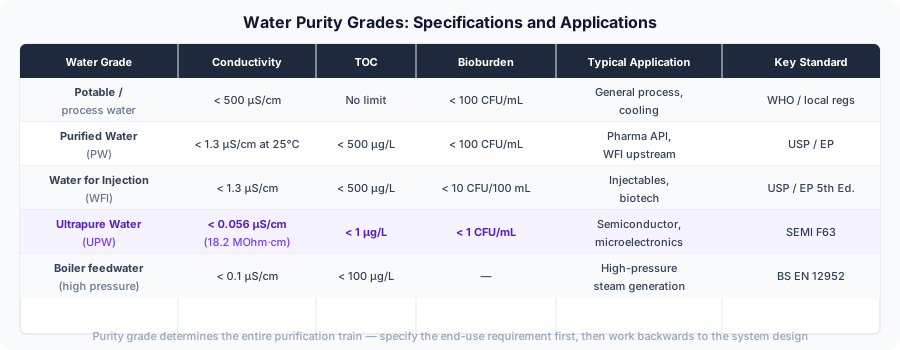
The jump from Purified Water (PW) to Ultrapure Water (UPW) is not an incremental engineering challenge, it is a step change in system complexity, operational discipline, and cost. The move from 1.3 µS/cm (PW) to 0.056 µS/cm (UPW) requires moving from EDI to MBIX polishing, from periodic hot-water sanitisation to continuous recirculation with UV treatment, and from quarterly microbiological sampling to continuous bioburden monitoring.
High-pressure boiler feedwater represents a different application of high-purity water. HP boiler drums operating above 60 bar require feedwater conductivity below 0.1 µS/cm and TOC below 100 µg/L, not because of product quality concerns, but because ionic contamination in the steam drum causes stress corrosion cracking, pitting corrosion, and carryover of dissolved solids into the steam distribution system. A single boiler failure caused by poor feedwater quality can cost $500,000 to 2,000,000 in replacement of the pressure vessel, plus production disruption.
## Where High-Purity Water Systems Fail
1. Dead-legs enabling biofilm colonisation Decision made: pharmaceutical WFI loop designed with several valved-off branch connections for future process additions; connections not fitted with sanitary valves and flow paths. Outcome: biofilm established in dead-legs within 3 months of commissioning; TOC and bioburden exceedances at downstream sample points forced production shutdown during investigation. Remediation required physical replumbing of the distribution loop at a cost of $180,000 plus 6 weeks of lost production. Correct decision: every connection on a high-purity water loop must have flow through it, or must be eliminated. Dead-legs are not acceptable in validated pharmaceutical water systems, specify sanitary design with no dead-legs greater than 6 pipe diameters at the design stage.
2. EDI membrane fouling from RO permeate [calcium](/elements/calcium) hardness Decision made: pre-treatment softener regeneration frequency reduced to cut salt consumption. Hardness breakthrough of 2 mg/L CaCO3 passed undetected for 3 weeks. Outcome: calcium carbonate scaling on EDI cation exchange membranes caused conductivity to rise above specification. EDI module required chemical cleaning (acid flush) and partial membrane replacement. Total cost: $28,000 plus 72 hours of system downtime. Correct decision: online hardness monitoring or conductivity monitoring on the softener outlet with hardness breakthrough alarm is mandatory for softener-EDI trains. EDI requires RO permeate with hardness below 0.5 mg/L CaCO3, protect it.
3. [Chlorine](/elements/chlorine) breakthrough to ion exchange resins Decision made: GAC media life extension beyond iodine number specification to reduce replacement cost. Chlorine breakthrough occurred without detection (no inline chlorine monitor on GAC outlet). Outcome: chlorine oxidised the MBIX anion exchange resin, causing progressive loss of ion exchange capacity and rising final conductivity. Resin replacement cost: $35,000. Correct decision: continuous inline chlorine monitoring at GAC outlet with hard interlock shutdown of the downstream RO system is a non-negotiable design requirement. The cost of the instrument ($3,000 to 8,000) is recovered in resin life extension within months.
4. Recirculation pump failure creating stagnation Decision made: single recirculation pump with no standby. Pump bearing failed at 02:00 on a Saturday. Stagnant water sat in the distribution loop for 11 hours until a replacement pump was sourced and fitted. Outcome: biofilm formed in low-velocity zones; batch cultures taken on Monday morning showed Legionella in the loop at 500 CFU/L, significantly above the pharmaceutical alert limit. Full system sanitisation, replumbing of affected sections, and revalidation took 3 weeks. Production impact: $2.1M. Correct decision: high-purity water loops must have standby recirculation pumps with automatic changeover. Stagnation in a high-purity loop is never acceptable, even brief stagnation allows rapid biofilm establishment.
The [Water Research, electrodeionisation performance](dofollow:https://www.sciencedirect.com/journal/water-research) provides systematic data on EDI performance under varying feed conditions, including calcium and magnesium sensitivity data that is directly relevant to pre-treatment design.
## Specifying a High-Purity Water System
The single most important document in a high-purity water system specification is the User Requirements Specification (URS), the formal statement of what the water must achieve, the flow rates required, the regulatory framework, and the operational context. For pharmaceutical systems, the URS is the basis of GMP validation (IQ/OQ/PQ); for other industries, it is the basis of performance guarantee testing.
A complete URS for a pharmaceutical high-purity water system should include: purity specification at point of use (not at the system outlet, which is a different location), flow rate and pressure requirements at each point of use, sanitisation method and frequency, monitoring strategy (online parameters, sampling frequency, sample locations), alarm and interlock requirements, and materials of construction for all wetted parts. For detailed guidance on the monitoring parameters and testing methods that underpin a validated water quality programme, see the [industrial water quality testing guide](/resources/industrial-water-quality-testing).
Materials specification for high-purity water loops: all wetted surfaces must be non-reactive and must not leach extractable compounds into the water. 316L stainless steel with electropolished internal surfaces is standard for pharmaceutical WFI loops; PVDF (polyvinylidene fluoride) piping is used in semiconductor UPW applications where metal contamination at ppb levels is unacceptable. Elastomers must be tested for extractables and specified by grade, standard EPDM used in general pipework contains process aids that leach into high-purity water at detectable concentrations.
[Model your purification train with Nepti](/nepti) to validate the technology selection against your specific feed water composition and purity target before engaging vendors. [Find high-purity water system providers](/providers) who specialise in your industry and application, a semiconductor UPW specialist and a pharmaceutical WFI specialist are different disciplines despite working with similar technology.
## FAQ
### What is the difference between Purified Water and Water for Injection?
Both are defined by the USP (United States Pharmacopeia) and European Pharmacopoeia (EP). Both require conductivity below 1.3 µS/cm at 25°C and TOC below 500 µg/L. The difference lies in bioburden and endotoxin specifications: PW allows up to 100 CFU/mL total viable count with no endotoxin limit; WFI requires below 10 CFU/100 mL and endotoxins below 0.25 EU/mL. WFI is required for parenteral (injectable) products, reconstitution of parenteral medications, and some ophthalmic preparations. PW is used for oral and topical dosage form manufacture. The production route for WFI in Europe changed in 2017 to permit membrane systems (RO/EDI/UF) as an alternative to distillation, the EP 5th Edition now accepts either route provided the specification is met.
### How is system conductivity tested and validated?
System conductivity is continuously monitored by online inline sensors at multiple points, feed to distribution, return from loop, and at sample points representing the distribution extremes. Online sensors are supplemented by periodic calibrated grab sample analysis for regulatory purposes. For pharmaceutical systems, conductivity testing must follow the multi-stage test prescribed in USP and EP, Stage 1 is a temperature-compensated inline reading; Stage 2 and 3 involve pH-titration to exclude carbon dioxide contributions and are performed in the laboratory. A system may meet the Stage 1 specification but fail Stage 2 if dissolved CO2 is suppressing apparent conductivity, this is why CO2 removal (membrane degassing) is included in the purification train.
### What causes conductivity to rise in an established high-purity water loop?
Rising conductivity in a validated loop typically indicates one of: ion exchange resin exhaustion (check outlet conductivity from the ion polishing stage), biological contamination producing ionic metabolites (check bioburden and TOC simultaneously), ingress of a contaminating water source (review all connections for isolation integrity), or EDI module fouling reducing ion removal efficiency. A rising conductivity that responds to increasing loop velocity (suggesting mixing with stagnant zones) points to biofilm. A rising conductivity correlated with production activity (process connections, sampling) points to ingress from external sources. Systematic troubleshooting, measuring conductivity at each stage outlet in sequence, isolates the source.
### Can high-purity water systems be sanitised with chemicals?
Yes, but chemical sanitisation is more complex than thermal (hot-water or steam) sanitisation for pharmaceutical systems. Hot-water sanitisation at 80°C for 1 hour is the standard method for pharmaceutical WFI and PW loops, it is efficient, leaves no chemical residue, and is relatively straightforward to validate. Chemical sanitisation using peracetic acid, hydrogen peroxide, or ozone is used in cold-water systems where thermal sanitisation is not practical (ambient-temperature loops, temperature-sensitive materials). Ozone sanitisation followed by UV destruction is increasingly used in pharmaceutical loops, it avoids chemical residuals, provides effective biofilm control, and is compatible with continuous operation. Chemical sanitisation requires rinsing validation to confirm that the sanitising agent has been removed to acceptable residual levels before the system returns to production.
### What is the minimum recommended recirculation velocity in a high-purity water loop?
Minimum 1.0 m/s at all points in the loop, with 1.5 to 2.0 m/s preferred for pharmaceutical WFI systems. At velocities below 1 m/s, the shear force on biofilm is insufficient to prevent colonisation, and thermal gradients can develop in large-bore piping that create warm zones favourable to microbial growth. Loop design must ensure minimum velocity at the furthest point-of-use, not just at the pump outlet, this often requires a dedicated return line with booster pumping rather than a simple dead-end distribution system. ISPE (International Society for Pharmaceutical Engineering) Baseline Guide Vol. 4 (Water and Steam Systems) provides detailed engineering guidance on loop design velocities and sanitisation requirements.
### How should a high-purity water system be commissioned and validated?
For pharmaceutical applications, commissioning and qualification follow the IQ/OQ/PQ protocol: Installation Qualification (IQ) verifies that the system was built as designed; Operational Qualification (OQ) verifies that the system operates within its defined parameters; Performance Qualification (PQ) demonstrates that the system consistently produces water meeting the specification under normal operating conditions. PQ for pharmaceutical water requires 12 months of operation covering all seasons, with sampling at defined frequency and locations. A system that passes PQ can be released for routine production use. The [WHO WFI manufacturing guidance](dofollow:https://www.who.int/publications/i/item/9789241549950) provides detailed commissioning and qualification requirements for WFI systems. [Post your purification project](/post-project) to find qualified engineering firms with direct GMP validation experience for pharmaceutical water systems.