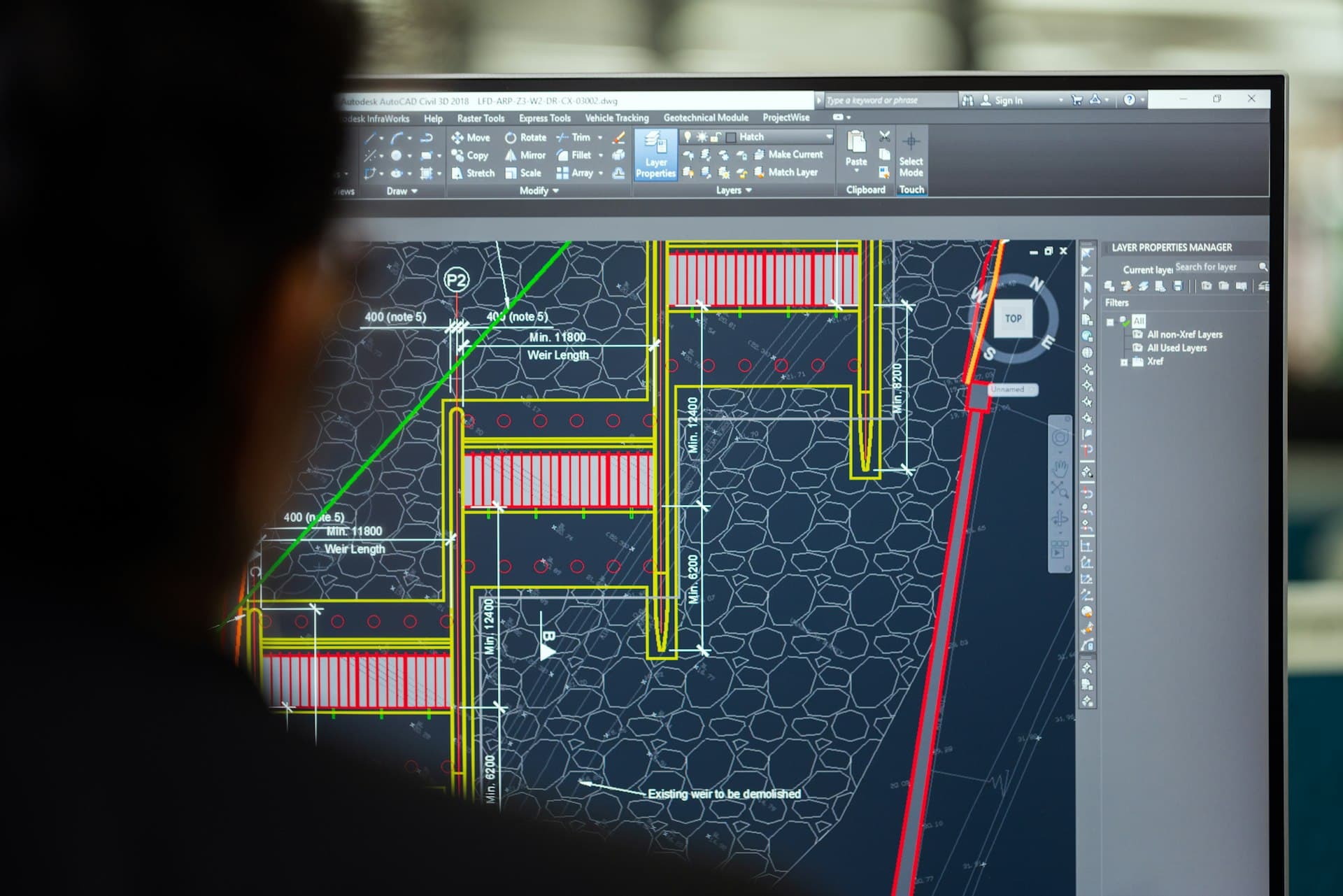
What separates a water treatment plant that runs for 20 years from one that fails its first peak event, covering the five design stages, redundancy and peaking factors by criticality class, and the rework costs that hit USD 1M+ when feed-water characterisation gets cut.
Water treatment plant design is the engineering decision the operator lives with for 20 to 30 years. The CAPEX gets approved once at financial close, but the OPEX consequences, the energy bill, the chemical bill, the redundancy that prevents a 5-figure outage day, the consent breach that costs a 7-figure fine, compound for every operating year afterwards. A 1,000 m3/day plant designed without proper feed-water characterisation typically requires USD 200,000 to 1,500,000 in retrofit work within the first 2 years of operation, and 6 to 18 months of delayed capacity ramp-up while the rework happens. The mistake is almost never made in detailed engineering. It's made at the FEED stage, when a single-point feed sample drives the design and the actual flow profile turns out to vary 3 to 10× across a real operating year.
A water treatment plant is not a single piece of equipment, it is a sequenced engineering system spanning process design, hydraulic profile, civil + structural, mechanical install, electrical + I&C, and a commissioning regime that proves the whole assembly meets spec on real feed water. Each of the five project stages (concept, FEED, detailed engineering, construction, commissioning) has its own deliverables, decision gates, and failure modes. The plant that runs for 20 years passes through every gate cleanly. The plant that fails its first peak event skipped at least one.
This guide is for capital-projects engineers, operations directors, and procurement leads specifying a new water treatment plant or retrofitting an existing one. It walks the five-stage project lifecycle, the redundancy and peaking-factor decisions that distinguish criticality classes, the CAPEX/OPEX economics, and the six recurring failure modes that destroy plant economics on real builds.
## Why the Design Stages Matter Commercially
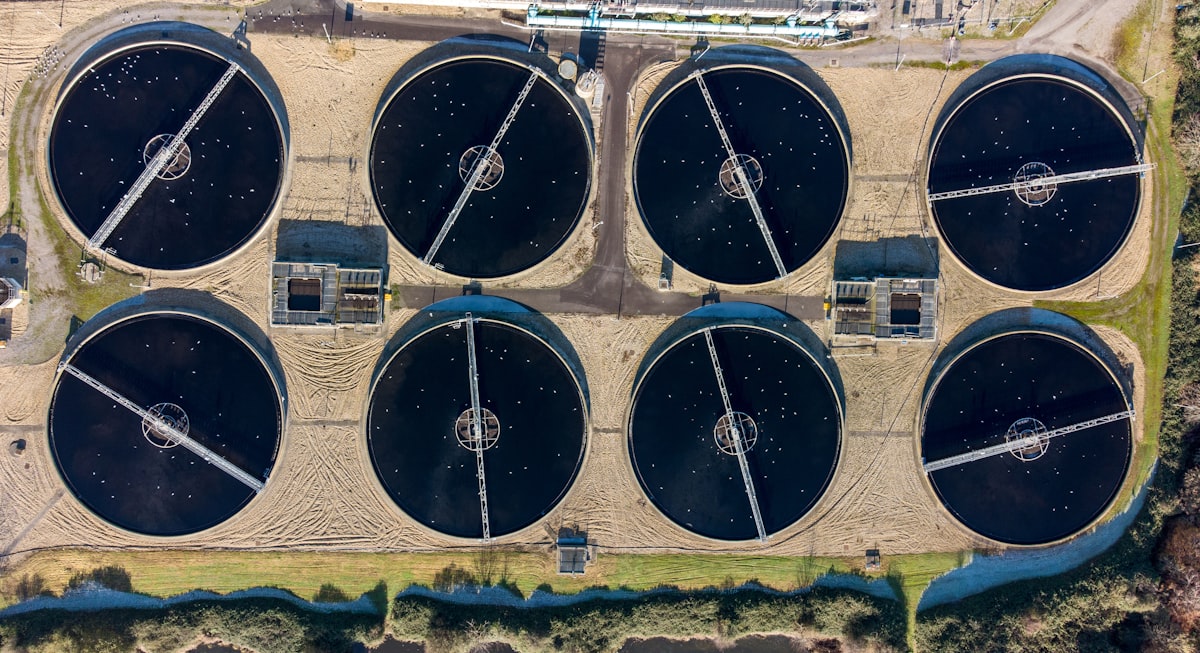
Plant design decisions compound asymmetrically. A correct decision at FEED, say, sizing the equalisation tank for a 24-hour smoothing cycle on the actual flow profile, costs a few thousand dollars in additional civil concrete and saves hundreds of thousands of dollars in consent fines over the asset's life. The wrong decision at the same gate, a 4-hour EQ tank because the design flow looked stable, invisibly accumulates non-compliance days and produces a 7-figure retrofit bill in year three.
The [Water Environment Federation Manual of Practice](dofollow:https://www.wef.org/publications/) catalogues design failures across over 1,000 documented industrial water and wastewater projects: the single most common root cause is not detailed engineering error, it is inadequate front-end loading (FEL) at concept and FEED stage. The IPA (Independent Project Analysis) benchmarks place the project-cost-overrun probability at 3 to 4× higher when FEL is rated "poor" versus "best practice", a difference of months in upfront engineering and tens of millions in eventual outcome.
The honest framing: cheap design upfront is the most expensive design decision available. Every dollar saved on FEED engineering becomes 5 to 20 dollars added to construction change orders, retrofit work, and lifetime OPEX. The plants that operate cleanly for 20 years all paid for proper FEED. The plants that fail in year 2 all skipped it.
## The Five Project Stages
A complete water treatment plant build runs through five gated stages. Each stage produces specific deliverables that the next stage depends on; skipping any stage's deliverable creates rework downstream.
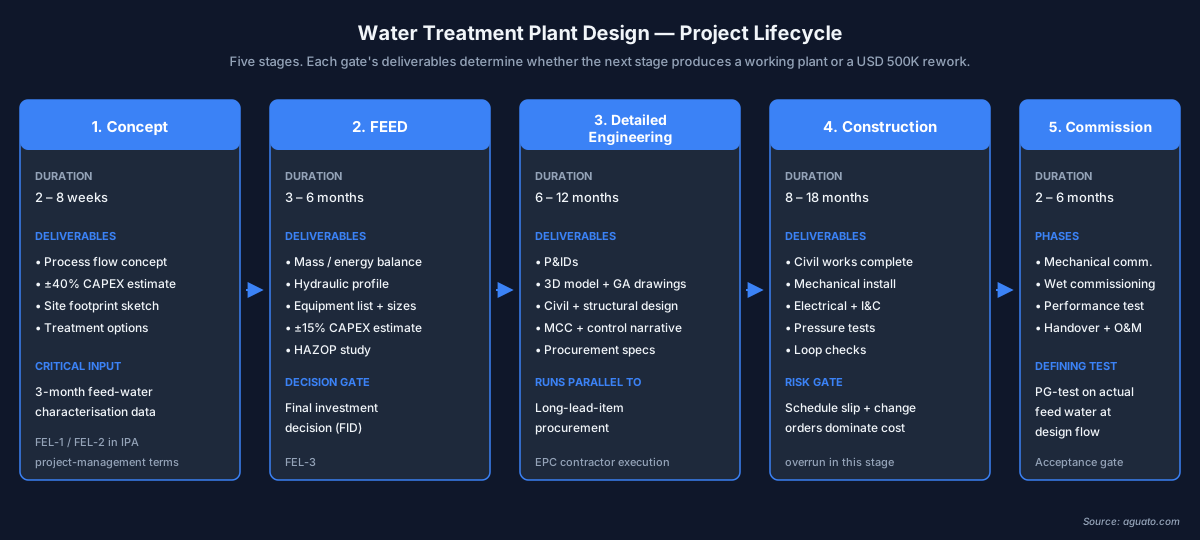
| Stage | Duration | Cost (% of CAPEX) | Key deliverable | Decision gate | |---|---|---|---|---| | 1. Concept | 2 to 8 weeks | 0.1 to 0.3% | ±40% CAPEX estimate, options study | Go / no-go to FEED | | 2. FEED | 3 to 6 months | 1 to 3% | Mass-energy balance, hydraulic profile, ±15% estimate | Final investment decision | | 3. Detailed engineering | 6 to 12 months | 5 to 10% | P&IDs, GA drawings, MCC, control narrative | EPC contract award | | 4. Construction | 8 to 18 months | 50 to 70% | Mechanical install, loop checks | Mechanical completion | | 5. Commissioning | 2 to 6 months | 5 to 10% | Performance test on real feed | Acceptance / handover |
Stage 1, Concept. Process flow concept based on 3 months of feed-water characterisation data (the single most important upstream input). Output: process options, footprint sketch, ±40% CAPEX estimate. This is FEL-1 / FEL-2 territory. The most expensive shortcut here is sampling for 2 weeks instead of 3 months, feed water varies seasonally and across operating shifts in ways a short sample programme cannot capture.
Stage 2, FEED. Front-end engineering design produces the mass and energy balance, hydraulic profile, equipment list with sized items, electrical single-line diagrams, and a HAZOP study. CAPEX estimate firms up to ±15%. This is the gate where Final Investment Decision (FID) happens. The deliverables from FEED are what the EPC contractor actually builds against in detailed engineering.
Stage 3, Detailed Engineering. P&IDs (piping and instrumentation diagrams), 3D model and general arrangement drawings, civil and structural design, MCC and control narrative, vendor procurement specifications. Long-lead-item orders (membrane vessels, blowers, large pumps) are placed during this stage because their lead times can exceed the construction stage.
Stage 4, Construction. Civil works, mechanical install, electrical and I&C, pressure tests, and instrumentation loop checks. This stage is where schedule slip and change orders dominate cost overrun. The plant that's been through proper FEED has minimal change orders here; the plant that skipped FEED runs into 50 to 200% cost overruns during construction.
Stage 5, Commissioning. Mechanical commissioning (rotation checks, calibration), wet commissioning (water on the plant, no real feed), and performance test (PG-test) on actual feed water at design flow. The PG-test is the acceptance gate. Operators that accept handover without a PG-test on real feed inherit the supplier's risk. The [ASCE Environmental & Water Resources Institute publishes commissioning guidance](dofollow:https://www.asce.org/communities/institutes-and-technical-groups/environmental-and-water-resources-institute) for the structure of a defensible PG-test programme, adopt it as the contractual baseline.
## Redundancy and Peaking Factors
The two design parameters that distinguish a plant that runs for 20 years from one that fails its first peak event are redundancy (number of parallel trains beyond the minimum needed) and peaking factor (multiple of average flow that the plant can handle without losing performance). Both are CAPEX-sensitive, high redundancy and high peaking factor cost more upfront, and both are catastrophic to under-spec.
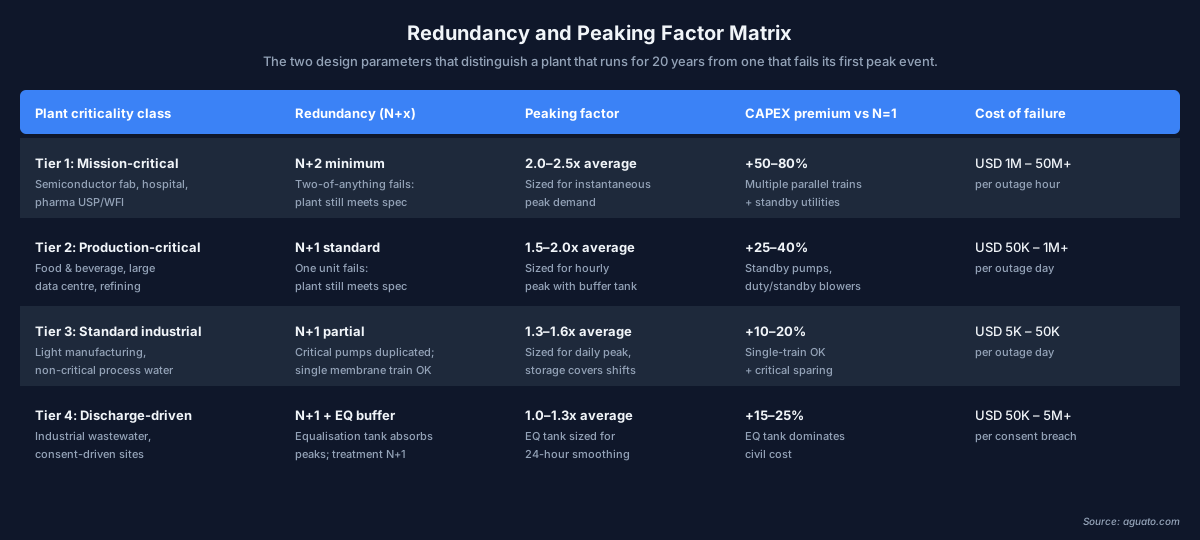
| Tier | Example sites | Redundancy | Peaking factor | CAPEX premium | Cost of failure | |---|---|---|---|---|---| | 1: Mission-critical | Semiconductor fab, hospital, pharma WFI | N+2 minimum | 2.0 to 2.5× average | +50 to 80% | USD 1M, 50M+ per outage hour | | 2: Production-critical | Food/bev, large data centre, refining | N+1 standard | 1.5 to 2.0× average | +25 to 40% | USD 50K, 1M+ per outage day | | 3: Standard industrial | Light manufacturing, non-critical process | N+1 partial | 1.3 to 1.6× average | +10 to 20% | USD 5K, 50K per outage day | | 4: Discharge-driven | Industrial wastewater, consent-driven | N+1 + EQ buffer | 1.0 to 1.3× average + EQ tank | +15 to 25% | USD 50K, 5M+ per consent breach |
The decision rule: classify the plant's criticality tier first, then size redundancy and peaking factors to match. Most cost overruns and operational failures stem from a Tier 2 plant being designed to Tier 3 redundancy, a single membrane train, no standby blower, no buffered raw-water tank. The plant works on the day it commissions and fails its first scheduled CIP cycle.
[cta:nepti-dark]
## Process Train Selection by Duty
The process train, the sequence of unit operations from raw water to product water or treated effluent, depends on the feed quality and the permeate spec. Standard duty trains:
Drinking-water plant. Surface water → coagulation/flocculation → clarification → sand filtration → ozone or UV → activated carbon → distribution. Common variant: replace sand filter with [hollow-fiber UF system](/resources/membrane-filtration-system) for absolute pathogen barrier.
Industrial process water. Raw water → softening or RO → polishing UF → storage and distribution. For ultrapure duty (semiconductor, pharma) add EDI + 0.05 µm filtration + UV at point of use.
Industrial wastewater (basic). Raw effluent → screening → equalisation → coagulation → DAF or primary clarifier → activated sludge → secondary clarifier → tertiary filter → discharge. Full sequence walked in the [step-by-step industrial wastewater treatment process guide](/resources/industrial-wastewater-treatment-process).
MBR-based wastewater plant. Screening → equalisation → MBR (anoxic + aerobic + membrane) → discharge. 30 to 50% smaller footprint than CAS for equivalent capacity; higher CAPEX (20 to 40% premium) and higher OPEX (0.3 to 0.8 kWh/m3 additional for membrane aeration).
ZLD / water reuse plant. Above + UF + RO + brine concentrator + crystalliser. Adds USD 600K, 3M to base CAPEX and 30 to 80 kWh/m³ thermal energy on the brine side. Only economic where freshwater cost or discharge consent forces the choice, see the [zero liquid discharge analysis](/resources/zero-liquid-discharge) for the decision logic.
The selection rule is feed-driven, not catalogue-driven. Browse verified water treatment design and engineering providers on [Aguato](/providers) and request scoped FEED proposals from 3 to 5 specialists with reference plants in your sector and feed type, not a single EPC bid that combines design + build into a margin-protected lump sum.
## Hydraulic Profile and Civil Design
The hydraulic profile is the elevation and pressure plot through the plant from inlet to outlet, showing how feed water flows by gravity through each unit operation. Most plants fail their first storm event because the hydraulic profile was sketched, not modelled. Specific requirements:
- Freeboard of at least 0.3 m above the design high-water level in every basin, sized for the peaking factor + dynamic surge - Minimum slope of 0.5% on gravity sewers between unit operations to prevent settling - Velocity head loss budgeted across each transition (typically 0.3 to 0.6 m total head between adjacent processes) - Surge protection on pump discharges and at flow control points (anti-surge valves, vortex breakers)
Civil design follows from the hydraulic profile. Reinforced concrete tank thicknesses, foundation requirements (especially for membrane skids that vibrate at startup), and access for crane lifts are all functions of the equipment list that comes out of FEED. Civil rework costs 5 to 10× the cost of doing it right at FEED. Common cause: equipment ordered before civil drawings finalised, then equipment doesn't fit the building.
The [International Water Association (IWA) design guidelines](dofollow:https://www.iwapublishing.com/) document hydraulic profile standards and modelling practices that have become baseline for any plant over 1,000 m³/day capacity. Plants designed without dynamic hydraulic modelling fail surge events, equalisation overflow, and high-flow scenarios that a spreadsheet calculation cannot predict.
## CAPEX and OPEX Economics
Total water treatment plant CAPEX (in USD per m³/day of design capacity) varies sharply by duty:
- Industrial process water (RO + softening + UF): 800 to 2,500 per m³/day - Industrial wastewater (CAS + tertiary): 600 to 1,800 per m³/day - MBR wastewater plant: 1,000 to 2,800 per m³/day (includes 20 to 40% MBR premium) - Pharmaceutical USP/WFI plant: 4,000 to 10,000 per m³/day (validation, redundancy, 316L) - ZLD wastewater plant: 2,000 to 6,000 per m³/day (brine concentrator + crystalliser drives premium)
OPEX (in USD per m³ treated) covers energy (40 to 60% of OPEX), chemicals (20 to 35%), labour (10 to 20%), and membrane / consumables replacement (10 to 25%). Industrial process water typically runs USD 0.30 to 1.50/m³ all-in; industrial wastewater USD 0.50 to 3.50/m³.
The CFO insight: the plant that costs 30% more in CAPEX often saves 50 to 70% in OPEX over its 20-year service life. Specifying redundancy, instrumentation, and pre-treatment correctly at FEED is the single highest-ROI engineering decision in a water project.
## Where Plant Designs Go Wrong
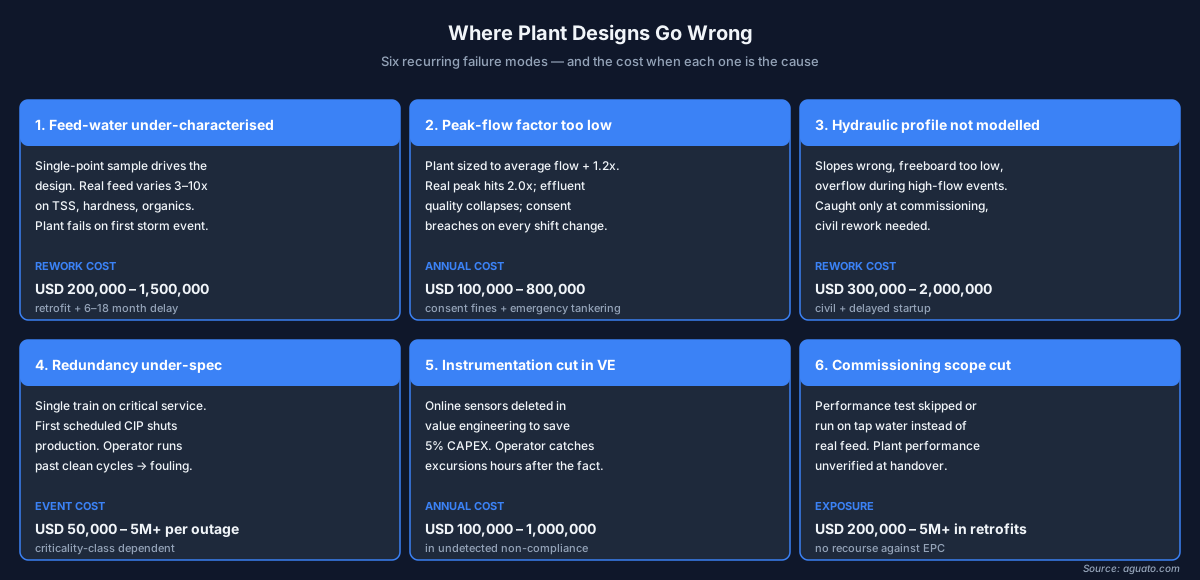
The six recurring failure modes:
Feed-water under-characterised. Single-point sample drives design. Real feed varies 3 to 10× on TSS, hardness, organics. Plant fails on first storm event. Cost: USD 200,000 to 1,500,000 retrofit + 6 to 18 month delay.
Peak-flow factor too low. Plant sized to average flow + 1.2×. Real peak hits 2.0×; effluent quality collapses; consent breaches on every shift change. Cost: USD 100,000 to 800,000/yr in fines + emergency tankering.
Hydraulic profile not modelled. Slopes wrong, freeboard too low, overflow during high-flow events. Caught only at commissioning. Cost: USD 300,000 to 2,000,000 in civil rework + delayed startup.
Redundancy under-spec. Single train on critical service. First scheduled CIP shuts production. Cost: USD 50,000 to 5M+ per outage event depending on criticality tier.
Instrumentation cut in value-engineering. Online sensors deleted to save 5% CAPEX. Operator catches excursions hours late. Cost: USD 100,000 to 1,000,000/yr in undetected non-compliance.
Commissioning scope cut. Performance test skipped or run on tap water instead of real feed. Plant performance unverified at handover. Cost: USD 200,000 to 5M+ in retrofits with no recourse against EPC.
The pattern across all six is the same: each fails not because the engineering was wrong on day one, but because an upstream stage's deliverable was cut to save schedule or cost. Real water treatment plant engineering is gated, every stage produces an explicit deliverable that the next stage uses. Skip a deliverable and the downstream stages compensate with rework that costs 5 to 20× the upstream saving.
If you specify a Tier-2 plant correctly at FEED, proper feed characterisation, N+1 redundancy, 1.5 to 2.0× peaking factor, modelled hydraulic profile, full instrumentation, real-feed PG-test, you save USD 500,000 to 2,500,000 in first-five-year retrofit cost and USD 200,000 to 1,500,000 per year in OPEX over the asset's life. The biggest cost-of-doing-nothing is letting the EPC contractor execute on a 2-week feed sample and a generic process train; that single FEED-stage shortcut is where every seven-figure plant rework starts.
## FAQ
### How long does a water treatment plant design project take?
End-to-end, from concept to commissioned plant: 18 to 36 months for a typical industrial plant. Concept (2 to 8 weeks) + FEED (3 to 6 months) + detailed engineering (6 to 12 months) + construction (8 to 18 months) + commissioning (2 to 6 months). Pharmaceutical and semiconductor plants run longer due to validation; mining and offshore plants can run shorter where modular pre-engineered systems fit the duty.
### What's FEL and why does it matter?
Front-End Loading (FEL) is the IPA project-management framework measuring the maturity of front-end engineering at the FID gate. FEL-1 = concept, FEL-2 = pre-FEED, FEL-3 = FEED complete. Projects with poor FEL-3 ratings overrun budgets by 30 to 80% on average; projects with best-practice FEL-3 come in within ±10% of estimate. The investment in proper FEL pays back 5 to 20× over the asset's life through reduced rework and better operability.
### How do I size the equalisation tank?
Build a 24-hour mass balance of expected feed flow + load, plot the cumulative inflow versus the design steady outflow, and size the EQ tank to the maximum vertical gap between the two curves. Add 20 to 30% margin for upset events. For consent-driven sites the EQ tank is the single most important civil structure, it determines whether the plant smooths peaks invisibly or breaches consent visibly.
### What's the difference between FEED and detailed engineering?
FEED produces the decision-grade documentation needed for FID, process flow diagrams, mass-energy balance, hydraulic profile, equipment list with budget pricing, ±15% CAPEX estimate, HAZOP. Detailed engineering produces the build-grade documentation the EPC contractor uses to construct the plant, P&IDs, GA drawings, civil drawings, MCC schematics, control narrative, vendor procurement specs. Both are required; neither replaces the other.
### Can I skip FEED on small plants?
Below about 100 m³/day of capacity on simple duty (industrial softening, single-train UF), a combined concept + abbreviated FEED + detailed engineering pass works fine. Above that, or for any consent-driven duty, full FEED is non-negotiable, the rework cost of a 1,000 m³/day plant designed without FEED routinely exceeds the entire FEED budget by 10 to 50×.
### How is performance verified at handover?
Through a Performance Guarantee test (PG-test) running the plant at design flow on the actual feed water, sampling permeate / effluent over a continuous 7 to 14 day window, and demonstrating compliance with every spec parameter. Acceptance = passing the PG-test against contractually specified values. If the EPC bid does not include a PG-test on real feed, the plant has no proven performance; if the operator accepts handover without it, the operator owns all subsequent rework risk.
### What's the cost of a poor commissioning?
USD 200,000 to over USD 5 million depending on what gets discovered post-handover. Common findings: undersized blowers (need replacement), wrong-spec membranes (need replacement), instrumentation gaps (need retrofit and software rework), missed permit conditions (need design change). All of these are caught by a properly scoped commissioning programme; all of them cost an order of magnitude more to fix after handover with no EPC recourse.