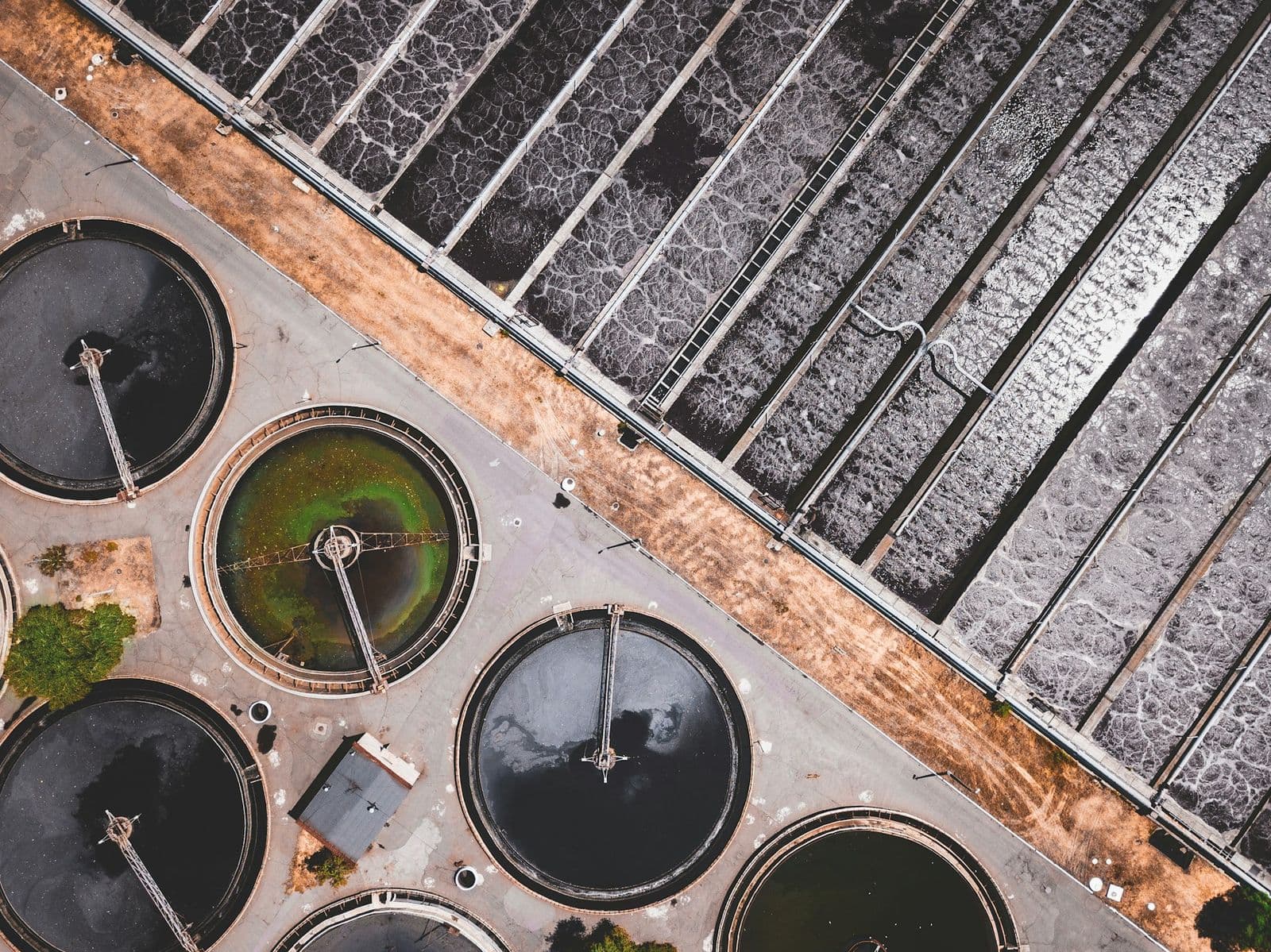
What actually happens, in operational order, between effluent intake and compliant discharge, eight steps, the engineering parameters at each, and the sequencing failures that make most plants underperform.
An industrial wastewater plant is a sequence, not a collection. Each stage assumes a feed quality the previous stage was designed to deliver, and a single under-sized or out-of-spec step propagates failures downstream that look like equipment problems but are really design problems. A 500 m3/day industrial plant with sequencing problems costs USD 80,000 to 200,000 per year more in chemicals, sludge disposal, re-treatment, and downtime than the same plant designed and operated correctly from day one. A primary clarifier running with TSS 50% above design pushes biomass out of the secondary aeration tank. An equalisation basin under-sized for shift loads kills nitrification within hours. A tertiary filter with no upstream coagulant breaks containment by producing turbid permeate. Treating each step in isolation is the most expensive shortcut in industrial water engineering.
The right approach is to model the plant as a process, feed water in, compliant effluent and dewatered sludge out, and to characterise what each step contributes, what it depends on, and what happens when it fails. That OPEX delta is rarely a CAPEX problem. It is a sequencing problem, and it compounds for the 20-year service life of every poorly-sequenced plant.
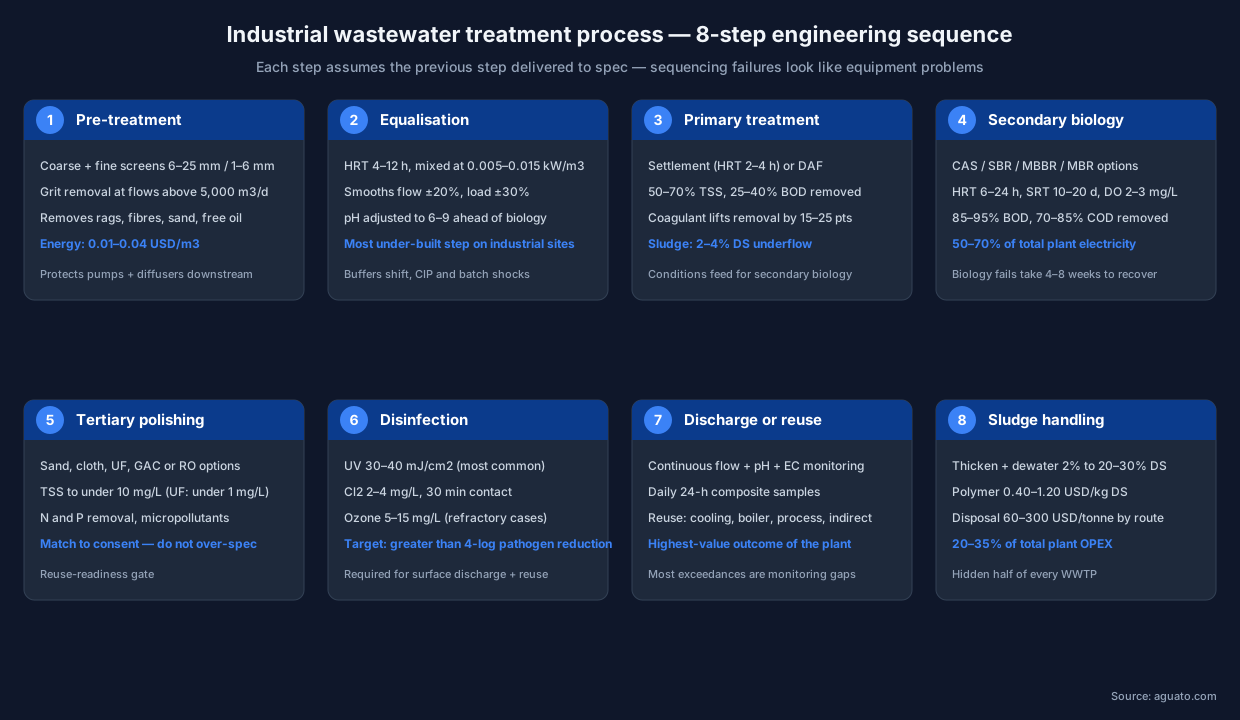
This article walks the eight operational steps of a modern industrial wastewater treatment train in the order they actually run, with the engineering parameters that drive each step, the removal each step is supposed to deliver, and the failure pattern that shows up when a step is wrong. The audience is operators, engineers, and capital-projects teams who need a practical understanding of what their plant should be doing, not a textbook definition of activated sludge. For the upstream engineering decisions that determine which process train is built in the first place, feed-water characterisation, redundancy by criticality class, hydraulic profile, the FEED-to-commissioning project lifecycle, see the [water treatment plant design walkthrough](/resources/water-treatment-plant-design).
## The decision in brief
- Sequence the design properly. For a 1,000 m3/day industrial wastewater plant, a properly sequenced design beats a typical specified-by-vendor design by USD 120,000 to 300,000 per year in OPEX over the 20-year asset life. - Read it in present-value terms. That delta is USD 2.4 million to USD 6 million in net-present-value terms at a 6% discount rate, and it sits primarily in equalisation sizing, primary coagulation strategy, aeration control, and sludge dewatering selection. - Scrutinise the equalisation tank above every other CAPEX line. None of those decisions are CAPEX-heavy, all of them compound for the life of the plant, and the equalisation tank is the single highest-leverage CAPEX line item on any industrial wastewater project.
Get the equalisation tank right and every downstream step performs at design point. Get it wrong and no amount of tertiary capability will make up for it.
## Step 1: Pre-treatment and Screening
Pre-treatment is the cheapest insurance in the plant. It removes everything downstream equipment was not designed to handle: rags, fibres, plastics, grit, free oils. Done well, it costs around USD 0.01 to 0.04 per m3 in energy and consumables. Done poorly, it generates downstream maintenance costs an order of magnitude higher.
The minimum spec for industrial pre-treatment is a coarse screen (6 to 25 mm bar spacing) followed by a fine screen (1 to 6 mm). Sectors with high fibre or solids loading, pulp and paper, food processing, slaughterhouse, typically need an additional drum or step screen at 0.5 to 1 mm. Aerated grit chambers handle grit and sand at flows above 5,000 m3/day; vortex grit removal works below that. For oil-bearing effluent (refining, metalworking, food fats), a free-oil API separator or tilted-plate interceptor is added before the grit step to recover floating hydrocarbons. The [US EPA Effluent Guidelines program](dofollow:https://www.epa.gov/eg) sets sector-specific categorical pretreatment standards that drive much of the equipment selection at this step, refining, metal finishing, organic chemicals, and dozens of other sectors all have prescriptive limits that pre-treatment must meet before any biological stage sees the feed.
The trade-off is footprint and headloss versus protection. Skimping on pre-treatment headloss (target 0.3 to 1.2 m total across screens and grit) saves civil works cost and pumping energy, but propagates trash and grit into pumps, fine-bubble diffusers, and membrane modules, where damage is expensive. Protecting the aeration train means matching the basin to the right [diffuser and aeration equipment suppliers](/diffuser-aeration-equipment-companies) at the design stage. A failed pre-treatment costs a typical mid-sized plant USD 20,000 to 50,000 per year in pump rebuilds, diffuser replacements, and unplanned screen-cleaning labour.
Real-world failure pattern. A 1,200 m3/day food-processing plant designed without grit removal faced fine-bubble diffuser fouling every 4 months, requiring tank drain-down, manual cleaning, and 2 to 3 days of plant downtime per cleaning event. Annual cost: USD 60,000 in lost production and labour. Adding a vortex grit chamber with 30-second residence time eliminated the issue and paid back in seven months.
## Step 2: Flow and Load Equalisation
Equalisation is the most commonly under-built step on industrial sites, and the most consequential. Industrial flow profiles are not municipal: shifts start, CIP cycles dump high-strength chemistry, batch reactors empty in 30 minutes, weekend wash-downs spike COD ten-fold. Without equalisation, every downstream step sees a different feed than it was designed for.
Equalisation tank sizing is governed by two parameters: hydraulic equalisation (smoothing flow rate to within ±20% of average) and load equalisation (smoothing pollutant mass loading to within ±30% of average). For a plant with a 12-hour operating cycle and a 1,000 m3/day flow, an HRT of 8 to 12 hours typically delivers both. Mixing energy is essential, typically 0.005 to 0.015 kW/m3 via mechanical mixers or coarse-bubble diffusers, because settling defeats the purpose. pH adjustment to 6 to 9 is added at this step ahead of any biological treatment.
A 500 m3 equalisation basin (concrete, fully coated, mixed and aerated) costs USD 250,000 to 450,000 installed, plus USD 4,000 to 8,000 per year in mixing energy. Skipping it and relying on the secondary tank to absorb shocks moves the cost into biology recovery, sludge bulking events, and consent exceedances, typically USD 100,000+ per year for a plant of that size. The CAPEX comparison rarely captures this; the OPEX comparison always does.
Most industrial wastewater designs are over-engineered on tertiary and under-engineered on equalisation. The right equalisation tank is a multiplier on every downstream step's reliability; spending the same money on a polishing filter buys you 5% more removal on a feed that already has consent compliance issues.
## Step 3: Primary Treatment, Settling and Flotation
Primary treatment removes settleable solids, free oil, and a fraction of organic load before biology. The two dominant unit operations are primary settlement (gravity sedimentation) and dissolved air flotation (DAF) (buoyancy separation by introduced micro-bubbles).
Primary clarifier design. HRT of 2 to 4 hours, surface loading rate of 30 to 50 m3/m2/day (lamella tube clarifiers can run at 80 to 150 m3/m2/day with a 60 to 70% smaller footprint). Removal: 50 to 70% TSS, 25 to 40% BOD, 10 to 25% COD on typical industrial feed. Underflow sludge concentration: 2 to 4% dry solids.
DAF. The right choice when the load is dominated by free oil, FOG, fibres, or low-density colloidal solids. Saturator pressure 4 to 6 bar, recycle ratio 20 to 40% of feed flow, surface loading 8 to 15 m3/m2/hour. Removal: 80 to 95% free oil, 70 to 90% FOG, 60 to 80% TSS. DAF sludge floats and is skimmed at 3 to 6% dry solids.
Coagulation upstream of either is what turns a marginal primary into a real workhorse. FeCl3 at 100 to 300 mg/L or aluminium sulphate at 50 to 200 mg/L destabilises colloids, builds flocs that settle or float, and lifts removal by 15 to 25 percentage points across all parameters. The trade-off is sludge volume, coagulant addition increases primary sludge mass by 30 to 60%, which becomes a sludge-handling cost. Run jar tests on actual effluent before committing to a dosing setpoint; literature values for similar sectors are a starting point, not an answer.
## Step 4: Secondary Treatment, The Biological Core
Secondary treatment is where most of the carbon, nitrogen, and remaining suspended solids are removed. The technology choices are well-documented (conventional activated sludge, sequencing batch reactor, moving bed bioreactor, membrane bioreactor) and covered in detail in the [industrial wastewater treatment guide](/resources/industrial-wastewater-treatment). What matters at the process-walkthrough level is what the biological step needs from the upstream stages, and what it must deliver.
The biological reactor needs four things: a feed within a viable BOD5:COD ratio (above 0.4 for fully aerobic systems, above 0.3 with anaerobic pre-stage), pH within 6.5 to 8.5, temperature within 15 to 35°C, and zero-to-low concentrations of biocides, free chlorine, surfactants, and toxic metals. If equalisation and primary treatment do not deliver these conditions, biology fails, and biology failures take 4 to 8 weeks to recover from. The recovery cost, re-seeding, persistent consent exceedances, batch-by-batch retreat, is what makes upstream sequencing decisions worth getting right.
Design parameters for activated sludge: HRT 6 to 24 hours (longer for refractory feeds), SRT 10 to 20 days (longer for nitrification), MLSS 3 to 6 g/L for CAS or 8 to 12 g/L for MBR, dissolved [oxygen](/elements/oxygen) 2 to 3 mg/L throughout the aeration zone, food-to-microorganism ratio 0.1 to 0.3 kg BOD/kg MLVSS/day. Removal at design point: 85 to 95% BOD, 70 to 85% COD, 90%+ TSS via clarifier or membrane, 80%+ ammonia with adequate SRT and temperature.
Aeration is the dominant operating cost. It accounts for 50 to 70% of total plant electricity consumption, typically 0.5 to 1.2 kWh per m3 for CAS and 0.8 to 1.6 kWh per m3 for MBR. For a 5,000 m3/day plant, that is USD 90,000 to 290,000 per year in electricity alone. Aeration optimisation (DO setpoint tuning, fine-bubble diffuser maintenance, blower control on dissolved-oxygen feedback) typically delivers 15 to 25% energy savings, USD 15,000 to 70,000 per year, and is one of the highest-return OPEX projects in any plant.
## Step 5: Tertiary Polishing
Tertiary polishing is where the plant goes from "biologically treated" to "consent compliant" and, where applicable, "reuse ready". The selection depends entirely on what the consent specifies and what the discharge or reuse target requires.
| Technology | TSS achieved | CAPEX (USD per m3/day) | OPEX | Best for | Main risk | |---|---|---|---|---|---| | Sand / dual-media filtration | Under 10 mg/L | 20 to 60 | 0.05 to 0.10 kWh/m3 | Routine TSS polish on stable secondary effluent | Breakthrough during turbidity excursions | | Cloth-disc or drum filters | 5 to 10 mg/L | 40 to 100 | 0.03 to 0.08 kWh/m3 | Footprint-constrained sites, retrofit | Cloth media wear; flux drops on FOG | | [Ultrafiltration polishing](/resources/ultrafiltration) | Under 1 mg/L | 80 to 200 | 0.08 to 0.18 kWh/m3 | Reuse pre-RO; validated pathogen barrier | Fouling on poorly-tuned secondary feed | | Activated carbon (GAC / PAC) | n/a (dissolved organics) | 30 to 120 | USD 1.50 to 4.00 per m3 (replacement) | Micropollutants, taste/odour, residual COD | Replacement cost balloons on heavy organic load | | Reverse osmosis polishing | Under 1 mg/L (also TDS) | 120 to 250 | 0.4 to 1.5 kWh/m3 | Water reuse, TDS-restricted discharge | High OPEX; rejected concentrate handling |
The trade-off framework is straightforward: the lowest-cost tertiary that meets the discharge or reuse specification wins. Adding an RO polishing step to meet a discharge consent that only requires TSS under 30 mg/L wastes USD 100,000+ per year in OPEX. Match the technology to the spec, not to the brochure. The right choice depends on your secondary effluent quality, your consent limits, and whether you want reuse capability, [browse verified tertiary-treatment providers](/providers) and request scoped proposals from 3 to 5 specialists rather than letting one vendor's catalogue drive the decision.
## Step 6: Disinfection
Disinfection is required for any discharge with public-contact risk (recreational waters, irrigation, indirect potable reuse) and for almost all reuse applications. The three industrial choices are UV, chlorination, and ozonation, and they don't compete head-to-head on every spec.
| Method | Design dose | CAPEX (USD per m3/day) | OPEX | Best for | Main limitation | |---|---|---|---|---|---| | UV | 30 to 40 mJ/cm2 | 30 to 90 | USD 0.005 to 0.02 per m3 | Medium-flow plants with clean secondary effluent and low colour | Requires UVT above 65%; upstream filtration must deliver it | | Chlorination | 2 to 4 mg/L free Cl2 for 30 min contact | 10 to 40 | USD 0.005 to 0.02 per m3 | Clean matrix, robust receiving environment, low organic load | Disinfection by-products (THMs, HAAs), increasingly restricted in surface-water consents | | Ozonation | 5 to 15 mg O3/L | 200 to 500 | 12 to 25 kWh per kg O3 produced | Refractory organics, micropollutants, colour removal, dual disinfection + AOP | High CAPEX and energy; pencils out only when oxidation is genuinely needed |
All three deliver >4-log reduction at design dose against most bacteria, viruses, and protozoa. The decision is rarely about pathogen kill, it is about feed-water quality, by-product regulation, and whether the plant needs simultaneous oxidation. Specifying disinfection without a real UVT measurement on the actual secondary effluent is a common cause of under-dosing; [post your project](/post-project) and qualified providers will spec the dose against your measured UVT and consent regime, not generic catalogue values.
For a sector-by-sector view of [industrial water disinfection options](/resources/industrial-water-disinfection), the comparison piece in the resources section walks through dose, contact, and OPEX trade-offs in more detail.
## Step 7: Discharge or Reuse
The discharge step is administrative and operational, not chemical. The plant's outflow is metered, sampled, and reported under the operating permit. Most consent exceedances at this step are not driven by treatment failures upstream, they are driven by monitoring gaps, sample timing, or composite-sample design that does not capture true effluent variability.
For direct surface-water discharge, expect: continuous monitoring of pH, conductivity, and flow; daily 24-hour composite samples for BOD, COD, TSS; sector-specific monitoring for ammonia, phosphorus, metals, and specific organics; and quarterly or annual whole-effluent toxicity (WET) testing. Operating permit conditions should be matched to online monitoring wherever possible, exceedances detected real-time can be intercepted (diversion to storage, additional dosing, batch retreat) before they leave the site. For trade-effluent discharge to a public sewer, the [US EPA National Pretreatment Program](dofollow:https://www.epa.gov/npdes/national-pretreatment-program) frames the categorical and local-limit obligations on industrial dischargers, protecting downstream POTW biology from slug loads is the regulatory rationale, but the engineering rationale (protecting your own downstream biology) is identical.
For water reuse, the requirements depend on the application:
- Cooling-tower makeup: TDS-controlled, biofouling-resistant, typically secondary effluent + tertiary filtration + chlorination is adequate - Boiler-feed makeup: very low hardness and silica, requires RO + ion exchange or EDI polish (see [industrial water purification grades](/resources/industrial-water-purification)) - Process water: matrix-specific, often plant-specific quality spec - Indirect potable reuse: requires multi-barrier treatment, validated pathogen log-reduction, and regulatory approval (Title 22 in California; equivalent frameworks elsewhere)
Reuse is the highest-value outcome of an industrial wastewater plant when the cost of fresh water and discharge is high, which is increasingly everywhere. A reuse retrofit on a 1,000 m3/day plant that displaces 50% of fresh-water purchase typically delivers USD 150,000 to 400,000 per year in net savings after OPEX, with payback of 3 to 5 years. [Use Nepti to model your reuse case](/nepti) before scoping the retrofit; the economics swing wildly with feed quality and reuse target.
## Step 8: Sludge Handling, The Hidden Half of the Plant
Sludge handling is where industrial wastewater plants most consistently lose money. A poorly designed sludge line generates 30 to 60% of plant operating cost on a process responsible for 5 to 10% of plant treatment performance. The mass balance does not lie: every kilogram of pollutant removed from the water phase has to go somewhere, and almost all of it ends up in the sludge stream.
Typical sludge volume from an industrial activated-sludge plant: 0.3 to 0.6 kg dry solids per m3 treated. For a 2,000 m3/day plant that is 600 to 1,200 kg/day of dry sludge, 30 to 60 tonnes per month at 20% dry solids after dewatering. Disposal cost varies by route: composting USD 60 to 110 per tonne, landfill USD 80 to 150 per tonne, incineration USD 150 to 300 per tonne, beneficial reuse (where allowed) USD 30 to 80 per tonne.
[cta:nepti-dark]
The dewatering step is the highest-leverage cost lever. A belt filter press achieving 20% dry solids on a feed at 2% dry solids reduces sludge volume by 90%, turning a 50 m3/day haulage problem into a 5 m3/day haulage problem. Centrifuge dewatering at 25 to 30% DS is even better but consumes 1.5 to 3 kWh per m3 feed; thermal drying to 90%+ DS is the gold standard but only pencils out at large scale or where the dried product has a beneficial reuse market.
Add to this the polymer cost, USD 0.40 to 1.20 per kg dry solids dewatered, and a further USD 1.50 to 3.50 per kg DS in disposal, and a typical mid-sized plant spends USD 80,000 to 250,000 per year on sludge handling alone. Treat the sludge line as a co-equal design challenge, not an afterthought.
## Where Process Sequences Break
The same patterns recur across industrial sites. They are not technology problems, they are sequencing problems.
Pre-treatment is mis-spec'd, biology absorbs the consequences. A grit chamber sized for municipal flow rates passes quartz sand into fine-bubble diffusers, which foul over 6 to 12 months. The plant operator chases a "biological" problem that is actually a hydraulics problem.
Equalisation is left out of the design to save CAPEX. The biological reactor sees a 3x shock load every Monday morning when the plant restarts. Sludge bulking ensues. Operators dose biocide to "fix" the bulking; the biocide kills the biomass; the plant goes into 6-week recovery. Annual cost of consent exceedances and re-seeding: USD 100,000+.
Primary settles for less because no coagulant is dosed. Secondary biology sees a feed with 50% more BOD load than design. Aeration cannot keep up. DO drops below 1 mg/L. Filaments take over. Same outcome as above.
Tertiary is over-spec'd to "make up" for poor secondary performance. The plant runs RO on secondary effluent that does not need RO. Operating cost is 4 to 6x what it would be with a properly tuned secondary. The fix is upstream, usually SRT adjustment and aeration tuning, not an additional capital project.
Sludge handling is under-spec'd because sludge is "out of sight, out of mind". A plant designed without sufficient sludge holding capacity or dewatering throughput backs up into the bioreactor. MLSS rises beyond design. Settling collapses. Same outcome as the others.
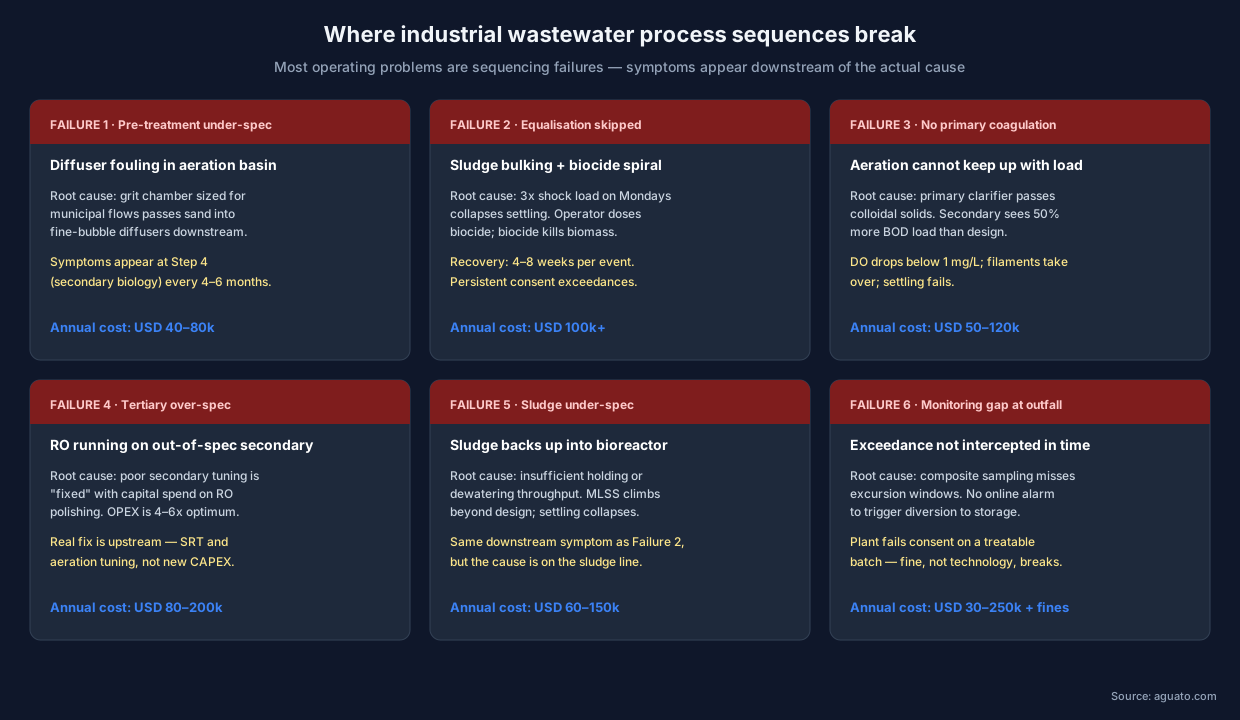
The pattern is consistent: plant performance is set by the weakest step in the sequence, not the strongest. Investment in tertiary or disinfection technology when the equalisation tank is wrong is a reliable way to spend a lot of money for very little measurable benefit.
The [Water Environment Federation's industrial wastewater design literature](dofollow:https://www.wef.org/publications) treats process sequencing as the central engineering problem of industrial wastewater treatment, and the rest of the design (equipment selection, materials, controls) as support to that core. Most operating sites would benefit from re-reading the sequencing chapter before commissioning the next capital project.
## FAQ
### What is the typical sequence of an industrial wastewater treatment plant?
The standard sequence is pre-treatment (screening + grit) → flow and load equalisation → primary treatment (settling or DAF) → secondary biological treatment → tertiary polishing → disinfection → discharge or reuse, with sludge handling as a parallel processing line that takes the solids generated by primary, secondary, and (where relevant) tertiary stages. The exact unit operations vary by sector and consent, but the eight-step sequence is universal.
### How long does industrial wastewater take to treat from intake to discharge?
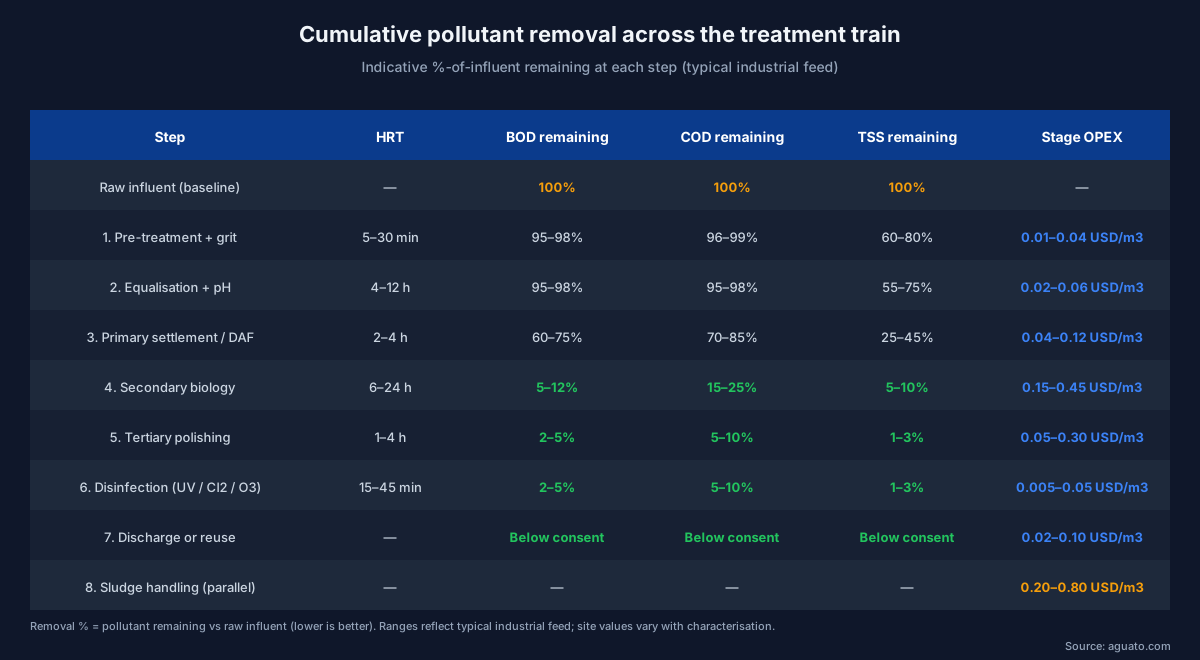
Typical hydraulic residence time across the full treatment train is 12 to 48 hours: 5 to 30 minutes pre-treatment, 4 to 12 hours equalisation, 2 to 4 hours primary, 6 to 24 hours secondary, 1 to 4 hours tertiary, 15 to 45 minutes disinfection. Plants treating very dilute or refractory effluent run longer; plants with heavy primary load may run shorter on secondary if biology is well-tuned.
### What is the most under-engineered step in industrial wastewater plants?
Equalisation. It is invisible from the outside, easy to under-size at the proposal stage, and consequential for every step downstream. Most plants with persistent biological-treatment problems would diagnose to an equalisation issue first, not a biological-design problem.
### How much sludge does an industrial wastewater plant generate?
Typical industrial activated-sludge plants generate 0.3 to 0.6 kg dry solids per m3 of wastewater treated. For a 2,000 m3/day plant that is 600 to 1,200 kg/day or roughly 3 to 6 m3/day of dewatered sludge cake at 20% dry solids. Sludge handling is typically 20 to 35% of total plant OPEX.
### Can an industrial wastewater plant be designed for water reuse from day one?
Yes, and it is increasingly the right answer where fresh water is expensive or supply is constrained. Designing for reuse from day one adds 20 to 40% to CAPEX (additional polishing capacity, RO trains, storage) but removes 30 to 60% of fresh-water purchase and discharge cost, with payback in 3 to 6 years for most industrial sites.
### What sensors should be online at minimum?
Flow at intake and outfall, pH and conductivity at intake, equalisation, and outfall, dissolved oxygen and MLSS in the bioreactor, and TSS or turbidity in tertiary effluent. Add ammonia, nitrate, and ORP monitors in nutrient-removal plants. Online monitoring is the cheapest insurance against consent exceedances, most exceedances are caught not by sampling but by an instrument seeing the excursion in time to divert flow.
### Does the plant need a separate disinfection step if discharge is to a foul sewer?
Generally no, the receiving sewerage works applies its own disinfection in its tertiary stage. Disinfection is required for direct surface-water discharge, recreational-water-impacted catchments, and any reuse application. Check the local trade-effluent consent before specifying.