Direct lithium extraction promises to unlock brine resources that evaporation ponds cannot touch, with 80 to 95% lithium recovery, 90-plus percent water return, and an 8 to 18 month production cycle versus the multi-year pond route. What industrial operators and project developers need to know about the technology landscape in 2025.
[Lithium](/elements/lithium) is embedded in the economics of the energy transition in a way that few critical minerals are. Every battery electric vehicle requires 5 to 15 kg of lithium carbonate equivalent. Every grid-scale battery storage project requires tonnes of it. The International Energy Agency's stated scenarios for net-zero emissions by 2050 require lithium supply to increase by a factor of 40 relative to 2020 levels. The geology of where lithium sits, predominantly in brines beneath the salt flats of South America and in subsurface geothermal and oilfield brines globally, means that producing it requires water management at a scale that rivals industrial wastewater treatment.
Direct lithium extraction (DLE) is the technology category that proposes to replace or augment the dominant evaporation pond route with a chemistry-first approach that recovers more lithium, returns more water to the environment, and operates on months rather than years. Whether those promises are fully delivered at commercial scale is a question that is still being answered in 2025. But the technology is past the purely academic stage, and the brine water treatment principles behind DLE are directly relevant to industrial operators, mining project developers, and water treatment engineers working in lithium, geothermal, or produced water sectors.
This guide covers the lithium brine resource landscape, why evaporation ponds fall short for many deposits, how DLE technologies work across the three main categories (ion exchange sorbents, electrochemical, and solvent extraction), the water management implications of each, and the failure modes that have derailed early commercial projects.
## The decision in brief
- Treat greenfield DLE as enabling, not competing. In a wet climate or high-Mg/Li brine where ponds are not viable, the comparison is DLE cost versus no production, and DLE wins by definition. - Let the revenue side fund the conversion. If lithium recovery improves from 50% to 90% and lithium carbonate sells at $20,000 per tonne LCE, a 10,000 tonne LCE/year operation gains 40 million euros per year in incremental revenue before any cost savings. That funds a very significant DLE capital investment. - Count water return as production continuity. Operations under regulatory or community pressure over evaporation pond water consumption face a different risk profile. For them, DLE's water return feature is a safeguard against the regulatory or social licence events that could otherwise force pond area reductions.
The economics look different depending on whether the project is greenfield or an upgrade to an existing salar operation, and for pond operators under pressure water return is not an environmental nicety.
[Browse industrial water treatment specialists on Aguato](/industrial-water-treatment-companies) who have experience with brine water management. [Compare proposals from DLE-qualified vendors](/post-project) on Aguato to ground-truth vendor OPEX claims against operational data.
## The lithium brine landscape and why DLE emerged
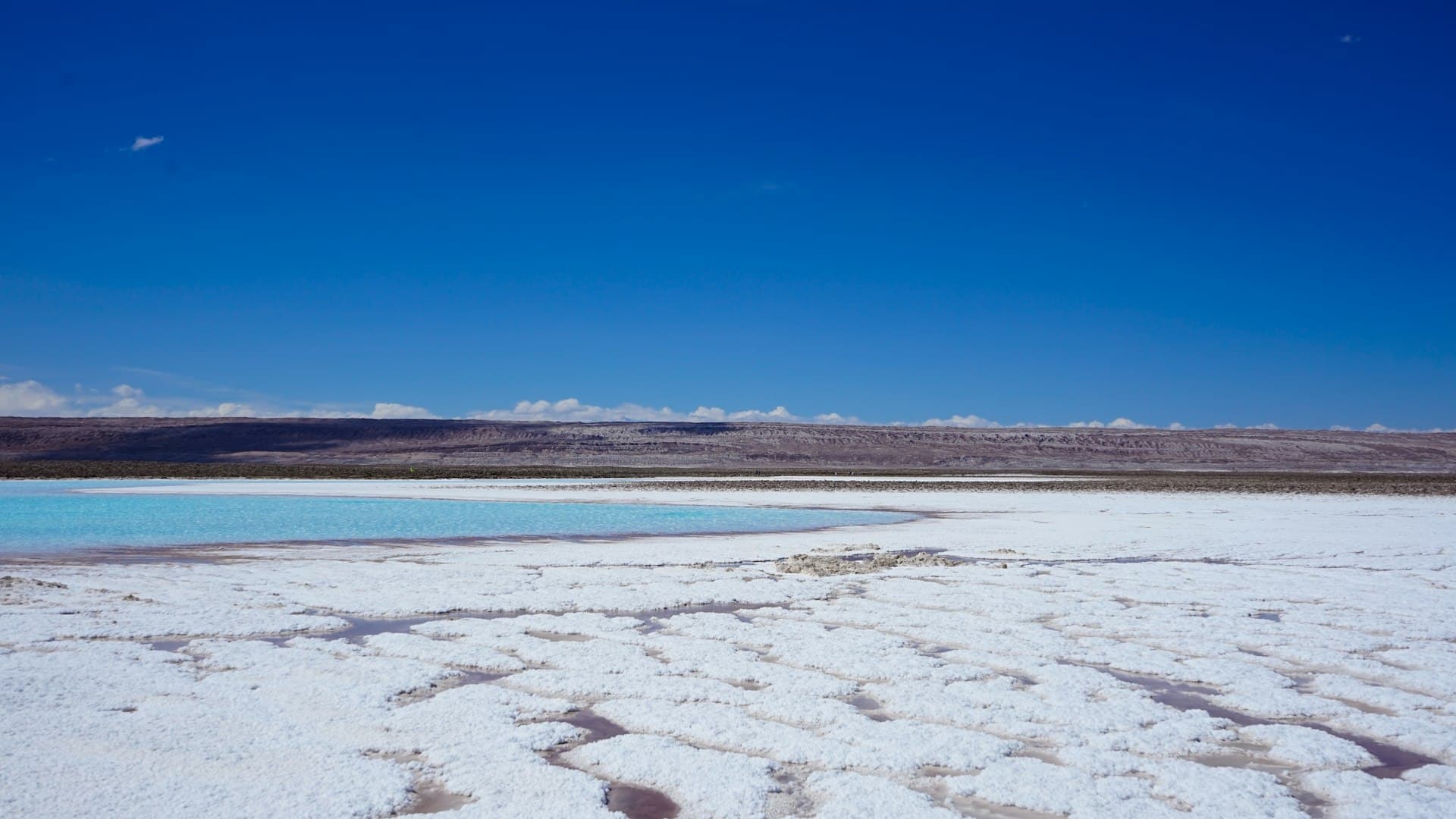
Lithium occurs in economically significant concentrations in three main deposit types: hard rock spodumene pegmatites (primarily in Australia, Canada, and Africa), lithium-bearing clays (Nevada, Mexico), and brines. Brines dominate global reserves by volume. The Lithium Triangle of Chile, Argentina, and Bolivia hosts the world's largest known brine deposits in the Atacama, Salar de Atacama, and surrounding salt flats (salares), where lithium concentrations in the brine range from 800 to 3,000 mg/L Li with large resources at depth.
The conventional production method for brine lithium is evaporation ponds: brine is pumped to the surface and into a series of ponds where solar evaporation progressively concentrates the lithium while removing water, magnesium, potassium, and other co-dissolved salts through sequential precipitation. The process takes 12 to 24 months, requires hundreds of square kilometres of pond area, and achieves lithium recoveries of 40 to 60% from the original brine. The water, once evaporated, is lost.
This approach works adequately for the Atacama, which has high lithium concentrations, a dry climate with high solar evaporation rates, and limited rainfall. It does not work well for deposits in wetter climates, at altitude with lower evaporation rates, in geothermal brines where the water has economic value, or in clay deposits where the lithium-bearing solution is not freely pumpable. More importantly, it faces increasing opposition from indigenous communities and environmental regulators in Chile and Argentina, where the water consumption and habitat disruption of large pond systems is under scrutiny.
DLE emerged from the recognition that the lithium extraction step, separating Li+ from a complex brine matrix containing high concentrations of magnesium, calcium, sodium, potassium, and sulphate, is a chemistry problem that can be solved more precisely than evaporation allows. The challenge is that lithium and magnesium have very similar ionic radii and charge, making chemical selectivity for lithium over magnesium the key technical hurdle.
## How direct lithium extraction works
All DLE technologies share a common logic: they expose the lithium-bearing brine to a material or medium that selectively captures lithium ions while rejecting or poorly binding the co-dissolved cations that are orders of magnitude more concentrated. They then strip the lithium from the capture medium into a much smaller volume of water or solvent, producing a concentrated lithium solution at a manageable Mg/Li ratio. This concentrated eluate is then processed through conventional precipitation steps to produce lithium carbonate (Li2CO3) or lithium hydroxide monohydrate (LiOH.H2O) at battery-grade purity.
The process flow is shown below.
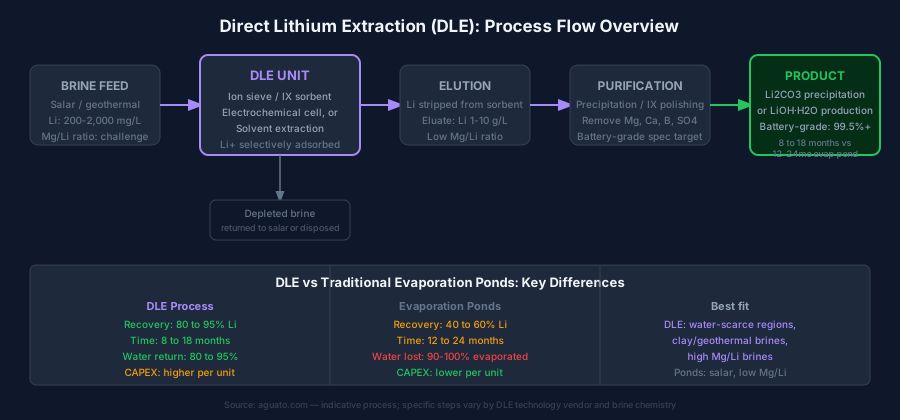
The depleted brine, stripped of most of its lithium, is returned to the aquifer or salar in most DLE designs, which is the water return advantage over evaporation. In a salar-based operation returning depleted brine to the aquifer at 80 to 95% of the pumped volume, the net aquifer drawdown is a fraction of what evaporation pond operations require.
## Ion exchange sorbent DLE: the leading commercial approach
Ion exchange sorbent DLE uses solid materials, typically manganese oxide or titanium oxide ion sieves, that have pore structures specifically sized to accommodate the lithium ion and exclude larger cations like magnesium. The sorbent is packed into columns or tanks, brine is passed through at controlled flow rate, lithium adsorbs to the sorbent while most other cations pass through, and then a stripping solution (dilute acid or fresh water) is passed through to elute the lithium into a small volume of eluate.
Manganese oxide ion sieves (H1.6Mn1.6O4 or lithium manganese oxide LMO precursors) are the most commercially advanced sorbent type. They have Li/Mg selectivity ratios of 50 to several hundred depending on conditions, meaning a brine at 1,000 mg/L Li with 50,000 mg/L Mg can be processed to produce an eluate at low Mg/Li ratio that is amenable to direct precipitation. The limitation is sorbent stability: repeated adsorption-stripping cycles cause [manganese](/elements/manganese) to dissolve into the eluate, which both contaminates the product and degrades the sorbent. Managing manganese loss is the key operational challenge in MnO2-based DLE systems.
Titanium oxide sorbents (H2TiO3) have lower manganese leakage and better acid stability than manganese oxide types, at the cost of lower lithium capacity per kilogram of sorbent and somewhat lower Li/Mg selectivity. They are used in some Chinese DLE operations on Tibetan plateau brines, where the brine chemistry differs from Atacama-type deposits.
According to [data published by the US Department of Energy's Critical Materials Institute](dofollow:https://www.energy.gov/eere/vehicles/articles/critical-materials-institute), IX sorbent-based DLE systems have demonstrated lithium recovery rates of 80 to 95% at pilot scale, compared to 40 to 60% for evaporation ponds, with water return to the brine aquifer of 80 to 95% of pumped volume. These numbers represent the best-in-class performance from optimised pilot operations, not the first-pass results from poorly specified systems.
The [ion exchange systems guide](/resources/ion-exchange-systems-industrial) provides the foundational principles of IX resin operation, regeneration chemistry, and system sizing that apply to DLE sorbent systems as well as industrial water treatment applications.
## Electrochemical DLE
Electrochemical DLE applies electrical current to drive selective lithium transfer across a membrane or into an electrode material. Two main sub-categories have received commercial development attention.
Intercalation-based electrochemical DLE uses electrodes made of lithium iron phosphate (LFP) or similar intercalation materials. When current is applied, lithium ions are preferentially intercalated into the electrode from the brine. The electrode is then moved to a stripping cell where the current is reversed, releasing lithium into a smaller volume of clean water. Li-Cycle and several Chinese companies have demonstrated this approach at pilot scale. The Li/Mg selectivity is high because the intercalation sites are crystallographically sized for lithium. The challenge is electrode lifetime: intercalation materials degrade with cycling, and the cost of electrode replacement needs to be included in the full OPEX model.
Electrodialysis-based DLE uses charged membranes selectively permeable to lithium over other cations. Conventional electrodialysis does not achieve adequate Li/Mg selectivity, but lithium-selective membranes based on crown ether chemistry or zeolite-modified Nafion variants have shown higher selectivity in research settings. No fully commercial electrodialysis DLE system was operating at scale as of 2025, but this technology pathway has attracted investment from several major lithium producers.
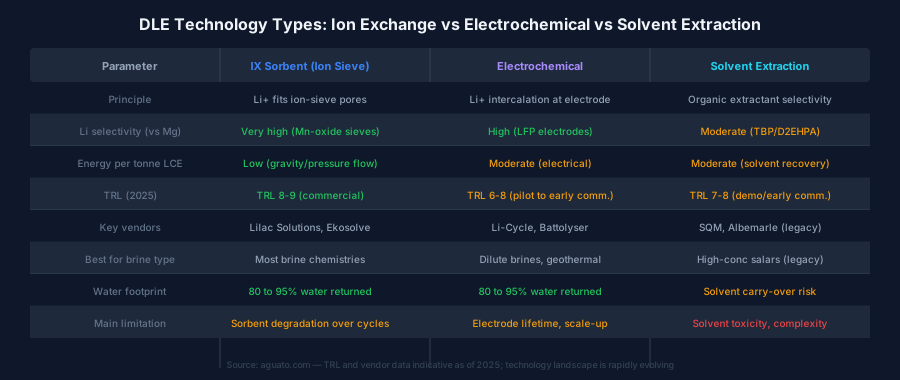
The technology comparison diagram below compares the three DLE approaches across key parameters.
## Solvent extraction DLE
Solvent extraction uses organic extractants that selectively form lipophilic complexes with lithium in preference to other cations. The classic extractants for lithium include TBP (tributyl phosphate), D2EHPA (di(2-ethylhexyl) phosphoric acid), and FeCl3-based systems. The brine contacts the organic phase, lithium partitions preferentially into the organic phase, and then a stripping agent (dilute acid or water) back-extracts the lithium into a concentrated aqueous phase.
Solvent extraction has relatively poor Li/Mg selectivity compared to MnO2 ion sieves, which limits its applicability to brines with low Mg/Li ratios. It is also challenged by organic solvent carry-over into the product stream (a significant quality concern for battery-grade product) and the environmental and safety implications of handling large volumes of organic solvents at industrial scale. For these reasons, solvent extraction is considered a legacy DLE approach and is less favoured than sorbent-based methods in new project designs.
## DLE vs evaporation ponds: technology and cost comparison
The economic comparison between DLE and evaporation ponds is not straightforward because it depends heavily on the specific deposit, climate, regulatory environment, and brine chemistry.
| Parameter | DLE (IX sorbent) | Evaporation Ponds | |---|---|---| | Li recovery | 80 to 95% | 40 to 60% | | Water returned to aquifer | 80 to 95% | Near 0% | | Time to production | 8 to 18 months | 12 to 24 months | | Land footprint | Small (processing plant only) | Very large (hundreds km2) | | Operating cost per tonne LCE | $4,000 to $6,000 (early commercial) | $3,000 to $5,000 (established) | | CAPEX per tonne LCE/year | Higher (equipment-intensive) | Lower (mostly earthworks) | | Applicability to wet climates | Yes | No (evaporation rates too low) | | Mg/Li brine suitability | High Mg/Li acceptable | Low Mg/Li required | | Environmental approvals | Easier (low water consumption) | Increasingly difficult |
The cost per tonne of LCE from DLE at early commercial scale (2023 to 2025 deployments) is higher than mature evaporation pond operations, but the gap is narrowing as sorbent costs decrease and plant scale increases. For projects in water-scarce regions, in higher-rainfall climates, or facing regulatory limits on pond areas, DLE has already crossed the economic threshold.
## Water management in DLE operations
Water management in DLE operations is not just an environmental requirement. It is a process constraint and an economic lever.
In a salar-based DLE operation, the brine is pumped from the aquifer, processed to extract lithium, and the depleted brine is reinjected. If reinjection is at a different depth or different location from pumping, the aquifer hydrology is disrupted. The design of the reinjection programme requires a detailed hydrogeological model of the salar.
Freshwater for sorbent stripping, reagent preparation, and process make-up is a critical constraint in arid salar environments. DLE systems that use dilute acid for stripping generate an acid waste stream that must be neutralised and disposed of or recycled. Closed-loop acid recovery systems that regenerate stripping acid from the neutralisation step are increasingly standard in new DLE designs but add capital cost.
For geothermal brine DLE (extracting lithium from geothermal fluids that are co-produced with electricity generation), the water is already at elevated temperature, which affects sorbent performance, and must be returned to the geothermal formation to maintain reservoir pressure. The [produced water treatment guide](/resources/produced-water-treatment-oil-gas) covers the analogous produced water reinjection considerations from the oil and gas sector, which share many of the same hydrogeological principles.
[Use Nepti on Aguato](/nepti) to model your brine matrix before specifying a DLE system. The Li/Mg ratio, TDS, temperature, and pH all affect sorbent selection and capacity, and getting these parameters into the design at the earliest stage avoids expensive corrections later.
## Key suppliers and technology readiness levels
The DLE vendor landscape in 2025 has several categories:
Commercially operating at scale (TRL 9): A small number of sorbent-based DLE installations in Argentina and Chile are operating at commercial scale, producing battery-grade lithium carbonate. SQM and Allkem (now Arcadium Lithium following the merger with Livent) both have commercial DLE operations or near-commercial pilots integrated with their existing salar operations.
Early commercial / demonstration (TRL 7 to 8): Lilac Solutions (California), Ekosolve (Australia), and several Asian DLE technology companies have systems operating at demonstration scale of 50 to 500 tonnes LCE per year. These represent credible commercial-scale data but not full production-scale proof of the OPEX figures they project.
Pilot stage (TRL 5 to 7): Multiple university spin-outs and start-ups are at the pilot stage. The technology claims in this category should be evaluated with particular scepticism because the gap between pilot performance and commercial performance is typically large in sorbent-based systems due to fouling, scale effects, and cycle degradation.
According to [USGS Mineral Resources data on lithium](dofollow:https://www.usgs.gov/centers/national-minerals-information-center/lithium-statistics-and-information), global lithium production is approximately 130,000 tonnes of lithium metal equivalent per year as of 2023. Even the most optimistic DLE deployment trajectories would need to scale production by at least 5 to 10 times to meet IEA net-zero scenarios, which means both evaporation ponds and DLE will be needed simultaneously for the foreseeable future.
## Where DLE projects fail
Sorbent degradation underestimated in design: The laboratory performance of MnO2 ion sieves is measured over tens to hundreds of cycles. Industrial systems run thousands of cycles per year. The manganese dissolution rate that is acceptable over 200 cycles in a lab becomes a significant reagent cost and product contamination issue over 2,000 cycles in a plant. Projects that did not build sorbent replacement costs into the OPEX model have had significant financial surprises.
Brine variability not characterised adequately: Salar brines vary seasonally, with depth, and across the salar extent. A sorbent system designed for average brine composition may perform poorly when brine chemistry shifts during wet season or when pumping from different well depths. Brine characterisation campaigns should cover at least 12 months of seasonal variation and multiple depth intervals.
Eluate purification undercosted: The eluate from DLE sorbent stripping is concentrated in lithium but still contains co-eluted cations including residual magnesium, calcium, barium, and manganese. The purification steps to reach battery-grade product specification (99.5% Li2CO3 with strict limits on Mg, Ca, Na, Fe) are not trivial and account for 30 to 50% of operating cost in some configurations. Projects that show DLE cost comparisons stopping at the eluate stage are omitting a large fraction of total cost.
Regulatory assumption on brine return not validated: Reinjecting depleted brine to the aquifer requires regulatory approval in all major salar jurisdictions. Chilean, Argentinian, and Bolivian authorities have increasingly rigorous requirements around brine balance monitoring, and reinjection wells require their own permits. Assuming regulatory approval for brine return is not a given, and a project design that requires brine return for its environmental and water balance case is exposed if the permit is delayed or denied.
[Post your lithium brine water treatment challenge on Aguato](/post-project) to compare proposals from specialists who have worked on DLE water management in operational projects, not just academic literature.
## FAQ
### What is direct lithium extraction and how does it differ from evaporation ponds?
Direct lithium extraction uses chemical, electrochemical, or membrane-based processes to selectively capture lithium ions from brines in hours to days rather than months. It achieves 80 to 95% lithium recovery, returns 80 to 95% of the brine water to the aquifer, and can process brines with high magnesium-to-lithium ratios that make evaporation ponds impractical. Evaporation ponds evaporate the water and concentrate lithium through sequential chemical precipitation, taking 12 to 24 months with 40 to 60% lithium recovery and near-total water loss.
### What types of brines are suitable for DLE?
DLE sorbent systems can in principle process any lithium-bearing brine, but economic viability depends on lithium concentration (generally above 100 to 200 mg/L Li for reasonable capital efficiency), brine flow rate, and manageable levels of calcium, barium, and silica that can foul sorbent columns or precipitate during processing. Geothermal brines and produced water brines with lithium concentrations of 50 to 500 mg/L Li are a growing application area, processing brines that evaporation ponds cannot economically address.
### Is DLE commercially proven at scale?
As of 2025, ion exchange sorbent DLE has reached commercial scale at a small number of installations in South America, producing battery-grade lithium carbonate. These are early commercial deployments, not mature mass-production operations. The OPEX figures published by DLE technology companies are based on engineering estimates and pilot data extrapolated to commercial scale, and independent operational verification of full-scale OPEX is limited. The technology is past the purely experimental stage but should be evaluated with appropriate scepticism about claimed cost reductions relative to proven evaporation pond costs.
### How does DLE handle the water it extracts from the brine?
The water extracted from the brine during the DLE process (the water that migrates through the ion sieve or membrane from brine to the stripping or product water side) is a secondary product. In most DLE designs, a portion of this water is used for sorbent stripping and process make-up, and the remaining water is the basis for the product stream that goes to lithium precipitation. The depleted brine, stripped of lithium, is typically reinjected into the brine aquifer at 80 to 95% of the original pumped volume.
### What is the main risk in DLE sorbent-based systems?
The main operational risk is sorbent degradation over cycling. Manganese oxide sorbents dissolve small amounts of manganese per cycle, and over thousands of industrial cycles this accumulates to meaningful sorbent loss and product contamination. Titanium oxide sorbents have better stability but lower capacity. The sorbent replacement or reactivation cost is frequently underestimated in DLE project economics, and projects that rely on laboratory-measured degradation rates without long-term pilot data are at risk of cost overruns.
### Can DLE be used for lithium recovery from oilfield produced water?
Yes, and this is a growing application. Many oil and gas formations contain produced water with lithium concentrations of 50 to 300 mg/L Li, particularly in the Permian Basin, Smackover Formation, and some Marcellus wells. DLE systems co-located with produced water treatment facilities could in principle convert a disposal cost into a revenue stream. The engineering challenge is that produced water has a far more complex and variable chemistry than salar brines, with high TDS, oil and grease contamination, temperature variation, and scaling-prone cations that challenge sorbent stability. Feasibility pilots at produced water sites are underway but commercial deployment at scale had not been demonstrated as of 2025.