Choosing the wrong biological treatment path adds $0.30 to $1.20/m3 in OPEX and can double sludge disposal costs. Here is how to choose between aerobic vs anaerobic wastewater treatment.
Choosing the wrong biological treatment pathway for your industrial wastewater plant does not just produce a bad effluent quality number. It shows up on your P&L as $0.30 to $1.20 per cubic meter of excess OPEX, sludge disposal contracts that double your expected budget, or a compliance exceedance that triggers a regulator visit and a potential $50,000 to $500,000 penalty under the Clean Water Act. The decision between aerobic vs anaerobic wastewater treatment is made at the design table, years before those costs materialise, and the wrong call is expensive to reverse once concrete is poured. This biological-technology choice sits at the centre of any full plant build, and the surrounding stages, sizing, and procurement logic are covered in our [effluent treatment plant design guide](/resources/effluent-treatment-plant-etp).
The common assumption is that aerobic treatment is the safe default and anaerobic is only worth considering for very high-strength waste streams. That framing misses the economics almost every time. A food and beverage plant running COD loads above 3,000 mg/L that specifies aerobic-only treatment is committing to energy bills that can reach $0.80 to $1.50 per cubic meter treated, while a correctly sized anaerobic stage on the same stream would generate enough biogas to offset 30 to 60% of site heating demand. The payback on the additional capital is often three to six years, with a 15-year net present value advantage of $1.5 million to $8 million on a 500 m3/day plant.
This article covers what aerobic and anaerobic biological treatment actually are, how the core process mechanics drive cost and risk differently, where each wins on a threshold-by-threshold basis, what a hybrid system looks like and when it justifies the complexity, and what the realistic failure modes are that turn a sound specification into a regretted one. It is written for operations directors managing OPEX, capital projects leads preparing RFP packages, and sustainability teams building water intensity targets into ESG reporting.
## The decision in brief
- Do not specify aerobic-only above 4,000 mg/L COD. If you are treating 500 m3/day of wastewater above 4,000 mg/L COD with aerobic-only treatment, you are committing $300,000 to $700,000 per year in avoidable energy and sludge disposal costs relative to a hybrid system. - Price the gap over the asset life. Over 15 years at 5% discount rate, that is a net present value gap of $3 million to $7 million against the additional capital cost of $400,000 to $900,000 for the anaerobic stage. - The sludge contract is the real inheritance. The biggest cost-of-doing-nothing is not the ongoing OPEX difference: it is the sludge disposal contract your operations team will inherit at volumes they were not designed to handle.
Those disposal unit costs have risen 40% in five years and continue rising.
## What aerobic and anaerobic treatment actually mean
Aerobic and anaerobic treatment are both biological processes that use microorganisms to break down organic matter in wastewater, but the [oxygen](/elements/oxygen) regime determines the microbial community, the byproducts, and the energy economics that follow. Getting the oxygen regime right for your stream is the single highest-leverage decision in biological wastewater design.
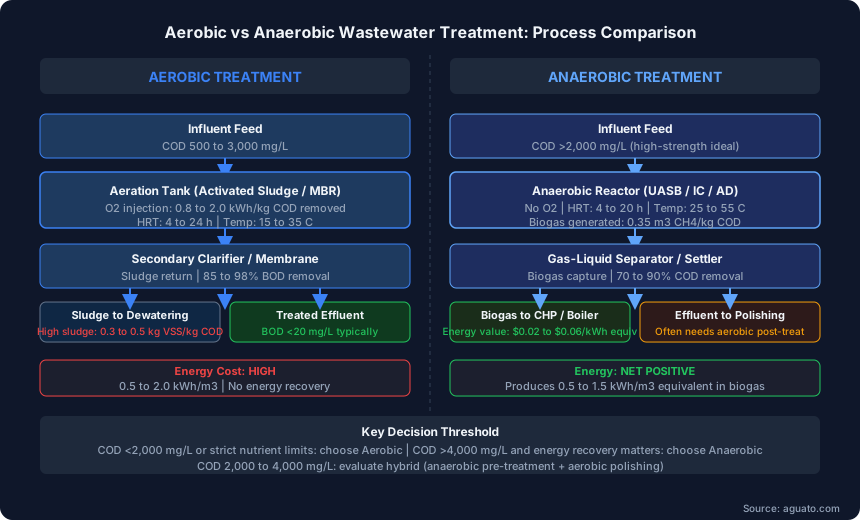
In aerobic treatment, microorganisms oxidise organic compounds in the presence of dissolved oxygen. The dominant products are [carbon dioxide](/elements/carbon), water, and a significant volume of new microbial biomass (sludge). Energy must be supplied continuously to aerate the tank. This process handles a broad range of organic compounds efficiently, tolerates feed variation, and can achieve effluent BOD below 10 mg/L with conventional activated sludge or membrane bioreactor (MBR) configurations.
In anaerobic treatment, microorganisms break down organic compounds in a completely oxygen-free environment through a staged process: hydrolysis, acidogenesis, acetogenesis, and methanogenesis. The dominant products are methane and carbon dioxide (biogas) rather than biomass. Sludge production is 3 to 10 times lower than aerobic treatment. The biogas is a recoverable energy source. The process is far more sensitive to temperature, pH swings, and inhibitory compounds, and it typically leaves residual COD that requires aerobic polishing before discharge.
The distinction is not purely technical. It is a capital allocation decision with a 15 to 25-year cost horizon that needs to be made on actual feed water chemistry, not on generic design heuristics.
## How the core process mechanics differ
Understanding the mechanics helps explain why the cost curves diverge so sharply at certain COD concentrations. The three most commercially significant differences are energy balance, sludge production, and startup time. Each one maps to a budget line.
Energy balance. Aerobic systems consume 0.5 to 2.0 kWh per cubic meter of wastewater treated, almost entirely in aeration. The US EPA estimates that aeration accounts for 45 to 75% of total energy use at a conventional activated sludge plant. At an industrial electricity price of $0.08 to $0.12/kWh, that is $0.04 to $0.24 per cubic meter in energy alone before any other OPEX. Anaerobic systems, by contrast, generate methane at approximately 0.35 m3 of CH4 per kg of COD removed. A 500 m3/day plant treating wastewater at 6,000 mg/L COD generates roughly 1,050 m3 of methane per day, equivalent to 10,500 kWh/day or enough to meet a significant share of the plant's thermal energy demand. The [US Department of Energy](dofollow:https://www.energy.gov/eere/amo/water-wastewater) has documented industrial biogas recovery projects with simple paybacks of three to eight years at this scale.
Sludge production. Aerobic treatment produces 0.3 to 0.5 kg of volatile suspended solids (VSS) per kg of COD removed, compared to 0.05 to 0.10 kg VSS/kg COD for anaerobic systems. At scale, that gap is decisive. A food processing plant generating 10,000 kg/day of COD in its effluent will produce 3,000 to 5,000 kg/day of wet sludge (at typical moisture content) in an aerobic system, versus 500 to 1,000 kg/day anaerobically. At $60 to $150 per tonne of sludge disposal cost (landfill, incineration, or land application), the annual delta is $60,000 to $500,000 per year. This is the line item that procurement leads most consistently underestimate at the capital approval stage.
Startup time. A conventional aerobic activated sludge system can be seeded and producing compliant effluent within one to four weeks. An anaerobic reactor requires establishing a dense methanogenic biomass, a process that takes two to six months depending on seed sludge availability and temperature. For a capital project with a fixed commissioning date tied to a plant expansion, that startup period needs to appear in the project schedule as a hard constraint, not an afterthought.
Process stability. Aerobic systems tolerate feed variability well. The aerobic microbial community adapts to moderate concentration swings without system upset. Anaerobic systems are sensitive. A pH drop below 6.5, an ammonia spike above 1,500 mg/L as N, or a sulphate-to-COD ratio above 0.15 can inhibit methanogenesis, forcing a multi-week system recovery. That sensitivity is not a reason to avoid anaerobic treatment; it is a reason to design around it with proper buffering, temperature control, and monitoring.
## Aerobic vs anaerobic wastewater treatment: the cost stack comparison
The table below gives the full cost stack comparison for the three main configurations. Costs are normalised per cubic meter per day of treatment capacity and assume a mid-size industrial installation of 200 to 1,000 m3/day.
| Factor | Aerobic (CAS/MBR) | Anaerobic (UASB/IC) | Hybrid (AN + AE) | |---|---|---|---| | CAPEX (USD/m3/day capacity) | $200 to $800 | $150 to $600 | $250 to $900 | | Energy OPEX (USD/m3 treated) | $0.05 to $0.24 (consumed) | Net positive or near zero | $0.02 to $0.10 net | | Sludge disposal (USD/m3 treated) | $0.08 to $0.30 | $0.01 to $0.05 | $0.02 to $0.10 | | Chemical OPEX (USD/m3) | $0.02 to $0.08 | $0.03 to $0.10 | $0.03 to $0.10 | | Startup time | 1 to 4 weeks | 2 to 6 months | 2 to 5 months | | Effluent quality (BOD) | 5 to 20 mg/L | 100 to 300 mg/L | 5 to 20 mg/L (polished) | | COD removal efficiency | 85 to 99% | 70 to 90% | 90 to 99% | | Typical footprint (m2/m3/day) | 0.5 to 2.0 | 0.2 to 0.8 | 0.6 to 2.5 | | Best for | Low to medium COD, strict discharge | High COD, energy recovery focus | High COD with strict discharge | | Primary risk | Energy cost, high sludge volume | Long startup, effluent quality, inhibition | Complexity, higher CAPEX |
The cost inflection point where anaerobic treatment becomes economically preferable is typically around 3,000 to 4,000 mg/L COD for large systems and 5,000 to 6,000 mg/L for smaller plants where the biogas volume is insufficient to justify the added complexity. Below those thresholds on a lifecycle basis, aerobic is usually more economical despite the higher energy cost per m3.
## Where aerobic treatment wins
Aerobic treatment dominates the specification whenever the feed water is low to moderate strength, the discharge licence requires tight nutrient limits, or the simplicity and startup speed of the system outweigh the energy premium. The aerobic bias in most plant specifications is commercially correct for a large subset of industrial applications, but it is reflexively applied to cases where it is not.
The clearest wins for aerobic treatment are municipal-strength or pre-treated industrial streams where COD is below 1,500 mg/L, pharmaceutical and semiconductor fabs where effluent quality requirements are very tight and biogas recovery would be marginal, food and beverage operations processing low-strength waste such as wash water rather than concentrated process streams, and any application where the discharge licence requires nitrification to remove ammonia to below 5 mg/L as N. Aerobic nitrification requires dedicated aeration residence time and is straightforward in a single-stage aerobic system. Achieving equivalent nitrogen removal anaerobically requires significantly more complex downstream treatment.
Activated sludge remains the most widely deployed aerobic configuration worldwide because of its operational flexibility and low capital cost relative to MBR. For applications requiring reuse-quality effluent or a very small footprint, MBR is worth the 20 to 50% CAPEX premium because the integrated membrane eliminates the secondary clarifier and produces a permeate suitable for reverse osmosis pre-treatment without additional solids separation.
For [industrial wastewater treatment](/industrial-wastewater-treatment) plants handling mixed municipal-industrial streams, aerobic treatment with biological nutrient removal is typically the regulatory default, and deviating from it requires a strong cost and technical case that a process engineer will need to document for the permitting authority.
## Where anaerobic treatment wins
Anaerobic treatment earns its specification when the feed water is genuinely high-strength, the plant has a thermal use for the biogas, and the operator can maintain the controlled conditions the microbiology demands. The return on the additional startup complexity compounds over a 20-year plant life in a way that most capital project NPV models understate.
The strongest cases for anaerobic treatment are: food and beverage effluents with COD above 3,000 mg/L (breweries, distilleries, dairy, starch, sugar processing); paper and pulp mill effluent where COD can reach 5,000 to 20,000 mg/L; slaughterhouse and meat processing waste typically running 3,000 to 8,000 mg/L COD; and petrochemical and pharmaceutical streams where specific organic compounds favour anaerobic degradation pathways.
The [US EPA's guidance on industrial wastewater treatment](dofollow:https://www.epa.gov/sites/default/files/2015-06/documents/industrial-ww-guide.pdf) identifies UASB (Upflow Anaerobic Sludge Blanket) and IC (Internal Circulation) reactors as the dominant commercial configurations for high-strength industrial streams, with UASB units operating at hydraulic retention times of 4 to 8 hours at COD loads of 5 to 15 kg COD/m3/day. The compact footprint relative to treatment capacity is a significant advantage on constrained industrial sites.
A pattern that recurs in industrial installations is the mismatch between the design-basis COD and the actual operating COD two years after commissioning. Plants that expand production output without expanding their anaerobic capacity run into organic overloading, which manifests as VFA accumulation, pH drop, and rapid system destabilisation. Building a design safety factor of 1.3 to 1.5 on the organic loading rate is not conservatism for its own sake; it is the buffer that prevents a $200,000 to $800,000 system recovery exercise when the next production expansion happens.
The right answer for your specific COD concentration, temperature, and discharge constraints depends on site-specific data. [Post your project](/post-project) and qualified providers who have designed and operated both system types will scope the economic case against your actual numbers.
## Hybrid systems: when to combine both
Hybrid anaerobic-aerobic systems capture the energy economics of anaerobic pre-treatment and the effluent quality achievable through aerobic polishing. They are the right answer for a specific and growing segment of industrial wastewater applications. They are also the most commonly over-specified solution for projects where a single-stage aerobic or anaerobic system would have been perfectly adequate.
The hybrid configuration adds capital cost of 15 to 30% relative to a single-stage system and increases operational complexity significantly. The anaerobic pre-treatment stage removes 60 to 85% of the COD load and generates biogas, while the downstream aerobic polishing stage handles the residual organics and achieves the effluent quality required for discharge or reuse. The result is a combined system that is typically 30 to 50% lower in total OPEX than aerobic-only on high-strength streams, while meeting the same discharge standards.
The hybrid case is strongest at COD concentrations of 3,000 to 8,000 mg/L with a strict discharge requirement (BOD below 30 mg/L), flow rates above 200 m3/day where the biogas volume justifies recovery infrastructure, and sites with an existing thermal load for the recovered methane. Below 200 m3/day, the economics of biogas recovery often fail to justify the added anaerobic stage, and an aerobic-only system at slightly higher OPEX is often the more defensible capital decision.
[cta:nepti-dark]
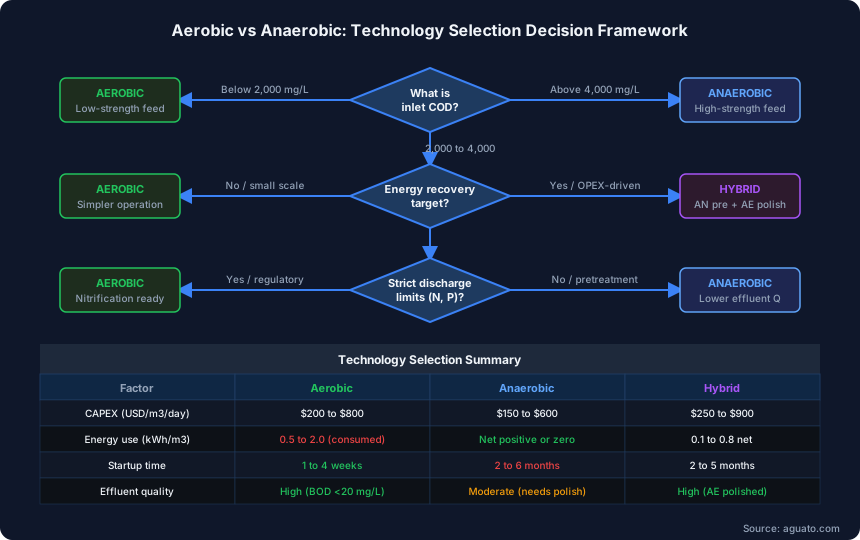
For the [industrial wastewater treatment process](/resources/industrial-wastewater-treatment-process) specification, the key design parameter driving the hybrid decision is the ratio of influent COD to the discharge limit COD. When that ratio exceeds 100:1, a single-stage aerobic system requires very long hydraulic retention times and large tank volumes; the hybrid almost always wins on both CAPEX and OPEX at that point.
The technology decision at this level of complexity benefits from a systematic modelling approach. Nepti models your water matrix, organic load profile, and discharge requirements and produces a ranked comparison of aerobic, anaerobic, and hybrid configurations with cost projections across a 10 to 20-year horizon. That output provides the documented technical basis a CFO or capital review committee needs before releasing funds. [Explore Nepti](/nepti) to see how that comparison is structured for high-COD industrial streams.
## Threshold-based decision framework
The decision between aerobic, anaerobic, and hybrid treatment maps cleanly onto six quantitative thresholds. These are not rules of thumb; they are the cut-points where the lifecycle cost models change sign, based on the underlying process economics.
Threshold 1: COD concentration. If COD is below 1,500 mg/L, specify aerobic as the default. If COD is above 5,000 mg/L, anaerobic is almost always the lower-OPEX path and should be the default unless other thresholds override. Between 1,500 and 5,000 mg/L, evaluate the energy balance and biogas recovery economics on a site-specific basis.
Threshold 2: Flow rate and biogas volume. Below 100 m3/day, biogas recovery infrastructure rarely has a payback under 10 years. Aerobic is typically preferred. Above 500 m3/day treating streams above 3,000 mg/L COD, the anaerobic mass balance strongly favours biogas recovery with paybacks of three to seven years.
Threshold 3: Discharge limits. If the discharge licence requires BOD below 20 mg/L, NH3-N below 5 mg/L, or total phosphorus below 1 mg/L, the post-treatment stage must be aerobic regardless of the upstream configuration. Anaerobic treatment alone cannot reliably meet those limits without additional polishing.
Threshold 4: Temperature. Psychrophilic anaerobic systems (below 20 degrees C) exist but perform poorly without insulation and heating. If the influent temperature is consistently below 18 degrees C and site heating capacity is limited, the OPEX to maintain mesophilic conditions (30 to 37 degrees C) may erode the energy advantage. Aerobic systems are less temperature-sensitive in the 10 to 35 degrees C range.
Threshold 5: Inhibitory compounds. Streams containing heavy metals above 5 mg/L, sulfate above 500 mg/L, or long-chain fatty acids above 200 mg/L present significant inhibition risk to anaerobic methanogenesis. Pre-treatment to remove inhibitors adds capital and complexity. If the inhibitor removal step is expensive, aerobic treatment may be more economical despite the higher OPEX.
Threshold 6: Operator competency and support. Anaerobic systems require more skilled operation and more consistent monitoring. A site with a lean maintenance team, high staff turnover, or remote location without ready access to specialist support should weight the operational risk heavily in the system selection. A less optimal technology choice that is reliably operated outperforms an optimally specified system that is intermittently mismanaged.
For [food and beverage water treatment](/resources/food-beverage-water-treatment) applications, thresholds 1 and 2 almost universally point toward anaerobic or hybrid configurations at large-scale dairy, starch, and beverage processing operations. The operational risk question (threshold 6) is where individual site assessments diverge most strongly.
## Failure scenarios and what they cost
Understanding failure modes in advance is the most practical form of risk management in biological treatment design. Each of the following failure patterns has a clear trigger, a characteristic operating outcome, and a quantifiable cost range based on documented industrial cases.
Failure 1: Organic overloading in an anaerobic UASB. Decision: plant production expanded 40% without proportional adjustment to the wastewater treatment plant design basis. Operational outcome: volatile fatty acid (VFA) accumulation, pH crash from 7.2 to 5.8 over three to seven days, granular sludge washout from the UASB, effluent COD rising from 400 mg/L to 8,000 mg/L. Recovery cost: $150,000 to $400,000 (emergency aeration to bypass, replacement seed sludge procurement at $20 to $60/m3, four to 12-week system restart, regulatory exceedance notice). Prevention: design to 1.3x maximum expected load, install real-time VFA monitoring, include a bypass aerobic treatment circuit.
Failure 2: Aerobic system undersized for peak COD loads. Decision: aerobic CAS system designed to average COD of 900 mg/L in a meat processing plant where seasonal peak COD reaches 2,200 mg/L. Operational outcome: sludge bulking, filamentous bacterial overgrowth, secondary clarifier failure, dissolved oxygen depletion, effluent TSS exceeding discharge limits. Recovery cost: $80,000 to $250,000 (emergency chemical dosing, polymer costs, sludge blanket management, compliance penalty). Prevention: design to peak-week COD, not annual average; build 20 to 30% dissolved oxygen buffer in aeration capacity.
Failure 3: Sulphide toxicity in anaerobic treatment of high-sulfate stream. Decision: anaerobic pre-treatment specified for a tannery effluent with sulfate of 800 mg/L and COD of 4,500 mg/L without sulphide removal provision. Operational outcome: sulfate-reducing bacteria outcompete methanogens for acetate, biogas methane content drops from 65% to 30%, H2S concentration in biogas rises to 8,000 ppm (corrosion risk), system net energy balance turns negative. Recovery cost: $100,000 to $300,000 (precipitation system retrofit, biogas scrubbing upgrade, lost energy revenue during recovery). Prevention: check sulfate-to-COD ratio at design stage; if above 0.10, include iron dosing or sulphide stripping in scope.
Failure 4: Sludge disposal cost shock from aerobic-only specification. Decision: greenfield pharmaceutical wastewater plant specified aerobic-only treating 300 m3/day at COD 2,500 mg/L. Operational outcome: sludge production of 750 kg/day wet sludge requiring specialist hazardous waste disposal at $200 to $400/tonne due to pharmaceutical residues. Actual sludge disposal cost: $180,000 to $360,000 per year versus the $40,000 to $80,000 assumed in the OPEX model. Correct decision at design stage: hybrid configuration with anaerobic pre-treatment to reduce sludge production by 60 to 75%, reducing disposal cost by $100,000 to $250,000 per year. CAPEX premium for the hybrid: $180,000 to $280,000. Payback: 14 to 28 months.
These failure scenarios map directly to the risk column in the comparison table. For [sludge dewatering and treatment](/resources/sludge-dewatering-treatment) downstream of either biological route, the volume and composition of sludge produced are the primary design inputs. Getting the biological treatment configuration right is the first step in controlling sludge processing costs.
## Real-world examples
Example 1: Brewery wastewater, activated sludge to UASB conversion. Industry: beverages. Problem: a 50,000-hectoliter-per-year brewery was treating 800 m3/day of effluent at COD 3,800 mg/L through an activated sludge plant, spending $420,000 per year on electricity and $180,000 per year on sludge disposal. Capital project: retrofit with a UASB pre-treatment stage followed by a reduced-footprint aerobic polishing stage. Solution outcomes: biogas production of 3,200 m3/day (methane content 65%), offsetting 90% of the brewery's boiler gas consumption. Sludge production reduced by 68%. Total OPEX reduction: $390,000 per year. CAPEX of the retrofit: $1.8 million. Payback: 4.6 years. Trade-off: startup took four months including a production curtailment period, and a specialist was required on-site for the first three months of commissioning.
Example 2: Food processing plant, aerobic MBR for reuse application. Industry: prepared meals processing. Problem: site needed to reuse 40% of treated effluent for CIP pre-rinse applications, requiring effluent quality of BOD below 5 mg/L, TSS below 2 mg/L. COD was 1,400 mg/L from cleaning operations. Solution: aerobic MBR treating 150 m3/day. Why aerobic won: COD was below the anaerobic threshold, and the tight reuse quality requirement made aerobic the only single-stage option. MBR produced permeate directly suitable for reuse without additional filtration. Trade-off: MBR energy cost of $0.65/m3 was 30% higher than conventional aerobic, but reuse credit (avoided freshwater cost of $1.20/m3) made the net cost $0.55/m3 positive versus a conventional aerobic-only discharge configuration. The right answer depended entirely on valuing the reuse credit.
Example 3: Pulp mill, two-stage hybrid anaerobic-aerobic. Industry: paper and pulp. Problem: 2,000 m3/day effluent at COD 8,000 mg/L, discharge limit of BOD 30 mg/L, site with a 4 MW steam demand. Solution: IC anaerobic reactor (removing 82% COD) feeding a sequencing batch reactor (SBR) aerobic polishing stage. Biogas production of 22,400 m3/day at 70% methane content, providing 2.8 MW of thermal energy equivalent and reducing site natural gas consumption by $620,000 per year. Sludge disposal reduced by 75% versus a standalone aerobic baseline. CAPEX: $6.2 million for the hybrid versus an estimated $4.8 million for aerobic-only. OPEX saving versus aerobic-only: $780,000 per year. Net present value advantage over 20 years at 7% discount rate: $5.2 million. This case is not unusual for pulp, brewery, and starch processing applications with flows above 1,000 m3/day.
For [industrial water treatment companies](/resources/industrial-water-treatment-companies) tendering on large biological treatment projects, the hybrid configuration has become the standard recommendation for high-strength streams above 3,000 mg/L where biogas recovery can be justified. The question is no longer whether to use anaerobic pre-treatment, but which reactor configuration and what organic loading rate to specify.
## What to ask providers before you commit
Specifying biological wastewater treatment is a long-term commitment. The questions below separate providers who understand the operating risk from those presenting an optimistic design-basis to win the contract. A provider who cannot answer these questions in writing during the tender process is not ready to take responsibility for a 20-year plant.
Ask for the maximum organic loading rate (kg COD/m3/day) the proposed system has demonstrated at full scale, not pilot scale. Pilot results at clean synthetic feed do not predict industrial performance. Ask for the sludge production coefficient used in the design and the resulting sludge volume at the design-basis COD and at 130% of design-basis COD. Ask what monitoring systems are included in scope, specifically real-time COD, VFA monitoring for anaerobic systems, and dissolved oxygen and MLSS monitoring for aerobic systems. Ask for the inhibitor sensitivity analysis: which compounds in your specific stream, at what concentrations, would require system upset response?
The [industrial water treatment process](/resources/industrial-wastewater-treatment-process) design phase is the moment where these questions have the most leverage. Once the system is built, the cost of correcting an under-designed organic loading rate or a missing monitoring point is 10 to 50 times higher than including it in the original scope.
For operators who want a systematic way to compare vendor proposals against each other on a common basis, rather than trying to reconcile incompatible design assumptions, [Nepti's decision-intelligence platform](/nepti) models your water matrix and treatment objectives and produces a ranked comparison of technology options with independent cost projections. That comparison gives a defensible technical basis for the vendor recommendation in the capital approval package.
The [Water Research Foundation](dofollow:https://www.waterrf.org/research/projects/energy-neutral-wastewater-treatment) has published extensive research on energy-neutral wastewater treatment design, confirming that plants treating high-COD industrial streams can achieve net-zero or net-positive energy balance through anaerobic integration. The economic case is documented; the barrier is usually the design process not surfacing it systematically.
## FAQ
### What is the main difference between aerobic and anaerobic wastewater treatment?
The fundamental difference is whether microorganisms use oxygen to break down organic compounds. Aerobic treatment requires a continuous supply of dissolved oxygen, produces significant sludge, and achieves high effluent quality but consumes 0.5 to 2.0 kWh per cubic meter. Anaerobic treatment uses no oxygen, generates methane-rich biogas as a recoverable byproduct, produces 3 to 10 times less sludge, but typically leaves residual COD requiring further treatment before discharge.
### At what COD concentration does anaerobic treatment become more economical than aerobic?
The economic inflection point is typically around 3,000 to 4,000 mg/L COD for plants processing above 500 m3/day. Below 2,000 mg/L, the biogas volume generated rarely justifies the additional capital and operational complexity. Above 5,000 mg/L, anaerobic or hybrid configurations almost always show a lower 15-year total cost of ownership when sludge disposal costs are fully included in the aerobic baseline. For flows below 200 m3/day, the threshold rises to 5,000 to 6,000 mg/L because biogas recovery infrastructure does not scale down proportionally.
### Can anaerobic treatment meet strict discharge limits on its own?
No. Standalone anaerobic treatment cannot reliably meet BOD discharge limits below 50 to 100 mg/L or nutrient limits for ammonia and phosphorus. Anaerobic effluent typically contains 100 to 300 mg/L BOD and elevated dissolved solids. Meeting a discharge licence of BOD below 20 mg/L or NH3-N below 5 mg/L requires a downstream aerobic polishing stage. This is why the hybrid configuration is the default specification for high-COD streams with strict discharge requirements.
### How long does it take to start up an anaerobic reactor?
Startup takes 2 to 6 months for a UASB or IC reactor seeded with granular anaerobic sludge, compared to 1 to 4 weeks for a conventional aerobic activated sludge system. The slow startup reflects the doubling time of methanogenic archaea, which is 3 to 10 days versus hours for aerobic heterotrophs. Availability of high-quality seed sludge from an operating anaerobic plant on a similar waste stream is the single biggest factor in reducing startup time. Projects should plan for a parallel aerobic bypass during commissioning to avoid any production curtailment.
### What are the main inhibitors of anaerobic treatment?
The most common industrial inhibitors of anaerobic methanogenesis are sulphide (above 200 mg/L as S), free ammonia (above 150 to 300 mg/L as N), long-chain fatty acids (above 100 to 200 mg/L), heavy metals (above 5 mg/L for copper, zinc, nickel), and chlorinated organics at elevated concentrations. Sulphate above 500 mg/L in the feed is a frequent problem in brewery, tannery, and certain food processing streams because sulphate-reducing bacteria outcompete methanogens for hydrogen and acetate, reducing biogas yield and generating corrosive hydrogen sulphide.
### What is a UASB reactor and when is it preferred over other anaerobic configurations?
A UASB (Upflow Anaerobic Sludge Blanket) reactor is the most widely installed anaerobic configuration for soluble industrial wastewater, preferred when the feed is low in suspended solids, COD is 2,000 to 15,000 mg/L, and temperature can be maintained at 25 to 37 degrees C. Feed flows upward through a dense bed of granular anaerobic sludge that self-selects for efficient methanogenesis. UASB units operate at loading rates of 5 to 15 kg COD/m3/day and hydraulic retention times of 4 to 8 hours, making them highly compact. IC (Internal Circulation) reactors are preferred at higher loading rates of 15 to 30 kg COD/m3/day for very concentrated streams.
### How do aerobic and anaerobic treatments compare on carbon footprint and ESG reporting?
Aerobic treatment contributes net CO2-equivalent emissions through electricity consumption (0.5 to 2.0 kWh/m3 at grid emission factors of 0.3 to 0.7 kg CO2e/kWh). Anaerobic treatment with biogas recovery is close to carbon-neutral or even carbon-negative when the displaced fossil fuel is credited. For ESG reporting under frameworks aligned with the [Global Reporting Initiative water standards](dofollow:https://www.globalreporting.org/standards/media/1909/gri-303-water-and-effluents-2018.pdf), capturing biogas and reducing sludge disposal volumes both contribute to water intensity, energy intensity, and waste metrics. Sustainability directors targeting Scope 1 and Scope 2 emission reductions have an increasing material incentive to retrofit aerobic-only systems handling high-COD streams to hybrid configurations.