A single microbial failure on a product-contact surface costs $500,000 to $2 million in recalls and lost contracts. Full CAPEX, OPEX, technology selection, and CIP standards inside, plus the effluent side benchmarked against 107 published food and beverage treatment cases with real influent and effluent data.
Food and beverage water treatment is not a utility decision. It is a food safety decision, and the cost of getting it wrong is measured in product recalls, lost certification, and production shutdowns that run at $50,000 to $300,000 per day depending on plant scale and product category. A single microbial exceedance on a bottling line can trigger a full recall within 48 hours; a single scale event in a steam boiler feeding a dairy UHT line can force a week of production loss. The water going into every product, every clean-in-place circuit, and every steam generator directly determines whether you ship or stop.
Most plants treat this as an infrastructure problem and hand it to the utilities team. That is the wrong framing. The treatment train that runs your CIP loop at the wrong hardness strips flavour-contact surfaces. The disinfection system that leaves a [chlorine](/elements/chlorine) residual in ingredient water reacts with flavour compounds and shows up in a sensory panel. And vendors will recommend whatever they sell. The buyer's job is to understand what the plant water actually demands across every use point, and specify accordingly.
This guide covers the full decision arc for food and beverage water treatment: the regulatory framework that governs what quality you must meet, the technology selection logic from pre-treatment through to point-of-use polishing, the real CAPEX and OPEX numbers across technology options, the CIP-specific water quality requirements that most plants underspecify, and the failure modes that have caused the most expensive shutdowns in this sector. It is written for the operations leads who own the daily water programme and the procurement and capital projects teams who are specifying or upgrading a treatment system.
## The decision in brief
- Design the RO and disinfection train properly. A food and beverage plant processing 500 m3/day with a properly designed RO and disinfection train typically saves $60,000 to $120,000 per year compared to a plant running on inadequately treated municipal supply. - Know what the saving buys and what it costs. Those $60,000 to $120,000 per year come from reduced membrane replacement, lower cleaning chemical consumption, and fewer unplanned CIP cycles, and the capital investment to prevent the microbial failure is $250,000 to $700,000. - One microbial failure is the biggest cost. The biggest cost of inaction is a single microbial failure on a product-contact surface: the recall, re-certification, and lost retail contracts that follow typically run $500,000 to $2 million in the first year.
The brand damage extends well beyond the direct costs, and the maths is not complicated.
## Why water quality determines food safety compliance
Water is a direct food ingredient in beverages, soups, sauces, and dairy products. It is an indirect ingredient via the CIP solutions that contact product surfaces. It drives steam quality in UHT and pasteurisation systems. And it sustains the cooling and utilities infrastructure that keeps everything running. Each of those end uses has a distinct quality requirement, and most plants source from a single supply point.
The commercial stake is straightforward. HACCP, BRC Global Standard, SQF, and IFS Food all require a documented water treatment programme with defined critical control points. Auditors are increasingly prescriptive: they want online monitoring data, calibration records for sensors, and evidence that out-of-spec incidents trigger a defined response. A plant that cannot produce that documentation in an audit loses certification. A plant that loses BRC Grade A or SQF Level 3 loses its retail contracts within 90 days in most supply chain agreements.
The pattern that recurs across food and beverage installations is a mismatch between the treatment system installed at commissioning and the actual water quality demands of the current production mix. A plant that started making a single product with a tolerant water spec has often been converted to co-pack six SKUs, three of which are sensitive to mineral profile. The original softener and UV system is still running. The water is not the same water the product development team assumed.
The first resource the procurement team needs is a comparison of certified [industrial water treatment companies](/industrial-water-treatment-companies) who have food-grade experience, not generic industrial water contractors. Food-grade experience means documented HACCP integration, sanitary design capability, and references from BRC or SQF-certified production sites.
## Regulatory framework: what standards actually govern your water
Water quality requirements in food and beverage are layered: municipal potable water regulations set the floor, food safety standards set the operational frame, and customer-specific audit schemes add the ceiling. Understanding which layer governs each decision point is what separates a defensible specification from one that fails on inspection.
### Potable water as the baseline
Most jurisdictions require that all water used in food manufacturing meet or exceed the potable water standard at the point of use. In the European Union, this is the [EU Drinking Water Directive 2020/2184](dofollow:https://environment.ec.europa.eu/topics/water/drinking-water_en) on the quality of water intended for human consumption, which sets maximum values for microbiological parameters (E. coli at 0 CFU per 100 mL, Enterococcus at 0 CFU per 100 mL), chemical parameters (nitrate at 50 mg/L, lead at 5 micrograms per litre from 2036, arsenic at 10 micrograms per litre), and a suite of pesticides and disinfection by-products. In the US, the EPA Safe Drinking Water Act standards apply at the mains supply point, but point-of-use quality inside the plant remains the operator's responsibility under FDA 21 CFR Part 117 (Current Good Manufacturing Practice).
The critical commercial insight is that these potable standards are a floor, not a specification. Municipal water supplied at potable quality can still have TDS of 300 to 800 mg/L in hard-water regions, hardness of 200 to 400 mg/L as CaCO3, chlorine residuals of 0.5 to 1.0 mg/L (added for network protection), and turbidity spikes during heavy rainfall. None of those parameters violates the potable standard. All of them cause production problems.
### Food safety audit requirements
BRC Issue 9, SQF Edition 9, and IFS Food Version 8 all require a risk assessment for water, a defined HACCP control for each water use point, and documented evidence of monitoring at a frequency proportional to the identified risk. The monitoring requirement is what drives capital investment: you cannot document compliance without sensors, and sensors require calibration-traceable infrastructure that adds $20,000 to $80,000 to a typical installation.
The sector-specific angle that catches plants off guard is product water versus process water. Many audit schemes treat ingredient water (water that becomes part of the product) as a critical control point requiring microbiological testing at least weekly, while cleaning water is a prerequisite programme requiring monitoring but not necessarily the same testing frequency. The treatment system must be designed to support that distinction operationally, with physically separate supply circuits where the audit risk profile differs.
## The treatment decision framework: choosing your technology train
Choosing the right treatment train for a food and beverage facility starts not with technology but with a systematic water use audit. Before any equipment is specified, the site needs to know four things: the feed water quality (a full hydrochemical analysis, not just municipal compliance data), the quality required at each end use point, the volume and flow rate profile across the day, and the regulatory and audit standard that governs each use point.
The technology logic then follows a threshold-based decision tree:
- If feed water TDS exceeds 300 mg/L, or if product quality is TDS-sensitive (bottled water, spirits, dairy), reverse osmosis is required as the core demineralisation step. - If feed water TDS is below 300 mg/L and hardness is the primary concern (CIP scale, boiler scale), ion exchange softening may be sufficient, but the [sodium](/elements/sodium) addition it creates must be assessed against product specs. - If microbial risk is the primary concern and no mineral removal is needed, UV disinfection with or without a chlorine residual for distribution is the starting point. - If the site has variable raw water quality (surface water, borehole with seasonal variation), a pre-treatment train with coagulation, multimedia filtration, and activated carbon is required before any membrane system. - If UHT steam, high-pressure boiler feed, or pharmaceutical-grade CIP is in scope, post-RO electrodeionisation (EDI) is required to achieve resistivity above 1 MOhm cm.
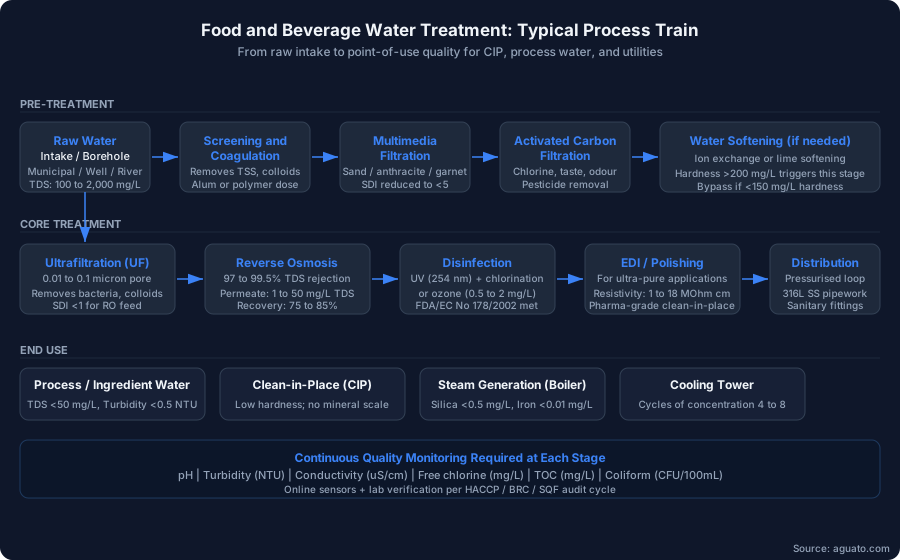
Vendors will almost always recommend a full system even when a partial train is appropriate. A plant sourcing clean municipal water with a TDS of 150 mg/L and stable hardness of 80 mg/L does not need a multi-stage pre-treatment train. It needs a properly sized softener and a UV system with a chlorine residual for the distribution loop. Over-specifying costs $200,000 to $600,000 in unnecessary CAPEX and adds operational complexity that a small site cannot absorb. The decision tree above is the starting point for pushing back on a vendor scope that exceeds what the feed water and end-use requirements actually demand.
## Pre-treatment: removing what kills membranes and audit reports
Pre-treatment is the stage that most plants underfund and most vendors undersize. It is also the stage whose failure causes the most expensive downstream consequences. A membrane system fed with inadequately pre-treated water will foul in weeks rather than months, doubling chemical cleaning frequency and cutting membrane life from five years to eighteen months. That costs $30,000 to $80,000 in premature replacements on a mid-sized RO skid.
### Coagulation and flocculation
When feed water contains suspended solids above 20 mg/L (typical of surface water sources and many boreholes after rainfall), coagulation with alum or a polyelectrolyte flocculant reduces turbidity to below 5 NTU before filtration. For food-grade applications, the coagulant must be food-grade certified. Dosing rate is typically 5 to 30 mg/L depending on raw water turbidity and seasonal variation. The cost is low: $0.01 to $0.04 per m3 of water treated. The consequence of skipping it on turbid water is SDI (Silt Density Index) above 5 at the membrane inlet, which causes irreversible fouling and voids most membrane warranties.
### Multimedia filtration
Multimedia filtration (sand, anthracite, garnet in layered beds) reduces turbidity to below 1 NTU and SDI to below 5, creating a stable feed for downstream membranes. Backwash cycles run at 10 to 15% of throughput, so water recovery is typically 85 to 90%. CAPEX for a correctly sized multimedia filter serving a 50 m3/hour RO system is $25,000 to $60,000. Runtime between backwashes is 8 to 24 hours depending on feed quality; automating the backwash sequence is essential for consistent output and avoids the manual intervention that is the single most common source of pre-treatment process failures in food plant audits.
### Activated carbon filtration
Activated carbon is mandatory upstream of any RO membrane system receiving chlorinated municipal water. Residual chlorine above 0.1 mg/L will oxidise polyamide RO membranes within weeks, destroying the active rejection layer. Granular activated carbon (GAC) at an empty-bed contact time of 5 to 10 minutes provides adequate dechlorination for most municipal feeds. Carbon beds require sanitisation (hot water or sodium hypochlorite flush) every 3 to 6 months for food-grade installations; a bed that is sanitised inconsistently becomes a biofilm reservoir, which is a critical control point failure in a BRC audit.
For food and beverage applications, activated carbon also removes chloramines, taste compounds, geosmin (the earthy off-flavour from algal blooms common in surface water sources), and many pesticides and herbicides. It is the right technology for organic removal before RO; it is not a substitute for a disinfection stage. Carbon removes organics but does not kill microorganisms. Poorly maintained carbon beds can shed bacteria into the downstream system at counts that exceed food-grade limits.
Working with a specialist is important here. [Browse verified water purification companies](/water-purification-companies) with food and beverage sector experience, and request proposals that include full feed water analysis and pre-treatment sizing documentation rather than a generic equipment catalogue.
## Reverse osmosis in food and beverage: the workhorse technology
Reverse osmosis is the dominant technology for food and beverage water treatment where mineral quality, microbiological consistency, and product specification compliance are non-negotiable. It removes 97 to 99.5% of dissolved solids, effectively eliminates nitrates (removal 85 to 95%), rejects all bacteria and viruses above the size of 0.0001 microns, and produces water with a TDS of 1 to 50 mg/L from a municipal feed at 200 to 400 mg/L.
The business case for RO in food and beverage is straightforward: it is the only technology that simultaneously addresses microbiological, chemical, and organoleptic (taste and odour) requirements in a single pass. A plant making a flavour-sensitive beverage that shifts from an RO-sourced water to adjusted municipal supply typically sees sensory panel rejection rates rise by 15 to 40% in blind comparative testing. That is a product quality risk that CFOs can quantify.
### When RO is required versus when it is optional
The threshold decision is primarily TDS-driven:
- TDS below 150 mg/L with stable hardness below 100 mg/L and no organic contamination risk: RO is optional. Softening plus UV may be sufficient for most applications. - TDS 150 to 300 mg/L: RO is advisable for flavour-sensitive products and boiler feed; evaluate the specific product spec and audit standard before making the call. - TDS above 300 mg/L: RO is required for any product where mineral profile affects taste, shelf life, or safety. - Nitrate above 25 mg/L (half the regulatory limit, common in agricultural catchment areas): RO is required as a precautionary control, particularly for infant food and baby formula production. - Any site producing bottled water, spirits, or premium dairy under a brand with a defined mineral specification: RO is required as the control step regardless of feed TDS.
See the [reverse osmosis systems](/reverse-osmosis-systems) category for a technical overview of system configurations, operating pressures, and membrane types suited to food-grade service.
### RO performance parameters a specification must fix
A food-grade RO specification must define recovery rate (typically 75 to 85% for low-TDS municipal feeds; accept lower if scaling risk requires it), salt rejection at design conditions (minimum 97%, verify at commissioning with a conductivity measurement), SDI at RO inlet (maximum 5, target below 3), and permeate TDS target with upper control limit. Plants that do not fix a permeate TDS upper control limit have no basis for a critical control point in their HACCP plan, which is an audit failure waiting to happen.
Recovery rate deserves particular attention for water-stressed sites. A 500 m3/day RO system running at 80% recovery produces 500 m3 of permeate and 125 m3 of concentrate. Managing that concentrate (returning to drain, to cooling tower blowdown, or to a zero-liquid-discharge train) is a cost and compliance question that varies by site discharge consent. The [industrial water disinfection](/industrial-water-disinfection) systems that follow RO in the treatment train also affect the overall water balance and must be sized with the full system flow in mind, not just the permeate stream.
## Disinfection strategies: UV, ozone, and chlorination compared
Disinfection is the stage where food and beverage plants make the most technology-fit errors. A disinfection system that is appropriate for one use point can be wrong for another in the same plant. Specifying a single technology for the whole site often compromises either safety or product quality, and sometimes both. The right approach is to treat each use point as a separate specification exercise.
[cta:nepti-dark]
### UV disinfection
UV at 254 nm achieves a 4-log reduction (99.99%) of bacteria, viruses, and Cryptosporidium at a dose of 40 mJ/cm2. It leaves no chemical residual, adds no taste or odour, and has the lowest OPEX of any disinfection technology: $0.01 to $0.04 per m3. The lamp replacement cycle (every 8,000 to 12,000 hours) costs $100 to $400 per unit. UV is the correct technology at point-of-fill in bottling operations, post-RO where no distribution loop exists, and for any product-contact water application where a chlorine residual would affect flavour.
The limitation is the absence of residual protection. A UV-treated water stream that then travels through 50 metres of pipework can be recontaminated by biofilm before it reaches the fill point. UV-only systems must be paired with a sanitary stainless steel distribution loop with regular hot-water sanitisation, or the pathogen reduction achieved at the lamp is eroded by the time water reaches the tap. A UV lamp that has drifted below rated output due to sleeve fouling while operators assumed it was functioning correctly is among the most common hidden food safety risks in lightly maintained food plants.
### Ozone
Ozone at 0.5 to 2.0 mg/L is more powerful than chlorine (ozone's CT value for Giardia is 40 times lower than free chlorine), removes taste and odour compounds more effectively than any other disinfectant, and leaves no chemical by-products if properly managed. It is the preferred technology for breweries, fruit juice plants, and bottled water operations where taste profile is a commercial differentiator. CAPEX for an ozone generator and contact tank sized for a 100 m3/hour system is $80,000 to $200,000.
The risk that many installers understate is bromate formation. When ozone contacts bromide-containing water (common in coastal aquifers and some river sources), it oxidises bromide to bromate, a regulated carcinogen with a maximum limit of 10 micrograms per litre in drinking water and many food-grade standards. A site that selects ozone without first measuring bromide concentration in its feed water and modelling bromate generation is creating a compliance risk that will not be visible until the first food safety audit or the first regulatory inspection.
### Chlorination
Low-level chlorination (0.1 to 0.3 mg/L free chlorine at the distribution loop) provides a maintained residual that suppresses biofilm regrowth in distribution pipework. It is cheap ($0.005 to $0.02 per m3), simple to monitor, and universally accepted by food safety auditors. The downside in food manufacturing is that free chlorine at even 0.05 mg/L is detectable by trained tasters in some beverage applications, and chlorine reacts with naturally occurring organics to form trihalomethanes (THMs), regulated at 100 micrograms per litre in the EU.
The practical approach in most food and beverage plants is a multi-stage disinfection strategy: ozone or UV as the primary kill step post-treatment, followed by a minimal chlorine residual (0.05 to 0.2 mg/L) for distribution protection, with a final activated carbon or UV stage at point-of-use where residual chlorine cannot be tolerated. This configuration satisfies the auditor (documented residual in the distribution loop) while protecting product quality at the fill point. The [industrial water disinfection](/industrial-water-disinfection) article covers CT values, log-reduction calculations, and the regulatory compliance framework for each technology in detail.
## CAPEX and OPEX: what food and beverage water treatment actually costs
The total cost of ownership is what matters, and the gap between the cheapest compliant system and the right system is usually visible only in year three or four of operation. A system that costs $300,000 less at installation but requires $80,000 per year more in chemistry and maintenance will be more expensive within four years, and the plant will own it for fifteen. The vendors who win on price almost always win by underspecifying pre-treatment, undersizing carbon beds, and proposing manual rather than automated control, all of which migrate cost from CAPEX to OPEX.
For a food or beverage plant treating 500 m3/day (a mid-size processing operation), typical installed CAPEX for a complete treatment train breaks down by configuration as follows. Softener plus UV on clean municipal water (the minimum viable system for non-sensitive products and general utilities) runs $60,000 to $150,000 installed. A full multimedia, activated carbon, RO, and UV train for beverage ingredient water or boiler feed runs $250,000 to $550,000. A complete pre-treatment plus RO plus ozone system for bottled water or flavour-sensitive beverages runs $350,000 to $700,000. A post-RO electrodeionisation system for pharmaceutical-grade CIP or UHT steam generation runs $500,000 to $1,100,000. These ranges assume stainless steel food-grade wetted parts throughout, certified instrumentation, and a commissioning protocol that includes full HACCP validation documentation.
On a per-unit basis, RO system CAPEX in food-grade service typically runs $400 to $1,200 per m3/day of permeate capacity, inclusive of pre-treatment and post-treatment skids. That range narrows once feed water quality and end-use specification are fixed. A plant that provides a full hydrochemical analysis and a documented end-use specification typically receives quotations that are 20 to 35% less dispersed than a plant that issues a vague RFP, because vendors can size correctly rather than padding for uncertainty.
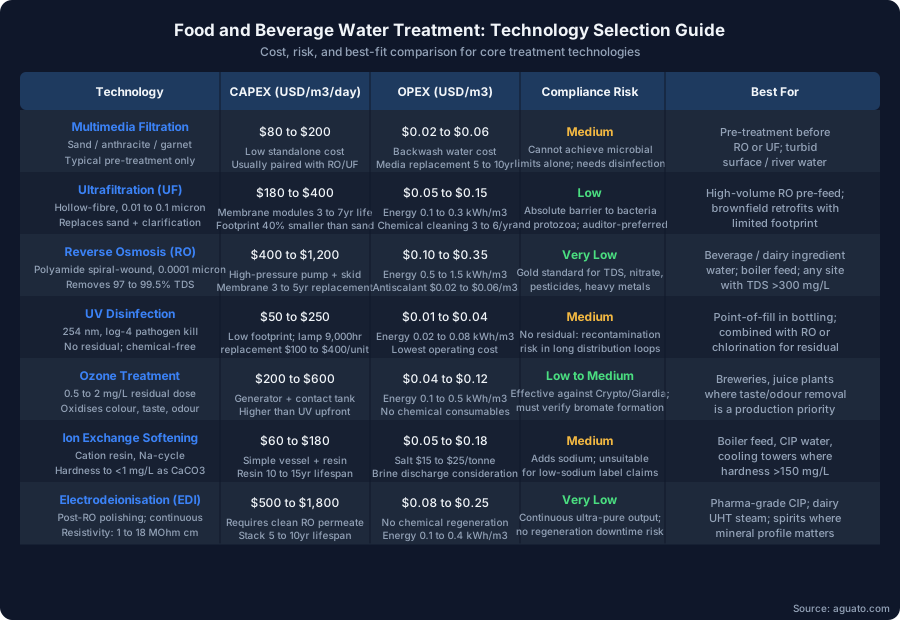
The comparison above summarises the six core technologies across the four dimensions that matter to a capital projects team. The compliance risk column is particularly important: an auditor reviewing your HACCP plan will ask which technology provides an absolute barrier at each critical control point. Ultrafiltration and RO membranes provide absolute barriers (their rejection is a physical function of pore size and not subject to chemical dosing variability). UV and ozone provide probabilistic log-reduction barriers that depend on maintained equipment performance. That distinction affects how each technology is documented in your food safety plan.
| System configuration | CAPEX (USD) | Target application | Recovery rate | |---|---|---|---| | Softener + UV (municipal, low TDS) | $60,000 to $150,000 | CIP, utilities, low-sensitivity products | 95 to 99% | | Multimedia + carbon + RO + UV | $250,000 to $550,000 | Beverage ingredient water, boiler feed | 75 to 85% | | Full pre-treatment + RO + ozone | $350,000 to $700,000 | Bottled water, flavour-sensitive beverage | 75 to 85% | | RO + EDI (ultra-pure) | $500,000 to $1,100,000 | Pharma-grade CIP, UHT steam, spirits | 75 to 85% |
### OPEX breakdown for a 500 m3/day RO-based system
For a 500 m3/day RO-based system, annualised OPEX breaks down across six cost lines:
- Energy: RO high-pressure pumping at 0.5 to 1.5 kWh/m3 of permeate = $10,000 to $33,000/year at $0.12/kWh (US average commercial rate). - Antiscalant: $0.02 to $0.06 per m3 of feed = $4,000 to $11,000/year. - Membrane replacement: Full array set on a 5-year cycle, amortised = $8,000 to $20,000/year depending on array size and membrane brand. - UV lamp replacement: $3,000 to $8,000/year for a plant-wide UV installation. - Activated carbon replacement: $4,000 to $10,000/year for a 20 m3 GAC vessel on a 3 to 5 year replacement cycle. - Laboratory and monitoring: $6,000 to $15,000/year including third-party verification for HACCP documentation. - Labour (operations and maintenance): $15,000 to $40,000/year depending on automation level.
Total OPEX for a properly designed 500 m3/day system typically runs $50,000 to $137,000 per year, or $0.27 to $0.75 per m3 of treated water. Sites that inherit a poorly designed system without adequate automation can double that figure in unplanned maintenance and emergency chemical spend. The single highest-leverage OPEX reduction available to most food plants is pre-treatment investment: a correctly sized multimedia and carbon pre-treatment train that extends membrane life from 2 years to 5 years saves $30,000 to $60,000 in membrane costs alone over a single replacement cycle.
Connect with [industrial water treatment companies](/industrial-water-treatment-companies) who have demonstrated food and beverage sector experience to receive OPEX-modelled proposals. Ask every vendor to provide a five-year total cost of ownership projection, not just an equipment price. Any vendor who cannot produce that projection at proposal stage is not in a position to stand behind their design.
## CIP water quality: where most plants get it wrong
Clean-in-place systems are where water quality failures create the most expensive food safety incidents. CIP water is not product, but it contacts every surface that product touches. A hardness of 200 mg/L in a CIP rinse water stream deposits calcium carbonate scale inside pasteurisers, filler manifolds, and heat exchangers. That scale harbours biofilm. That biofilm generates pathogens. That pathogen event triggers a recall. The causal chain from inadequate CIP water quality to product recall is well-established, and it is avoidable.
The critical parameter for CIP water is hardness, and the specification is tighter than most procurement teams realise. The target for CIP final rinse water is hardness below 50 mg/L as CaCO3, with a practical target of below 20 mg/L for any system that contacts product surfaces at elevated temperature. Most municipal water in hard-water regions runs at 150 to 400 mg/L. The gap between what comes from the mains and what CIP requires is the entire case for dedicated treatment.
A pattern that recurs across dairy and beverage installations is the use of a single softener for both CIP water and general process water. That configuration works when the softener is correctly sized and maintained, but ion exchange softening adds sodium to the treated water (typically 50 to 150 mg/L, depending on starting hardness). For product contact water in low-sodium beverages or dairy products with sodium-sensitive label claims, that sodium addition is a formulation problem as well as a water quality issue. The right specification for many sites is RO-treated water for ingredient and CIP circuits, softened water for general utilities.
The better specification for a mid-to-large food and beverage plant is a split supply: RO-treated water for ingredient and CIP circuits where mineral profile matters, and softened municipal water for non-critical utilities. RO permeate at 1 to 20 mg/L TDS and near-zero hardness eliminates the scale risk entirely, reduces detergent consumption by 15 to 30% (softer water requires less surfactant to achieve the same cleaning result), and produces a rinse water that leaves no mineral residue on product-contact surfaces. For a plant spending $80,000 per year on CIP detergents, a 20% reduction in chemical dose rate from better water quality saves $16,000 annually, which materially improves the payback calculation on the RO system.
A useful starting point for sizing and specification is the [water treatment consulting](/water-treatment-consulting) services category, which lists firms that specialise in CIP system design and HACCP water programme integration. The [industrial water filtration](/industrial-water-filtration) systems used ahead of CIP water supply also affect detergent performance: particulates above 1 micron in the rinse water create nucleation sites for scale and require higher detergent concentrations to overcome, a cost that compounds across hundreds of CIP cycles per year.
## The effluent side
Everything above is about the water going into the plant. The other half of a food and beverage water programme is the effluent leaving it, and it is a different discipline with its own economics: a high but highly biodegradable organic load, hard swings with the production and sanitation cycle, and nutrients as the parameter that catches plants built only to remove carbon. It is where a site's discharge consent and its water-reuse opportunity both sit, and providers that build these trains are listed under [food and beverage water treatment suppliers](/industries/food-beverage).
The discharge side is deep enough to carry its own guide. The benchmarks from 107 real plants across 32 countries, the treatment train that handles the swing, the sub-sector differences, and the reuse decision are covered in the companion [food and beverage wastewater treatment](/resources/food-beverage-wastewater-treatment) guide.
## Failure scenarios and what they cost
Understanding how systems fail is more valuable than understanding how they work. A plant that knows the failure modes can specify the safeguards and monitoring that prevent the most expensive outcomes before they occur.
### Membrane fouling from inadequate pre-treatment
Decision: skip coagulation and multimedia filtration to reduce CAPEX. Operational outcome: SDI at RO inlet rises above 5 during any turbidity event. Membrane elements foul with colloidal material within 3 to 6 months. Differential pressure across the array rises 30% above design, triggering more frequent chemical cleaning than the system was designed for. Cost: emergency membrane replacement at $12,000 to $30,000 for a 500 m3/day skid, plus 2 to 5 days of reduced output at $5,000 to $20,000 per day in lost production, plus $4,000 to $8,000 per cleaning event for chemicals and labour. Total exposure per episode: $30,000 to $80,000. Correct decision: specify multimedia filtration with automatic SDI monitoring and a high-SDI alarm interlock that protects the RO inlet. The pre-treatment investment of $25,000 to $60,000 prevents losses that can exceed that amount in a single fouling episode.
### Biofilm formation in distribution loops
Decision: install UV at the treatment plant but use PVC distribution pipework with dead legs and intermittent flow at remote use points. Operational outcome: biofilm establishes in low-flow sections within 60 to 90 days. The UV lamp achieves its designed log-reduction at the treatment outlet, but by the time water reaches the remote fill station it carries 100 to 1,000 CFU per mL. A BRC audit fails the microbial test at point-of-use. Cost: $15,000 to $40,000 for full loop sanitisation, pipework replacement or modification, and third-party microbiological re-validation. Plus potential suspension of production pending re-certification: $50,000 to $200,000 in lost throughput depending on plant scale. Correct decision: specify 316L stainless steel distribution loops with no dead legs, minimum flow velocity of 0.6 m/s, automated hot-water or chemical sanitisation cycles, and microbiological monitoring at five or more points around the loop, not just at the treatment outlet.
### Chlorine damage to RO membranes
Decision: operate a chlorinated feed water supply without continuous monitoring of free chlorine at the RO inlet. Operational outcome: activated carbon bed reaches breakthrough (typically 6 to 18 months depending on bed volume and chlorine load). Free chlorine above 0.05 mg/L reaches RO membranes. Polyamide rejection layer oxidises progressively over 2 to 8 weeks. Salt rejection falls from 99% to 90%, then below 85%. Permeate TDS rises above specification without a visible operational alarm. Cost: complete membrane replacement at $15,000 to $50,000 (larger arrays), plus re-commissioning and product quality hold pending re-validation: $20,000 to $60,000 total. Correct decision: install continuous ORP or free-chlorine monitoring at the carbon filter outlet with an interlock that shuts the RO feed pump above 0.05 mg/L free chlorine. Replace carbon on a defined schedule, not when failure is detected.
### Scale in CIP heat exchangers
Decision: use untreated or softener-bypass water in CIP circuits during a softener maintenance period. Operational outcome: hardness above 150 mg/L in a 90 degrees Celsius caustic CIP solution precipitates calcium carbonate on heat exchanger plates within 2 to 4 cleaning cycles. Scale builds to 0.5 to 2 mm, reducing heat transfer efficiency by 20 to 40%. Biofilm grows under scale that CIP chemistry cannot penetrate. Cost: heat exchanger mechanical descaling or plate replacement: $10,000 to $35,000. Extended product hold pending microbiological clearance: $30,000 to $100,000. Correct decision: specify a hardness bypass interlock and continuous hardness monitoring in the CIP water supply. Never run CIP from untreated water, even as a temporary measure.
The [water quality monitoring](/water-quality-monitoring-online-vs-lab) article covers the sensor technologies and monitoring architectures that prevent these failure modes from running undetected long enough to become expensive.
## How to evaluate and specify vendors
The vendor selection process for food and beverage water treatment is where most procurement teams lose money. The standard approach (issue a brief RFP, receive three quotations, select the lowest compliant price) almost guarantees a specification gap, because the brief does not contain enough site-specific data to produce comparable quotations, and vendors optimise their proposals for what they can quote rather than what the site needs.
The right approach has three stages. First, commission a full hydrochemical analysis of the feed water. Not the utility company's annual compliance report, which measures at the supply boundary and not at the plant tap. The analysis should include TDS, hardness (calcium and magnesium separately), alkalinity, silica, iron, manganese, chlorine, TOC, SDI potential, and a microbiological screen including heterotrophic plate count and coliform. Cost: $1,500 to $4,000 from an accredited laboratory. This investment is non-negotiable and is almost always cheaper than a specification error.
Second, define the end-use specifications for each water application point: ingredient water, CIP rinse water, boiler feed, cooling tower makeup. These should be expressed as measured parameters with upper and lower control limits, not as technology requirements. You are specifying what you need, not what to install. That distinction forces vendors to demonstrate that their technology meets the spec, rather than asserting it. It also gives you a contractual performance basis for commissioning and warranty claims.
Third, evaluate proposals on five-year total cost of ownership, not equipment price. Ask every vendor to provide: membrane replacement schedule and cost, chemical consumption rates (antiscalant, cleaning chemicals), energy consumption at rated and part-load, service response time and spare parts availability, and reference sites in the food and beverage sector with comparable feed water. A vendor who cannot provide food-sector references with HACCP-validated installations is not the right vendor for a food-grade system.
[Water treatment consulting](/water-treatment-consulting) specialists can manage this specification and evaluation process, which typically reduces the total cost of ownership by 15 to 25% compared to a self-managed RFP by providing market intelligence on pricing benchmarks and technology performance. The fee for a well-scoped consulting engagement ($15,000 to $40,000) is usually recovered in the first year through avoided specification errors.
The [Nepti decision-intelligence platform](/nepti) models your water matrix against your production specifications and simulates which treatment train delivers the lowest lifecycle cost at your required quality. It produces a ranked comparison of technology options with cost projections before you engage a single vendor, so you arrive at the RFP stage with an independent benchmark rather than relying on the vendor's own modelling. Characterising your challenge before engaging vendors is the most reliable way to avoid paying for a system that works for the vendor's product range rather than your site.
Not sure which configuration suits your site? [Post your project](/post-project) with your hydrochemical data and end-use specifications, and qualified food-grade water treatment providers will scope the trade-off against your actual numbers.
The [WHO Guidelines for Drinking-water Quality](dofollow:https://www.who.int/publications/i/item/9789241549950) provide the international reference framework for water quality parameters, including the scientific basis for the microbial and chemical limits that underpin most national food safety regulations and audit scheme requirements.
For sites operating in the US, the [FDA Food Safety Modernization Act Preventive Controls rule](dofollow:https://www.fda.gov/food/food-safety-modernization-act-fsma/full-text-fsma-regulations) (21 CFR Part 117) sets the regulatory requirement for water quality monitoring and corrective action procedures as part of a food safety plan, which is why many plants retain accredited [water quality testing providers](/water-quality-testing) on a standing contract. The water monitoring provisions are detailed in Subpart C and are enforceable from the first FDA inspection of a covered facility.
## Sources
The effluent benchmarks and case studies in this guide are drawn from Aguato's food and beverage reference corpus of published treatment studies. Featured facilities:
- Corn-starch plant, China: [IOP Conference Series (2019)](https://doi.org/10.1088/1755-1315/358/2/022060) - Poultry slaughterhouse, Kuala Lumpur, Malaysia: [Journal of Membrane Science Research (2021)](https://doi.org/10.22079/jmsr.2021.523382.1443) - Brewery, Addis Ababa, Ethiopia: [Heliyon (2024)](https://pmc.ncbi.nlm.nih.gov/articles/PMC11648748/) - Buffalo abattoir ETP, India: [Frontiers in Environmental Science (2022)](https://www.frontiersin.org/journals/environmental-science/articles/10.3389/fenvs.2022.881623/full) - Soft-drink bottling plant, Opole, Poland: [E3S Web of Conferences (2017)](https://www.e3s-conferences.org/articles/e3sconf/pdf/2017/07/e3sconf_eems2017_02014.pdf)
The swine slaughterhouse (Merida, Mexico) and the under-performing cases (a slaughterhouse in Aligarh, India and a cheese dairy in Brazil) are drawn from peer-reviewed journals in the same corpus.
## FAQ
### What water quality standards apply to food and beverage manufacturing?
Food and beverage plants must meet the potable water standard at the point of use as a minimum baseline, which in the EU is set by Directive 2020/2184 and in the US by EPA Safe Drinking Water Act standards enforced at the supply boundary. Above that baseline, food safety certification schemes including BRC Global Standard Issue 9, SQF Edition 9, and IFS Food Version 8 require a documented HACCP plan for water, continuous monitoring at critical control points, and corrective action records. Many retail contracts impose additional requirements beyond the certification scheme, including specific microbiological testing frequencies and TDS or hardness limits for ingredient water. The regulatory floor is a starting point, not a complete specification, and most sites that fail food safety audits on water do so not because they breach the potable standard but because they lack documented monitoring evidence.
### What TDS level requires reverse osmosis in a food plant?
The threshold is context-dependent, but as a practical rule: feed water TDS above 300 mg/L warrants RO for any flavour-sensitive product, and TDS above 150 mg/L warrants RO for boiler feed or for any product where the mineral profile is part of the formulation specification. For bottled water, spirits, and premium dairy, RO is required regardless of feed TDS to ensure consistent mineral profiling across production batches. Nitrate concentration is a parallel trigger: any feed water above 25 mg/L nitrate should be treated with RO if the plant produces infant food, baby formula, or products consumed by vulnerable populations. When in doubt, model the lifecycle cost of RO against the product quality and audit risk of not installing it.
### How do I prevent biofilm in a food-grade water distribution loop?
The three design requirements are: use 316L stainless steel pipework with an electropolished interior surface (Ra below 0.8 microns), eliminate all dead legs and low-flow sections where water can stagnate, and maintain a minimum flow velocity of 0.6 m/s throughout the loop. Operationally, the loop requires hot-water sanitisation (80 degrees Celsius circulated for 30 minutes) or chemical sanitisation on a defined schedule, typically weekly for high-risk use points and fortnightly for lower-risk circuits. UV alone at the treatment plant does not prevent biofilm regrowth in a distribution loop: you need either a maintained disinfectant residual or a physical loop design that eliminates the conditions biofilm requires, and the monitoring to verify that either control is working.
### What is the difference between CIP water quality and product water quality requirements?
Product (ingredient) water must meet the potable standard plus the product formulation specification, which typically means TDS below 50 to 100 mg/L, hardness below 20 mg/L, no detectable coliforms, and in many cases a defined mineral profile for flavour consistency. CIP water has a different priority: the critical parameters are hardness (below 50 mg/L to prevent scale on heat-transfer surfaces), microbiological quality (below 100 CFU per mL for pre-rinse water, below 1 CFU per 100 mL for final rinse), and absence of any residual from previous CIP cycle chemicals that could contaminate product. CIP water does not need the same TDS or mineral profile control as ingredient water, but it needs tighter hardness control than most plants specify, and it needs to be monitored at the point of use, not just at the treatment plant outlet.
### How long do RO membranes last in a food and beverage application?
In a properly designed system with correct pre-treatment and OPEX chemistry management, polyamide spiral-wound RO membranes typically last 4 to 7 years. The most common causes of premature membrane failure (18 to 30 months) are chlorine breakthrough from a saturated carbon bed, biological fouling from inadequate pre-treatment, and scaling from incorrect antiscalant dosing or dosing system failure. Membrane life is one of the most sensitive indicators of overall system health: a plant replacing membranes every 2 years when the design life is 5 years is spending two to three times its intended membrane OPEX, and the root cause is almost always addressable through pre-treatment or monitoring upgrades that cost a fraction of the membrane replacement bill.
### What is the cost per cubic metre for food-grade water treatment?
Full lifecycle cost (CAPEX amortised plus OPEX) for a properly designed food-grade water treatment system typically runs $0.40 to $1.20 per m3 of treated water for a system treating 500 m3/day, including energy, chemicals, membrane replacement, and maintenance. Pre-treatment adds $0.05 to $0.12 per m3. The total all-in cost for a mid-size food plant is typically $0.50 to $1.50 per m3 depending on treatment train complexity and quality specification. That cost is low relative to the product value being protected: treated ingredient water at $0.001 per litre protects finished goods worth $0.50 to $5.00 per litre. The cost-benefit calculation almost always favours investment in adequate treatment when modelled at the product level rather than the infrastructure level.
### How should a food plant respond when water quality goes out of specification?
A documented corrective action procedure is a HACCP requirement, not an option. The response sequence should be: isolate the affected supply immediately and switch to backup supply or production hold; investigate the root cause (sensor failure versus actual quality event); collect confirmatory samples for laboratory analysis; assess product hold requirements for any product made during the out-of-spec period (conservative approach: hold all product produced while the issue was undetected); address root cause before returning to normal operation; and document the full event including the time of detection, cause, corrective action taken, and product disposition decision. The documentation is what auditors review after the event. Plants that cannot produce it face certificate suspension regardless of whether the out-of-spec event caused any product harm, and that suspension is the real cost driver.