Recirculating aquaculture systems reuse 95 to 99% of their water, but that efficiency only holds if the multi-stage treatment train is correctly sized and operated. The RAS water treatment guide for fish farm operators and system designers.
Recirculating aquaculture systems are the most water-efficient method of intensive fish production, reusing 95 to 99% of the water in the system rather than flowing it through once and discharging it. That efficiency comes at a price. Every gram of fish feed that enters a RAS generates ammonia, carbon dioxide, and suspended solids that must be continuously removed before they accumulate to toxic levels. The water in a commercial RAS salmon facility carrying 80 to 100 kilograms of fish per cubic metre passes through the full treatment train every 20 to 30 minutes. Get any stage of that treatment wrong and you can lose the entire stock in hours.
The attractive economics of RAS, the ability to locate production near markets, achieve year-round growth, and control disease exposure, only materialise if the water treatment system is sized and operated correctly. An under-designed RAS that runs into recurrent water quality excursions, ammonia spikes after a biofilter upset, or CO2 accumulation during peak feeding will never reach its production targets regardless of how good the fish genetics are.
This article covers the full RAS water treatment train, from mechanical filtration and biological treatment to UV disinfection and gas management, the performance targets for each stage, the technology choices available at each point, and the failure modes that end fish farm projects prematurely. It is written for aquaculture operators, system designers, and investors who want to understand what a properly functioning RAS requires.
## The decision in brief
- Size, commission and train the treatment system properly. A commercial RAS facility producing 1,000 tonnes of Atlantic salmon per year represents a capital investment of $30 to $80 million in water treatment infrastructure alone. - A single biofilter crash can cost $4 to $8 million. A crash causing a 30% stock mortality event, which has occurred at multiple large RAS operations, costs $4 to $8 million in lost stock at current market prices. - Every documented crash was predictable and preventable. The causes reviewed for this article were under-designed biofilter capacity, missing ammonia monitoring with automated alarms, or inadequate staff training on the early warning signs of nitrification stress.
Properly sizing the treatment system, commissioning it correctly and training operators to its operating parameters is consistently less than 5% of the cost of a single major stock loss event.
## What makes aquaculture water treatment different
The fundamental difference between aquaculture water treatment and industrial or municipal water treatment is that the treated water is returned immediately to a live system. There is no buffer time between a water quality excursion and its consequence. In an industrial RO system, a product water quality deviation takes hours or days to affect downstream processes. In a RAS, a dissolved [oxygen](/elements/oxygen) drop below 5 mg/L or an ammonia spike above 0.5 mg/L affects fish behaviour within minutes and causes mortality within hours.
This immediacy demands a combination of treatment capacity, monitoring frequency, and redundancy that goes well beyond what most other water treatment applications require. A properly designed RAS runs multiple parallel treatment stages, monitors the key parameters every 15 minutes or less with automated alarms, and has standby capacity to handle a primary stage failure without a fish kill.
The water quality requirements for salmon as a benchmark are: dissolved oxygen above 7 mg/L (optimally 8 to 10 mg/L), total ammonia [nitrogen](/elements/nitrogen) (TAN) below 1 mg/L (un-ionised ammonia below 0.02 mg/L, which is the toxic fraction), nitrite below 0.1 mg/L, carbon dioxide below 15 mg/L, temperature at 12 to 15 degrees Celsius for Atlantic salmon, pH 6.8 to 7.5, and solids below 10 mg/L total suspended solids. Each of these parameters drives a specific treatment stage, and each treatment stage affects the others.
Understanding [industrial water filtration](/resources/industrial-water-filtration) principles is the foundation of mechanical RAS treatment design, but the biological treatment stages, which are unique to aquaculture, are where most RAS projects succeed or fail.
## The RAS treatment train
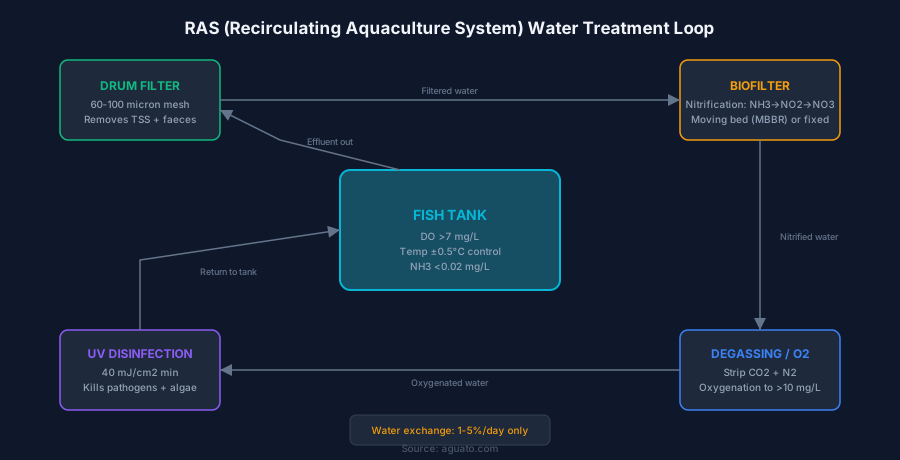
A full RAS treatment train for intensive finfish production moves in a loop. Fish tank effluent flows first to mechanical removal of solids, then to biological treatment of dissolved nitrogen compounds, then to degassing and oxygenation to manage CO2 and DO, then through UV disinfection, and back to the fish tank with only 1 to 5% of the volume replaced by fresh water on each pass.
The design constraint that governs everything is the fish load. A RAS designed for 80 tonnes of fish must size every treatment stage to handle the waste output of 80 tonnes of fish at the peak feeding rate. Because fish grow, the system that starts running at 30 tonnes will eventually reach 80 tonnes, and the treatment stages must be sized for the maximum load, not the initial load. Under-sizing the biofilter at commissioning because the initial fish load is small is the cause of many RAS failures at the point when the system approaches design capacity for the first time.
## Mechanical filtration and drum filters
Drum filters are the standard mechanical filtration technology in modern RAS because of their continuous self-cleaning operation, compact footprint relative to flow capacity, and ability to handle the variable solids load from a feeding and fasting cycle. A rotating drum filter with a 60 to 100 micron mesh removes faecal matter, uneaten feed, and biofilm fragments before they decompose and generate additional ammonia load for the biofilter.
The design target is to remove at least 60 to 80% of total suspended solids before the water enters the biofilter. Suspended solids passing through to the biofilter accumulate on the media, increase the oxygen demand in the biofilm, and compete with nitrifying bacteria for surface area, reducing nitrification efficiency. A drum filter that runs continuously at a mesh blinding rate that exceeds the backwash cycle allows accumulated solids to break through, causing sharp TSS spikes in the biofilter that can push ammonia above control targets within a few hours.
[cta:nepti-dark]
Drum filter sizing is typically based on hydraulic throughput at 80% of the manufacturer's rated capacity, allowing headroom for variability. A drum filter rated at 500 m3/h should be sized in a system processing 400 m3/h or less. For large RAS, multiple drum filters in parallel provide both the required capacity and the redundancy to allow individual units to be taken out of service for maintenance without reducing throughput.
## Biological filtration: the engine of the system
The biofilter is the most critical and the most difficult to manage stage of RAS water treatment. Its function is to convert the ammonia excreted by fish into nitrite and then nitrate through a two-step nitrification process carried out by specific bacterial communities. The nitrifying bacteria that do this work, primarily Nitrosomonas and Nitrospira species, are obligate aerobic chemolithotrophs that grow slowly, require alkalinity as a carbon source, and are sensitive to temperature, pH, dissolved oxygen, and various chemicals including many veterinary treatments used in aquaculture.
The design basis for a moving bed biofilm reactor (MBBR), the most common biofilter format in modern RAS, is the nitrification rate per unit of media surface area, typically 0.4 to 1.0 grams of total ammonia nitrogen per square metre per day at 15 degrees Celsius and DO above 4 mg/L. Calculating the required media volume starts with the daily ammonia production of the fish load, divides by the design nitrification rate, and then adds a safety factor of 1.5 to 2.0.
The biological maturation period before a new biofilter reaches full nitrification capacity is 6 to 12 weeks at typical RAS water temperatures. This has two practical implications. First, a new RAS cannot be stocked to design capacity immediately. The fish load must be built up gradually to match the developing nitrification capacity. Second, a biofilter that crashes due to a disinfection dosing error, a rapid temperature change, or a chemical treatment cannot be restarted at full capacity for weeks. Having a documented biofilter monitoring protocol and an emergency ammonia management procedure is not optional.
For alkalinity management, the nitrification process consumes approximately 7.1 grams of alkalinity (as CaCO3) per gram of ammonia-N oxidised. A RAS consuming 5 kg of TAN per day depletes 35.5 kg of alkalinity per day. Without supplemental alkalinity addition (sodium bicarbonate is standard), the pH falls and nitrification stops. Alkalinity monitoring and dosing is a daily management task that directly determines whether the biofilter functions.
## Degassing and oxygenation
Carbon dioxide is produced by fish respiration at a ratio of approximately 1.4 grams of CO2 per gram of oxygen consumed. In a RAS with high fish loading, CO2 accumulates rapidly, and it is toxic to fish above approximately 30 mg/L (chronic stress begins at 15 to 20 mg/L). The degasser removes CO2 by creating surface contact between the water and atmosphere or a low-pressure gas flow, allowing CO2 to partition to the gas phase.
The oxygenation stage, typically using pure oxygen injection into a pressurised column or a venturi system, raises dissolved oxygen from the post-treatment level of 5 to 7 mg/L back to 8 to 12 mg/L before return to the fish tank. Pure oxygen systems allow oxygen supply to be precisely matched to fish metabolic demand, which varies with fish weight, temperature, and feeding activity. The cost of pure oxygen in a large commercial RAS, typically $0.30 to $0.60 per kg of fish produced, is one of the larger variable costs in the system.
The interaction between CO2 and dissolved oxygen management requires careful attention to water temperature and flow distribution. A poorly mixed return flow that creates a high-DO, high-CO2 plume near fish can cause acute stress even if the bulk tank parameters are within target.
## UV disinfection and ozone
UV disinfection in RAS serves two functions: pathogen control to reduce the load of bacteria, viruses, and parasites in the recirculating water, and algae control to prevent phytoplankton growth that would compete with fish for dissolved oxygen. Standard UV dose targets are 20 to 40 millijoules per square centimetre for bacteria, 40 to 80 mJ/cm2 for viral pathogens, and 100 to 400 mJ/cm2 for cryptosporidium and giardia. For RAS, a target of 40 mJ/cm2 is a practical minimum for general pathogen reduction.
The relationship between [water disinfection methods](/resources/water-disinfection-methods-comparison) and fish welfare is different from other applications. Chlorination is generally not used in RAS because chlorine is toxic to fish and must be dechlorinated before fish contact, adding a further treatment stage. UV does not leave a residual (which is beneficial in a live fish system) and does not generate disinfection by-products.
Ozone is used in some advanced RAS designs for disinfection, colour removal, and micro-flocculation that improves drum filter efficiency. Ozone is effective but requires careful control: residual ozone above 0.01 mg/L is toxic to fish, and ozone reacts with bromide in saline systems (as in marine species RAS) to form hypobromite, which is also toxic. Ozone use in RAS requires a dedicated reaction chamber followed by UV to destroy residual ozone before the water returns to the fish tank.
## Feed management and its interaction with water quality
Feed management is inseparable from water quality management in RAS because every gram of uneaten feed and every gram of faecal output is a direct load on the water treatment system. The relationship between daily feed rate and daily ammonia production is approximately: 1 kilogram of feed at 35% protein generates 25 to 35 grams of total ammonia nitrogen. A RAS stocked at 80 tonnes of salmon consuming 1.5% of body weight daily is adding 120 kilograms of ammonia per day to the water that the biofilter must process.
The practical implication is that feeding schedules must be integrated with treatment system capacity. A feeding programme that maximises growth by pushing feed rates to satiation during warm-water peak growth periods may exceed biofilter capacity during those periods, causing TAN accumulation. RAS operators who discover their biofilter is undersized for peak summer temperatures learn this at the cost of a stock mortality event. The correct engineering approach is to design the biofilter for the maximum fish load at maximum feed rate at the highest operating temperature, with a 1.5 safety factor on nitrification capacity.
Feed wastage, uneaten pellets that fall through the fish population and accumulate on the tank floor, significantly increases the solids load on the drum filter and adds a decomposing organic load to the water column. Modern RAS designs use transparent or near-transparent feed pellets and underwater cameras at feeding stations to allow immediate detection of feed fallthrough and feed rate adjustment. This feed management technology reduces the drum filter solids load by 20 to 40% and keeps the decomposing organics load in the system minimal.
For species farmed at high pH, such as tilapia which tolerates pH up to 8.5, the higher pH reduces the toxicity of total ammonia nitrogen (because the un-ionised NH3 fraction decreases with increasing pH), which provides more safety margin at high TAN concentrations. The species-specific pH tolerance interacts with the alkalinity management programme in ways that must be understood at the system design stage, not discovered during operation.
## Water quality parameters and monitoring
A well-operated RAS continuously monitors dissolved oxygen, temperature, and pH at minimum, with automated alarms and emergency responses (oxygen injection increase, feeding halt, water exchange) triggered by parameter deviations. Ammonia is measured on a 1 to 4-hour cycle using on-line analysers or frequent grab sampling, with daily laboratory confirmation. CO2 is typically measured by pH and alkalinity inference rather than direct measurement in smaller systems, though direct CO2 probes are used in high-density systems.
[Water quality monitoring for industrial applications](/resources/water-quality-monitoring-online-vs-lab) must be adapted for aquaculture with a critical difference: the response time for a life-threatening parameter excursion is measured in hours, not days. The monitoring system must generate actionable alarms in real time. A monitoring programme that generates data for weekly review is not a RAS monitoring programme; it is a historical record of incidents that have already occurred.
For nitrate management, the accumulation of nitrate (the end product of nitrification) is controlled by the water exchange rate. Nitrate tolerance varies by species: salmon tolerate up to 200 mg/L, while more sensitive species may be affected above 50 mg/L. The 1 to 5% daily water exchange rate that defines RAS is calibrated to keep nitrate below the species-specific limit while maintaining the water efficiency that makes RAS economically competitive.
## Denitrification: the advanced RAS stage for intensive systems
In a standard RAS, nitrate accumulates continuously as the end product of nitrification and is managed by the daily water exchange rate. For very intensive systems targeting minimal water exchange (below 1% per day), or for systems in water-scarce areas where even minimal exchange is costly, denitrification becomes necessary to control nitrate below species-specific limits without excessive water use.
Denitrification converts nitrate to nitrogen gas using heterotrophic bacteria in an anoxic zone, reversing part of the nitrogen cycle. The carbon source for denitrification can be: methanol (effective but requires careful dosing and handling), ethanol (safer, food-grade available), or the soluble organic carbon in RAS water itself in autotrophic systems. Denitrification adds a third biological stage to the RAS treatment train and increases system complexity and capital cost by approximately 20 to 35%.
The decision to include denitrification at the design stage depends on: the species nitrate tolerance (salmon tolerates 200 mg/L, sensitive species require below 50 mg/L), the target water exchange rate, and the cost of freshwater make-up in the project location. For inland salmon RAS in water-scarce regions, denitrification with below 0.5% daily exchange is economically justified when freshwater costs exceed EUR 0.50 to 1.00 per cubic metre.
The interaction between the biofilter and the denitrification stage requires careful hydraulic design to prevent anoxic water from the denitrification stage reaching the nitrification zone of the biofilter, which would kill the nitrifying bacteria. Physically separated reactors with controlled flow paths are the standard design.
## RAS vs alternatives: a production comparison
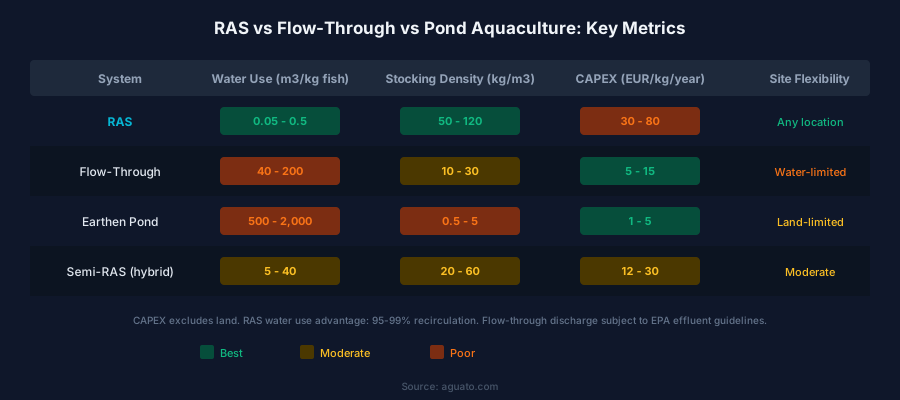
The decision to invest in RAS versus flow-through or pond systems is primarily an economics decision, and the economics depend on water availability, land cost, species value, and market proximity. RAS has the highest capital cost and the highest operational complexity, and it only makes economic sense when those costs are offset by production advantages that alternative systems cannot match.
| System | Water use (m3/kg fish) | Stocking density (kg/m3) | CAPEX (EUR/kg/year) | Site constraint | |---|---|---|---|---| | RAS | 0.05 to 0.5 | 50 to 120 | 30 to 80 | None (any location) | | Flow-through | 40 to 200 | 10 to 30 | 5 to 15 | Water-limited | | Pond | 500 to 2,000 | 0.5 to 5 | 1 to 5 | Land-limited | | Semi-RAS (hybrid) | 5 to 40 | 20 to 60 | 12 to 30 | Moderate |
According to [FAO aquaculture production statistics](dofollow:https://www.fao.org/fishery/en/aquaculture), global aquaculture production now exceeds capture fisheries for human consumption, and the fastest-growing segment is land-based intensive production using RAS. The water scarcity argument for RAS is compelling in markets where freshwater allocation is constrained, but the financial case requires salmon-equivalent market prices to justify the CAPEX in most basins.
[Post your aquaculture water treatment challenge and compare proposals from qualified RAS system providers](/post-project).
## Biosecurity and pathogen management in RAS
RAS systems, because they recirculate water rather than flowing it through, create the possibility that a pathogen introduced into the system will persist and build up in concentration unless actively controlled. This makes biosecurity, the suite of measures that prevent pathogen introduction and control pathogen levels within the system, a critical operational discipline.
The primary biosecurity measures in commercial RAS are: UV disinfection of all incoming water and recirculating water, restricted access to the fish tanks with hygiene protocols for staff entering the fish area, quarantine procedures for any fish entering the system from outside (typically 4 to 6 weeks in an isolated biosecure tank with separate water treatment), and disinfection of all equipment and vehicles before entry to the fish zone. The UV system is the primary technical control. A UV dose of 40 mJ/cm2 reduces most bacterial and viral pathogens by several orders of magnitude, but it does not sterilise the water completely. The biosecurity protocol is the layer that prevents reintroduction of controlled pathogens.
The most economically damaging pathogens in salmon RAS are: Aeromonas salmonicida (furunculosis), infectious pancreatic necrosis (IPN) virus, and sea lice in marine-phase systems. Sea lice are not a problem in freshwater RAS but become a major challenge when salmon are transferred to sea cages for the marine grow-out phase. Managing the parasite load in the RAS freshwater phase so that fish enter the sea cage phase with minimal louse burden is an important part of the overall salmon production model.
The antibiotic and antiparasitic treatments used to manage disease in RAS fish populations must be selected carefully for their compatibility with the biofilter. Many veterinary bath treatments have biocidal effects at the concentrations reached in the treatment bath and residuals that carry into the recirculating water. Before any chemical treatment is used on fish in a RAS, the biofilter response must be evaluated, the treatment must be applied in an isolated bath tank where possible (not in the main recirculating system), and ammonia must be monitored intensively for the 24 to 48 hours following any system-wide treatment.
## Where RAS water treatment fails
Biofilter crash. The most common and most damaging failure in RAS operations is a biofilter collapse, where the nitrifying bacterial community is disrupted and TAN rises faster than the fish load changes. Causes include: chemical dosing error (many veterinary bath treatments are biocidal at concentrations that also kill nitrifiers), a rapid temperature drop that slows nitrification faster than feeding is reduced, a pH drop below 6.5 that inhibits nitrifying bacteria, or a dissolved oxygen drop in the biofilter that creates anoxic zones where nitrification stops and denitrification begins.
Solids management failure. A drum filter running beyond its effective capacity allows solids to break through to the biofilter and build up in tank corners and dead zones. Decomposing solids generate hydrogen sulphide, which is acutely toxic to fish above 0.3 mg/L, and create hypoxic microenvironments even when bulk DO is adequate. Solids management failure is rarely a single event; it is a cumulative process where incrementally increasing solids load progressively degrades water quality.
Ozone or UV overdosing. The treatment that controls pathogens can also kill fish if it is misconfigured. A UV lamp that fails and allows an oxidising chemical to be dosed without adequate UV destruction is a known cause of mass mortality events. Ozone systems without proper residual monitoring and destruction stages are similarly dangerous. The [industrial water disinfection](/resources/industrial-water-disinfection) principle of dose control and residual verification is critical in RAS, where there is no opportunity to intercept treated water before it reaches the product.
## FAQ
### How often does RAS water need to be replaced?
In a well-designed RAS, 1 to 5% of the total water volume is exchanged per day to manage nitrate accumulation and replace evaporation losses. This compares to 100% turnover in flow-through systems. The exchange rate is calibrated to the fish load and the species' nitrate tolerance.
### What is the most important parameter to monitor in a RAS?
Dissolved oxygen is the most immediately critical parameter because fish show stress within minutes of a DO drop below 5 mg/L and can die within hours at 3 mg/L or less. Ammonia is the most important parameter for daily management because its accumulation is faster than visible symptoms appear. Both should be monitored continuously with automated alarms.
### Can RAS be used for all fish species?
RAS is commercially established for Atlantic salmon, trout, tilapia, sea bass, sea bream, and shrimp. The water quality requirements differ by species, particularly for temperature, salinity (marine vs freshwater), and nitrate tolerance. The treatment train design must be adapted to the specific species being farmed, including the correct biofilter sizing for the species-specific ammonia excretion rate and the oxygenation system sized for the species-specific oxygen consumption rate at maximum stocking density and peak water temperature. A RAS designed for salmon cannot simply be restocked with tilapia without reassessing every treatment stage parameter, because the water quality requirements and waste profiles are fundamentally different. Always commission a species-specific water quality management plan before any species change in an existing RAS.
### What causes most RAS biofilter failures?
The most common causes are: chemical treatment of fish with antibiotics or parasite treatments that are biocidal at biofilm concentrations, rapid pH drops due to insufficient alkalinity addition, and sudden temperature changes during the growth season. All are preventable with proper monitoring and treatment protocols.
### How much does a RAS water treatment system cost per tonne of annual production?
CAPEX for a full RAS treatment train ranges from EUR 30 to 80 per kilogram of annual production capacity. A 1,000-tonne facility therefore requires EUR 30 to 80 million in water treatment infrastructure. OPEX, covering energy, oxygen, chemicals, and media replacement, adds approximately EUR 0.80 to 2.50 per kg of fish produced.
### What is the water treatment difference between freshwater and marine RAS?
Marine species RAS operates at salinity of 30 to 35 parts per thousand, which changes the chemistry of several treatment stages. Ozone use requires additional caution due to bromide reactions producing toxic hypobromite. Biological filtration kinetics are similar. The greater difference is in species-specific water quality targets, particularly dissolved oxygen, CO2, and alkalinity requirements.