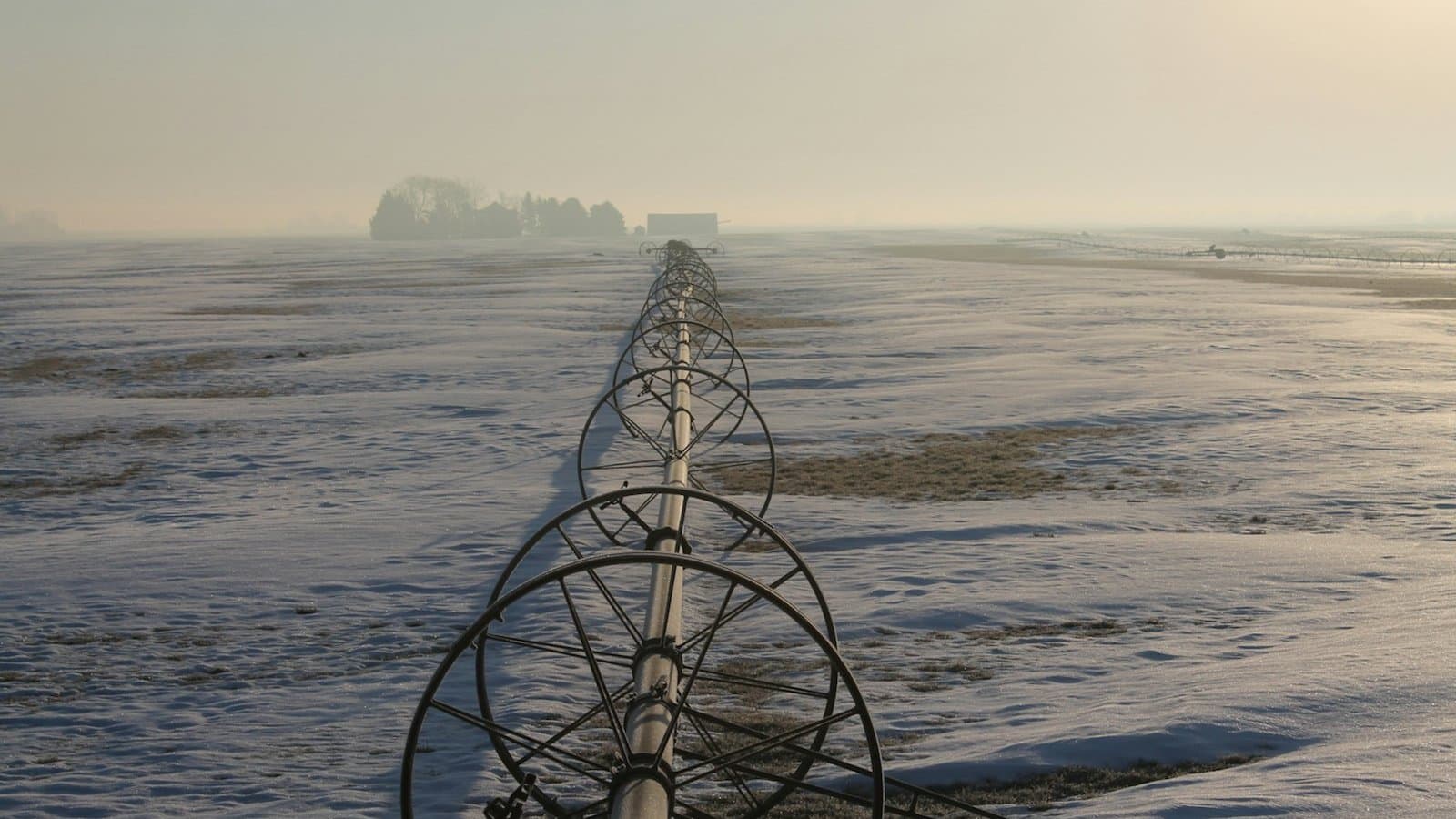
Agricultural reuse is regulated by exposure risk, and the wrong quality class costs 30 to 60% in treatment. The regulations, classes, and technology to meet them.
Agricultural water reuse, applying treated wastewater to irrigate crops, is one of the largest water-efficiency opportunities in a water-stressed world, but it is governed by regulations that can make or break a project before a single pipe is laid. A food processor, a municipality, or a farm operation that wants to reuse treated effluent for irrigation faces a quality standard that varies enormously by jurisdiction and crop, and a project designed to the wrong standard either fails permitting or over-treats at needless cost. The difference between hitting the right quality class and missing it can be 30 to 60% of the treatment cost.
The instinct is to treat the water to a high, safe standard and assume that covers any regulatory requirement. That instinct wastes money. Reuse regulations are tiered by exposure risk, irrigating a fruit orchard where the produce is processed before eating demands a far lower standard than irrigating salad crops eaten raw, and treating all reuse water to the strictest standard pays for protection the application does not need. Matching the treatment to the regulated quality class for the actual crop and irrigation method is the core of an economical, compliant project.
This article gives sustainability directors, agricultural operations leads, and water-project managers a guide to agricultural water reuse regulations and the technology to meet them: how the regulations are structured, the quality classes and what they require, the treatment trains for each class, the technology and monitoring obligations, and where reuse projects go wrong.
## The decision in brief
- Design to the exact quality class the crop and irrigation method require. Designing to the required class rather than to a generic high standard avoids the 30 to 60% over-treatment cost while still passing permitting. - Treat for the binding agronomic limit as well as the health class. Salinity or boron is the binding agronomic limit, so treating for it alongside the health class is what protects the crop, and skipping that check quietly damages the soil the reuse was meant to sustain. - Do not design to an assumed standard. An assumed standard either fails permitting because the class was under-built or wastes a large share of the treatment budget over-treating, and the salinity and boron check gets missed in parallel.
The biggest cost of doing nothing is a project that fails permitting or over-treats, while an unchecked salinity and boron problem damages the soil it was meant to sustain.
## Why agricultural reuse is regulated by exposure risk
Agricultural water reuse is regulated to protect human health, and the regulation is structured around exposure risk: how likely the treated water is to reach a person, and in what way. This risk-tiered structure is the key to understanding the rules, because it explains why the same treated water can be perfectly compliant for one crop and prohibited for another. The regulator's question is not "is this water clean" but "what is the pathway from this water to a person, and is it adequately broken."
The exposure pathways that drive the tiers are direct consumption (crops eaten raw carry the highest risk), processing (crops cooked or processed before eating carry lower risk because the processing reduces pathogen exposure), and contact (irrigation method matters, spray irrigation that aerosolises the water and exposes workers and neighbours is higher-risk than drip irrigation that delivers water at the root with no aerosol). The combination of crop type and irrigation method sets the exposure risk, and the exposure risk sets the required quality class.
The practical consequence is that the project's required treatment is determined before any technology is chosen, by the crop and irrigation method. A drip-irrigated processed crop sits at the low-risk end and needs modest treatment; a spray-irrigated salad crop sits at the high-risk end and needs the strictest treatment with reliable disinfection. Establishing where the project sits on this risk spectrum is the first design step, because everything downstream, treatment train, cost, monitoring, flows from it. This is the agricultural application of the broader [industrial water reuse and recycling](/resources/industrial-water-reuse-recycling) logic, governed by health rather than process-quality requirements.
## The quality classes and what they require
Reuse regulations define quality classes (the naming varies by jurisdiction, but the structure is consistent), each tied to a permitted set of uses. The classes step up in stringency with exposure risk, and the parameters that define them are microbiological (pathogen indicators), physical (turbidity, suspended solids), and sometimes chemical.
| Reuse class | Typical permitted use | Key quality requirements | Treatment intensity | |---|---|---|---| | Highest (unrestricted) | Spray-irrigated raw-eaten crops, public contact | Very low pathogens, low turbidity, reliable disinfection | Secondary plus filtration plus disinfection | | High | Restricted raw crops, drip-irrigated food crops | Low pathogens, controlled turbidity | Secondary plus filtration plus disinfection | | Moderate | Processed food crops, pasture, fodder | Moderate pathogen reduction | Secondary plus disinfection | | Lower | Non-food crops, orchards (no contact), fibre | Basic pathogen reduction | Secondary treatment |
The microbiological requirement is the one that drives the treatment, because pathogen reduction is the health-critical function. The highest classes demand not just a low pathogen count but a reliable, verified disinfection process (often with a turbidity limit, because turbidity shields pathogens from disinfection), while the lower classes accept less stringent reduction. The step from a moderate class to the highest class typically adds a filtration stage and a more robust disinfection system, which is the 30 to 60% cost increment that makes class-matching so important.
The disinfection technology choice, [UV versus chlorination](/resources/uv-vs-chlorination-disinfection), is central here: UV avoids disinfection by-products and chemical residual (relevant where the water contacts crops), while chlorination provides a lasting residual. The right choice depends on the class, the crop, and the distribution system.
## The major regulatory frameworks
The specific regulations vary by jurisdiction, and a project must be designed to its actual governing framework, but the major frameworks share the risk-tiered structure. In the EU, Regulation 2020/741 on minimum requirements for water reuse sets harmonised quality classes (A to D) for agricultural irrigation, defining the microbiological and physical limits and the permitted crops for each class. In the US, there is no single federal standard; the EPA publishes guidelines, but the binding rules are set at state level, with California's Title 22 being the most influential and stringent model that many states reference. The [European Commission's water reuse framework](dofollow:https://environment.ec.europa.eu/topics/water/water-reuse_en) sets the harmonised class definitions and permitted crops that govern agricultural reuse across member states.
According to the [WHO Guidelines for the safe use of wastewater in agriculture](dofollow:https://www.who.int/publications/i/item/9241546824), the internationally referenced health basis for reuse regulation, the multiple-barrier approach, combining treatment, crop restriction, irrigation-method control, and withholding periods, is the foundation of safe reuse, which is why the regulations integrate all of these rather than relying on treatment alone. This matters for project design: a project can sometimes meet a health target with less treatment by combining moderate treatment with crop restriction or drip irrigation (additional barriers), rather than treating to the highest class and ignoring the other barriers. Designing the full barrier system, not just the treatment plant, is often the more economical compliant path.
The practical first step on any project is to identify the exact governing framework and the class the intended use falls into, because the entire design follows from it, and a project designed to a generic or wrong standard risks both over-treatment and permitting failure.
## Treatment trains by reuse class
The treatment train follows directly from the required class, building up in stages as the class becomes more stringent. The economical approach treats to exactly the class the use requires, no further.
For the lower classes (non-food crops, no-contact orchards), secondary biological treatment, the [sewage treatment plant](/resources/sewage-treatment-plant-stp) or equivalent that most wastewater already receives, may suffice with basic disinfection. For moderate classes (processed crops, pasture), secondary treatment plus reliable disinfection is the typical train. For the high and highest classes (raw-eaten crops, spray irrigation, public contact), the train adds tertiary filtration ([sand or membrane filtration](/resources/membrane-filtration-system)) before disinfection, because the highest classes require low turbidity for reliable pathogen kill, and a more robust, verified disinfection stage.
[cta:nepti-dark]
The membrane option deserves note for the highest classes: a [membrane bioreactor](/resources/mbr-vs-activated-sludge) or ultrafiltration tertiary stage produces a consistently low-turbidity, low-pathogen effluent that reliably meets the strictest classes, and while it costs more than sand filtration, its reliability can be worth it where the consequence of a class failure is losing the reuse permit. The train choice is a reliability-versus-cost decision within the class requirement, and it should be made against the cost of non-compliance, which for a project the farm or processor depends on for water can be severe.
## Salinity, boron, and the agronomic limits
Beyond the health-driven microbiological classes, agricultural reuse faces a second set of limits that the health regulations do not cover but that determine whether the crops actually grow: the agronomic limits on salinity, [boron](/elements/boron), [sodium](/elements/sodium), and specific ions. These are about crop and soil health, not human health, and a project that meets every microbiological class but ignores them can damage the crops and the soil it irrigates.
Salinity is the dominant agronomic constraint. Treated wastewater, especially if it includes any desalination reject or industrial stream, can carry elevated salts that, applied repeatedly, accumulate in the soil and reduce crop yield. Salt-sensitive crops tolerate far less than salt-tolerant ones, so the source water salinity must be checked against the crop's tolerance. The [FAO guidance on water quality for agriculture](dofollow:https://www.fao.org/land-water/en/) defines the salinity, sodium, and boron thresholds that determine whether reuse water sustains or damages crops and soils over time. Boron is a particular concern where any of the source is desalinated water, because [desalination](/resources/swro-vs-thermal-desalination) leaves boron that single-pass RO rejects poorly, and the agricultural boron limit (often 0.3 to 0.5 mg/L) is far tighter than the potable limit, which is exactly the constraint that can force a second RO pass on desalinated water intended for irrigation.
These agronomic limits mean a reuse project must characterise the source water against both the health classes and the crop's agronomic tolerances, and treat for whichever is binding. A project that treats only for the microbiological class and discovers the salinity or boron damages the crop has solved the health problem and created an agronomic one, a failure that surfaces only after the irrigation has been running long enough to harm the soil.
## Monitoring and compliance obligations
Agricultural reuse carries ongoing monitoring and compliance obligations that the project must build in, because the regulator requires continuing proof that the reuse water meets its class, not just a one-time commissioning test. The monitoring intensity scales with the class: the highest classes require frequent, sometimes continuous, monitoring of the critical parameters (turbidity, disinfection, pathogen indicators), while lower classes require less.
The obligations typically include continuous turbidity and disinfection monitoring for the high classes (because these are the real-time proxies for pathogen control), periodic microbiological sampling, record-keeping that proves continuous compliance, and often operational controls like automatic diversion if the water falls out of class (a high-turbidity event must not be allowed to reach the crop). This continuous-compliance requirement is why the [online versus lab monitoring](/resources/water-quality-monitoring-online-vs-lab) capability matters: the high classes effectively require online monitoring with automatic response, because a weekly lab sample cannot prove continuous compliance or prevent a real-time excursion reaching the crop.
The right monitoring and treatment system depends on your specific class, crop, and governing framework. [Post your project](/post-project) and qualified water reuse specialists will design the treatment and monitoring system against your actual regulatory class and crop requirements, so the project is compliant and economical rather than over- or under-treated.
## Where agricultural reuse projects go wrong
Failure 1: designing to the wrong quality class. A project is designed to a generic or assumed standard rather than the actual class the crop and irrigation method require, and either fails permitting (under-treated) or wastes 30 to 60% of treatment cost (over-treated). The fix is to identify the exact governing framework and class first, then design to it precisely.
Failure 2: ignoring the agronomic limits. A project meets every microbiological class but ignores salinity and boron, and the reuse water damages the crops and accumulates salt in the soil over time. The fix is to characterise the source against the crop's agronomic tolerances, not just the health classes, and treat for whichever is binding.
Failure 3: under-building the monitoring. A project builds the treatment to class but skimps on the continuous monitoring and automatic diversion the high classes require, then cannot prove continuous compliance or prevent an excursion reaching the crop, risking the reuse permit. The fix is to build the class-appropriate monitoring and automatic response into the system from the start.
To design an agricultural reuse project that is compliant, economical, and agronomically sound, characterise the source water and the crop requirements against the governing framework before designing the treatment. Nepti characterises your source water against both the health classes and the agronomic limits and ranks the treatment and monitoring options by cost and compliance, so the project is matched precisely to its actual regulatory class and crop. Start at [Nepti](/nepti).
## FAQ
Why is agricultural water reuse regulated by crop type? Because the regulation protects human health by managing exposure risk, and the crop type plus irrigation method determine the pathway from the water to a person. A spray-irrigated raw-eaten salad crop is high-risk; a drip-irrigated processed crop is low-risk, so they require different quality classes.
What quality does reuse water need for irrigation? It depends on the class. The lowest classes (non-food crops) may need only secondary treatment; the highest classes (raw-eaten spray-irrigated crops) need secondary plus tertiary filtration plus reliable verified disinfection. The step to the highest class typically adds 30 to 60% to treatment cost.
What are the main regulatory frameworks? In the EU, Regulation 2020/741 sets harmonised classes A to D for agricultural irrigation. In the US, rules are set at state level, with California's Title 22 the most influential model. All share a risk-tiered structure based on the WHO multiple-barrier approach.
What is the boron problem in agricultural reuse? Where any source water is desalinated, it can carry boron that single-pass RO rejects poorly, and the agricultural boron limit (often 0.3 to 0.5 mg/L) is far tighter than the potable limit. This can force a second RO pass on water intended for irrigation, an easily missed cost.
Do I need continuous monitoring for agricultural reuse? For the high classes, effectively yes. They require continuous turbidity and disinfection monitoring with automatic diversion if the water falls out of class, because a weekly lab sample cannot prove continuous compliance or prevent a real-time excursion reaching the crop.
Can I reduce treatment cost by using other barriers? Often yes. The multiple-barrier approach lets a project meet a health target by combining moderate treatment with crop restriction or drip irrigation as additional barriers, rather than treating to the highest class alone. Designing the full barrier system can be more economical than maximal treatment.
What is the most common mistake in agricultural reuse projects? Designing to the wrong quality class (either under-treating and failing permitting, or over-treating and wasting cost), and ignoring the agronomic limits on salinity and boron that determine whether the crops actually grow. Both are avoided by characterising the source against the actual class and crop requirements first.