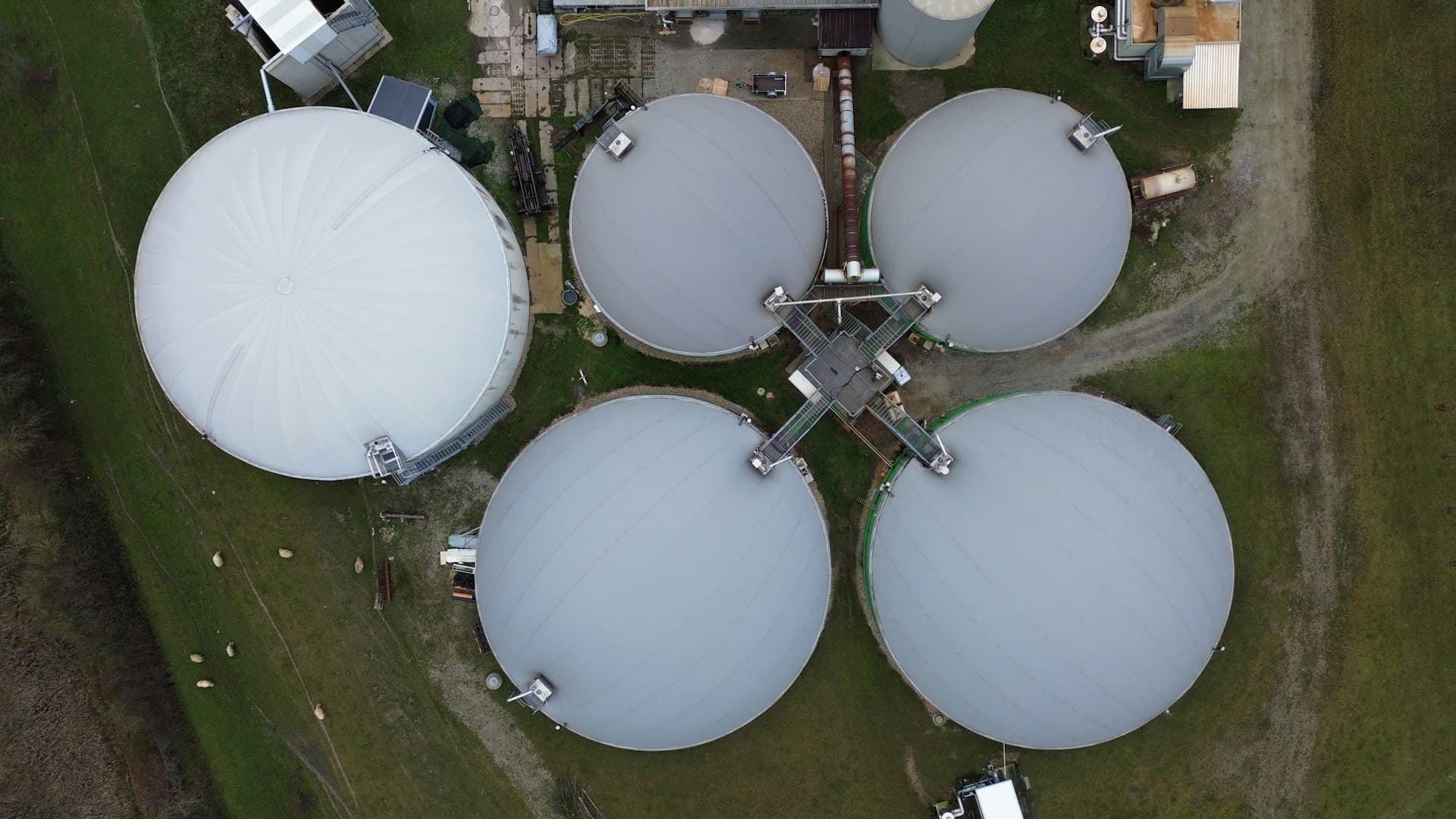
Sludge-to-energy can offset $400K to $800K a year of grid power while cutting disposal volume 30 to 50%. The energy yield, biogas use, and payback math.
Sludge is the line item every wastewater operator wants to shrink and few think to monetise. A site producing 10 tonnes a day of dewatered biosolids spends $300,000 to $1.2 million a year hauling and disposing of it, depending on the route and the regulation. Sludge-to-energy flips that equation: the same organic load that costs money to dispose of can be digested to produce biogas, generating heat and power that offsets the plant's energy bill and cutting the disposal volume by 30 to 50%.
The reflex on most sites is to treat sludge purely as a disposal cost, a problem to be hauled away as cheaply as possible. That framing leaves money on the table. Sludge carries chemical energy, and anaerobic digestion is a mature, bankable technology for recovering it. The barrier is rarely the technology; it is that the energy-recovery business case was never run against the site's specific sludge volume, disposal cost, and energy tariff.
This article gives plant managers, capital projects leads, and sustainability directors the working detail: how sludge-to-energy works, how much energy a given sludge stream yields, the CAPEX and payback math, the carbon and ESG value, and where energy-recovery projects fail.
## The decision in brief
- Digest 10 tonnes a day with CHP and a co-digestion substrate. You can offset $400,000 to $800,000 a year of grid energy, cut disposal cost by $150,000 to $400,000, and earn gate fees on top. - The plant pays back in 2 to 4 years. Those combined savings pay back a $2 to $3 million plant in 2 to 4 years, and the plant keeps earning for the rest of its life after that. - Hauling raw sludge forgoes a recurring six-figure benefit. Continuing to haul raw sludge as a pure disposal cost while paying full grid price for energy forgoes a recurring six-figure benefit and a defensible scope-1 and scope-2 emissions reduction the same organic load could deliver.
The biggest cost of doing nothing is paying to dispose of sludge and paying full grid price for energy when the same organic load could offset $400,000 to $800,000 a year.
## How sludge-to-energy actually works
Sludge-to-energy via biogas rests on anaerobic digestion: bacteria break down the organic matter in sludge in the absence of oxygen, producing biogas (roughly 60 to 65% methane, 35 to 40% [carbon dioxide](/elements/carbon)) and a stabilised digestate. The biogas is the energy carrier; the digestate is a reduced-volume, stabilised solid that is easier and cheaper to dispose of or land-apply than raw sludge. So digestion delivers two wins at once: energy out, and disposal cost down.
The process runs in heated, sealed digesters, typically at mesophilic temperature (around 35 degrees C) over 15 to 25 days of retention, or at thermophilic temperature (around 55 degrees C) over a shorter retention with higher gas yield and better pathogen kill. The digester is the heart of the system, and the [anaerobic digestion for sludge](/resources/anaerobic-digestion-sludge-industrial) process detail, retention time, loading rate, and temperature control, governs how much energy the sludge actually yields.
The defining principle is that digestion does two jobs simultaneously: it recovers energy as biogas and it reduces the mass and improves the stability of the residual solid. A site that digests its sludge typically cuts the volume requiring final disposal by 30 to 50% while producing enough biogas to offset a large share of the plant's energy demand. That double benefit is what makes the business case, because the project earns on both the energy side and the disposal side at once.
## How much energy your sludge yields
The energy yield is the number that makes or breaks the business case, and it is set by the sludge volume and its organic content (measured as volatile solids). A useful planning figure: each kilogram of volatile solids destroyed in digestion yields roughly 0.8 to 1.1 cubic metres of biogas, and each cubic metre of biogas carries about 6 kWh of energy (of which roughly a third converts to electricity in a CHP engine, the rest to recoverable heat).
For a mid-size plant treating municipal or food-industry wastewater, this translates to meaningful numbers. A plant producing 10 tonnes a day of dry solids at 70% volatile content, with 50% destruction in digestion, yields roughly 2,800 to 3,800 m3/day of biogas, carrying 17,000 to 23,000 kWh/day of energy. Converted in a CHP engine, that is roughly 6,000 to 8,000 kWh/day of electricity plus a similar quantity of recoverable heat, much of which goes back to heating the digester.
Co-digestion multiplies the yield. Adding high-strength organic waste (food waste, fats, oils and greases, brewery or dairy residues) to the digester can double or triple the gas yield, because those substrates are far more energy-dense than sewage sludge. A plant that takes in food-industry organic waste as a co-substrate can transform its energy balance, and often charges a gate fee for the waste on top. The strongest sludge-to-energy business cases almost always involve co-digestion, which is why the substrate strategy deserves as much analysis as the digester itself. The [European Biogas Association](dofollow:https://www.europeanbiogas.eu/) reports that co-digestion of sewage sludge with high-strength organic waste is the dominant route to commercially viable biogas yields at wastewater plants.
## Using the biogas: CHP, upgrading, and heat
Producing biogas is only half the project; using it well is the other half, and there are three routes, each with a different economic profile depending on the site's energy needs and the local market.
| Biogas use | What it delivers | Best for | Main consideration | |---|---|---|---| | Combined heat and power (CHP) | Electricity plus recoverable heat on site | Plants with on-site power and heat demand | Engine maintenance, gas cleaning | | Biomethane upgrading | Pipeline-grade or vehicle fuel for export | Plants near a gas grid or fleet, with incentives | Upgrading CAPEX, grid-injection rules | | Direct heat / boiler | Heat for the digester and process | Plants with large heat demand, no power need | Lowest value per unit energy |
CHP is the default for most wastewater plants because the plant has a large continuous electricity demand and the digester needs heat, so the CHP output is self-consumed and displaces grid power at retail price, the highest-value use. Biomethane upgrading wins where there is a gas grid connection or a vehicle fleet and a regulatory incentive (renewable-gas certificates, feed-in tariffs) that pays a premium for green gas. Direct heat is the simplest but lowest-value route, suitable only where the plant has a large heat sink and no power need.
The right route depends on your on-site energy demand profile and the local incentive regime. [Post your project](/post-project) and qualified anaerobic digestion and CHP specialists will model the biogas-use options against your real energy bills and the available incentives.
## The economics: CAPEX, OPEX, and payback
A sludge anaerobic digestion plant with CHP typically carries a CAPEX of $1.5 to $4 million for a mid-size municipal or industrial plant, depending on digester volume, gas cleaning, and engine size. The OPEX is modest (engine maintenance, labour, gas conditioning), and is more than offset by the value of the energy produced and the disposal cost avoided.
The payback comes from three streams: the electricity and heat the biogas displaces, the reduction in sludge-disposal volume and cost, and, where applicable, co-digestion gate fees and renewable-energy incentives. For a plant displacing $400,000 to $800,000 a year of grid energy, cutting disposal cost by $150,000 to $400,000, and earning gate fees on co-digested waste, the combined annual benefit of $700,000 to $1.5 million pays back a $2 to $3 million plant in 2 to 4 years. Without co-digestion or incentives, payback stretches to 5 to 8 years, which is where projects on thin sludge streams stall.
[cta:nepti-dark]
The disposal-side saving is easy to under-count and matters as much as the energy. Digestion reduces the residual solid by 30 to 50%, and the [sludge dewatering and treatment](/resources/sludge-dewatering-treatment) cost scales with that residual volume, so every tonne not produced is a tonne not dewatered, hauled, and disposed of. On a site with a high disposal tariff, the avoided-disposal saving alone can carry a meaningful share of the payback.
## The carbon and ESG value
Sludge-to-energy is one of the cleaner carbon stories in water treatment, and for a sustainability director it can be a flagship project. It displaces grid electricity (cutting scope-2 emissions), it captures methane that would otherwise be released during uncontrolled sludge decomposition (a potent greenhouse gas), and it reduces the haulage emissions of disposing of a smaller residual.
The methane-capture angle is the strongest. Methane is roughly 28 times more potent than carbon dioxide as a greenhouse gas over a century, so capturing and combusting the methane from sludge (turning it into the far weaker CO2) is a substantial emissions reduction even before counting the displaced grid power. For a site reporting against science-based targets, a digestion-with-CHP project delivers a defensible, quantifiable scope-1 and scope-2 reduction, which connects directly to the [ESG water reporting metrics](/resources/esg-water-reporting-metrics) the sustainability function must report against. The [IPCC assessment of methane](dofollow:https://www.ipcc.ch/) confirms methane's outsized near-term warming potency, which is why capturing and combusting sludge methane delivers a disproportionate emissions benefit.
According to the [International Energy Agency's analysis of biogas and biomethane](dofollow:https://www.iea.org/reports/outlook-for-biogas-and-biomethane-prospects-for-organic-growth), wastewater sludge is one of the most readily exploitable feedstocks for sustainable biogas, because the sludge is already collected and concentrated at the treatment plant, removing the collection-logistics barrier that limits other biogas feedstocks.
## Beyond digestion: thermal energy recovery
Anaerobic digestion is the dominant route, but for some sludges thermal energy recovery is the better fit. Where the sludge is poorly digestible (high inert content, industrial sludges with low volatile solids) or where the disposal-volume reduction must be maximised, incineration with energy recovery, gasification, or pyrolysis converts the sludge's energy thermally and reduces the residual to ash.
These thermal routes recover energy as heat and steam rather than biogas, and they shrink the residual far more than digestion (to a small ash fraction), but they carry higher CAPEX and tighter emissions permitting. They make sense where digestion is unviable or where land for digestate disposal is unavailable, and they connect to the broader [biosolids management options](/resources/biosolids-management-options) decision about the final fate of the residual. For most municipal and food-industry sludges, digestion remains the economic default; thermal recovery is the answer for difficult sludges or volume-constrained sites.
## Where sludge-to-energy projects fail
Failure 1: over-sizing the digester for thin sludge. A team sizes a digester for an optimistic gas yield, the sludge turns out lower in volatile solids than assumed, and the plant runs at low gas output with a payback that stretches past a decade. The fix is to characterise the sludge's actual volatile-solids content and digestibility before sizing, and to secure a co-digestion substrate if the native sludge is thin.
Failure 2: ignoring the digestate disposal problem. Digestion reduces the residual but does not eliminate it, and the digestate still needs a disposal route, usually land application or further dewatering. A project that recovers energy but has no plan for the digestate simply moves the disposal problem downstream. The fix is to confirm the digestate route as part of the project, not after.
Failure 3: poor gas cleaning fouling the CHP engine. Raw biogas carries hydrogen sulphide and siloxanes that corrode and foul CHP engines if not removed. A project that skimps on gas cleaning sees engine maintenance costs balloon and availability fall, eroding the energy benefit. The cost of inadequate gas cleaning is repeated engine overhauls at tens of thousands of dollars each. The fix is to specify gas conditioning matched to the biogas quality.
To size and justify a sludge-to-energy project correctly, model the sludge's energy yield, the biogas-use options, and the disposal saving against your actual numbers. Nepti characterises your sludge stream and ranks the energy-recovery options with cost and payback projections, so the project is approved on data rather than an optimistic gas-yield assumption. Start at [Nepti](/nepti).
## FAQ
How much energy can sludge produce through digestion? Each kilogram of volatile solids destroyed yields roughly 0.8 to 1.1 m3 of biogas at about 6 kWh per m3. A plant producing 10 tonnes a day of dry solids can generate enough biogas to offset a large share of its own energy demand.
What is co-digestion and why does it matter? Co-digestion adds high-strength organic waste (food waste, fats, oils, greases) to the digester, which can double or triple the gas yield because those substrates are far more energy-dense than sewage sludge. It is central to the strongest business cases.
What is the best use for the biogas? For most wastewater plants, combined heat and power (CHP), because the plant self-consumes the electricity and uses the heat for the digester, displacing grid power at retail value. Biomethane upgrading wins where a gas grid and incentives exist.
Does digestion eliminate the sludge? No. It reduces the residual volume by 30 to 50% and stabilises it, but the digestate still needs a disposal or land-application route, which must be planned as part of the project.
What is the payback for a sludge-to-energy plant? Typically 2 to 4 years with co-digestion and energy incentives, stretching to 5 to 8 years on thin native sludge without co-substrate or incentives. Local energy and disposal costs are the dominant variables.
Is sludge-to-energy good for carbon reporting? Yes. It displaces grid electricity (scope 2), captures methane that would otherwise be released (a potent greenhouse gas, scope 1), and cuts haulage emissions, delivering a quantifiable, defensible emissions reduction.
When is thermal energy recovery better than digestion? For poorly digestible sludges (low volatile solids, industrial sludges) or where the residual volume must be minimised. Incineration, gasification, or pyrolysis recover energy thermally and reduce the residual to ash, at higher CAPEX and tighter permitting.