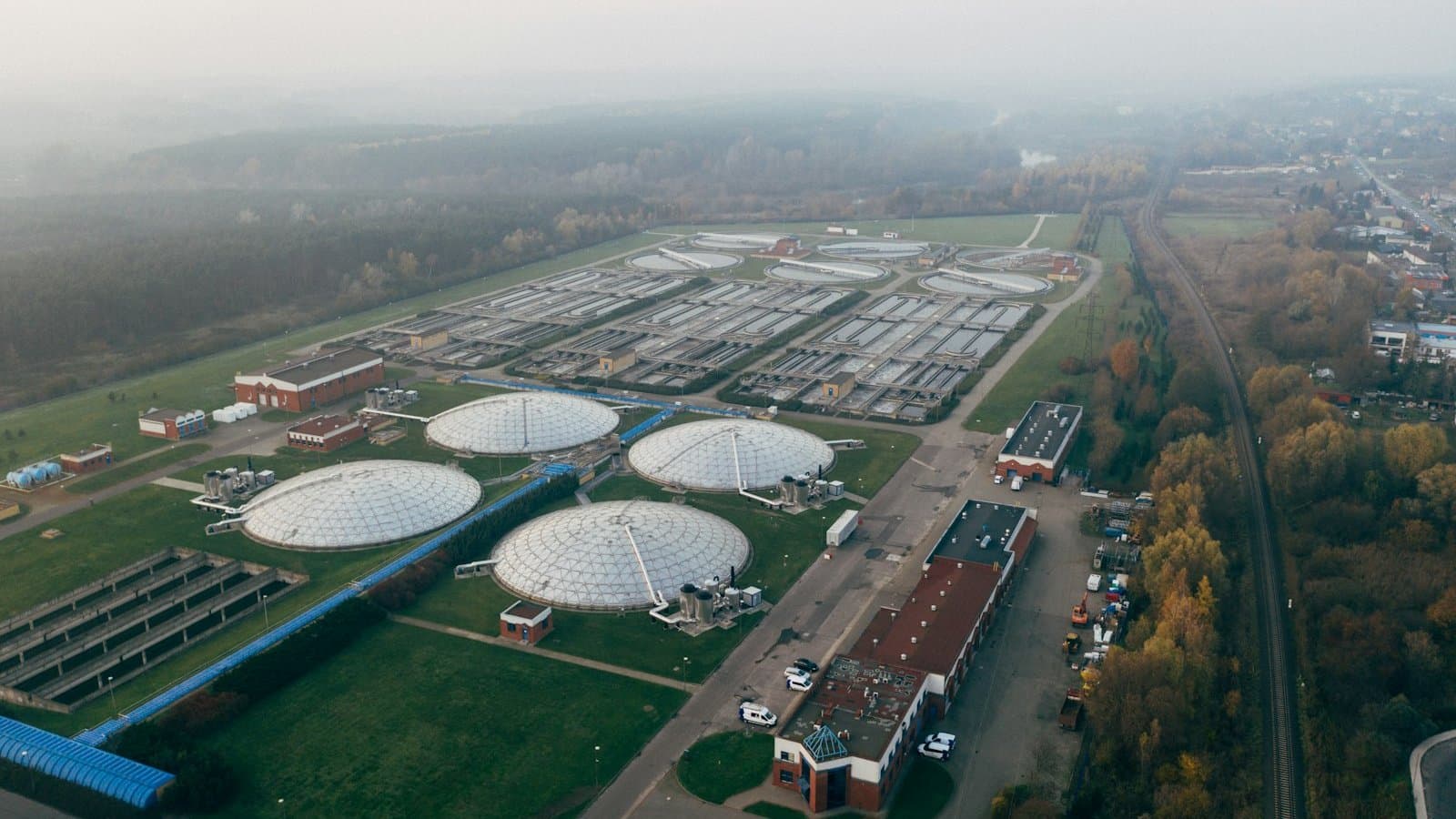
Biosolids routes are narrowing fast, especially under PFAS rules. Land application, incineration, and landfill compared, with the resilience strategy.
Biosolids are the unavoidable end product of wastewater treatment, and the decision about where they go is increasingly the most regulated and most expensive part of running a plant. A site producing 5,000 tonnes a year of biosolids faces a disposal bill of $400,000 to $1.5 million depending on the route, and the routes are narrowing as regulation on land application, landfill, and emissions tightens. Choosing the wrong management path locks a plant into a cost trajectory that only goes up as the rules close in.
The default assumption on many sites is that biosolids management is a fixed cost to be minimised by picking the cheapest current route. That view is dangerous, because the cheapest route today (often land application or landfill) is precisely the one most exposed to regulatory tightening, especially around emerging contaminants. A plant that builds its biosolids strategy around a route that gets restricted finds itself scrambling for an alternative at a premium price under deadline pressure.
This article gives plant managers, capital projects leads, and sustainability directors a decision-grade comparison of the biosolids management options: land application, incineration, landfill, and emerging recovery routes, with their costs, regulatory exposure, and the decision logic for choosing among them.
## The decision in brief
- Keep at least two management routes open. Treating biosolids to a quality that keeps two routes open protects the plant against a forced, premium-priced route change when regulation, especially on PFAS, closes the cheapest path. - A forced pivot can add $40 to $120 per tonne. A route change made under deadline pressure can add $40 to $120 per tonne to the disposal bill, which is the premium a second route is there to avoid. - Do not build the whole strategy on land application. Land application is cheapest today, but if it is banned in your jurisdiction with no fallback in place, a routine disposal line turns into a scramble that costs multiples of keeping a second route open.
The biggest cost of doing nothing is a scramble that costs multiples of what keeping a second route open would have cost.
## What biosolids are and why management is tightening
Biosolids are the treated, stabilised solid residual from wastewater treatment, distinct from raw sludge in that they have been processed (digested, dewatered, sometimes limed or heat-treated) to reduce pathogens, odour, and volume. Treatment quality determines which management routes are open: a well-stabilised, pathogen-reduced biosolid qualifies for beneficial land application, while a poorly treated one is restricted to landfill or incineration. So the upstream [sludge dewatering and treatment](/resources/sludge-dewatering-treatment) and digestion choices directly govern the downstream management options and their cost.
The reason management is tightening is a convergence of three pressures. Land-application rules are tightening on nutrient loading and, sharply, on emerging contaminants. Landfill capacity is shrinking and gate fees are rising. And incineration faces tightening air-emissions permitting. Each route that once looked like a cheap default is becoming more constrained and more expensive, which means a plant's biosolids strategy must be chosen for resilience against regulatory change, not just for today's lowest cost. The [European Environment Agency's analysis of sewage sludge](dofollow:https://www.eea.europa.eu/) documents the steady tightening of land-application and landfill routes across member states, reinforcing the case for route resilience.
The strategic point is that biosolids management is no longer a single-route decision; it is a portfolio and resilience decision. A plant locked into one route with no alternative is exposed if that route is restricted. The plants managing this well are building optionality, treating their biosolids to a quality that keeps multiple routes open, so a regulatory change on one path does not become a crisis.
## Land application: the cheapest route under pressure
Land application, spreading treated biosolids on agricultural or reclamation land as a soil amendment and fertiliser, has long been the cheapest and most beneficial-use route. The biosolids supply nutrients (nitrogen, phosphorus) and organic matter to the soil, displacing synthetic fertiliser, and the cost is typically the lowest of all routes at $30 to $80 per tonne.
The route requires the biosolids to meet a quality standard, usually a class based on pathogen reduction and contaminant limits. In the US, the EPA's Part 503 rule defines Class A (suitable for unrestricted use) and Class B (restricted use with site controls) biosolids. Achieving Class A typically requires thermophilic digestion, composting, or heat treatment, which is why the upstream treatment choice matters so much to the management cost.
The pressure on land application is real and growing. Nutrient-loading limits restrict how much can be applied per hectare, public acceptance varies by region, and, most significantly, concern over emerging contaminants (especially PFAS) is driving some jurisdictions to restrict or ban land application entirely. According to the [US EPA's biosolids program guidance](dofollow:https://www.epa.gov/biosolids), beneficial land application remains the EPA's preferred route on sustainability grounds, but the contaminant question is reshaping the regulatory landscape faster than the guidance can keep up. A plant relying solely on land application is the most exposed to this tightening.
## Incineration and thermal routes
Incineration and the related thermal routes (gasification, pyrolysis) combust the biosolids, reducing them to a small ash fraction and, in modern installations, recovering energy as heat or power. The thermal routes deliver the greatest volume reduction (to under 10% of the input mass) and, critically, they destroy organic contaminants, which is the property driving renewed interest as the contaminant question intensifies.
Incineration's advantages are decisive volume reduction, energy recovery, and the destruction of pathogens and organic contaminants including, at sufficient temperature, PFAS. Its disadvantages are high CAPEX (a dedicated biosolids incinerator is a major capital project), tightening air-emissions permitting, and the residual ash that still needs disposal, though the ash volume is small. This is the same thermal-recovery logic covered in the [sludge-to-energy](/resources/sludge-to-energy-biogas) analysis, applied to final disposal rather than energy as the primary objective.
The economics suit large plants or regional facilities serving multiple plants, because the high CAPEX needs scale to justify. For a single mid-size plant, dedicated incineration is often uneconomic, pointing toward either a regional shared facility or co-incineration in an existing industrial combustion plant (cement kilns, power stations) that can take biosolids as a supplementary fuel.
## Landfill: the shrinking default
Landfilling dewatered biosolids has been the fallback route, simple and requiring no special biosolids quality, but it is the route under the most consistent long-term pressure. Gate fees are rising as landfill capacity shrinks, some jurisdictions are restricting or banning organic-waste landfilling outright, and the methane emissions from landfilled organics are a growing regulatory and ESG concern.
Landfill costs vary widely by region, from $40 to $150 per tonne, but the trend is uniformly upward, and the route's long-term availability is genuinely uncertain in many jurisdictions. A plant building its strategy around landfill is building on the most rapidly eroding foundation of all the routes. Landfill remains useful as a backup or for biosolids that cannot meet land-application quality and where incineration is unavailable, but as a primary long-term strategy it is the weakest choice.
[cta:nepti-dark]
The right route mix for a specific plant depends on its biosolids quality, local regulation, and disposal markets. [Post your project](/post-project) and qualified biosolids management specialists will model the available routes against your actual biosolids characteristics and local regulatory position.
## The options compared
The four main routes differ across cost, regulatory exposure, volume reduction, and resilience. The table normalises the comparison to support a portfolio decision rather than a single-route default.
| Route | Cost per tonne | Volume reduction | Regulatory exposure | Best for | |---|---|---|---|---| | Land application | $30 to $80 | None (full mass applied) | High and rising (contaminants, nutrients) | Class A biosolids, supportive region, no contaminant restriction | | Incineration / thermal | $80 to $200 (plus high CAPEX) | Very high (to ash) | Moderate (air emissions) | Large or regional plants, contaminant destruction needed | | Landfill | $40 to $150 | Low | High and rising (capacity, organics bans) | Backup route, non-land-application-quality biosolids | | Composting / advanced recovery | $50 to $120 | Moderate | Moderate | Plants seeking a beneficial-use product with market demand |
The decision logic is to build resilience by keeping at least two routes open. A plant treating its biosolids to Class A quality keeps land application and composting available while retaining landfill as backup; if a contaminant restriction closes land application, it can pivot to composting or a thermal route without crisis. The plants in trouble are those locked into a single route with no alternative when the regulation moves.
## The PFAS question that changes everything
PFAS (per- and polyfluoroalkyl substances) is the single factor most reshaping biosolids management, and any strategy set without accounting for it is built on shifting ground. These persistent compounds accumulate in biosolids from industrial and domestic wastewater, and because they do not break down in conventional treatment, they end up in the solid residual.
The consequence is direct: jurisdictions concerned about PFAS entering the food chain via land-applied biosolids are restricting or banning land application, the cheapest route. This is pushing biosolids toward thermal routes, which at sufficient temperature destroy PFAS, and is driving demand for PFAS-destruction technologies. A plant in a region moving on PFAS that relies on land application faces a forced and expensive route change, exactly the cost trajectory that resilience planning is meant to avoid. The broader treatment context is covered in our [PFAS removal in water treatment](/resources/pfas-removal-water-treatment) guide, but for biosolids specifically the practical message is to assume land application may be restricted and to keep a thermal or alternative route viable. The [US Department of Energy's research on PFAS destruction](dofollow:https://www.energy.gov/) confirms that high-temperature thermal treatment is among the few proven routes to destroy PFAS in biosolids.
This is why the resilient strategy increasingly leans toward treatment quality and thermal optionality: not because land application is bad today, but because the contaminant trajectory makes a land-application-only strategy a regulatory single point of failure.
## Where biosolids strategies go wrong
Failure 1: building the strategy around the cheapest current route. A plant commits to land application because it is cheapest, then a PFAS or nutrient restriction closes it, and the plant scrambles for an alternative at a premium under deadline. The cost of the forced pivot, and the interim premium disposal, far exceeds what resilience planning would have cost. The fix is to keep at least two routes viable.
Failure 2: under-treating the biosolids, closing off routes. A plant minimises treatment cost, producing a Class B or lower-quality biosolid that only qualifies for landfill or incineration. When those routes tighten, it has no land-application option because the quality was never there. The fix is to treat to a quality (Class A) that keeps the maximum number of routes open.
Failure 3: ignoring the regulatory trajectory. A plant sets a strategy against today's rules and does not track where the regulation is heading, then is caught flat-footed when a restriction it could have seen coming lands. The fix is to monitor the regulatory direction, especially on contaminants, and to stress-test the strategy against plausible future restrictions.
To set a resilient biosolids strategy, model the available routes against your biosolids quality, local regulation, and the contaminant trajectory before committing. Nepti characterises your biosolids and ranks the management routes by cost and regulatory resilience, so the strategy is built for where the rules are heading, not just where they are. Start at [Nepti](/nepti).
## FAQ
What is the difference between sludge and biosolids? Sludge is the raw solid residual from wastewater treatment; biosolids are sludge that has been treated and stabilised (digested, dewatered, sometimes heat-treated) to reduce pathogens, odour, and volume. The treatment quality determines which management routes are open.
What is the cheapest way to manage biosolids? Land application is typically the cheapest at $30 to $80 per tonne, and it provides beneficial reuse as a soil amendment. But it is the route most exposed to regulatory tightening, especially on PFAS and nutrient loading.
Why is PFAS changing biosolids management? PFAS accumulates in biosolids and does not break down in conventional treatment, so concern about it entering the food chain via land application is driving restrictions and bans on that route, pushing biosolids toward thermal routes that destroy PFAS at high temperature.
What does Class A versus Class B mean for biosolids? In the US EPA Part 503 framework, Class A biosolids meet strict pathogen-reduction standards and can be used unrestricted; Class B require site controls and restricted use. Achieving Class A (via thermophilic digestion, composting, or heat treatment) keeps more management routes open.
Is incineration better than land application? Neither is universally better. Incineration delivers the greatest volume reduction and destroys contaminants including PFAS, but at high CAPEX and with air-emissions permitting. Land application is cheaper and beneficial but increasingly restricted. The resilient strategy keeps both viable.
Why is landfill a weak long-term strategy? Because landfill capacity is shrinking, gate fees are rising, and many jurisdictions are restricting or banning organic-waste landfilling over methane-emission concerns. It works as a backup but is the most rapidly eroding route as a primary strategy.
How should I choose a biosolids strategy? Build resilience by keeping at least two routes open, treat the biosolids to a quality (Class A) that maximises route options, and track the regulatory trajectory, especially on contaminants, so the strategy holds as the rules tighten.