SCADA can save $60K to $200K a year in labour but costs $50K to $1M and brings a cybersecurity burden. What it does, when you need it, how to specify it.
SCADA is the difference between a water treatment plant that needs an operator standing at every valve and one that runs itself overnight with a single person watching a screen. For a plant manager weighing whether to invest, the question is not whether SCADA works (it does, and it is the industry standard for any plant above a modest size) but whether the labour, reliability, and compliance gains justify the capital and the cybersecurity burden it brings. A mis-scoped SCADA project can cost $200,000 to over $1 million and deliver a system operators distrust and bypass.
The common misframing is to treat SCADA as an IT project, a set of screens and software bolted onto the plant. It is not. SCADA is the plant's nervous system, the layer that senses every process variable and actuates every valve and pump, and specifying it wrong produces a plant that is harder to operate, not easier. The decision and the specification must be driven by the process and the operators, not by a software vendor's feature list.
This article gives plant managers, operations directors, and capital projects leads a clear, jargon-light explanation of SCADA in water treatment: what it actually does, when a plant needs it, what it costs, the cybersecurity reality, and how to specify it so operators trust and use it.
## The decision in brief
- Scope SCADA to your plant's actual complexity. Scoped correctly and left to run continuously with minimal staffing, SCADA typically saves $60,000 to $200,000 a year in labour plus the avoided cost of incidents the alarms catch. - Expect payback in 2 to 4 years on a continuously operated plant. A $150,000 to $400,000 system pays back in 2 to 4 years when the plant runs continuously, on the labour saving and the incidents the alarms catch. - Do not scope SCADA as an IT project without the operators. Operators who were left out distrust and bypass an expensive system, so the plant carries the full capital and OPEX of automation while still running manually.
The biggest cost of doing nothing is paying the full capital and OPEX of automation for a plant that is still run by hand.
## What SCADA actually is
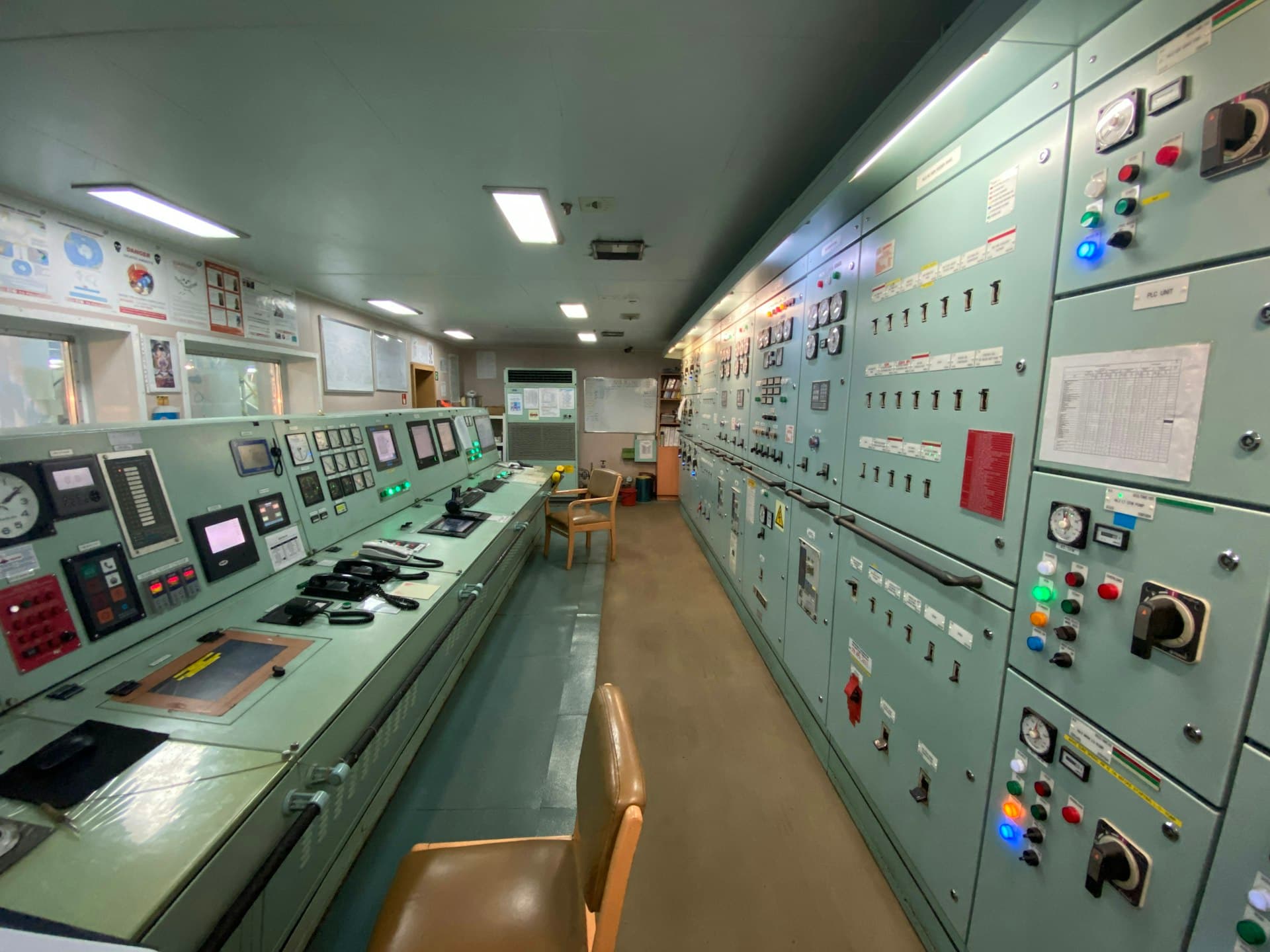
SCADA stands for supervisory control and data acquisition. Stripped of jargon, it is a system that does three things: it collects readings from sensors across the plant (flow, pressure, level, pH, turbidity, chlorine), it displays those readings to operators on screens, and it lets operators (or automated logic) control equipment (pumps, valves, dosing) in response. It sits on top of the plant's field instruments and programmable logic controllers (PLCs), which do the actual real-time control; SCADA is the supervisory layer that gives humans visibility and command over the whole plant from one place.
The architecture has three layers. At the bottom, field devices (sensors and actuators) interact with the physical process. In the middle, PLCs execute the real-time control logic, running the local automatic loops that keep a dosing pump matched to a flow signal. At the top, the SCADA system aggregates everything into a human-machine interface (HMI), logs the data, raises alarms, and lets operators supervise and override. Understanding this layering matters because it tells you where reliability comes from: the PLCs keep the plant running even if the SCADA screen fails, which is why a well-designed plant does not stop when the SCADA server reboots.
The simplest way to understand SCADA's value is this: without it, an operator must physically walk the plant to know its state and adjust it; with it, the entire plant's state is on one screen and most adjustments are a click or fully automatic. That collapse of the operator's physical workload is where SCADA pays back, and it connects directly to the broader [chemical dosing and control systems](/resources/chemical-dosing-control-systems) that SCADA supervises.
## What SCADA does in a water treatment plant
In a working water treatment plant, SCADA performs several concrete functions that together transform how the plant is run. The value is cumulative: each function alone is useful, and together they change the plant's labour and reliability profile fundamentally. The [American Water Works Association](dofollow:https://www.awwa.org/) treats supervisory control and data acquisition as standard practice for any plant beyond minimal scale, principally for its continuous-compliance and labour benefits.
- Continuous monitoring of every critical process variable, so deviations are visible the moment they occur rather than at the next manual round. - Automatic control of dosing, pumping, and filtration cycles, holding the process at setpoint without constant operator intervention. - Alarming that alerts operators to out-of-range conditions immediately, including remotely via phone or message, so a problem at 2 a.m. wakes the right person rather than running unattended. - Data logging that creates the compliance record regulators demand, automatically and tamper-evidently, replacing manual logbooks. - Remote operation that lets a small team supervise multiple plants or run a plant overnight without on-site staff.
[cta:nepti-dark]
The compliance angle deserves emphasis. Water treatment is heavily regulated, and the regulator wants evidence that the plant held its limits continuously. SCADA's automatic, time-stamped data logging is the cleanest way to produce that evidence, turning compliance reporting from a manual chore into an automatic output, which connects to the continuous [online versus lab water quality monitoring](/resources/water-quality-monitoring-online-vs-lab) that feeds the data SCADA logs.
## Do you actually need SCADA?
Not every plant needs full SCADA, and over-specifying it on a small simple plant wastes capital. The decision turns on plant size, complexity, criticality, and labour cost. The threshold logic below gives a structured way to decide.
You need SCADA when: the plant has multiple process stages that interact (so manual coordination is error-prone), the plant runs continuously or unattended for periods, compliance requires continuous monitoring and records, the labour cost of manual operation is significant, or the plant is one of several you want to supervise centrally. The more of these that apply, the stronger the case.
You may not need full SCADA when: the plant is small and simple (a single-stage system), it runs only during attended hours, the process is forgiving and slow-changing, and a basic local PLC with simple controls suffices. Here a lighter local-control solution may deliver most of the benefit at a fraction of the cost.
The middle ground is common: many plants need robust local PLC control and basic remote alarming, but not a full multi-screen SCADA suite. Matching the level of automation to the actual plant need, rather than to a vendor's standard offering, is the core of getting the investment right. This is the same scope-matching discipline that governs any [decentralized water treatment](/resources/decentralized-water-treatment) automation decision.
The right level of automation depends on your specific plant. [Browse verified automation and controls providers](/providers), filter by capability, and request scoped proposals matched to your plant's actual complexity rather than a one-size-fits-all package.
## What SCADA costs
SCADA cost scales with the number of monitored and controlled points, the number of HMI stations, the redundancy level, and the integration complexity. A basic system for a small plant might run $50,000 to $150,000; a comprehensive system for a large multi-stage plant with redundancy and remote access runs $300,000 to over $1 million. The instrumentation (the sensors and actuators the SCADA reads and drives) is often a large share of the total and is easy to under-budget.
The payback comes mostly from labour and reliability. A plant that can run overnight unattended, or that lets one operator supervise what previously needed several, saves $60,000 to $200,000 a year in labour. Avoided incidents add to it: a SCADA alarm that catches a dosing failure before it becomes a compliance breach or a process upset prevents costs that can run into tens or hundreds of thousands. For a continuously operated plant of any size, the labour saving alone usually justifies the system within 2 to 4 years.
The cost trap is the ongoing burden, not the build. SCADA needs maintenance, software updates, instrument calibration, and, increasingly, cybersecurity management. A plant that budgets the CAPEX but not the OPEX ends up with a system that degrades, instruments that drift out of calibration, and software that ages into a vulnerability. The total cost of ownership, framed the way our [CAPEX versus OPEX](/resources/water-treatment-capex-opex) analysis frames any water-treatment investment, must include this ongoing burden.
## The cybersecurity reality
SCADA connects the plant's control system to networks, and that connection is a genuine and growing risk that must be designed for, not bolted on. Water treatment is critical infrastructure, and SCADA systems have become a target. A compromised SCADA system is not just a data breach; it is potential control over chemical dosing and process safety, which is why water-sector cybersecurity is a regulatory and operational priority.
The defensive principles are well established: segment the control network from the business IT network and from the internet, control and monitor every remote-access path, keep the PLC-level control able to run safely even if the SCADA layer is compromised (the fail-safe design that stops a cyber incident becoming a safety incident), and patch and monitor the system continuously. According to [CISA's guidance on securing water and wastewater control systems](dofollow:https://www.cisa.gov/water), the most common vulnerabilities are weak or default credentials and unmonitored remote access, both of which are addressable with disciplined configuration.
The practical implication for the SCADA decision is that cybersecurity is now part of the specification and the ongoing OPEX, not an optional extra. A SCADA project scoped without a security architecture and an ongoing security-management plan is incomplete, and the gap is one that can turn the plant's nervous system into its biggest liability.
## Specifying SCADA so operators trust it
The most common reason SCADA underdelivers is not technical failure; it is that operators do not trust it and revert to manual operation, leaving an expensive system unused. Specifying SCADA so operators adopt it is as important as specifying it to work.
Design the interface around the operator's mental model, not the software's structure. Screens should match how operators think about the plant (by process stage, by the decisions they make) rather than mirroring the database. An HMI that takes ten clicks to find a critical reading will be bypassed. Make the automatic control transparent and overridable, so operators understand what the system is doing and can take manual control instantly when they judge it necessary; a black-box that operators cannot override is one they will not trust. Tune the alarms ruthlessly, because an HMI that floods operators with nuisance alarms trains them to ignore alarms, defeating the safety purpose. Alarm rationalisation, cutting the alarm set to the ones that genuinely require action, is one of the highest-value steps in a SCADA project and one of the most often skipped. The [ISA-18.2 alarm management standard](dofollow:https://www.isa.org/) codifies alarm rationalisation as essential to preventing the alarm flooding that trains operators to ignore alarms.
These adoption factors are why the operators must be involved in the SCADA specification from the start. A SCADA system designed by a vendor and an IT team without the operators who will use it routinely produces a technically sound system that the plant works around rather than with.
## Where SCADA projects go wrong
Failure 1: scoping it as an IT project, not a process project. A SCADA system specified by software and IT people without deep operator and process input produces screens that do not match how the plant is run, alarms that flood, and automation operators distrust. The expensive result is a system bypassed in favour of manual operation. The fix is operator-led specification with the process at the centre.
Failure 2: under-budgeting instrumentation and ongoing cost. A plant budgets the software and HMI but under-budgets the sensors, actuators, and the ongoing calibration, maintenance, and cybersecurity. The system degrades, instruments drift, and within a few years the data is untrustworthy. The fix is to budget the full instrumentation and the lifetime OPEX, including security.
Failure 3: ignoring cybersecurity until an incident. A SCADA system is connected for remote access without network segmentation or monitored access, and becomes a vulnerability in critical infrastructure. The potential cost, control over process safety in the wrong hands, is severe. The fix is to design the security architecture into the specification and fund ongoing security management.
To scope SCADA correctly for your plant, model the automation level against your plant's complexity, labour cost, and compliance need before specifying. Nepti characterises your plant's monitoring and control requirement and helps frame the right automation scope and total cost of ownership, so the SCADA investment matches the plant rather than a vendor's standard package. Start at [Nepti](/nepti).
## FAQ
What does SCADA stand for and do? Supervisory control and data acquisition. It collects readings from plant sensors, displays them to operators on screens, logs the data for compliance, raises alarms, and lets operators or automated logic control pumps, valves, and dosing from one place.
Does every water treatment plant need SCADA? No. Plants with multiple interacting stages, continuous or unattended operation, continuous-monitoring compliance needs, or high manual-labour cost benefit most. Small, simple, attended-hours plants may need only basic local PLC control.
How much does a SCADA system cost? A basic system for a small plant runs $50,000 to $150,000; a comprehensive system for a large multi-stage plant with redundancy and remote access runs $300,000 to over $1 million. Instrumentation is a large and often under-budgeted share.
Is SCADA a cybersecurity risk? Yes, and it must be designed for. SCADA connects control systems to networks, and as critical infrastructure it is a target. Network segmentation, controlled remote access, fail-safe PLC-level control, and ongoing security management are essential.
Why do operators sometimes bypass SCADA? Usually because the interface does not match how they think about the plant, the automation is a black box they cannot override, or the alarms flood them into ignoring all alarms. Operator-led specification and alarm rationalisation prevent this.
What is the difference between SCADA and PLC? PLCs execute the real-time control logic on individual process loops; SCADA is the supervisory layer above them that aggregates data, displays it, logs it, and lets operators supervise the whole plant. The PLCs keep the plant running even if the SCADA layer fails.
What is the payback for SCADA? Mostly from labour, as the plant runs with fewer staff or unattended overnight, saving $60,000 to $200,000 a year, plus avoided incident costs. On a continuously operated plant the labour saving alone usually pays back the system in 2 to 4 years.