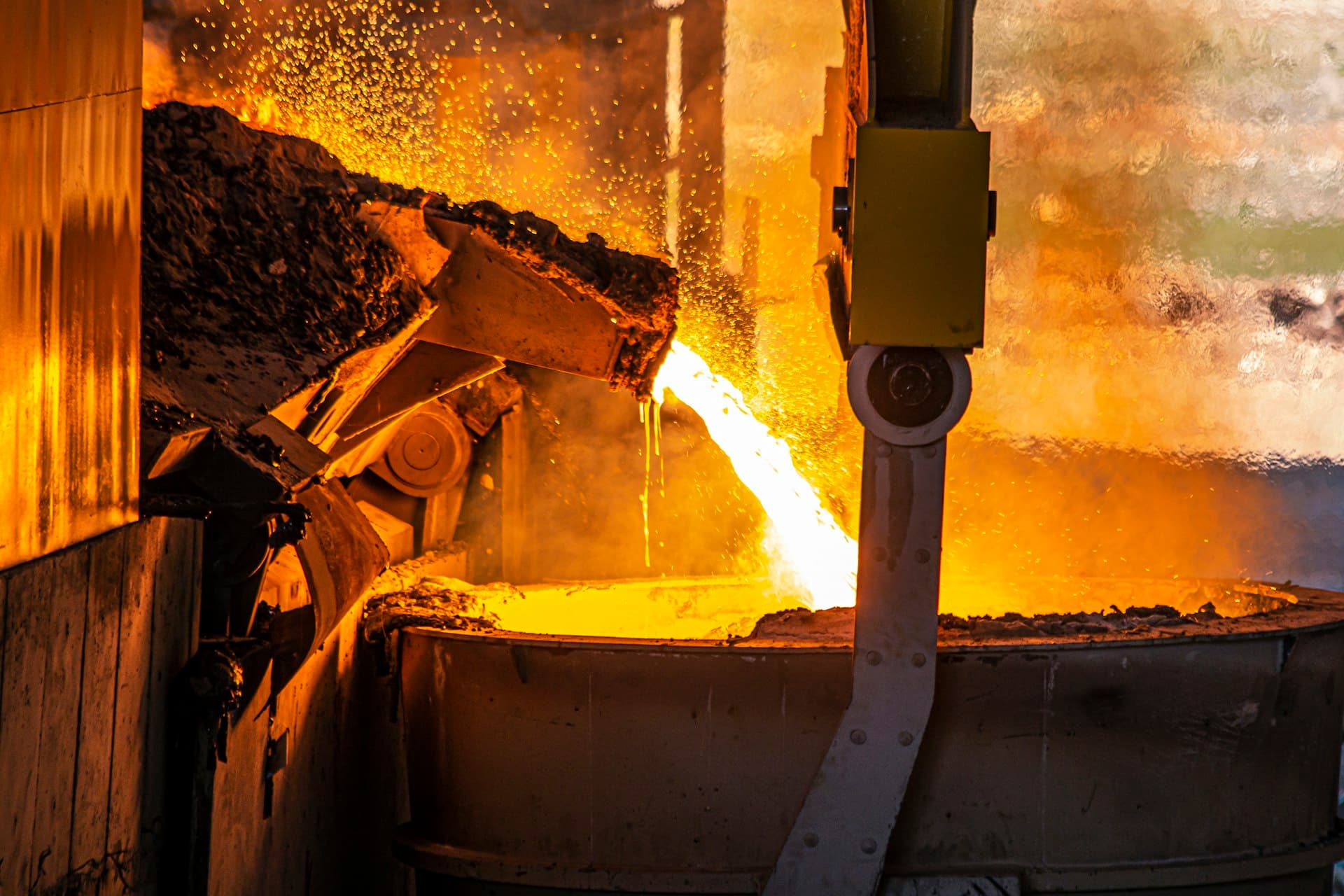
Metals wastewater is among the most regulated in industry. Stream segregation, heavy-metal removal, recovery, and reuse can halve combined water cost.
Metals and steel production generates some of the most contaminated and most regulated wastewater in heavy industry, and getting its treatment wrong is a direct threat to a plant's licence to operate. A steel mill or metals processing site discharges water laden with heavy metals, oils, acids, and suspended solids, and the discharge limits on those contaminants are among the tightest in industrial permitting. A site that exceeds them faces fines, discharge suspension, and in severe cases plant shutdown, while the water it draws and discharges represents a cost running into millions a year that reuse could substantially cut.
The common failure in metals-sector water management is to treat wastewater as a compliance afterthought, a problem solved by an end-of-pipe treatment plant sized to just meet the discharge limit. That approach is both expensive and fragile: it pays full freshwater cost while discharging treatable water, and it has no margin when production changes or limits tighten. The sites managing water well treat it as an integrated system, segregating streams, recovering metals, and reusing water, turning a compliance cost into an efficiency opportunity.
This article gives plant managers, environmental compliance leads, and sustainability directors a sector-specific guide to metals and steel wastewater: what the wastewater contains, the treatment trains for each contaminant, the metal-recovery and reuse opportunities, the regulatory exposure, and where treatment goes wrong.
## The decision in brief
- Segregate your streams and reuse 50% of your water. Reusing half your water roughly halves both your freshwater purchase and your discharge volume, and the tight discharge limits become easier to meet on the smaller discharge. - Typically $500,000 to several million a year. That is what a metals plant typically saves on combined water cost once segregation and 50% reuse are in place. - Do not run a combined, just-meet-the-limit system. It pays full freshwater cost, forecloses metal and water recovery, and has no margin, so the day production changes or the limit tightens, an exceedance puts the discharge permit at risk.
The biggest cost of doing nothing is an exceedance that puts the discharge permit, and the plant's licence to operate, at risk.
## What metals and steel wastewater contains
Metals and steel wastewater is a mix of several distinct contaminant streams, each from a different process, and understanding the mix is the prerequisite to treating it economically. The major contaminants are heavy metals ([chromium](/elements/chromium), nickel, zinc, lead, copper, [cadmium](/elements/cadmium), depending on the process), oils and greases (from rolling, machining, and lubrication), acids and alkalis (from pickling and surface treatment), suspended solids (mill scale, fines), and sometimes cyanide or fluoride from specific processes.
The contaminant profile varies sharply by process. Pickling lines produce spent acid heavy in dissolved iron and the pickling acid itself. Rolling mills produce oily, scale-laden water. Electroplating and surface-finishing produce wastewater rich in the specific metals being plated, often the most tightly regulated (hexavalent chromium, cadmium). Continuous casting and direct cooling produce large volumes of scale-laden water. The crucial point is that these streams are different, and mixing them all into one effluent for combined treatment is usually the most expensive way to handle them, because the combined stream needs a treatment train capable of removing everything, sized for the total volume.
This contaminant diversity is why the [heavy metals removal](/resources/heavy-metals-removal-water) unit process is necessary but not sufficient on its own: a metals plant needs heavy-metal removal plus oil separation plus acid neutralisation plus solids removal, configured for its specific stream mix, not a single generic process.
## Stream segregation: the decision that sets the cost
The most consequential decision in metals wastewater treatment is whether to segregate the streams or combine them, and it is made at the plant-layout stage, often before anyone thinks about water treatment. Segregation, keeping the acid stream, the oily stream, the metal-bearing stream, and the clean cooling water separate, almost always produces a cheaper, more robust, and more recovery-friendly treatment system than combining everything into one effluent.
The reasons are concrete. A segregated metal-bearing stream is concentrated, so the metal can be recovered economically and the treatment is sized for a small high-value flow rather than a large dilute one. A segregated oily stream can go straight to [oil and grease removal](/resources/oil-grease-removal) without the metals and acids complicating it. The clean cooling water can be reused directly with minimal treatment, rather than being contaminated by mixing with the dirty streams and then needing full treatment. Combining everything forces every drop through a treatment train capable of removing every contaminant, which is the most expensive possible configuration. The [European Environment Agency's industrial emissions analysis](dofollow:https://www.eea.europa.eu/) shows that stream segregation and resource recovery are central to meeting the tightening discharge limits in the metals sector.
[cta:nepti-dark]
The rule of thumb: segregate by contaminant type and concentration, treat each stream with the minimum process it needs, and keep clean streams clean so they can be reused cheaply. A site that designed combined treatment and now wants to improve its water economics often finds that retrofitting segregation, even partially, is the single highest-return water project available, because it shrinks the treatment burden and opens up reuse and recovery that combined treatment forecloses.
## Treating heavy metals
Heavy metals are the contaminant with the tightest limits and the highest compliance stakes, and their removal is the core of metals wastewater treatment. The standard approach is chemical precipitation: adjusting pH to convert the dissolved metals into insoluble hydroxides that settle out, followed by clarification and sludge dewatering. It is mature, reliable, and the right default for most metal-bearing streams.
The nuances matter for compliance. Different metals precipitate optimally at different pH values, so a stream with several metals needs careful pH control, sometimes staged, to remove them all to limit. Some metals (hexavalent chromium) must first be chemically reduced to a removable form before precipitation. And precipitation alone may not reach the very tightest limits, in which case a polishing stage, [ion exchange](/resources/ion-exchange-water-treatment) or membrane filtration, follows to take the residual metal down to the discharge limit. This staged approach, precipitation for the bulk, polishing for the final compliance margin, is the reliable pattern for tight limits.
[Electrocoagulation versus chemical coagulation](/resources/electrocoagulation-vs-chemical-coagulation) is an increasingly relevant choice for metal-bearing streams: electrocoagulation can remove metals effectively while generating less sludge than chemical precipitation in some applications, though chemical precipitation remains the workhorse. The right choice depends on the metal mix, the volume, and the sludge-disposal cost, which for metal hydroxide sludge (often classified as hazardous) can be substantial.
## Treating oils, acids, and solids
The non-metal contaminants each need their own process, and handling them well, ideally on segregated streams, keeps the overall system economical and robust.
Oils and greases from rolling and machining are removed by physical separation first ([dissolved air flotation](/resources/dissolved-air-flotation-daf) or coalescing separators for free and emulsified oil), then by polishing if a tight limit applies. Emulsified oils, which do not separate by gravity, often need chemical or membrane treatment to break the emulsion, and getting this wrong, treating emulsified oil as if it were free oil, is a common cause of oil exceedances.
Acids and alkalis from pickling and surface treatment are neutralised by pH adjustment, but the better approach for concentrated spent acid is recovery rather than neutralisation: spent pickling acid can often be regenerated and reused, recovering both the acid and the dissolved metal, which is far cheaper than neutralising and disposing of it. Suspended solids (mill scale, fines) are removed by settling and filtration, and the recovered scale can sometimes be recycled back into the process as a raw material.
The principle across all three is the same as for metals: segregate, treat each with the minimum process it needs, and recover value where possible rather than defaulting to neutralise-and-dispose. The right train for a specific site depends on its exact process mix. [Browse verified industrial wastewater treatment providers](/providers), filter by sector experience, and request scoped proposals built on your actual effluent characterisation.
## Metal recovery and water reuse
The opportunity that transforms metals wastewater from pure cost to partial value is recovery: of the metals, the acids, and the water itself. A metals plant's wastewater is, after all, full of the valuable materials the plant works with, and recovering them turns a disposal cost into a recovered input.
Metal recovery from concentrated segregated streams can recover the metal for reuse or sale, and it simultaneously reduces the hazardous-sludge volume that would otherwise need expensive disposal. Acid recovery regenerates spent pickling acid for reuse. Water reuse is often the largest prize: a metals plant draws and discharges large volumes, and treating its wastewater to a quality fit for reuse in cooling, rinsing, or process can cut freshwater purchase and discharge cost dramatically, the same [industrial water reuse system](/resources/industrial-water-reuse-system) logic that applies across heavy industry, sharpened by the metals sector's high water cost and tight discharge limits. The [International Energy Agency's analysis of steel](dofollow:https://www.iea.org/energy-system/industry/steel) highlights water and material recovery as key levers in reducing the resource intensity of metals production.
The reuse case is unusually strong in metals because the plant pays twice for water, once to buy it and once to discharge it under a tight, expensive-to-meet permit, so every cubic metre reused saves on both sides. A site that reuses 50% of its water halves both its freshwater bill and its discharge volume, and a smaller discharge volume is also easier and cheaper to keep within the tight limits. This dual benefit is why water reuse is frequently the highest-return water investment a metals plant can make.
## The regulatory exposure
Metals and steel wastewater is regulated tightly because the contaminants, especially heavy metals, are persistent and toxic, and the regulatory exposure is a genuine threat to operations, not just a cost. Discharge permits set strict limits on each metal, on oil and grease, on pH, and on suspended solids, and the limits are tightening over time as environmental regulation advances.
The consequences of exceedance escalate quickly: fines for a breach, mandatory corrective action, public reporting that damages reputation, and, for repeated or severe breaches, suspension of the discharge permit, which can halt production entirely. According to the [US EPA's effluent guidelines for the iron and steel and metal finishing sectors](dofollow:https://www.epa.gov/eg/iron-and-steel-manufacturing-effluent-guidelines), these sectors are subject to some of the most detailed categorical discharge standards in industrial permitting, reflecting the toxicity and persistence of the contaminants involved. This regulatory weight is why metals wastewater treatment cannot be a marginal, just-meet-the-limit system: it needs margin and robustness, because the cost of falling out of compliance is the licence to operate itself. The broader framework is covered in our [industrial wastewater discharge regulations](/resources/industrial-wastewater-discharge-regulations) guide.
## Where metals wastewater treatment goes wrong
Failure 1: combining streams that should be segregated. A plant routes all wastewater into one combined effluent, forcing every drop through a treatment train capable of removing every contaminant, the most expensive configuration, and foreclosing the metal recovery and water reuse that segregation enables. The fix, even as a retrofit, is to segregate by contaminant type and treat each stream with the minimum process it needs.
Failure 2: treating emulsified oil as free oil. A plant sizes oil removal for gravity-separable free oil, but the rolling-mill water carries emulsified oil that gravity separation does not touch, causing oil exceedances. The fix is to characterise the oil (free versus emulsified) and provide emulsion-breaking treatment where needed.
Failure 3: a just-meet-the-limit system with no margin. A plant builds treatment sized to exactly meet the current discharge limit, then production changes or the limit tightens, and the system exceeds, threatening the discharge permit. The cost of an exceedance, up to a production-halting permit suspension, dwarfs the cost of building in margin. The fix is to design for robustness and margin, not for the minimum that meets today's limit.
To design metals wastewater treatment that is economical and compliant with margin, characterise the streams and model segregation, recovery, and reuse against your actual effluent before building. Nepti characterises your wastewater streams and ranks the segregation, treatment, and reuse options by cost and compliance robustness, so the system is designed for efficiency and margin rather than just meeting today's limit. Start at [Nepti](/nepti).
## FAQ
What does metals and steel wastewater contain? A mix of heavy metals (chromium, nickel, zinc, lead, copper, cadmium), oils and greases from rolling and machining, acids and alkalis from pickling and surface treatment, suspended solids (mill scale, fines), and sometimes cyanide or fluoride. The profile varies sharply by process.
Why is stream segregation so important? Because combining all streams into one effluent forces every drop through a treatment train capable of removing every contaminant, the most expensive configuration, and forecloses metal recovery and water reuse. Segregating by contaminant type and treating each with the minimum process needed is far cheaper and more robust.
How are heavy metals removed from steel wastewater? Primarily by chemical precipitation: adjusting pH to convert dissolved metals into insoluble hydroxides that settle out, followed by clarification. Tight limits often need a polishing stage (ion exchange or membrane filtration), and some metals (hexavalent chromium) must be chemically reduced first.
Can metals plants recover value from their wastewater? Yes, substantially. Concentrated segregated streams allow metal recovery for reuse or sale, spent pickling acid can be regenerated, recovered mill scale can be recycled, and treating the water for reuse cuts both freshwater purchase and discharge cost.
Why is water reuse especially valuable in the metals sector? Because the plant pays twice for water, once to buy it and once to discharge it under a tight, expensive permit, so every cubic metre reused saves on both sides, and the smaller discharge is also easier to keep within limits. Reuse is often the highest-return water investment available.
What are the consequences of a discharge exceedance? They escalate from fines and mandatory corrective action to reputational damage and, for repeated or severe breaches, suspension of the discharge permit, which can halt production. This is why metals wastewater treatment needs margin, not a just-meet-the-limit design.
What is the most common treatment mistake in the metals sector? Combining streams that should be segregated, which inflates treatment cost and forecloses recovery, and treating emulsified oil as if it were free oil, which causes oil exceedances. Both are avoided by proper stream characterisation and segregation.