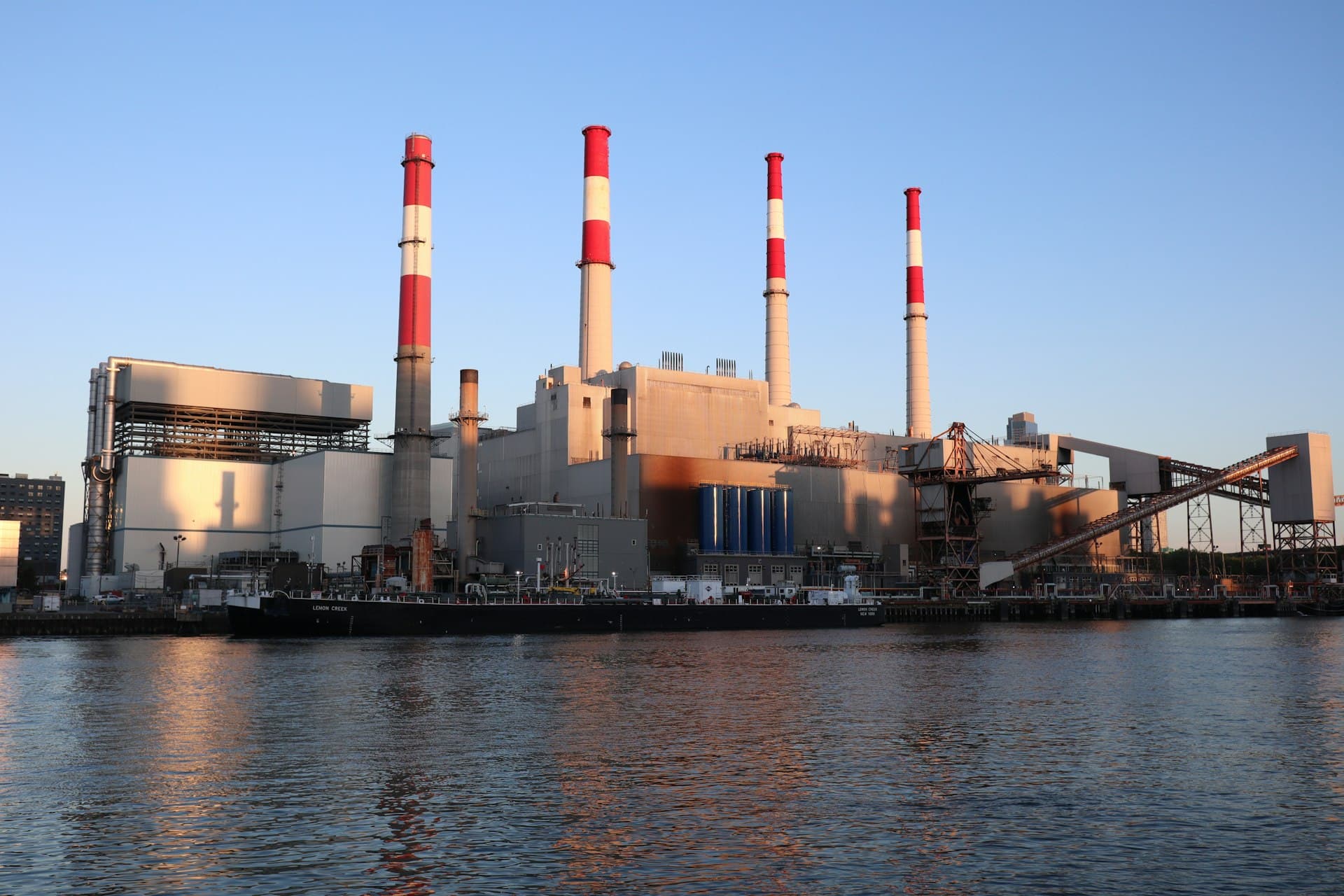
Wrong demineralized water spec costs $200K to $1M in rework and equipment failure. Here is how to match the method to the purity target.
A plant that specifies the wrong grade of demineralized water does not discover the mistake immediately. It discovers it six months later, when a heat exchanger fouls, a steam turbine blade erodes, or a batch of pharmaceutical product fails a conductivity test and gets quarantined. The remediation cost ranges from $200,000 for a resin swap and recommission to over $1 million when the root cause is a misspecified treatment train that has to be rebuilt from the pre-treatment stage. Demineralized water is not a single product. It is a family of purities, each produced by a different combination of unit operations, and the gap between the cheapest and the most expensive route is roughly 8x in OPEX.
The industry conflates demineralization with deionization, uses both terms interchangeably with ultrapure, and lets vendors define the spec rather than the process requirement. That is a procurement failure, not a technology failure. A two-bed ion exchange system costs $0.15 to $0.45 per cubic metre to run. A two-pass RO plus mixed-bed polishing system costs $0.30 to $0.90 per cubic metre. Specifying the latter when the former would have met the duty is waste. Specifying the former when the latter is required is a quality failure that no vendor warranty covers. And vendors will recommend whatever they sell.
This guide covers what demineralized water actually is at each purity tier, how each major production method works and what it costs, the threshold-based decision framework for selecting the right treatment train, the failure modes that drive avoidable cost, and the specifications that govern regulated applications in power generation, pharmaceuticals, and electronics manufacturing.
## The decision in brief
- Specify the train for your purity target and feed water. The correct demineralized water treatment train saves $150,000 to $600,000 over a 10-year operating period for a mid-sized industrial system at 100 to 300 m3/day. - Know where the saving comes from. The saving comes through avoided resin overconsumption, fewer unplanned membrane replacements, and elimination of chemical regen complexity where EDI is the right choice. - Put monitoring instrumentation in the original scope. The single largest cost of doing nothing, or of accepting a vendor-driven specification that optimises for CAPEX rather than TCO, is a silent quality exceedance that goes undetected for 6 to 18 months because the monitoring instrumentation was not included.
That failure mode, documented repeatedly across boiler and pharmaceutical applications, carries remediation costs of $150,000 to $2 million depending on what the off-specification water touched.
## What demineralized water actually means
Demineralized water is water from which dissolved mineral salts have been removed to a specified residual level, measured by electrical conductivity (in microsiemens per centimetre, uS/cm) or resistivity (in megaohm-centimetres, MOhm-cm). These two measures are inverses: pure water at 25C has a theoretical maximum resistivity of 18.2 MOhm-cm and a minimum conductivity approaching 0.055 uS/cm. Every ion in solution reduces resistivity and increases conductivity.
The term covers a wide range. Utility-grade demineralized water used in cooling tower makeup or general rinsing might have conductivity of 1 to 50 uS/cm, which a single-pass RO system can produce for under $0.15 per cubic metre. At the other end, ultrapure water for semiconductor wafer rinsing must reach 17.5 to 18.2 MOhm-cm, with total [organic carbon](/elements/carbon) (TOC) below 5 parts per billion, which requires a multi-stage treatment train costing $0.60 to $1.20 per cubic metre in OPEX alone. These are not variations on the same product; they are different products requiring different engineering.
What the term does not tell you is the method. Demineralized water can be produced by ion exchange, by reverse osmosis, by electrodeionization, by distillation, or by any combination of these. The right method depends on the feed water quality, the target purity, the required flow rate, the operating model (batch or continuous), and the site's tolerance for chemical handling. The spec should define the output. The engineer selects the method.
Internal reference: for a deeper treatment of the highest-purity tier, see [ultrapure water production: industrial methods and standards](/resources/ultrapure-water-production), which covers the semiconductor and pharmaceutical grades in detail.
## The four main production methods
Four technology families account for the vast majority of industrial demineralized water production. Understanding each one's mechanism, strengths, and limitations is the minimum required to evaluate a vendor proposal intelligently.
### Ion exchange (two-bed and mixed-bed)
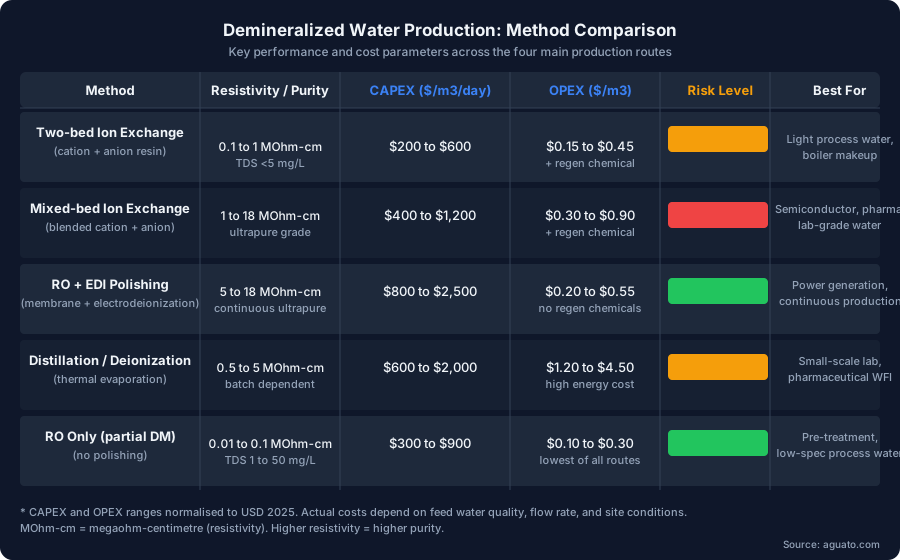
Ion exchange passes water through beds of synthetic resin that swap dissolved ions for hydrogen (cation resin) and hydroxide (anion resin). In a two-bed configuration, the cation and anion beds are separate vessels; in mixed-bed, the two resins are blended in a single vessel. Mixed-bed achieves higher purity because ionic leakage from each half-cycle is immediately captured by the complementary resin. The trade-off is regeneration complexity: separating cation and anion resin for acid/caustic regen requires backwash density separation and careful procedure.
Two-bed IX produces conductivity in the range of 0.5 to 5 uS/cm (resistivity 0.2 to 2 MOhm-cm), which covers most boiler makeup and process water applications. Mixed-bed, when properly conditioned, reaches 0.1 uS/cm or below (10 MOhm-cm and above). Both require periodic regeneration with hydrochloric acid or sulfuric acid (cation) and sodium hydroxide (anion), which generates a regulated effluent stream that must be neutralised before discharge.
The regeneration chemistry is the biggest operational risk that plant managers routinely underestimate. Handling concentrated acid and caustic on a recurring basis requires trained operators, secondary containment, and a neutralisation system. On a site without those capabilities, the operational cost and safety exposure of ion exchange can easily exceed the capital savings versus an RO-based alternative.
A pattern that recurs across industrial installations: a plant will install a two-bed IX system to save $300,000 in CAPEX relative to an RO-IX hybrid, then spend $80,000 per year on resin replacement and regen chemical because the feed water TDS is 800 mg/L, which exhausts the resin far faster than the design assumed. Over five years, the cheaper system costs $400,000 more to operate. That calculation is almost never done in procurement.
### Reverse osmosis
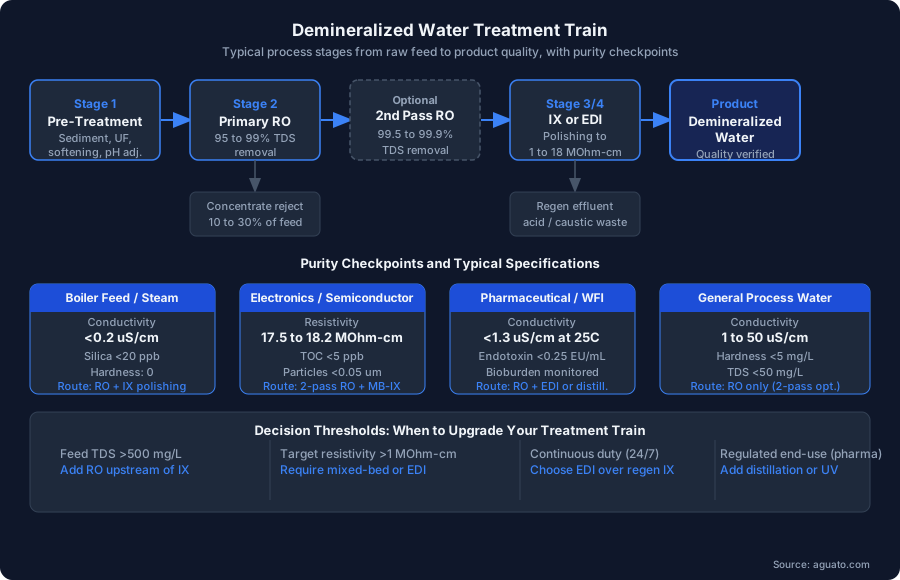
Reverse osmosis forces water through semi-permeable membranes under pressure (typically 5 to 15 bar for low-salinity feeds, 55 to 85 bar for seawater), rejecting dissolved salts, organics, and particulates. A single-pass RO system removes 95 to 99% of dissolved TDS from the feed. Two-pass RO (permeate from the first stage re-pressurised through a second membrane array) achieves 99.5 to 99.9% removal.
RO alone does not produce demineralized water in the conventional sense: its output still contains trace ions, dissolved carbon dioxide (which passes freely through membranes), and silica at levels that may disqualify it from high-purity applications. It is almost always used as a pre-treatment stage before ion exchange or electrodeionization, where its job is to reduce the ionic load on the downstream polishing unit. For applications where conductivity of 1 to 50 uS/cm is sufficient, two-pass RO is often the complete solution.
The economic advantage of RO in a combined train is that it dramatically extends the resin cycle between regenerations. A feed at 500 mg/L TDS exhausts a given resin volume roughly five times faster than a feed at 100 mg/L TDS. Installing RO upstream of IX reduces the downstream ionic load and can cut annual resin regeneration frequency from weekly to monthly, reducing chemical consumption, waste effluent, and operator time. For a 200 m3/day system, that shift in regeneration frequency is worth $40,000 to $70,000 per year in reduced chemical and labour cost.
[Browse verified reverse osmosis system providers](/reverse-osmosis-companies) to source equipment sized for your feed water profile and target recovery rate.
### Electrodeionization (EDI)
Electrodeionization uses an electric field to drive ions through ion-selective membranes while simultaneously regenerating the ion exchange resin in the device using the water's own electrolytic dissociation. The result is continuous production of high-purity water (typically 1 to 18 MOhm-cm resistivity) without any chemical regeneration. The resin is regenerated in situ, the waste stream is a small fraction of the feed, and there is no acid or caustic handling on site.
EDI is the technology that broke the trade-off between purity and operability. Before EDI became reliable at industrial scale in the 1990s, any application requiring sustained resistivity above 5 MOhm-cm required mixed-bed IX, with all the chemical handling, downtime for regeneration, and effluent management that entails. EDI made continuous ultrapure production practical and safe.
The constraint is that EDI requires a low-ionic-load feed, typically conductivity below 20 to 40 uS/cm, which in practice means it must be preceded by at least one pass of RO. It is also sensitive to hardness ions, carbon dioxide, and certain organics, which must be controlled in the RO permeate before the EDI stack. A poorly designed RO pretreatment stage that allows hardness breakthrough will precipitate scale on the EDI membranes within weeks, a repair bill of $15,000 to $80,000 per stack depending on size.
### Distillation
Distillation removes dissolved minerals by evaporating water and condensing the vapour, leaving non-volatile salts behind in the residue. It is the oldest demineralization method and the most energy-intensive: producing one litre of distilled water requires evaporating the same litre, which consumes 2,260 kJ/kg of latent heat. Even with waste-heat recovery and multi-effect configurations, distillation OPEX runs $1.20 to $4.50 per cubic metre, compared to $0.20 to $0.90 for membrane-based routes.
Distillation remains the required method for two specific applications: Water for Injection (WFI) in the pharmaceutical industry, where regulatory frameworks in the US and EU historically mandated distillation (the EU updated its pharmacopeia in 2017 to allow membrane-based WFI, but many facilities maintain distillation infrastructure for legacy validation reasons), and applications where volatile organic contaminants must also be removed, since membrane processes do not reliably remove low-molecular-weight volatile organics that co-distil in trace quantities.
For general industrial demineralized water, distillation is not economically competitive and should not be specified unless the application genuinely requires it. Vendors who propose distillation for boiler makeup water or cooling tower quality water are solving the wrong problem.
The [ASTM D1193 standard for reagent-grade water](dofollow:https://www.astm.org/d1193-06r18.html) defines four grades (Type I through Type IV) that govern laboratory and industrial purity specifications, including the maximum allowable conductivity, pH, silica, and heavy metals for each tier.
## Purity specifications by industry and application
The decision about which production method to specify starts with the purity target, which in turn is determined by the end use. There is no universal standard for demineralized water: different industries use different metrics, different threshold values, and different analytical methods.
Power generation uses conductivity as the primary specification, with International Association for the Properties of Water and Steam (IAPWS) guidelines requiring boiler feed water below 0.2 uS/cm for high-pressure drum boilers (above 60 bar) and below 0.1 uS/cm for supercritical and ultra-supercritical boilers. Silica is separately specified at below 20 micrograms per litre (ppb) to prevent silica deposition on turbine blades, which causes progressive efficiency loss and, if uncorrected, blade erosion requiring turbine overhaul at $500,000 to $2 million per unit. [Sodium](/elements/sodium) is specified at below 3 ppb to prevent caustic attack on boiler tubing.
Electronics and semiconductor manufacturing specifies by resistivity. The SEMI F64 standard specifies 17.5 to 18.2 MOhm-cm for ultrapure water used in wafer fabrication rinsing, with TOC below 1 to 5 ppb, dissolved oxygen below 1 ppb, and particle counts below 1 particle per millilitre at 0.05 micrometres. These specifications are typically achieved by RO followed by EDI, UV oxidation for TOC destruction, and final mixed-bed polishing.
Pharmaceutical manufacturing is governed by the USP (United States Pharmacopeia) and the European Pharmacopoeia (Ph.Eur.). Purified Water (PW) must meet conductivity below 1.3 uS/cm at 25C; Water for Injection (WFI) adds endotoxin limits below 0.25 endotoxin units (EU) per millilitre. The production route for WFI in the US remains distillation; the EU now permits alternative methods including reverse osmosis and ultrafiltration if the system demonstrates equivalent endotoxin rejection.
For applications outside these regulated tiers, such as battery manufacturing cooling, industrial rinsing, and laboratory support water, the specification is typically expressed as a maximum conductivity or TDS. Most general industrial applications are adequately served by a conductivity target of 1 to 10 uS/cm, achievable by two-pass RO at OPEX of $0.12 to $0.25 per cubic metre.
The specification mismatch between what an application needs and what gets procured is where most of the avoidable cost in demineralized water sits. A procurement team under pressure to reduce CAPEX will buy the cheapest system that meets the nominal spec, but if that spec is written to match the vendor's product rather than the process requirement, the savings are illusory.
## CAPEX and OPEX: what the right system costs
Cost data for demineralized water systems varies widely with flow rate, feed water quality, purity target, and geographic location. The ranges below are normalised to USD 2025 for systems in the 50 to 500 m3/day range, which represents the bulk of industrial and pharmaceutical installations. Smaller systems (below 10 m3/day) carry a higher capital cost per unit capacity; larger systems (above 2,000 m3/day) benefit from scale economies in membranes and civils.
| Method | CAPEX ($/m3/day) | OPEX ($/m3) | Energy (kWh/m3) | Chemical cost | Risk | |---|---|---|---|---|---| | Two-bed IX only | $200 to $600 | $0.15 to $0.45 | 0.05 to 0.15 | High (acid+caustic) | Medium | | Mixed-bed IX only | $400 to $1,200 | $0.30 to $0.90 | 0.05 to 0.15 | High (acid+caustic) | High | | RO only (single-pass) | $300 to $900 | $0.10 to $0.30 | 0.3 to 0.8 | Low | Low | | RO + Two-bed IX | $500 to $1,400 | $0.20 to $0.50 | 0.35 to 0.95 | Medium | Low | | RO + EDI | $800 to $2,500 | $0.20 to $0.55 | 0.4 to 1.1 | None | Low | | 2-pass RO + Mixed-bed IX | $900 to $2,800 | $0.35 to $0.90 | 0.5 to 1.2 | Medium | Medium | | Distillation | $600 to $2,000 | $1.20 to $4.50 | 5 to 15 | Low | Low |
The OPEX line item that most procurement teams underestimate is resin replacement. Resin does not last forever. It degrades through organic fouling (particularly by humic acids and chlorine), mechanical attrition from backwash cycles, and thermal shock. A well-operated IX system on clean feed will see resin life of 5 to 8 years before significant capacity loss. On difficult feed with high organic load or chlorine residual, resin life can drop to 18 to 30 months. At $1,500 to $4,000 per cubic foot of resin (with systems ranging from 5 to 200 cubic feet), this is a material lifecycle cost that a 10-year TCO calculation cannot ignore. Labour cost for regeneration also accrues: a manual regeneration cycle on a two-bed system takes 4 to 8 operator hours per cycle, and weekly cycles on a heavily loaded system translate to 200 to 400 operator hours per year, a cost that rarely appears in the vendor's OPEX model but consistently appears on the maintenance budget in year two.
For [industrial water purification](/resources/industrial-water-purification) projects requiring continuous high-purity output, the RO plus EDI combination consistently delivers the lowest 10-year TCO when chemical handling cost, operator time, and effluent treatment are properly loaded into the model. The higher CAPEX relative to RO plus IX is typically recovered within 3 to 5 years at flow rates above 100 m3/day.
[cta:nepti]
Not sure which configuration fits your flow rate and purity target? [Post your project](/post-project) and qualified demineralized water system providers will scope the trade-off against your actual feed water analysis.
## How to choose: threshold-based decision framework
The right treatment train follows directly from three numbers: feed water TDS, target output purity (in conductivity or resistivity), and required flow rate. The following thresholds are based on observed patterns across industrial installations and are not vendor-specific.
If feed water TDS is below 200 mg/L and the target conductivity is 1 to 10 uS/cm, single-pass RO is the correct and sufficient solution. CAPEX ranges from $300 to $900 per m3/day of capacity, and OPEX sits at $0.10 to $0.30 per cubic metre. Adding IX polishing at this tier produces no material quality benefit and adds chemical handling complexity for no process reason.
If feed TDS is 200 to 1,000 mg/L and the target conductivity is 0.1 to 1 uS/cm, the correct route is RO upstream of a two-bed or mixed-bed IX system. The RO reduces the ionic load entering the resin, which cuts regeneration frequency and extends resin life. Operating without RO pretreatment at this feed quality will exhaust resin three to five times faster, inflating annual OPEX by $30,000 to $80,000 on a 100 m3/day system.
If feed TDS exceeds 1,000 mg/L, two-pass RO is required before any IX or EDI polishing. Single-pass RO at this feed concentration produces a permeate at 5 to 50 mg/L TDS (conductivity 8 to 80 uS/cm), which is still within the feed specification for EDI but at the margin. Two-pass RO reduces permeate TDS to below 2 mg/L, giving EDI the ionic load it needs to perform reliably.
If the target resistivity is above 5 MOhm-cm and the operation is continuous (24 hours per day, 7 days per week), choose RO plus EDI. The elimination of chemical regeneration batches, the absence of conductivity spikes during resin exhaustion cycles, and the continuous product quality are decisive for any process where water quality excursions cause production downtime. A single unplanned shutdown on a semiconductor fab costs $50,000 to $250,000 per hour. Specifying an IX-based system to save $400,000 in CAPEX on a $200 million fab is a false economy.
If the application is pharmaceutical and the product contacts the water (WFI, rinse water for parenteral containers), engage your QA team and regulatory affairs function before selecting any technology. The method must be validated, not just compliant.
For applications in the 5 to 30 m3/day range where capital budget is constrained, a packaged RO-IX system from a specialist supplier often delivers better total value than a custom-engineered solution. The design is proven, the commissioning risk is lower, and the resin replacement is a standard service. The trade-off is less flexibility in recovery rate and product quality tuning.
If your feed water chemistry is complex (high silica, high organics, variable TDS), the treatment train selection cannot be done from first principles alone. Tools like [Nepti](/nepti) model your water matrix and simulate which treatment train minimises cost and risk across the full operating envelope, producing a ranked comparison of technology options with cost projections before you approach a single vendor.
## Feed water quality and pre-treatment requirements
The quality of the water entering the demineralization system determines the cost and complexity of everything downstream. This is the input that most procurement specifications underspecify, and it is the most common cause of system underperformance in the first 12 months of operation.
Hardness (calcium and magnesium) is the primary scaling risk for RO membranes and EDI stacks. At high pH or elevated concentration, calcium carbonate and calcium sulfate precipitate on membrane surfaces, creating scale deposits that reduce permeability and increase trans-membrane pressure. The correct response is antiscalant dosing upstream of the RO, sized to the saturation index of the feed. Getting this wrong costs $8,000 to $25,000 in membrane replacement per element set on a mid-sized RO array.
Silica deserves separate attention. It is not removed effectively by antiscalants above the saturation limit, and at high recovery rates (above 75 to 80%), silica in the concentrate can exceed saturation and foul membranes in a way that standard cleaning protocols cannot reverse. For feeds with silica above 20 mg/L, either reduce the recovery rate to keep silica below saturation in the concentrate, or add a warm-lime softening stage upstream to precipitate silica. Neglecting this detail on a high-silica feed is a $60,000 to $200,000 mistake.
Chlorine and chloramine residual from municipal supply water will oxidise polyamide RO membranes rapidly. Even 0.1 mg/L free chlorine causes measurable membrane degradation; a feed at 1 mg/L will destroy a polyamide membrane array in weeks. Activated carbon filtration or sodium bisulfite dosing is required for any municipal feed. This is not optional. It is a capital budgeting item that sometimes gets value-engineered out and consistently reappears as an emergency membrane replacement.
[The US Environmental Protection Agency's guidance on water quality and treatment](dofollow:https://www.epa.gov/ground-water-and-drinking-water/national-primary-drinking-water-regulations) defines the baseline chemical parameters in municipal supply water that feed water analyses should be checked against when sizing pre-treatment systems.
For feeds from surface water, industrial process returns, or recovered cooling tower blowdown, organic load (measured as TOC or COD) must be assessed. TOC above 2 mg/L reaching an EDI stack will foul the ion exchange membranes within the stack, reducing current efficiency and eventually requiring stack replacement. Upstream UV oxidation at 254 nm reduces TOC by photolytic decomposition; combined with activated carbon, it can reduce surface-water TOC from 5 to 10 mg/L down to below 0.5 mg/L at OPEX of $0.03 to $0.08 per cubic metre.
See [ion exchange water treatment](/resources/ion-exchange-water-treatment) for a detailed treatment of pre-treatment requirements specific to IX systems, including hardness limits, temperature ranges, and organic fouling mitigation.
## Failure modes and what they cost
The most expensive demineralized water problems are not equipment failures. They are specification and design decisions that look correct at commissioning and reveal themselves over 12 to 36 months of operation. The following failure modes recur across project types.
Resin breakthrough without adequate monitoring. Two-bed and mixed-bed IX systems produce water that appears compliant until the resin is exhausted, at which point conductivity spikes sharply. If there is no continuous conductivity monitoring with an alarm and automatic divert, product-quality water continues to be routed to the process during the exhaustion event. In a power plant, this delivers sodium and chloride ions to the boiler, which causes pitting corrosion of boiler tubing. A corrosion event detected after 6 to 18 months of substandard water requires boiler tube replacement at $150,000 to $600,000 plus the cost of a planned outage. The conductivity analyser that would have prevented it costs $2,000 to $8,000. The correct decision: instrument every IX system with a continuous conductivity monitor, alarm, and auto-divert valve as standard scope.
RO membrane fouling from inadequate pre-treatment. Biological fouling (biofouling) is the dominant RO failure mode on surface water and warm feeds. A biofilm forms on the membrane surface, increases differential pressure, and eventually creates bypass channels that destroy salt rejection. Chemical cleaning (clean-in-place, or CIP) may restore 60 to 80% of original performance, but a severely biofouled system requires element replacement. On a 20-element RO array, element replacement costs $40,000 to $90,000 plus the downtime for element changeout. The correct decision: design the pre-treatment for the worst-case seasonal feed quality, not the average. That typically means UV disinfection and/or biocide dosing upstream of the RO, plus a CIP system included in the original scope (not added later as a change order at 2x the cost).
EDI stack failure from hardness breakthrough. As noted above, hardness ions that pass through an RO system with degraded membranes or poor antiscalant dosing will scale the EDI stack. The EDI module is the highest-cost component in a combined RO-EDI train, at $8,000 to $35,000 per module depending on capacity. A well-maintained system runs 5 to 10 years before module replacement is needed; a poorly fed one may fail within 18 months. The total cost of a premature EDI module replacement, including parts, installation, and commissioning, typically exceeds $50,000 for a mid-sized industrial system. The correct decision: specify hardness below 0.1 mg/L as CaCO3 in the RO permeate as a hard-wired EDI feed requirement, and include a hardness analyser with an interlock that diverts flow away from the EDI stack on any hardness exceedance.
Silica deposition on turbine blades. This failure mode is specific to power generation but carries the highest financial consequence of any demineralized water failure. Silica that passes through a demineralization system at concentrations above the specification (typically 20 ppb for high-pressure boilers) volatilises in the steam phase and deposits on high-pressure turbine blades as the steam expands and cools. The deposit builds over months, reducing blade profile efficiency and increasing the pressure drop across the turbine stage. A 1% efficiency loss on a 500 MW turbine at $60/MWh electricity price costs $2.6 million per year in lost generation revenue. Blade cleaning or replacement costs $500,000 to $2 million per turbine unit plus the outage. The correct decision: specify silica monitoring as part of the demineralization system instrumentation from day one, with continuous online silica analysis and an alarm set at 80% of the specification limit.
Across projects we have seen, the pattern is consistent: the savings made by omitting monitoring instrumentation are recovered within the first unplanned maintenance event. The argument for a fully instrumented demineralization system is not operational gold-plating; it is basic lifecycle cost management.
## Regulated applications: power, pharma, and electronics
Three industries operate demineralized water systems under explicit regulatory or standards-based requirements. Understanding these frameworks is essential for any procurement team buying into one of these sectors, because the regulatory requirement constrains both the technology choice and the validation scope.
Power generation. The IAPWS-ID (International Association for the Properties of Water and Steam, International Dosing Criteria) and the IAPWS-AVT (All-volatile Treatment) guidelines specify water and steam chemistry for different boiler and turbine types. For high-pressure drum boilers (60 to 180 bar), feed water conductivity must be below 0.2 uS/cm, with sodium below 3 ppb, chloride below 2 ppb, and silica below 10 to 20 ppb depending on operating pressure. For once-through supercritical boilers, specifications are tighter: conductivity below 0.1 uS/cm, TOC below 100 ppb. These are continuous operating requirements, not startup specifications, which means the demineralization system must sustain this quality 24/7 with no batch-production interruption.
Pharmaceuticals. The USP 645 (Water Conductivity) test and USP 643 (Total Organics) test define Purified Water and Water for Injection specifications. USP PW requires conductivity below 1.3 uS/cm at 25C; USP WFI adds endotoxin below 0.25 EU/mL and bacterial endotoxin testing by the LAL method. The production system must be qualified (Installation Qualification, Operational Qualification, Performance Qualification) before any product can be manufactured using the water. Retrofitting an unqualified system after the fact can cost $200,000 to $500,000 in validation documentation and testing. The correct approach is to engage a water system validation specialist at the design stage.
Electronics. SEMI F64 defines ultrapure water specifications for semiconductor wet processing. The tier relevant to front-end-of-line (FEOL) processes requires 18.2 MOhm-cm resistivity (at ambient temperature), TOC below 1 ppb, dissolved oxygen below 1 ppb, metals below 0.1 ppt each, and particle counts below 1 per millilitre at 50 nm. Achieving this specification requires a treatment train of: pretreatment (UF, activated carbon, cartridge filtration) followed by primary RO, then degassing and CO2 removal, then EDI, then UV for TOC reduction, then final mixed-bed polishing, then UF point of use. The total installed cost for a semiconductor-grade ultrapure water system capable of 500 m3/day is $15 million to $40 million.
[The WHO guidelines for drinking water quality](dofollow:https://www.who.int/publications/i/item/9789241549950) provide the baseline chemical parameters for feed water quality assessments, including acceptable ranges for hardness, TDS, chloride, sulfate, and heavy metals that inform pre-treatment sizing.
For industries that sit between these regulated tiers, such as battery manufacturing, food and beverage, and automotive, the specification is typically set by the process engineer and the equipment manufacturer's requirement rather than a regulatory framework. The risk of underspecification here falls entirely on the buyer.
## Operational considerations and system lifecycle
A demineralized water system is not a set-and-forget asset. The operational model determines whether the capital cost is justified over the design life of 10 to 20 years, and the operational decisions made in years one and two have a disproportionate effect on total lifecycle cost.
Resin management is the highest-touch operational requirement for IX-based systems. Proper regeneration procedure, including correct chemical concentration, contact time, slow rinse, and fast rinse sequence, determines both the quality of the regenerated bed and the volume of chemical consumed. Regeneration with excess chemical is waste; insufficient chemical leaves the resin underperforming and reduces cycle length between regenerations. Most systems should be equipped with a conductivity-based endpoint to terminate the regeneration rinse cycle, rather than running a fixed-time rinse that either wastes water or stops too early.
Membrane replacement cadence for RO systems is determined by the salt rejection trend, the normalised pressure differential trend, and the normalised permeate flow trend. On a well-run system with clean feed and proper antiscalant dosing, RO membranes last 5 to 7 years. On a system with seasonal fouling pressure or suboptimal pre-treatment, 3 years is more realistic. The cost difference between planned membrane replacement (scheduled, parts on hand, 2-day shutdown) and emergency replacement (unplanned, logistics premium, extended downtime) is typically 40 to 60% more expensive for the unplanned version, plus production loss during the extended outage.
Chemical handling and storage for IX systems requires dedicated infrastructure: segregated storage for acid and caustic (which must not be stored adjacent or handled simultaneously by the same operator), secondary containment, neutralisation pit, and pH monitoring on the effluent line. Facilities that underinvest in this infrastructure at commissioning create ongoing safety and environmental compliance risk. A chemical spill event on an under-contained IX regen system can generate regulatory enforcement costs of $50,000 to $300,000 depending on jurisdiction and volume.
For large industrial sites operating multiple demineralized water systems, centralising the monitoring of all conductivity, flow, and pressure data into a single SCADA interface reduces the operator burden and makes quality exceedances visible across the site in real time. The capital cost of this integration is $30,000 to $80,000 for a typical multi-skid installation; the avoidable downtime it prevents in the first five years routinely justifies that investment.
See [industrial water quality testing](/resources/water-quality-monitoring-online-vs-lab) for guidance on selecting between online continuous monitoring and laboratory spot-check protocols for demineralized water systems, including the specific analyser types and calibration requirements for each purity tier.
## Sourcing and vendor selection
The demineralized water systems market includes global process equipment suppliers, regional packaged system integrators, and specialty vendors focused on specific technology types (RO-only, EDI-specialist, pharmaceutical-grade). The right vendor category depends on the project scope and complexity.
For standard industrial applications (boiler makeup, general process water, cooling tower support) at flows below 500 m3/day, a packaged system from a regional integrator typically offers the best combination of cost, delivery time, and local service capability. These systems are pre-engineered, pre-piped, and skid-mounted, with commissioning times of 2 to 6 weeks rather than the 6 to 18 months for custom-engineered systems.
For high-purity applications in pharmaceuticals, electronics, or power generation, a specialist supplier with documented project experience in the specific regulatory framework is essential. The technology performance difference between a commodity RO-IX supplier and a pharmaceutical water specialist is not large; the difference in validation documentation capability, FDA-compatible design, and ongoing regulatory support is substantial. Paying a 20 to 30% premium for a specialist supplier on a $1 million pharmaceutical water system is an investment in validation speed and audit readiness, not a luxury.
Evaluate vendors on four criteria that most RFPs underweight: (1) demonstrated analytical capability for feed water characterisation, not just quoted removal efficiencies; (2) local service and resin replacement infrastructure, since a vendor with no regional service presence leaves you without support for the most time-sensitive maintenance tasks; (3) instrumentation scope in the base proposal, not as an add-on; and (4) lifecycle cost modelling over 10 years, not just CAPEX.
Not sure which supplier type fits your project? [Browse verified water purification providers](/water-purification-companies), filter by technology and regulatory experience, and request scoped proposals from three to five specialists.
The specification document you send to vendors is the most important quality control step in the procurement process. Vendors will design to the minimum specification that wins the bid. If the specification does not include monitoring requirements, waste stream management, resin life guarantees, and 10-year OPEX estimates as mandatory scope items, the cheapest bidder will exclude them. The buyer pays for these omissions in years two through ten of operation.
For projects where vendor comparison across multiple technology routes is complex, [Nepti](/nepti) produces a ranked comparison of treatment train options with cost projections, helping you characterise the trade-off before engaging vendors and eliminating the information asymmetry that most procurement processes accept as normal.
## FAQ
### What is demineralized water and how is it different from distilled water?
Demineralized water is water from which dissolved mineral salts have been removed by an ion exchange, membrane, or electrochemical process, typically to a conductivity below 1 uS/cm. Distilled water is produced specifically by thermal evaporation and condensation, which also removes non-volatile contaminants including most bacteria and endotoxins. The two can reach similar purity levels, but they are produced by different methods. Demineralization is generally lower in energy cost and higher in throughput; distillation is required for specific pharmaceutical applications (Water for Injection in some regulatory frameworks) where the evaporation step provides validated endotoxin reduction.
### What conductivity level qualifies as demineralized water?
There is no single universal threshold. The term is generally applied to water with conductivity below 10 uS/cm, with common industrial grades ranging from 0.5 to 5 uS/cm. High-purity demineralized water for boiler makeup or pharmaceutical Purified Water is specified below 0.2 to 1.3 uS/cm depending on the application. Ultrapure water for semiconductor manufacturing is measured in resistivity rather than conductivity and must reach 17.5 to 18.2 megaohm-centimetres (equivalent to conductivity of 0.055 to 0.057 uS/cm). The relevant specification is always defined by the end-use process or the applicable regulatory standard, not by a general definition of "demineralized."
### How much does a demineralized water system cost to install and operate?
Capital cost ranges from $200 to $2,800 per cubic metre per day of design capacity, depending on the technology combination and purity target. A simple two-bed ion exchange system for low-flow general process water sits at the lower end. A two-pass RO plus EDI system for continuous high-purity production sits at the upper end. Operating cost (OPEX) ranges from $0.10 to $0.55 per cubic metre for membrane-based systems without chemical regeneration, up to $0.30 to $0.90 per cubic metre for ion exchange systems with full acid and caustic regeneration included. Distillation OPEX of $1.20 to $4.50 per cubic metre makes it uncompetitive for general industrial use.
### When should I choose electrodeionization over ion exchange for polishing?
Choose EDI when the operation is continuous (24 hours per day), the target resistivity is above 1 MOhm-cm, and the site has limited tolerance for chemical handling or regulatory constraints on acid and caustic storage. Choose IX polishing when the flow rate is low (below 20 m3/day), the system operates in batch mode with predictable shutdowns for regeneration, or the capital budget cannot support the higher CAPEX of an RO-EDI train. The 10-year TCO favours EDI at flow rates above 50 to 100 m3/day once chemical, labour, and effluent treatment costs are fully loaded into the IX model.
### What pre-treatment does a demineralized water system require?
Pre-treatment requirements depend on the feed water source and the downstream technology. For RO-based systems, the standard pre-treatment sequence includes sediment filtration (removing particles above 5 to 10 micrometres), activated carbon (removing chlorine and chloramine residual that would otherwise destroy polyamide membranes), and antiscalant dosing (preventing calcium carbonate and sulfate scale on the membrane surface). For feeds with high hardness, a water softener upstream of the RO reduces scaling risk and extends membrane life. For EDI-based systems, the RO permeate must also have hardness below 0.1 mg/L as CaCO3 and carbon dioxide below 5 mg/L.
### What are the main failure modes for demineralized water systems?
The five most common failures are: resin exhaustion without alarm or divert (delivering off-specification water to the process); RO membrane fouling from inadequate pre-treatment (biofouling, scaling, or chlorine damage); EDI stack scaling from hardness breakthrough; silica deposition on power generation equipment from under-specified silica removal; and chemical regeneration errors on IX systems that leave resin underperforming. All five are preventable with proper monitoring instrumentation, an alarm and auto-divert strategy, and a documented regeneration procedure. The cost of instrumentation to prevent these failures is 2 to 5% of system CAPEX; the cost of the failures themselves ranges from $40,000 to $2 million.
### How do I write a specification for a demineralized water system that protects the buyer?
A defensible specification includes: the feed water analysis (full chemistry, seasonal range, and worst-case TDS and hardness); the product water quality requirements (conductivity or resistivity, silica, sodium, TOC, and any regulatory limits); the required flow rate and storage volume; the operating model (continuous or batch); instrumentation requirements (continuous conductivity monitoring, alarm setpoints, and auto-divert logic); waste stream limits (maximum pH and volume of regeneration effluent); resin life and membrane replacement guarantees; and a mandatory 10-year TCO estimate as part of the bid deliverable. Including monitoring and lifecycle cost in the RFP eliminates the low-bid trap where the cheapest proposal becomes the most expensive system after two years of operation.