Cooling water corrosion causes 25 to 40% of all heat exchanger failures. A $23,000 to $72,000/yr programme prevents $120,000 to $350,000 tube replacements and six-figure Legionella shutdowns.
Cooling water corrosion control is one of the highest-leverage decisions in industrial water management, and one of the most underspecified. A heat exchanger tube bundle in a 10 MW chiller or process cooler carries roughly $120,000 to $350,000 in replacement value. When corrosion drives an unplanned perforation, that number is just the starting point: add forced downtime at $15,000 to $80,000 per day for a mid-size continuous process, emergency contractor rates, and the water damage downstream. Across industrial plants globally, corrosion accounts for an estimated 25 to 40% of all heat exchanger failures, most of which were preventable.
The frustrating part is that most corrosion events are not caused by unusual chemistry or extreme operating conditions. They happen because the treatment programme was sized for a different system, because dosing was inconsistent, because someone cut the biocide budget during a cost review, or because the wrong inhibitor chemistry was specified for the metallurgy on site. Vendors will recommend whatever they sell. The buyer's job is to model the lifecycle cost of the alternatives and hold the programme to measurable corrosion rate targets, not just chemical spend.
This guide covers the four corrosion mechanisms active in cooling water systems, how to read your water chemistry to diagnose the dominant threat, the inhibitor chemistries available and when each applies, the CAPEX and OPEX of a properly structured programme, the failure scenarios that cost the most, and a decision framework for evaluating proposals. It is written for the plant operations team that owns the treatment programme and the procurement lead that has to defend the chemistry budget to a CFO who sees only a line item.
## The decision in brief
- Budget the programme at $23,000 to $72,000 per year. A cooling water corrosion control programme that keeps mild steel corrosion below 2 mpy and copper below 0.5 mpy costs $23,000 to $72,000 per year for a mid-size industrial system. - A missing or technically inadequate programme exposes the facility. Without a properly specified programme, the exposure is a heat exchanger bundle failure at $120,000 to $350,000, a Legionella response event at $85,000 to $640,000 including production loss, or a scale-driven energy penalty of $30,000 to $180,000 per year compounding annually. - The second and third failures are the real cost. The biggest cost of doing nothing is not the first failure. It is the second and third failure that occur before the root cause is diagnosed and the programme is corrected.
Most sites that reach that point have spent more on reactive remediation in 18 months than a properly designed programme would have cost for a decade.
## Why cooling water systems corrode
Cooling water systems create the conditions for corrosion almost by design. Water is concentrated by evaporation, [oxygen](/elements/oxygen) is continuously introduced at the tower fill, heat drives reaction rates at exchanger surfaces, and biological activity is favoured by warm, nutrient-rich water circulating through shaded basins. The result is an electrochemical environment that actively attacks metal surfaces unless it is deliberately managed.
The core problem is that circulating water is never chemically neutral. It picks up carbon dioxide, oxygen, and atmospheric dust through the tower. It concentrates all dissolved salts as pure water evaporates away. Corrosion inhibitors, scale inhibitors, and biocides are consumed or degraded continuously and must be replenished accurately. Let any one of those three legs fail and corrosion accelerates, often silently, until a tube fails or a pump impeller loses measurable wall thickness.
A pattern that recurs across industrial installations: operations teams monitor chemical dosing but do not measure corrosion rates directly. Quarterly coupon readings that show 3 to 5 mils per year (mpy) are treated as acceptable because they are below the alarm threshold, but the threshold was set by the vendor based on industry averages, not the specific metallurgy or duty cycle of that system. By the time pitting corrosion makes the heat exchanger irreparable, the cumulative wall loss has been occurring for 18 to 36 months under a programme that looked compliant on paper.
For background on how cooling tower water chemistry evolves through evaporation and concentration cycles, the [cooling tower water treatment](/resources/cooling-tower-water-treatment) reference covers the full chemistry framework including Langelier Saturation Index, blowdown control strategy, and how the treatment programme fits into the overall water balance.
## The four corrosion mechanisms and their signatures
Cooling water corrosion is not a single phenomenon. Four distinct mechanisms operate in these systems, each with a different driving chemistry, a different damage signature, and a different countermeasure. Misidentifying the mechanism leads to the wrong treatment, which at best wastes money and at worst accelerates the failure it was supposed to prevent.
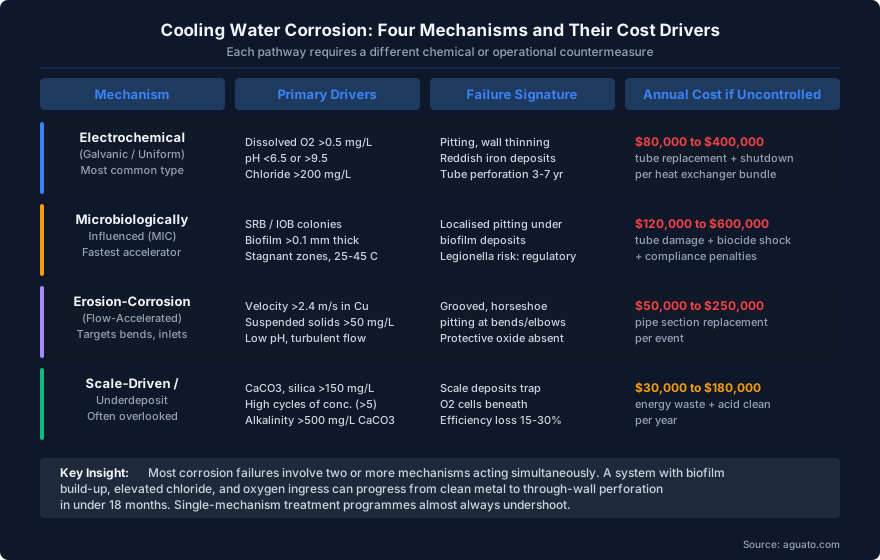
Electrochemical corrosion is the baseline mechanism in any aqueous system. Metal surfaces act as anodes, releasing ions into solution, while oxygen reduction occurs at cathodic sites nearby. In cooling water the driving variables are dissolved oxygen concentration (above 0.5 mg/L accelerates attack), pH (acidic conditions below 6.5 or alkaline conditions above 9.5 strip protective oxide films), chloride concentration (above 200 mg/L causes pitting in stainless steel and stress corrosion cracking in sensitised alloys), and temperature (each 10 degrees C rise roughly doubles the electrochemical reaction rate). The damage signature is general wall thinning with scattered pits, reddish iron oxide deposits in mild steel systems, and white crystalline deposits in [copper](/elements/copper) systems.
Microbiologically influenced corrosion (MIC) is the mechanism most commonly underestimated. Sulphate-reducing bacteria (SRB) produce hydrogen sulphide that attacks ferrous metals directly. Iron-oxidising bacteria (IOB) form tubercles of iron oxide that create oxygen-depleted cells underneath, accelerating pitting. Both operate beneath biofilm layers that the bulk water chemistry programme cannot penetrate with adequate biocide concentration. [According to the CDC's Legionella resource centre](dofollow:https://www.cdc.gov/legionella/index.html), biofilm is the primary reservoir for Legionella proliferation in cooling towers, making biological control a dual safety and corrosion concern. MIC-driven pitting can perforate a mild steel tube in 12 to 24 months even when bulk water chemistry appears fully controlled.
Erosion-corrosion targets specific geometry. High-velocity flow above 2.4 m/s in copper alloy tubing strips the protective copper oxide layer that forms the first line of corrosion defence. Suspended solids above 50 mg/L act as abrasives. Bends, inlets, and return bends are the primary damage sites, showing characteristic horseshoe or groove pitting aligned with the flow direction. This is a design and operating problem as much as a chemistry problem: oversized pumps running throttled lines, or filter bypasses that allow solids to accumulate, create the conditions regardless of inhibitor dose.
Underdeposit and scale-driven corrosion occurs when calcium carbonate, silica, or iron oxide deposits form on heat transfer surfaces. Scale itself is thermally resistive, causing hot spots that accelerate corrosion reactions at the metal-deposit interface. Oxygen concentration cells form between the deposit and the surrounding metal, driving localised anodic attack. A 0.5 mm calcium carbonate scale layer reduces heat transfer efficiency by 10 to 15% and creates a corrosion environment that can penetrate carbon steel at twice the rate of a clean surface.
## Reading your water chemistry: the diagnostic framework
Before specifying any inhibitor programme, the feed water and circulating water must be characterised. The decision thresholds below determine which mechanisms are dominant and which inhibitor families are required.
The Langelier Saturation Index (LSI) is the starting point for scale and corrosion balance. An LSI below -0.5 indicates corrosive, undersaturated water that aggressively dissolves metal oxides. An LSI above +0.5 indicates scale-forming tendency. The operating target for most open recirculating systems is LSI between 0 and +1.0, where a thin protective calcium carbonate film forms on metal surfaces without building scale deposits thick enough to cause fouling. If your LSI in the circulating water is below -1.0 at your design cycles of concentration, you need both an inhibitor programme and a pH correction programme, not just inhibitor alone.
Chloride-to-sulphate mass ratio (CSMR) matters specifically for copper alloys and for galvanic corrosion in mixed-metal systems. A CSMR above 0.5 in systems with copper heat exchangers increases dezincification and pitting risk substantially. Above 1.0 in systems with both copper and mild steel, galvanic attack accelerates at the dissimilar metal junctions. Your circulating water analysis should include both ions at every monitoring interval.
Microbiological screening should include total aerobic plate count (target below 10,000 cfu/mL in circulating water), Legionella culture or qPCR (target below 100 cfu/L with action level at 1,000 cfu/L per UK HSE ACoP L8 guidelines), and, where MIC is suspected, specific SRB and IOB counts. Bulk ATP measurement gives a rapid real-time indicator of total microbial load between formal laboratory cultures.
The following decision thresholds map water chemistry to treatment needs:
- LSI below -0.5 at target CoC: add pH control (acid dosing or CO2 injection) to target LSI 0 to +0.5, and increase inhibitor dose by 30 to 50% - Chloride above 200 mg/L with copper metallurgy: specify azole (BZT or TTA) at 2 to 4 mg/L minimum; consider stainless steel or titanium alternatives if chloride cannot be controlled - Silica above 150 mg/L at operating CoC: reduce cycles of concentration or add silica-specific dispersant; silica scale is practically irreversible once formed - Dissolved oxygen above 2 mg/L in the circulating water: check tower air seals and distribution, consider oxygen scavenger supplement in closed-loop portions of the system - Total aerobic count above 100,000 cfu/mL: shock dose biocide within 24 hours; audit cooling tower fill and basin for biofilm accumulation
Providers specialising in cooling water chemistry analysis and programme design can be found through the [water treatment chemical companies](/water-treatment-chemical-companies) directory on this platform.
## Corrosion inhibitor chemistries compared
Inhibitor selection is the most consequential chemical decision in the programme. Get it wrong and you pay twice: once for the chemistry that does not work, and again for the failure it fails to prevent. The four main inhibitor families in cooling water service each have specific strengths, limitations, and cost profiles.
Phosphonate inhibitors (HEDP, PBTC, ATMP, AMP) are the workhorses of modern cooling water programmes. They form a thin adsorbed film on metal surfaces that retards anodic dissolution, and they carry a secondary scale inhibition function by threshold effect at substoichiometric doses. Effective pH window is 6.8 to 9.0. Dosage ranges from 3 to 10 mg/L active phosphonate. Annual chemical cost for a 500 m3 system runs $4,000 to $12,000. The concern in regulated discharge environments is total phosphorus: phosphonate oxidises to orthophosphate in the system, and NPDES permits in sensitive watersheds may impose limits of 0.1 to 0.5 mg/L total phosphorus in blowdown, requiring more aggressive blowdown or supplemental treatment before discharge.
Azole inhibitors (benzotriazole, tolyltriazole, mercaptobenzothiazole) are essential in any system with copper alloys, including admiralty brass, cupronickel, and bronze heat exchangers. Azoles adsorb strongly onto copper surfaces to form a protective polymeric film. They do not provide significant protection for ferrous metals on their own and are almost always used as part of a blended programme with phosphonate for ferrous protection. At 1 to 3 mg/L BZT in the circulating water, copper corrosion rates in compliant programmes fall below 0.5 mpy. Without an azole programme in copper systems, copper ion release of 0.5 to 2 mg/L is common, driving copper deposition on mild steel surfaces that accelerates galvanic attack.
Molybdate inhibitors (sodium molybdate blends) provide anodic protection across a wide metallurgy range, including stainless steel and nickel alloys. Their toxicity profile is significantly lower than chromate (which is now essentially banned in open recirculating systems across most jurisdictions), and they are preferred in food and pharmaceutical environments where chromate discharge is prohibited. The cost disadvantage is significant: molybdate effective dosages of 20 to 80 mg/L produce annual chemical costs of $18,000 to $55,000 for a 500 m3 system, three to five times the cost of a phosphonate-based programme. Molybdate is almost always blended with phosphonate and polymer to reduce overall dosage requirements.
Polymer dispersants (polyacrylate, AA/AMPS copolymers, PASP, PESA) are not corrosion inhibitors in the classical sense, but they are integral to corrosion control. By keeping iron oxides, calcium carbonate, and other foulants in suspension rather than allowing them to deposit, they prevent the underdeposit corrosion mechanism from gaining a foothold. PASP (polyaspartic acid) and PESA (polyepoxysuccinic acid) are fully biodegradable and preferred where discharge regulations are tightest. Annual costs for polymer dispersants run $6,000 to $22,000 per 500 m3 system.
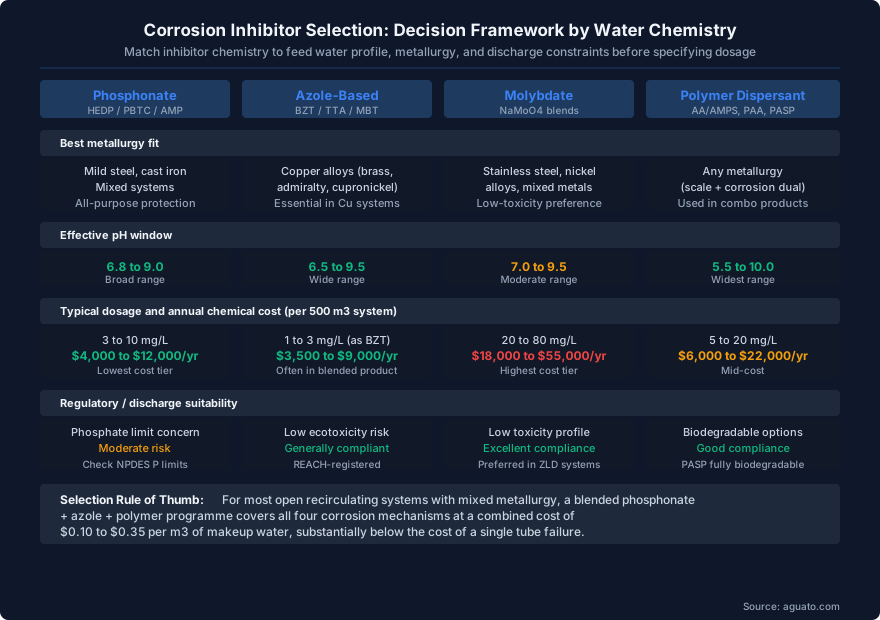
The practical reality is that no single inhibitor chemistry addresses all four corrosion mechanisms. A properly specified cooling water programme for a mixed-metallurgy system will almost always be a blended formulation: phosphonate for ferrous protection and scale inhibition, azole for copper protection, polymer for dispersancy, and a biocide programme for biological control. The total blended cost for a well-specified programme in a 500 m3 system typically runs $0.10 to $0.35 per m3 of makeup water consumed, which is the number that belongs in the lifecycle cost model, not the raw inhibitor unit price.
Not sure which inhibitor chemistry fits your system metallurgy and discharge constraints? [Browse verified water treatment chemical providers](/water-treatment-chemical-companies), filter by technology specialism, and request scoped proposals from 3 to 5 suppliers with your circulating water analysis attached.
Inhibitor selection decisions carry long tails. Specifying the wrong product type is not a mistake you discover at commissioning; you discover it 18 months later when a corrosion coupon comes back at 8 mpy on copper and someone traces the failure back to the original engineering package. The four families above are not interchangeable. Phosphonate on a copper alloy system without azole is the single most common specification error across projects reviewed here. The azole cost is $3,500 to $9,000 per year. The first tube bundle failure it prevents costs $180,000. That arithmetic should end the conversation, but it does not, because the inhibitor choice gets buried in a line item called "water treatment chemicals" and nobody reads it until something fails.
There is also a sequencing problem in blended programmes that vendors rarely explain upfront. Phosphonate and azole are both anodic inhibitors, meaning they protect by forming a film on the metal surface. Film formation requires a critical minimum threshold concentration to be maintained continuously. Doses that fall below the threshold do not provide partial protection; they provide no protection at all and may actually accelerate corrosion by forming an incomplete film that sets up localised concentration cells. This is why dosing consistency matters as much as dosing level: a system that runs at 90% of target inhibitor dose 95% of the time is better protected than a system that runs at 150% of dose for two weeks and then falls to 20% during a supply interruption. Automated dosing control, sized and maintained properly, is the only reliable way to hold that consistency across shifts and seasons.
Across projects in industrial cooling water, the pattern that recurs most consistently is this: sites with automated, flow-paced or conductivity-controlled dosing systems and monthly coupon monitoring hold their corrosion rates below 2 mpy on mild steel for 10 to 15 years. Sites with manual or timer-only dosing and quarterly coupon reading average 4 to 8 mpy and see their first tube replacements within 5 to 8 years of commissioning. The capital cost difference between those two control system approaches is $15,000 to $30,000 at installation. The lifetime cost difference is an order of magnitude larger.
| Inhibitor Type | Best Metallurgy Fit | pH Window | Annual Cost (500 m3 system) | Discharge Risk | Best For | |---|---|---|---|---|---| | Phosphonate (HEDP/PBTC) | Mild steel, cast iron | 6.8 to 9.0 | $4,000 to $12,000 | Phosphorus limits | Most open systems | | Azole (BZT/TTA) | Copper alloys | 6.5 to 9.5 | $3,500 to $9,000 | Low risk | Cu heat exchangers | | Molybdate blends | SS, nickel, mixed | 7.0 to 9.5 | $18,000 to $55,000 | Very low risk | Food, pharma | | Polymer dispersant | All metallurgies | 5.5 to 10.0 | $6,000 to $22,000 | Biodegradable options | Scale + corrosion dual | | Blended programme | Mixed systems | 6.8 to 9.0 | $12,000 to $35,000 | Moderate, manageable | Standard industrial |
The cost column in the table above warrants one more observation: the inhibitor unit price is not the right comparison point. The correct comparison is inhibitor cost per m3 of makeup water treated versus the cost of the failure the inhibitor prevents. On that basis, even the highest-cost option in the table, molybdate at $18,000 to $55,000 per year, is the economically correct choice in a food or pharmaceutical facility where a single tube perforation triggers a product contamination event and a regulatory investigation. In those environments, the cost of a single contamination incident runs $500,000 to several million dollars in product write-off, recall administration, and regulatory response. The molybdate programme costs less in a year than a contamination event costs in a week.
Discharge constraints also affect the total cost picture in ways the table cannot fully capture. Phosphonate-based programmes in watersheds with tight phosphorus discharge limits may require additional treatment of blowdown water before it can be released to the municipal drain, adding $5,000 to $20,000 per year in treatment cost or requiring a reduction in cycles of concentration that increases water consumption. In those cases, shifting to a molybdate or polymer-dominant programme may actually be more cost-effective on a total-cost-of-compliance basis than the headline chemistry cost comparison suggests. This is a calculation that requires site-specific discharge permit data and cannot be read off a generic comparison table.
The other factor the table does not capture is the interaction between inhibitor chemistry and biocide chemistry. Chlorine-based oxidising biocides degrade many organic inhibitors, including some azole compounds and certain polymer dispersants, at high residual concentrations. If your biocide programme calls for free chlorine above 2 mg/L as a shock dose, the inhibitor programme must either use chlorine-stable compounds or accept a temporary reduction in inhibitor efficacy during the dose window. Chlorine dioxide and monochloroamine have significantly lower inhibitor degradation profiles and are preferred in systems where high chlorine dosing is unavoidable. Your water treatment provider should be able to demonstrate inhibitor stability data specific to the biocide combinations proposed for your system.
Not sure where your site sits in this matrix? [Nepti](/nepti) models your water chemistry and simulates which inhibitor and biocide combination minimises total programme cost at your operating parameters, including discharge constraints, before you engage vendors on specific product formulations.
[cta:nepti]
## Biocide selection and microbiological corrosion control
Biological control is not a secondary concern in cooling water systems. It is co-primary with inhibitor chemistry because biofilm negates the effectiveness of every chemical programme it underlies. A corrosion coupon immersed in well-inhibited bulk water can show 1 mpy while a tube in the same system corrodes at 15 mpy beneath a biofilm deposit that the inhibitor never reaches.
[According to ASHRAE Standard 188 on Legionella risk management](dofollow:https://www.ashrae.org/technical-resources/bookstore/ansi-ashrae-standard-188-2021-legionellosis-risk-management-for-building-water-systems), cooling towers are designated high-risk devices requiring a formal water management programme including biocide treatment, monitoring, and documented corrective action. Compliance with Standard 188 is now effectively mandatory for US facilities with commercial cooling towers, and analogous regulations apply across the EU, UK (HSE ACoP L8), and Australia (AS/NZS 3666).
The two primary biocide strategies in cooling water are oxidising and non-oxidising, and both are required in a complete programme. They work by different mechanisms and address different parts of the microbial community.
Oxidising biocides (sodium hypochlorite, sodium bromide/chlorine activation, chlorine dioxide, monochloroamine) provide fast-acting, broad-spectrum kill in the bulk water. Hypochlorite is the lowest-cost option at $0.50 to $1.50 per kg active chlorine, but it is rapidly consumed by ammonia, organic load, and high pH, and it degrades azole inhibitors at high residuals. Chlorine dioxide is effective across a broader pH range, penetrates biofilm better than hypochlorite, and does not react with azoles, making it the preferred oxidising biocide in copper systems, at a cost premium of 3 to 5 times hypochlorite. Target residuals: 0.1 to 0.5 mg/L free chlorine or equivalent halogen in circulating water, measured at the tower basin, not at the dosing point.
Non-oxidising biocides (DBNPA, THPS, isothiazoline/CMIT-MIT blends, glutaraldehyde) penetrate biofilm and target sessile bacteria that oxidising biocides cannot reach. They are typically slug-dosed on a 2 to 4-week rotation, alternating between two chemistries to prevent resistance development. DBNPA is fast-acting (effective within 30 minutes) and decomposes rapidly to non-toxic residues, making it well-suited for systems with tight discharge windows. Glutaraldehyde provides longer contact-time activity. Annual non-oxidising biocide cost for a 500 m3 system runs $5,000 to $18,000 depending on frequency and formulation.
The most common biological control failure pattern: the biocide programme is technically adequate when operating as specified, but slug dosing frequency is reduced from monthly to quarterly when labour is tight, and the dip-slide aerobic count stays below the action level because it is measuring bulk water, not biofilm. MIC is progressing beneath the biofilm the whole time. The fix is continuous oxidising biocide residual for bulk water control plus monthly non-oxidising slugs regardless of dip-slide results, with quarterly Legionella qPCR to catch biofilm-harboured growth before it reaches reportable levels.
For the full treatment programme framework including Legionella risk zoning and management plan requirements, the [cooling tower treatment](/cooling-tower-treatment) category covers specialist providers across biological control, chemical dosing, and monitoring technologies.
## Cycles of concentration and corrosion risk
Cycles of concentration (CoC) is the single number most directly under an operator's control that governs corrosion risk. Every dissolved species in the makeup water, corrosive ions, scale-forming ions, conductivity contributors, is concentrated by the ratio equal to CoC. Running at CoC 3 doubles the chloride, sulphate, and silica concentrations in the circulating water relative to makeup. Running at CoC 6 puts you at six times the makeup concentration for every one of those species.
The corrosion-scale balance shifts as CoC increases. Below CoC 2, circulating water tends to be undersaturated and corrosive. Between CoC 3 and 5, most systems can maintain an acceptable LSI with modest pH control and inhibitor programme. Above CoC 5, scale inhibitor demand increases sharply, silica control becomes critical above 150 mg/L, and chloride concentrations in brackish-makeup systems can exceed the threshold for stainless steel pitting susceptibility.
The economics of CoC optimisation cut both ways. Increasing from CoC 3 to CoC 5 in a 1,000 m3/hour system reduces makeup water consumption by roughly 400 m3 per hour and reduces blowdown volume proportionally, generating significant water cost savings of $150,000 to $400,000 per year in water-stressed regions. But those savings are only realised if the chemical programme is upgraded to handle the higher ionic loading without increasing corrosion rates. Running CoC 5 on a programme designed for CoC 3 is a common and expensive mistake.
The recommended approach is to model the water chemistry at each target CoC level, calculate inhibitor requirements and expected corrosion rates, and compare the water savings against the increased chemical cost before changing the operating setpoint. For the detailed engineering of blowdown control strategy and CoC optimisation, the [cooling tower blowdown](/resources/cooling-tower-blowdown) article covers the control methods, setpoint engineering, and the five most common blowdown failure modes.
## CAPEX and OPEX: what a corrosion control programme costs
The capital cost of installing a properly automated chemical treatment system for a medium-to-large cooling system is $25,000 to $90,000, comprising the dosing pump skid, chemical storage tanks, flow pacing or conductivity/timer-based control, corrosion rate monitoring (coupons and/or ER probes), and any additional sensors needed for pH, ORP, or halogen residual measurement. Automated dosing control reduces chemical waste by 15 to 25% versus manual dosing and delivers more consistent residuals, improving corrosion protection while reducing overall chemical consumption.
Annual OPEX for a comprehensive programme including corrosion and scale inhibitors, oxidising and non-oxidising biocides, monitoring, and quarterly technical service visits runs $15,000 to $60,000 per year for a 500 to 2,000 m3 circulating water system. The breakdown by line item typically looks like this:
- Corrosion and scale inhibitor blend: $8,000 to $25,000 - Oxidising biocide (continuous): $4,000 to $12,000 - Non-oxidising biocide (slug): $5,000 to $18,000 - Technical service (quarterly): $3,000 to $8,000 - Laboratory analysis (monthly): $2,000 to $5,000 - Corrosion monitoring consumables: $1,500 to $4,000
The total annual programme cost of $23,500 to $72,000 compares directly against the consequences of an inadequate programme: a single heat exchanger tube bundle replacement at $120,000 to $350,000, or a forced shutdown for Legionella remediation that costs $80,000 to $250,000 in direct response costs plus the production loss. The programme pays for itself the first time it prevents either of those events.
The comparison that changes budget conversations: the inhibitor and biocide OPEX represents $0.10 to $0.35 per m3 of makeup water for most systems. For the same system, the energy penalty from a 1 mm scale deposit on heat exchanger tubes runs $0.15 to $0.50 per m3 of cooling water circulated, every year the scale is present. Corrosion control is not a cost centre. It is an energy and asset protection investment with a payback period measured in months, not years.
[Post your cooling system specification](/post-project) and qualified providers will scope the chemical programme against your actual water chemistry, metallurgy, and operating envelope, with itemised cost projections you can take directly into a budget review.
## Failure scenarios and what they cost
Understanding the failure modes gives operations teams the vocabulary to prevent them and gives procurement leads the numbers to justify preventive spend. Each scenario below represents a decision that seemed reasonable at the time, an operational outcome that followed predictably, and a cost that was entirely avoidable.
Scenario 1: Biocide budget cut, biofilm takes hold. A chemical cost reduction initiative at a mid-size food and beverage facility reduces non-oxidising biocide frequency from monthly to quarterly. For four months, dip-slide counts stay below the 10,000 cfu/mL threshold. In month five, a Legionella qPCR on the tower basin returns a result above 10,000 cfu/L. Mandatory notification triggers regulatory inspection, a full system shutdown, hyperchlorination, mechanical clean, and a third-party Legionella risk assessment. Direct costs: $85,000 to $140,000. Production loss during 4 to 7-day shutdown: $200,000 to $500,000 depending on product margins. The non-oxidising biocide programme that was cut cost $8,000 per year.
Scenario 2: Wrong inhibitor for metallurgy. A capital project specifies a new heat exchanger train in admiralty brass, but the cooling water treatment programme is unchanged from the previous carbon steel system, a phosphonate-only product with no azole component. Within 14 months, copper corrosion rates measured on copper coupons average 6 mpy against a target of below 1 mpy. Copper ions depositing on ferrous components in the same circuit accelerate galvanic corrosion at rates three to four times the unaffected base rate. First tube failure at month 18. Tube bundle retubing cost: $180,000 plus 6 days downtime. Adding a BZT azole at $4,000 to $8,000 per year would have prevented the failure.
Scenario 3: CoC pushed without programme update. Water costs rise and operations increases CoC from 3.5 to 5.5 without adjusting the inhibitor dose. Chloride in the circulating water reaches 340 mg/L. LSI rises to +2.1. Within 6 months, calcium carbonate scale deposits 0.8 mm on heat exchanger tube surfaces. The scale-heat penalty adds $65,000 per year in energy cost. Underdeposit corrosion progresses beneath the scale layer. By month 18, three tubes are perforated. The acid cleaning required to remove the scale costs $35,000 in chemical and downtime. A properly rebalanced programme at the higher CoC would have cost $6,000 more per year in inhibitor.
Scenario 4: Monitoring eliminated. An OPEX review discontinues monthly laboratory analysis in favour of operator dip-slides only. Over the following 8 months, dissolved silica creeps from 95 to 210 mg/L as the CoC controller drifts. No alarm is triggered. Amorphous silica scale deposits in the lowest-velocity zones of the heat exchanger. Silica scale, unlike calcium carbonate scale, cannot be removed by acid cleaning. Mechanical tube cleaning proves ineffective. Six heat exchangers require retubing at a combined cost of $380,000. Monthly lab analysis at $300 per month would have caught the silica trend in the first two months.
A [Legionella risk assessment](/resources/legionella-risk-assessment) should be part of any cooling system commissioning, not a response to a positive result. The cooling system's hydraulic dead legs, temperature profiles, and materials selection all affect the risk level before chemistry is even specified.
## Real-world sector examples
The treatment programme decisions that work in one sector do not automatically transfer to another. The following examples show how the dominant mechanism and the right countermeasure differ by industry and system design.
Petrochemical refinery, mixed-metallurgy cooling water system. A pattern across refinery cooling systems: the circulating water must serve both carbon steel air coolers and stainless steel heat exchangers in high-chloride service on the same header. The temptation is to run a single blended inhibitor programme at a compromise concentration. The recurring failure mode is that the blend is optimised for one metallurgy and underperforms on the other. The correct solution is a stratified programme: a phosphonate-molybdate blend at 15 to 25 mg/L covering ferrous components, with azole at 3 to 5 mg/L for any copper alloy instrumentation, and a separately monitored stainless steel section held above pH 7.5 to suppress chloride pitting. Where this has been implemented with proper zonal monitoring, measured corrosion rates on stainless fell from 3 to 5 mpy to below 0.8 mpy, and carbon steel protection was maintained below 2 mpy. The programme cost approximately $45,000 per year more than the previous single-product approach; the avoided failure costs in the first three years exceeded $600,000.
HVAC commercial chilled water system, recirculating. For context on the full scope of HVAC water treatment challenges beyond corrosion, the [HVAC water treatment](/resources/hvac-water-treatment) guide covers treatment objectives across the heating, cooling, and condenser water circuits. In closed recirculating systems, the corrosion dynamic is different from open towers: oxygen is not continuously replenished, but residual dissolved oxygen at commissioning and through each system opening drives initial corrosion product build-up. A pattern across commercial HVAC installations: systems are filled and commissioned without a proper passivation programme. In the first 6 to 12 months, iron oxide corrosion products circulate and deposit, creating underdeposit cells. By year 3, localised corrosion at deposit sites has reached through-wall on several copper tube runs. The correct approach is initial alkaline passivation to pH 9.0 to 9.5 with a molybdate or nitrite inhibitor at 500 to 1,000 mg/L for 2 to 4 weeks, then reduction to a maintenance dose of 100 to 200 mg/L for the operating programme. This adds $8,000 to $15,000 to commissioning cost and eliminates the early corrosion product cycle entirely.
## How to evaluate a corrosion control proposal
Every water treatment vendor will present their programme as comprehensive and cost-effective. The buyer's job is to create the conditions where claims can be verified and failure is contractually consequential.
The first question to ask any vendor is: what corrosion rate target does your programme guarantee, and what monitoring protocol will verify it? A programme without a specified corrosion rate target, expressed in mpy measured on site-specific coupons or ER probes, is a chemistry supply contract with no performance obligation. The industry standard targets are below 2 mpy for mild steel, below 0.5 mpy for copper alloys, and below 0.2 mpy for stainless steel in open recirculating service. Any vendor who cannot commit to those numbers in writing or who proposes quarterly coupon readings as the sole monitoring method deserves a follow-up question about why.
The second question is about the proposal's assumption about system metallurgy and water chemistry. A generic three-product programme (inhibitor, biocide, scale treatment) quoted off a conductivity reading and a flow rate is not a designed programme. A properly specified programme starts with a full water analysis, a system survey identifying all metallurgy and materials, a hydraulic assessment identifying dead legs and low-flow zones, and a blowdown calculation at the target operating CoC. If the vendor has not asked those questions, the proposal is based on assumptions that may or may not reflect your system.
The [industrial water chiller](/resources/industrial-water-chiller) article covers the intersection of cooling system design and water quality requirements for chiller plants, where the corrosion stakes in the evaporator and condenser circuits directly affect equipment warranty compliance as well as operational life.
Third, verify the monitoring protocol. Monthly corrosion coupon retrieval and laboratory analysis is the minimum standard for an open cooling system. High-risk systems, those with copper alloys, systems in chloride-stressed makeup water regions, or systems with a history of MIC, should have continuous online monitoring of corrosion rate via electronic resistance (ER) probes supplemented by monthly coupons. Online monitoring detects corrosion rate changes within days of an upset condition; quarterly coupons detect them after the damage is done.
When evaluating multiple proposals, ask every vendor to calculate the 5-year total cost of programme ownership including chemical OPEX, monitoring costs, service visit frequency, and expected tube replacement probability at their proposed corrosion rate target versus the industry standard. Vendors will recommend whatever they sell. The buyer's job is to make the comparison on total lifecycle cost, not on the inhibitor unit price per litre.
For a curated list of treatment providers who have passed the platform's verification process, the [cooling tower water treatment](/resources/cooling-tower-water-treatment) directory and the [industrial water treatment companies](/water-treatment-chemical-companies) category are the starting points.
[According to AMPP (the global authority on corrosion science and engineering)](dofollow:https://www.ampp.org/resources/general-resources/corrosion-basics), corrosion costs industry approximately $2.5 trillion annually worldwide, but up to 35% of those costs could be eliminated through systematic application of proven corrosion control practices. A fully documented water management programme including written procedures, monitoring results, and corrective action records is the baseline expectation for any responsible cooling water treatment engagement. Documentation is not bureaucracy. It is the only way to demonstrate due diligence when a failure is investigated.
## FAQ
### What causes corrosion in cooling water systems?
Cooling water systems corrode because the combination of dissolved oxygen, elevated temperature, concentrated ionic species, and biological activity creates a highly aggressive electrochemical environment at metal surfaces. The four primary mechanisms are electrochemical corrosion driven by oxygen and pH imbalance, microbiologically influenced corrosion from sulphate-reducing and iron-oxidising bacteria beneath biofilm, erosion-corrosion at high-velocity zones, and underdeposit corrosion beneath scale and fouling deposits. Most failures involve two or more mechanisms acting simultaneously, which is why single-chemistry treatment programmes frequently underperform.
### What is a good corrosion rate target for a cooling water system?
Industry standard targets for open recirculating systems are below 2 mils per year (mpy) for mild steel and carbon steel, below 0.5 mpy for copper alloys including admiralty brass and cupronickel, and below 0.2 mpy for stainless steel. These targets are verified by corrosion coupons retrieved and weighed monthly, or by continuous electronic resistance probes for high-risk systems. A programme that cannot produce documented corrosion rate data against these benchmarks should be treated as unverified regardless of the chemical residuals it achieves in the bulk water.
### How much does a cooling water corrosion control programme cost?
A comprehensive corrosion control programme for a 500 to 2,000 m3 open recirculating system costs $23,000 to $72,000 per year in total OPEX, including inhibitor blend, oxidising and non-oxidising biocide, technical service, and laboratory monitoring. Capital cost for the dosing and monitoring equipment is $25,000 to $90,000 as a one-time investment. The programme cost is typically $0.10 to $0.35 per m3 of makeup water consumed, which is consistently lower than the energy penalty from scale alone or the cost of a single unplanned tube replacement event.
### Which corrosion inhibitor is best for cooling water systems?
No single inhibitor chemistry addresses all four corrosion mechanisms in a mixed-metallurgy system. The standard approach is a blended programme: phosphonate (HEDP or PBTC) at 3 to 10 mg/L for ferrous and mild steel protection and scale inhibition, azole (benzotriazole or tolyltriazole) at 1 to 3 mg/L for copper alloy protection, and a polymer dispersant (polyacrylate or AA/AMPS copolymer) at 5 to 20 mg/L to prevent fouling deposits that create underdeposit corrosion conditions. Molybdate blends are used where low toxicity is required or where stainless and nickel alloys are the primary metallurgy. The specific blend and dosage depend on your feed water chemistry, operating cycles of concentration, metallurgy, and discharge permit requirements.
### How do cycles of concentration affect corrosion risk in cooling towers?
Every corrosive ion in the makeup water, including chloride, sulphate, and bicarbonate, is multiplied by the cycles of concentration (CoC) in the circulating water. Running at CoC 5 instead of CoC 2 puts five times the chloride concentration in contact with heat exchanger metals. For systems with makeup water above 100 mg/L chloride, this can push circulating water chloride above the 500 mg/L threshold where stainless steel becomes susceptible to pitting corrosion. Increasing CoC saves water and blowdown costs but requires a corresponding increase in inhibitor dose and more frequent monitoring to verify that corrosion rates remain within target. The programme must be redesigned at the new CoC, not simply run harder on the existing formulation.
### What is microbiologically influenced corrosion and how is it controlled?
Microbiologically influenced corrosion (MIC) is corrosion that is initiated or accelerated by the metabolic activity of bacteria living in biofilm deposits on metal surfaces. Sulphate-reducing bacteria produce hydrogen sulphide which attacks ferrous metals directly, while iron-oxidising bacteria create oxygen concentration cells beneath tubercle deposits. MIC-driven pitting can perforate mild steel tubing in 12 to 24 months even when bulk water chemistry appears fully compliant. Control requires a dual biocide programme: a continuous oxidising biocide (chlorine, bromine, or chlorine dioxide) for bulk water disinfection, plus a non-oxidising biocide slug (DBNPA, THPS, or isothiazoline blend) on a 2 to 4-week rotation to penetrate and disperse biofilm. Quarterly Legionella testing is also required in most jurisdictions for cooling towers.
### How often should cooling water be tested for corrosion control?
At minimum, circulating water chemistry including pH, conductivity, inhibitor residuals, and biocide residuals should be measured weekly by the operator and monthly by laboratory analysis. Corrosion coupons should be retrieved and weighed monthly. Microbiological counts via dip-slide or ATP measurement should be performed weekly, with formal laboratory culture results monthly. Legionella qPCR or culture should be performed quarterly as a baseline, increasing to monthly if the system is in a higher-risk category or following a positive result. Systems with a history of MIC or with copper alloy heat exchangers should consider continuous online corrosion rate monitoring via ER probes as the standard rather than the exception.