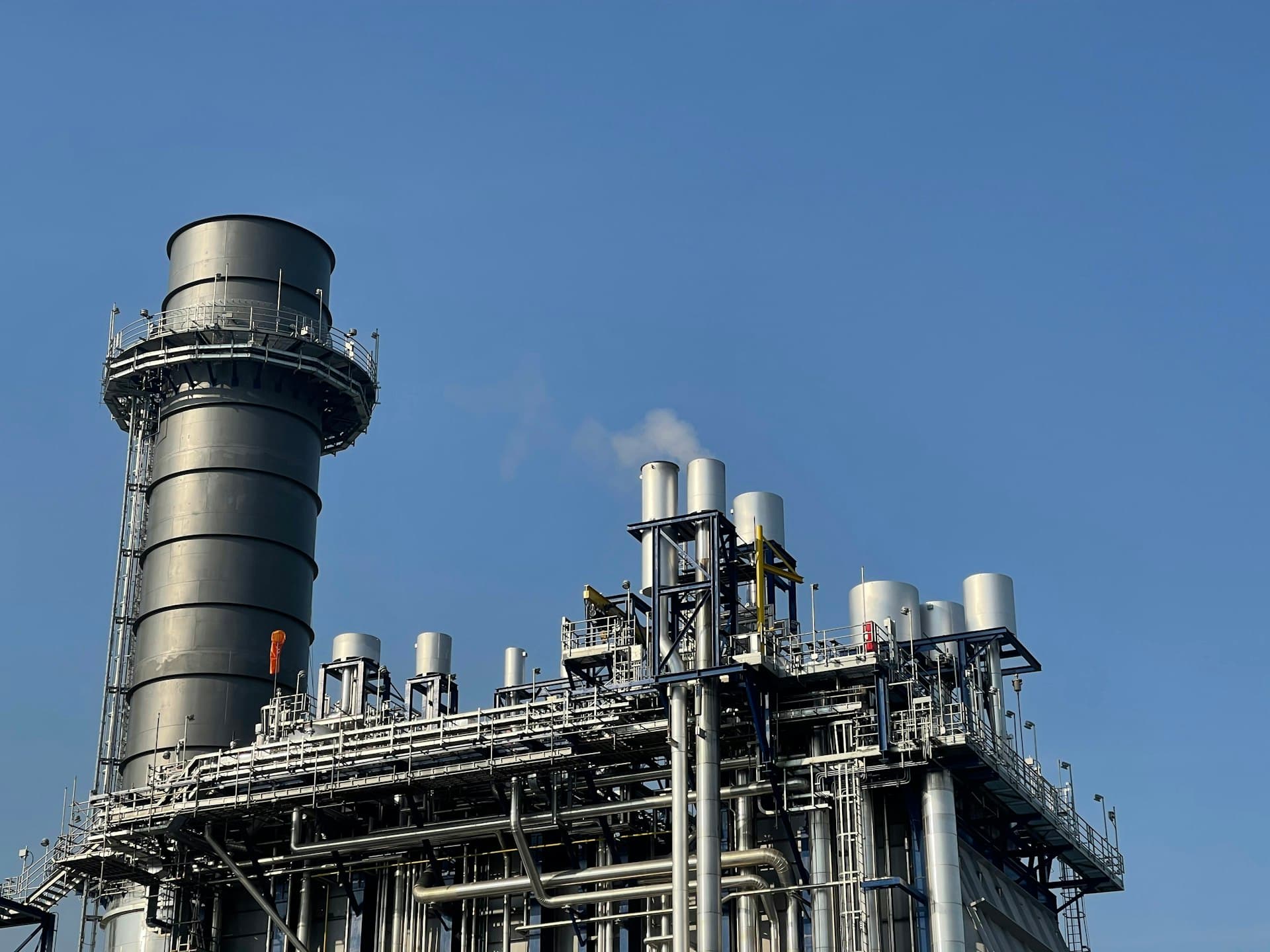
Air strippers are the dominant technology for removing volatile organic compounds from water at $0.18 to $0.55 per 1,000 gallons. Here is how to specify the right configuration without overpaying by 30 to 80%.
When a Superfund-listed industrial site discovers a 600-gallon-per-minute trichloroethylene plume at 2 mg/L spreading toward a municipal drinking-water wellfield, the conversation about air strippers water treatment moves from theoretical to time-critical within a week. The wrong technology decision at that moment costs $400,000 to $1.4 million in retrofit installation, regulatory penalties, and emergency lab fees within 18 months of go-live. The right decision delivers a sub-$0.50-per-1,000-gallons operating cost on a 15-year remediation timeline and keeps the site outside the EPA enforcement notice that triggers everything else.
Air stripping is the dominant technology for removing volatile organic compounds (VOCs) from water at concentrations between 50 micrograms per litre and 50 milligrams per litre, which covers the bulk of groundwater remediation, industrial process water treatment, and many drinking-water supply applications affected by petroleum or chlorinated-solvent contamination. The technology is mature, well-characterised, and engineered against decades of operational data, but the specification gets bungled often enough that procurement teams routinely overpay by 30 to 80% or under-treat by enough to trigger compliance failures that dwarf the original capital cost. The mistakes are predictable and avoidable, which is the central thesis of this article.
This guide is written for environmental remediation managers scoping a groundwater treatment system, industrial water treatment leads handling refinery or chemical-plant process water with VOC contamination, drinking-water utility engineers evaluating air stripping versus alternative VOC treatments, and procurement teams running RFPs against multiple system suppliers. It covers what air stripping actually is, the three main configurations, how to size a system without getting trapped by vendor-favourable assumptions, the air-stripping versus granular activated carbon versus advanced oxidation trade-off, the failure modes that produce six-figure write-offs, and what the numbers look like in USD ranges for the most common application bands.
## The decision in brief
- Match the configuration to the VOC matrix from day one. The right configuration matched to the actual VOC matrix, with off-gas treatment properly scoped, saves $400,000 to $2.4 million over the asset's 15-year service life on a 1 MGD treatment system. - Know where the saving sits. Avoided retrofit capex from contaminant-matrix mismatches is $150K to $1.2M, avoided regulatory penalties and consultant fees $80K to $400K, avoided off-gas over-specification capital $60K to $300K, and OPEX reduction from running inside the design envelope rather than chasing fouling and compliance excursions $110K to $500K. - Characterise the source-water VOC profile first. According to the WHO Guidelines for Drinking-water Quality, characterising the source-water VOC profile is the first technical step in any defensible treatment-train design, and skipping it is the single biggest source of avoidable lifecycle cost on this class of project.
The cost of doing nothing is accepting a vendor's air stripper quotation without a documented influent characterisation against Henry's Law constants, the upstream cause of three of the four six-figure failure modes in this article.
If you specify the right air-stripping configuration matched to the actual VOC matrix and properly scope the off-gas treatment from day one, you save $400,000 to $2.4 million over the asset's 15-year service life on a 1 MGD treatment system, split between avoided retrofit-installation capex from contaminant-matrix mismatches ($150K to $1.2M), avoided regulatory-enforcement penalties and consultant fees ($80K to $400K), avoided unnecessary off-gas treatment over-specification capital ($60K to $300K), and OPEX reduction from running the system inside its design envelope rather than chasing fouling and compliance excursions ($110K to $500K). The biggest cost-of-doing-nothing is accepting a vendor's "air stripper for VOC contamination" quotation without a documented influent characterisation including every contaminant species and concentration mapped against Henry's Law constants, because that single decision is the upstream cause of three of the four six-figure failure modes covered in this article. According to [the WHO Guidelines for Drinking-water Quality](dofollow:https://www.who.int/news-room/fact-sheets/detail/drinking-water), proper characterisation of the source-water VOC profile is the first technical step in any defensible treatment-train design, and skipping it is the single biggest source of avoidable lifecycle cost on this class of project.
## What air stripping actually does
An air stripper is a mass-transfer device that drives volatile organic compounds out of a water stream and into a counter-flowing air stream by exploiting the concentration gradient between the two phases. Water flows downward through a vertical column; air flows upward through the same column; VOCs in the water partition into the air phase according to their Henry's Law constants. The treated water exits the bottom of the column with VOC concentrations reduced by 85 to 99.9% depending on configuration and number of transfer units. The contaminated air stream exits the top of the column and either discharges directly to atmosphere (where air-permit rules allow) or routes through vapour-phase treatment, typically vapour-phase granular activated carbon or catalytic or thermal oxidation.
The technology works exceptionally well within its design envelope and fails predictably outside it. Inside the envelope (Henry's Law constant above roughly 0.01 atm-m3/mol, influent VOC concentration above about 50 micrograms per litre, no heavy fouling from [iron](/elements/iron), [manganese](/elements/manganese), or biological growth), air stripping delivers compliance against US EPA drinking-water maximum contaminant levels and most state-level groundwater cleanup standards at operating costs of $0.18 to $0.55 per 1,000 gallons treated. Outside the envelope, the technology either fails to meet the discharge target or generates an off-gas stream that triggers air-permit compliance costs the original project did not budget for.
A pattern that recurs across industrial installations: a project specifies an air stripper for groundwater remediation containing benzene, toluene, ethylbenzene, and xylenes (BTEX) and meets influent compliance reliably for years, until a process-water source containing 1,4-dioxane gets routed into the same stripper and the system fails to remove the dioxane (Henry's constant is two orders of magnitude too low) and the site triggers a non-compliance notice that costs $80,000 to $250,000 in regulatory penalties plus the cost of retrofitting an advanced oxidation step downstream. The cause is not the air stripper, it is the contaminant matrix change that was not characterised before the routing change.
[Browse verified providers across groundwater remediation, industrial water treatment, and disinfection technologies](/providers) to compare scoped proposals from three or more specialists who can defend their assumptions against your actual feed-water VOC profile.
The opinionated view that procurement teams need to hear up front: air stripping is the cheapest VOC treatment per unit mass removed when the contaminant is genuinely volatile, but it is also the technology most often specified on the wrong contaminant profile because it is the default answer for environmental engineers trained in groundwater remediation. The right specification starts with a documented feed-water analysis showing every VOC species and concentration, mapped against Henry's Law constants and the target compliance limits. Skipping that step is the upstream cause of every failure scenario in this article.
## The three main air-stripper configurations
Three architectures dominate the commercial air-stripping market, and each has a different cost profile, footprint demand, and failure-mode signature. Mixing up which one suits which application is the second most common procurement error.
Packed columns (towers) are the workhorse configuration: a vertical cylindrical vessel filled with random or structured packing media (typically polypropylene or stainless-steel saddle rings, Berl saddles, or Pall rings) where water flows down and air flows up through the packing. Column heights typically range from 15 to 40 feet (4.5 to 12 metres) to provide the surface area and contact time required for high VOC removal. Packed columns deliver 95 to 99.9% removal of high-Henry-constant VOCs with 3 to 4 transfer units of column height, at capex of $280,000 to $850,000 for a 1 MGD (3.8 MLD) system and OPEX of $0.18 to $0.42 per 1,000 gallons treated.
The trade-off is the vertical footprint. A 30-foot tower requires headroom that many indoor installations cannot provide, and the structural cost of a tall column at large diameters becomes the dominant capex driver. Packed columns also foul quickly on iron-rich or scale-prone water, requiring acid cleaning or media replacement every 12 to 36 months depending on feed-water quality. The best procurement framing is to specify packed columns when the site has the headroom and the feed-water chemistry is benign.
Sieve-tray columns replace the packing media with horizontal perforated trays that distribute the air-water contact across discrete stages. Tower heights are similar to packed columns but typically slightly shorter (15 to 30 feet) because the tray stages deliver higher per-unit mass-transfer efficiency. Trays handle iron, scale, and biological fouling better than packing because the fouling tends to deposit on tray surfaces in patterns that can be cleaned in place rather than requiring full media replacement. Capex runs $320,000 to $950,000 for a 1 MGD system; OPEX $0.22 to $0.48 per 1,000 gallons.
The application sweet spot for tray columns is treatment of moderately fouling feed water where packed-column media replacement would otherwise drive operating cost above the design budget. The cost premium versus packed columns is justifiable when the site's fouling profile predicts more than two media replacements over the asset life.
Low-profile air strippers (LPA) are the third configuration: stacked horizontal trays in a much shorter footprint, typically 4 to 9 feet tall (1.2 to 2.7 metres). Each tray contributes one or two transfer units, and stacking 4 to 6 trays in a horizontal cabinet achieves removal efficiencies of 85 to 98% on common VOCs. LPA systems sacrifice some efficiency relative to a tall packed column but win decisively on footprint, allowing indoor installation, retrofit applications, and headroom-constrained sites. Capex runs $220,000 to $620,000 for 1 MGD; OPEX $0.25 to $0.55 per 1,000 gallons.
The LPA configuration is the procurement-defensible answer for any installation where vertical space is limited, the influent VOC profile is well-characterised, and the removal target is above the 85% threshold the LPA reliably delivers. It is the wrong answer for applications requiring 99.9% removal of the most volatile compounds; in those cases, a packed column is the cheaper lifecycle answer despite the higher capex.
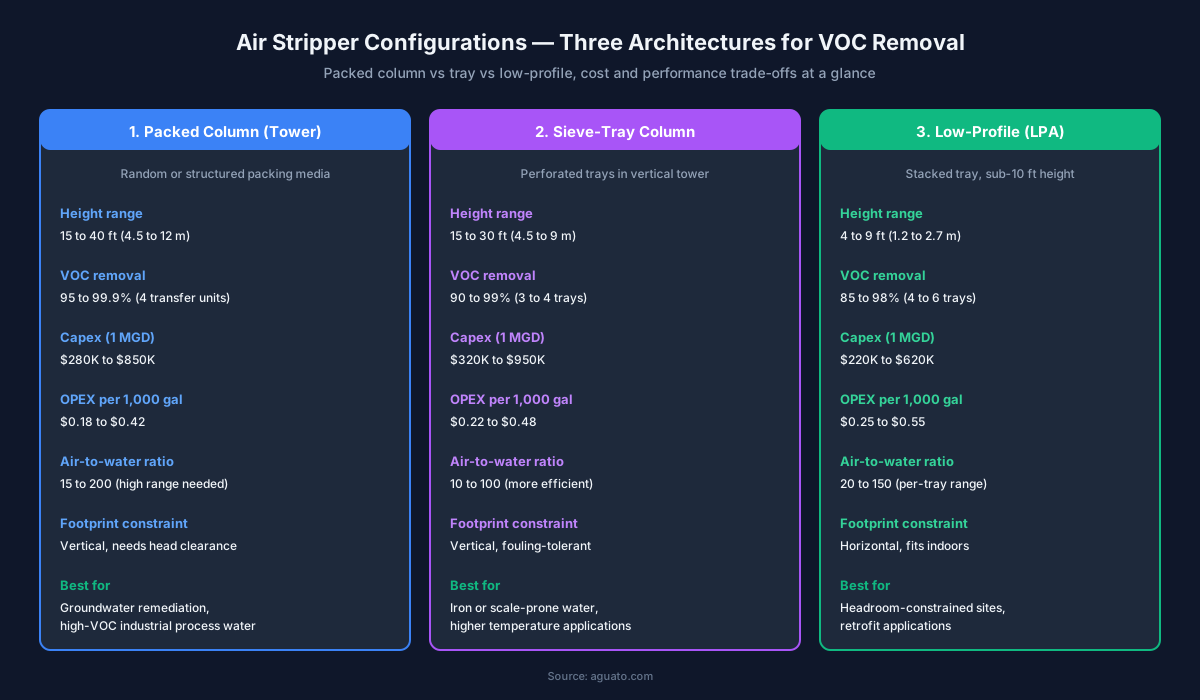
The configuration decision is rarely about the stripper hardware itself; it is about the site constraints (headroom, indoor versus outdoor, fouling potential) and the target removal efficiency the discharge consent demands. Get those two parameters defined before talking to vendors and the configuration choice typically resolves itself. Two of those three parameters depend in turn on the chemistry of the actual VOCs in the feed water, which is the next critical filter before any sizing or vendor conversation begins. Henry's Law constants are where the candidacy question gets settled, and getting that filter wrong is the single biggest cause of stranded capital on this technology.
## Henry's Law and the volatility filter
The single biggest determinant of whether air stripping is the right technology for a given application is Henry's Law constant of the target VOCs. Henry's constant (H) is the ratio of a compound's partial pressure in the gas phase to its concentration in the liquid phase at equilibrium, expressed in atm-m3/mol or in dimensionless form. The higher the value, the more readily the compound partitions into the air phase and the more effectively air stripping removes it.
Compounds with H above 0.01 atm-m3/mol (such as TCE at 0.0095, PCE at 0.0177, benzene at 0.0055, toluene at 0.0066, and most chlorinated solvents) are good candidates for air stripping. Compounds with H between 0.001 and 0.01 (such as MTBE at 0.00059 or some aromatic compounds) are borderline: air stripping can work but requires very high air-to-water ratios, which drives up operating cost and may make alternative technologies more attractive. Compounds with H below 0.001 (such as 1,4-dioxane at 0.0000049 or PFAS at effectively zero) cannot be effectively removed by air stripping at any practical scale.
The implication for procurement is direct. The feed-water VOC analysis must list every contaminant species and its concentration, and the design must size for the worst-actor compound, not the average compound. A site contaminated with 90% TCE and 10% 1,4-dioxane that specifies an air stripper to handle the TCE will fail discharge consent on the 1,4-dioxane, and the project will have to retrofit advanced oxidation or membrane filtration to address what air stripping cannot touch. The retrofit cost runs $200,000 to $1.2 million depending on flow rate, and almost always exceeds the original air-stripper capex.
A useful sanity check for air-stripping candidacy comes from [the US EPA Drinking Water Treatment Technologies guidance for VOCs under the Safe Drinking Water Act](dofollow:https://www.epa.gov/npdes), which catalogues which contaminants are best-suited to packed-tower aeration versus GAC adsorption versus AOP. Use that catalogue as the starting filter before any vendor conversation; it eliminates 60 to 80% of the wrong-technology specification errors that procurement teams fall into.
## Sizing the system: design parameters that matter
Once Henry's Law has confirmed that air stripping is the right technology, the system sizing problem is well-defined. Four parameters dominate the design: the air-to-water ratio (A/W), the number of transfer units (NTU), the column packing height (Z), and the column diameter (D). Each one trades off against the others, and the optimal combination depends on the influent VOC concentration, the target effluent concentration, and the lifecycle cost weighting between capex and OPEX.
The air-to-water ratio is the dominant operating-cost driver. Higher A/W moves more VOC into the air phase per unit of water but linearly increases the blower power required to push the air. For typical VOC applications, A/W runs from 15 to 200, with the value chosen to balance capex (lower A/W requires more transfer units, more packing height, more steel) against OPEX (higher A/W requires more blower power but a shorter column). The economic optimum is usually in the 30 to 80 range for groundwater remediation and 50 to 150 for industrial process water with higher VOC loadings.
The number of transfer units (NTU) measures how many theoretical equilibrium stages are needed to achieve the target removal. NTU is a function of influent and effluent concentrations and the stripping factor (R), which itself is a function of A/W and Henry's constant. A typical groundwater application targeting 99% removal of TCE at H=0.0095 and A/W=50 needs about 4 NTU. Translating NTU into column height requires the height of a transfer unit (HTU), which is a packing-specific empirical number typically running 3 to 8 feet (0.9 to 2.4 metres) for common packing media. So a 4-NTU column with 5-foot HTU is 20 feet tall.
Column diameter is sized for the hydraulic loading. Water hydraulic loading typically runs 15 to 50 gallons per minute per square foot of column cross-section. A 1 MGD design at 30 gpm/ft2 needs roughly 23 square feet of column cross-section, which is a 5.5-foot-diameter column. Going larger reduces hydraulic loading but increases capex disproportionately; going smaller raises the risk of flooding at peak flow.
The fourth parameter is air pressure drop, which determines the blower selection and energy consumption. Pressure drop runs typically 0.5 to 2 inches of water column per foot of packing height, depending on packing type and A/W. The blower power required is roughly: kW = (pressure drop in Pa × air flow in m3/s) / blower efficiency. Get any of these four parameters wrong and the operating cost shifts 20 to 60% from the design budget.
Procurement teams should pressure-test vendor designs against a published reference design tool. The most commonly used industry tools are catalogued in [the US EPA Superfund remediation technology resource library](dofollow:https://www.epa.gov/superfund) and now incorporated into multiple commercial design packages. Vendor designs that deviate materially from those reference outputs warrant a documented justification.
[cta:nepti-dark]
The sizing process is not the place to take vendor recommendations at face value. Different vendors optimise for different cost-line positions (some skew capex-low to win the bid then run high OPEX; others over-engineer capex for safety margin). The procurement-defensible approach is to specify the four sizing parameters in the RFP and ask vendors to bid against your design rather than ask them to provide a "stripper to handle 1 MGD of contaminated water". The latter approach guarantees inconsistent bids that cannot be compared.
## Air stripping vs GAC vs AOP: when each wins
Air stripping competes most directly with granular activated carbon (GAC) adsorption and with advanced oxidation processes (AOP). Each technology has a sweet spot, and getting the framing right at the technology-selection stage is what determines whether the project budget survives the first three years.
GAC adsorption works by physical adsorption of VOC molecules onto activated-carbon pores. It is the dominant technology for low-concentration VOC polishing (typically below 0.5 mg/L) because the carbon-bed effluent quality is very high and the technology handles all organic contaminants regardless of volatility. The cost driver is carbon replacement: when the carbon bed reaches breakthrough (typically every 6 to 24 months depending on contaminant loading), the spent carbon must be reactivated or disposed at $1.50 to $4 per pound of carbon, plus the labour and downtime of the carbon swap. For high-concentration applications above about 5 mg/L total VOCs, the carbon replacement frequency makes GAC economically uncompetitive against air stripping; below 0.5 mg/L, GAC routinely beats air stripping on TCO.
AOP, particularly UV/H2O2 and ozone-based processes, addresses the contaminants that neither air stripping nor GAC handle well. PFAS, 1,4-dioxane, NDMA, and certain refractory pharmaceutical compounds have Henry's constants too low for stripping and adsorption affinities too low for cost-effective GAC, but they are destroyed by hydroxyl-radical-mediated oxidation at $2.50 to $12 per 1,000 gallons treated. The cost is much higher than stripping or GAC, but for the contaminants AOP addresses, there is no alternative. See the dedicated guide on [advanced oxidation processes for industrial water treatment](/resources/advanced-oxidation-processes-industrial) for the full AOP cost breakdown.
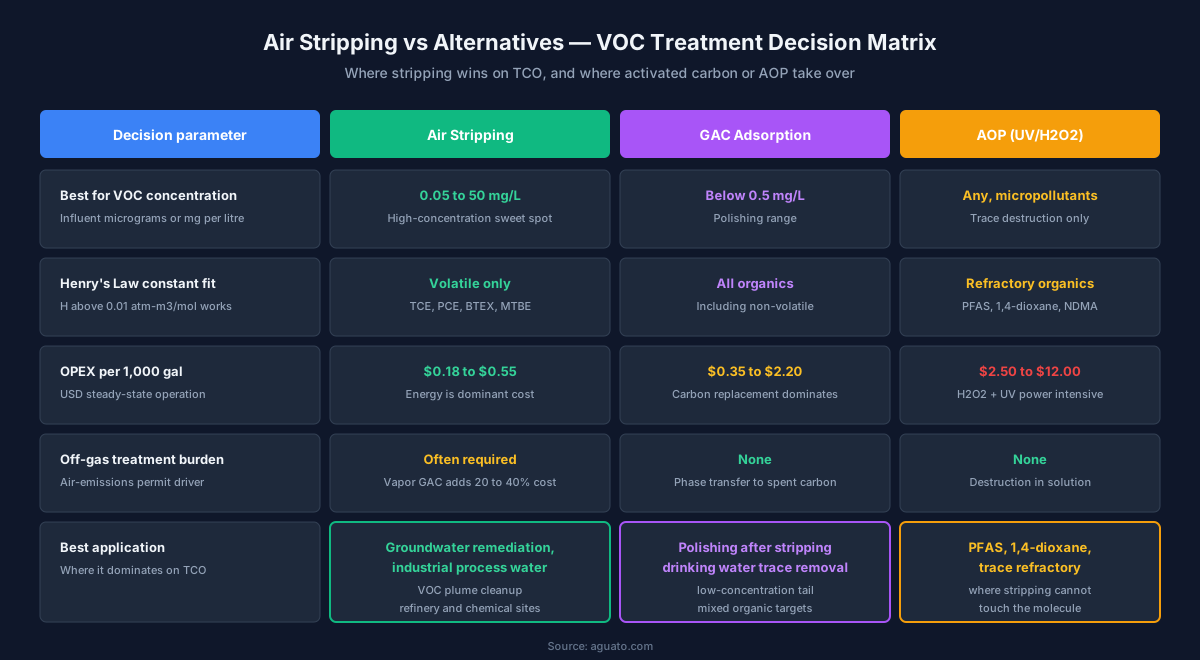
The procurement decision typically resolves to a treatment train rather than a single technology. A common configuration for industrial process water with mixed VOC contamination is: air stripping as the primary high-throughput stage to handle the volatile fraction, followed by GAC polishing to capture the low-concentration tail and any partially volatile species, followed by AOP only if specific refractory compounds (PFAS, 1,4-dioxane) are present. Each stage carries a different cost per cubic metre but each addresses a different contaminant class, and the optimised train has a total cost per cubic metre 30 to 60% lower than any single-technology solution attempting the same job.
The framing trap to avoid is the single-technology bias. Vendors who sell only air strippers will recommend air stripping; vendors who sell only GAC will recommend GAC. Procurement should specify the contaminant matrix and the target effluent quality, not the technology, and let the vendors propose the right combination. Specifications written as "air stripper to treat 500 GPM" rather than "treatment train to meet effluent X for influent Y at lowest 15-year TCO" produce bids that look apples-to-apples but compare incompatible technical approaches.
[Post your VOC treatment project](/post-project) and qualified providers will scope air-stripping, GAC, AOP, and combination treatment trains against your specific feed-water analysis with documented 15-year TCO comparison.
## Off-gas treatment: the compliance afterthought
The single most under-budgeted line item in air-stripper projects is the off-gas treatment system. Air strippers do not destroy VOCs, they transfer them from the water phase to the air phase. That air stream contains the same total mass of VOCs that the water contained, just at a lower concentration spread across a higher gas volume. Whether that off-gas can discharge directly to atmosphere depends entirely on the local air-emissions permit framework and the total mass discharge rate.
In most US states and EU countries, direct discharge of stripped VOCs is permissible only at very low total mass rates: typically below 1 to 5 pounds per day of total VOCs depending on the regulatory jurisdiction. Above those thresholds, vapour-phase treatment is required, and the most common technology is vapour-phase granular activated carbon (VGAC). VGAC for a 1 MGD air-stripping system handling moderate VOC loadings adds $80,000 to $250,000 in capex and $30,000 to $120,000 in annual OPEX (carbon replacement, labour, monitoring). The cost is rarely included in vendor base quotations for air strippers.
Catalytic and thermal oxidation are alternatives for very high VOC loadings (above 1,000 ppm in the off-gas) where VGAC becomes prohibitively expensive. Catalytic oxidation operates at 300 to 500 degrees Celsius with a noble-metal catalyst, destroying VOCs to CO2 and water. Capex runs $150,000 to $600,000 for 1 MGD-equivalent off-gas flow; OPEX $80,000 to $250,000 per year primarily in natural gas or electrical heat. Thermal oxidation operates at higher temperatures (700 to 900 degrees Celsius) without a catalyst, with similar economics but with potential for NOx generation that may itself trigger air-permit complications.
The procurement-defensible approach is to scope the off-gas treatment line item explicitly in the original RFP, never accept "off-gas discharge per local permit" as a deliverable without dollar-figure detail attached, and ensure the off-gas treatment design is validated against actual influent VOC characterisation rather than a generic loading assumption. Sites that fail to scope off-gas at the original capex stage routinely face $200,000 to $800,000 retrofit invoices within 18 months of commissioning.
## Capex and OPEX ranges across application bands
The cost table below gives real ranges across the application bands most VOC treatment projects encounter. All figures are USD for a treatment train including the air stripper, blowers, instrumentation, and packaged off-gas treatment (vapour-phase GAC for typical loadings). Land, civils, electrical supply, and influent piping are excluded.
| Application | Flow band | Capex (USD) | OPEX per 1,000 gal | Build time | Main risk | |---|---|---|---|---|---| | Groundwater remediation, low concentration | 50 to 500 GPM | $180K to $580K | $0.25 to $0.85 | 4 to 8 months | Fouling, off-gas underspec | | Industrial process water, mixed VOCs | 500 to 2,000 GPM | $400K to $1.2M | $0.20 to $0.65 | 8 to 14 months | Contaminant matrix change | | Drinking water utility, BTEX or chlorinated | 1,000 to 5,000 GPM | $750K to $2.4M | $0.18 to $0.55 | 12 to 20 months | Permit process delay | | Refinery process water | 2,000 to 10,000 GPM | $1.5M to $4.8M | $0.20 to $0.70 | 14 to 22 months | Off-gas to catalytic oxidiser | | Superfund remediation, high concentration | Site-specific | $400K to $2.5M | $0.30 to $1.20 | 6 to 14 months | Time-critical regulatory deadlines |
OPEX numbers assume 35 to 50% energy cost (blower power dominant at $0.08 to $0.12 per kWh), 20 to 35% off-gas treatment (carbon replacement on VGAC, or fuel cost on oxidation), 12 to 20% labour and maintenance, 8 to 15% lab analysis and reporting, and the balance in chemicals (acid cleaning for fouling control), minor parts, and miscellaneous. The single biggest swing variable in OPEX is the influent VOC concentration profile: high-concentration influent loads the off-gas treatment proportionally and shifts OPEX from energy-dominated to off-gas-dominated.
The capex numbers exclude site preparation, civils, electrical service upgrades, and the contaminated-site groundwater extraction wells that often dominate the total project capex on remediation sites. A common project-budgeting mistake is to scope only the treatment system without scoping the entire remediation envelope including extraction wells, conveyance, monitoring, and post-treatment discharge or reinjection.
## Failure scenarios and what they cost
The most common air-stripper failure is contaminant-matrix change after commissioning. A system designed for BTEX or TCE removal performs as designed for 2 to 5 years, then a process change introduces 1,4-dioxane, MTBE, or another low-Henry compound, and the discharge consent fails on the new contaminant. The non-compliance event typically costs $50,000 to $200,000 in regulatory penalties, lab analysis, and consultant time, plus a retrofit of advanced oxidation or alternative treatment that runs $200,000 to $1.2 million depending on flow rate. The defensive design choice is a documented contaminant-matrix change protocol: any new process water source routed into an existing air stripper requires re-characterisation against the original design envelope before being accepted.
A second failure pattern is iron and manganese fouling. Air strippers oxidise dissolved iron and manganese when they encounter atmospheric oxygen in the column, depositing iron and manganese oxides on packing media or tray surfaces. Performance degrades over 6 to 24 months as the fouling accumulates: VOC removal drops 15 to 35% and blower pressure rises 20 to 60%, both signs that the packing needs replacement or the trays need cleaning. Sites that skip the pre-stripper iron and manganese removal step typically spend $20,000 to $80,000 per year more on packing replacement and additional blower energy than the design budget allowed.
A third failure pattern is off-gas under-specification. The project capex includes the air stripper but not the vapour-phase carbon system, on the assumption that the off-gas discharge will fall within direct-emission permit limits. Operations discover that the actual VOC mass loading exceeds the permit threshold, an enforcement letter arrives 30 to 90 days after commissioning, and the retrofit of vapour-phase carbon costs $80,000 to $400,000 plus the regulatory penalties and lost-production cost during the 4 to 12 weeks of recovery. The fix is to scope off-gas in the original RFP with a documented mass-balance calculation.
A fourth failure pattern is biological fouling in warm-water or organic-rich applications. Air strippers running on water at 25 degrees Celsius or above, particularly with residual dissolved organics, can develop biological growth on packing media that is similar to a trickling filter biofilm. The biofilm reduces VOC removal efficiency and increases blower pressure drop, mimicking iron fouling but requiring a different chemical-cleaning protocol (typically chlorination rather than acid). Sites that misdiagnose biological fouling as iron fouling and apply acid cleaning routinely accelerate the biological growth instead of removing it, increasing the cleaning frequency from twice a year to monthly and pushing OPEX 40 to 70% above design.
## Real-world examples across three sectors
Industry: Superfund groundwater remediation. A 1,200 GPM groundwater treatment system for a former dry-cleaner site in the US Northeast was commissioned in 2019 to address TCE and PCE contamination at 800 micrograms per litre. The packed-column air stripper performed within design specifications for the first 18 months. The failure came when extraction-well drawdown brought a deeper contaminant plume into the influent stream containing 200 micrograms per litre of 1,4-dioxane. The air stripper had no effect on the dioxane and the site exceeded the EPA Region 1 cleanup target by a factor of four. Remediation cost: $920,000 in regulatory engagement, lab fees, consultant time, and the retrofit of a UV/H2O2 AOP polishing stage downstream of the stripper. The lesson is feed-water matrix monitoring at extraction wells, not just at the stripper influent.
Industry: petrochemical refinery process water. A 6,000 GPM treatment system at a Gulf Coast refinery was commissioned in 2021 to handle process-water VOCs primarily benzene and toluene before discharge to the cooling-tower makeup stream. The original design specified a packed column with direct off-gas discharge based on the calculated VOC mass loading. The actual influent concentration ran 40 to 80% higher than design (process upsets and unbudgeted unit-routing changes during the first year), pushing the off-gas mass loading above the air-emissions permit threshold within 90 days of commissioning. Retrofit of a catalytic oxidation system for off-gas treatment cost $1.4 million in capex plus $280,000 per year in additional OPEX. The lesson is design for the realistic upper bound of influent loading rather than the design-day average.
Industry: drinking-water utility VOC removal. A 3,500 GPM packed-tower aeration system for a Midwestern US municipal utility was commissioned in 2020 to address chlorinated solvent contamination of a wellfield. The system performed within design from day one, achieved 98 to 99.5% removal of TCE and PCE consistently across the first three years, and operated at $0.32 per 1,000 gallons OPEX, slightly below the design budget. The project's success was attributable to comprehensive influent characterisation at the design stage (a 24-month dataset of monthly samples from each wellhead), conservative design margins on column height and air-to-water ratio, and a built-in monitoring protocol that automatically flagged influent concentration excursions for operations review. The lesson is that air stripping done well, on the right contaminants, with proper characterisation, remains the cheapest and most reliable VOC treatment technology available.
The three cases all illustrate the same upstream truth: the failure modes that produce six-figure write-offs are traceable to contaminant-matrix assumptions made before commissioning, and the project successes are traceable to investment in influent characterisation before the stripper specification was issued. Procurement teams that under-invest in feed-water analysis to save $20,000 to $80,000 routinely overpay by 5 to 20 times that amount in retrofit costs over the asset life.
## FAQ
What is air stripping in water treatment?
Air stripping is a mass-transfer process that removes volatile organic compounds (VOCs) from water by passing the contaminated water down a vertical column countercurrent to an upward air flow. VOCs partition from the water phase into the air phase and are carried out the top of the column for either direct discharge or vapour-phase treatment. The technology is most effective on VOCs with Henry's Law constants above 0.01 atm-m3/mol.
Which VOCs can air stripping remove?
Volatile compounds with high Henry's Law constants: TCE, PCE, BTEX (benzene, toluene, ethylbenzene, xylenes), chloroform, vinyl chloride, methylene chloride, and most chlorinated solvents. Air stripping does not effectively remove low-volatility compounds such as 1,4-dioxane, PFAS, NDMA, or most pharmaceuticals.
How much does an air stripping system cost?
Capital cost ranges from $180,000 for small groundwater remediation systems (50 to 500 GPM) to $2.4 million for drinking-water utility systems (1,000 to 5,000 GPM), with operating cost typically $0.18 to $0.85 per 1,000 gallons treated. Off-gas treatment can add 20 to 40% to both capex and OPEX where vapour-phase carbon or catalytic oxidation is required.
What is the difference between packed column and low-profile air strippers?
Packed columns are vertical towers 15 to 40 feet tall filled with packing media; they deliver 95 to 99.9% VOC removal and suit high-throughput, high-removal applications where vertical space is available. Low-profile air strippers (LPA) are horizontal cabinets with stacked trays 4 to 9 feet tall; they deliver 85 to 98% removal in a smaller footprint, suiting indoor installations and retrofit applications.
Does air stripping remove PFAS?
No. PFAS compounds have effectively zero Henry's Law constants because of their strong polar functional groups; they remain in the water phase regardless of air-to-water ratio. PFAS removal requires advanced oxidation, granular activated carbon (with limitations), ion exchange, or specialised membrane technologies.
When is GAC better than air stripping?
GAC adsorption beats air stripping on TCO when influent VOC concentration is below 0.5 mg/L, when the target effluent concentration is in the low parts-per-billion range, when the contaminant matrix includes non-volatile organics that stripping cannot address, or when site constraints prevent installation of the column heights stripping requires. Above 5 mg/L total VOCs, air stripping dominates GAC on lifecycle cost.
What permits are required for an air stripping system?
Most jurisdictions require both a water discharge permit (for the treated effluent) and an air emissions permit (for the off-gas). The air permit thresholds typically limit direct discharge to 1 to 5 pounds per day of total VOCs, above which vapour-phase carbon or oxidation treatment is mandated. Both permits typically take 6 to 18 months to obtain and should be initiated in parallel with system design.