Uncontrolled biofilm adds $15,000 to $80,000 per remediation event and drives 40% of corrosion failures. How to prevent, detect, and eliminate it before it owns your system.
A single uncontrolled biofilm event in a cooling water loop costs between $15,000 and $80,000 to remediate, and that figure does not include lost production, unplanned downtime, or the accelerated corrosion that quietly destroys heat exchanger tubes over the following 18 months. Biofilm control is not a housekeeping task. It is a mechanical integrity issue dressed in microbiology. The pathogens come later; the pipe failures come first.
The standard framing from chemical vendors is that dosing more biocide solves the problem. It does not. Once a biofilm has progressed past the microcolony stage, the extracellular polymer matrix surrounding the community raises the minimum inhibitory concentration of most oxidising biocides by a factor of 100 to 1,000 compared to planktonic cells. You can triple the [chlorine](/elements/chlorine) dose and still not penetrate a mature mat. The correct answer is an integrated programme that prevents establishment, not one that tries to burn through a structure that already exists. Vendors will recommend whatever they sell.
This guide covers how biofilm forms and why it resists standard disinfection, how to detect it before it becomes a corrosion or compliance problem, the full toolkit of prevention and remediation methods with real cost ranges, the failure modes that kill treatment programmes in year two, and a threshold-based framework for selecting the right approach for your system. It is written for operations engineers who own the uptime numbers, procurement leads who need to evaluate competing chemical programmes, and ESG leads who need documented control of Legionella and microbiological discharge risks.
## The decision in brief
- Fund a proactive programme. A proactive biofilm control programme at $80,000 to $160,000 per year, including chemistry, monitoring and one planned mechanical cleaning, avoids $200,000 to $600,000 per year in energy losses from heat transfer degradation. - Count the corrosion and remediation bills too. The same programme avoids $30,000 to $150,000 per major corrosion event in tube bundle replacement and the $15,000 to $80,000 direct cost of each unplanned remediation. - Watch the tube wall, not the first event. The biggest cost of doing nothing is not the first remediation event but the progressive tube wall loss at 0.5 to 3 mm per year that goes undetected until a heat exchanger fails during a peak production period.
At a site running $50,000 per hour in production value, an 8-hour unplanned shutdown costs $400,000 in lost margin alone, which is 2.5 to 5 times the entire annual prevention budget.
## What biofilm is and why it is different from planktonic bacteria
Biofilm is a structured community of microorganisms encased in a self-produced matrix of extracellular polymeric substances (EPS), irreversibly attached to a wetted surface. It is the default state of bacterial life in most natural and industrial water environments. Planktonic (free-floating) bacteria are transient; biofilm is the destination they are always heading toward.
The critical operational consequence is resistance. Planktonic bacteria in cooling water are killed by free chlorine at 0.5 to 1.0 mg/L. The same organisms in a mature biofilm may require 100 to 1,000 times higher concentrations to achieve the same kill, because the EPS matrix limits oxidant diffusion and because sub-lethal exposure at the biofilm boundary promotes adaptive resistance. This is not theoretical. [Research published by the Centers for Disease Control and Prevention](dofollow:https://www.cdc.gov/healthywater/other/industrial/index.html) confirms that biofilm-associated bacteria can tolerate disinfectant concentrations that would be operationally toxic to the water system itself.
The second consequence is persistence. Once established, a biofilm continuously sheds dispersal cells into the bulk water. Heterotrophic plate counts (HPC) in the bulk water can look acceptable while the biofilm on heat exchanger surfaces is fully mature and actively corroding metal. Operators who rely solely on bulk water chemistry readings to assess microbiological status are flying blind. The bulk water is the symptom; the surface is the disease.
A third consequence matters specifically for sites with [Legionella risk assessment](/resources/legionella-risk-assessment) obligations: Legionella pneumophila colonises and amplifies within biofilm, using amoebae as host organisms. A tower that passes routine dipslide counts on bulk water samples can still harbour Legionella concentrations above 10,000 CFU/L within surface biofilm. This gap between bulk-water results and surface colonisation is the mechanism behind most Legionella outbreaks at sites with apparently compliant treatment programmes.
## How biofilm forms: the four stages
Understanding the formation timeline determines where intervention is effective and where it is largely futile.
Stage 1 - Initial adhesion (minutes to hours). Planktonic bacteria contact a surface via van der Waals forces and weak electrostatic interactions. At this stage, attachment is reversible. Adequate shear velocity (above 2 m/s in pipe flow) or physical flushing can remove cells before they commit. Biocide at standard doses kills these cells efficiently.
Stage 2 - Irreversible fixation (2 to 24 hours). Bacteria begin secreting EPS, anchoring themselves to the surface and to each other. The transition from reversible to irreversible adhesion is the last practical window for standard biocide intervention at normal doses. After this point, EPS begins blocking oxidant penetration and biocide efficacy starts declining sharply.
Stage 3 - Microcolony formation and quorum sensing (1 to 7 days). Cell density triggers quorum sensing, a chemical communication system that upregulates EPS production, activates stress response genes, and coordinates the community into a structured three-dimensional architecture. Minimum inhibitory concentrations climb 100 to 1,000 times. Nutrient channels form within the matrix, sustaining the community independently of bulk water chemistry.
Stage 4 - Mature biofilm and dispersal (weeks to months). The biofilm reaches steady state, with active growth at the outer layers and cell dispersal into the bulk water seeding downstream surfaces. Corrosion-accelerating organisms, particularly sulphate-reducing bacteria (SRB), create localised anoxic zones that drive pitting corrosion rates of 0.5 to 3 mm per year in carbon steel. Mechanical cleaning plus targeted chemistry is the only effective remediation at this stage; biocide alone will not work.
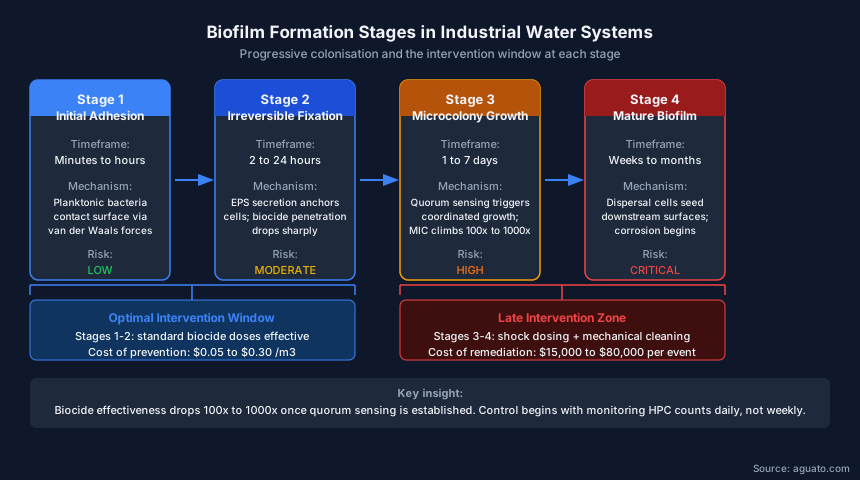
The commercial lesson from this timeline is that prevention is worth approximately 10 to 50 times its cost in avoided remediation. A prevention programme running at $0.10 to $0.30/m3 beats a remediation event at $15,000 to $80,000 every time, usually by a margin large enough to self-fund the entire annual programme budget.
## Where biofilm appears in industrial water systems
Biofilm does not distribute uniformly. It concentrates at surfaces with low flow velocity, elevated nutrients, and moderate temperature, which maps predictably onto specific equipment types.
Cooling towers and open recirculating loops are the highest-risk environment in most industrial sites. Warm water (25 to 45 degrees C), nutrients from makeup water and atmospheric ingestion, and the intermittent flow patterns within fill media create near-perfect conditions. A [cooling tower water treatment](/resources/cooling-tower-water-treatment) programme that does not explicitly address biofilm alongside scale and corrosion is incomplete by design. Fill media biofilm adds 10 to 25% thermal resistance, raising approach temperature and cutting cooling capacity measurably.
Heat exchangers and condensers accumulate biofilm on tube inner surfaces, particularly in units operating below 1 m/s flow velocity or with process-side fouling that reduces the thermal driving force. A 0.1 mm biofilm layer on a carbon steel tube has a fouling resistance equivalent to 0.0001 m2K/W, reducing heat transfer coefficients by 5 to 15% depending on material and flow regime. For a 10 MW heat exchanger, that translates to 500 kW to 1,500 kW of lost duty, equivalent to $200,000 to $600,000 per year in additional energy cost at industrial electricity rates.
Pipework dead legs and low-velocity sections are the nurseries for biofilm establishment. Water sitting in a 150 mm dead leg for more than 24 hours at temperatures above 20 degrees C will colonise. Hospital and pharmaceutical sites building water distribution systems routinely engineer out dead legs for this reason. Most industrial sites tolerate them and then wonder why HPC counts periodically spike.
Membrane systems, including reverse osmosis and ultrafiltration, are vulnerable to biofouling on the feed-side surface. Biofilm at 2 to 3 mm thickness causes transmembrane pressure to rise by 20 to 50%, reduces permeate flux, and shortens membrane replacement cycles from 3 to 5 years to 12 to 24 months. The cost of a fouled RO membrane train is not just the membrane replacement: it is the energy penalty during the fouling period and the treatment capacity loss during cleaning downtime.
Storage tanks and atmospheric vessels develop biofilm on walls and floors, particularly where sediment accumulates. These are often forgotten in treatment programmes focused on the recirculating loop, but they are significant reservoirs for Legionella and heterotrophic bacteria that re-seed the system after remediation.
## Detection and monitoring: finding it before it finds you
The majority of biofilm problems are discovered through consequences, heat transfer loss, corrosion perforation, or a Legionella positive, rather than through proactive detection. That is the wrong order of events.
Heterotrophic plate count (HPC) on bulk water samples is the standard method, but it is a lagging and incomplete indicator. HPC detects only those cells that shed from the biofilm surface into bulk water. A mature biofilm with a stable, dense surface layer can shed slowly while maintaining significant colonisation density. HPC targets for cooling water are typically below 10,000 CFU/mL, but this threshold was set for compliance, not for biofilm detection. Bulk water HPC of 1,000 CFU/mL is compatible with significant surface biofilm.
ATP bioluminescence measures adenosine triphosphate, which is present in all living cells, including those embedded in the biofilm matrix. Coupon-based ATP measurement, using standardised metal coupons inserted into system pipework for 7 to 14 days, gives a direct surface colonisation reading. ATP values above 1,000 RLU (relative light units) on cooling water coupons typically indicate established biofilm requiring intervention. This method is faster (results in 15 minutes versus 48 to 72 hours for HPC) and more operationally useful for real-time dosing decisions.
Biofilm monitors using purpose-built flow-through cells with replaceable surfaces allow continuous or semi-continuous surface colonisation measurement without disrupting the main system. Capital cost is $3,000 to $12,000 per monitoring point. For high-risk systems where a biofilm event triggers regulatory notification or production shutdown, the investment is easily justified by one avoided incident.
Deposit analysis on heat exchanger tubes during planned maintenance shutdowns provides the most direct evidence of biofilm history. Biological content above 5% by weight in tube deposits indicates active biofilm contribution rather than purely scale or corrosion product accumulation. This finding should immediately trigger a programme review rather than simply a cleaning event.
Online [industrial water quality testing](/resources/industrial-water-quality-testing) for turbidity, TOC, and oxidation-reduction potential (ORP) provides continuous data that can flag early biofouling trends before they escalate. ORP below 650 mV in a chlorinated system consistently indicates oxidant depletion at the distribution point, which is often the first measurable sign that biofilm is consuming available disinfectant residual faster than dosing can replace it.
## Biofilm control methods: the full toolkit
No single method controls biofilm in all system types and all stages of development. The effective programmes combine chemistry, physical intervention, and monitoring in a sequence calibrated to the specific system.
### Oxidising biocides
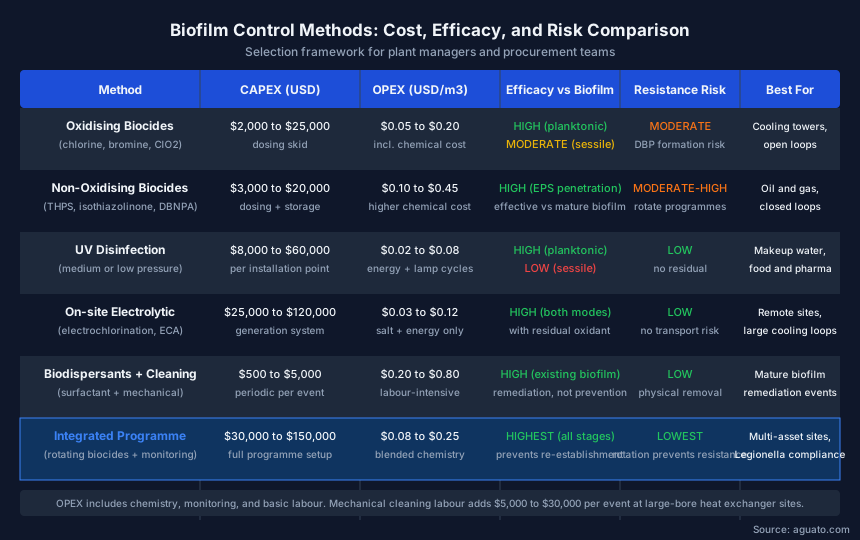
Chlorine (as sodium hypochlorite or gaseous chlorine), bromine (BCDMH tablets or sodium bromide activated with chlorine), and chlorine dioxide are the workhorses of cooling water biofilm control. Their advantage is the residual: a measurable free oxidant persists throughout the distribution system, providing ongoing kill of planktonic cells and stage-1 biofilm. The limitation is EPS penetration. Free chlorine at typical operating doses (0.5 to 2.0 mg/L as Cl2) does not penetrate more than a few cell layers into a mature biofilm.
Chlorine dioxide has better biofilm penetration than hypochlorite because of its neutral charge and higher lipid solubility, and [the World Health Organization's guidelines on drinking-water quality](dofollow:https://www.who.int/publications/i/item/9789241549950) recognise it as effective for biofilm control at 0.1 to 0.8 mg/L residual. Operating cost for oxidising biocide programmes runs $0.05 to $0.20/m3 including chemistry and dosing equipment.
### Non-oxidising biocides
Non-oxidising biocides, including THPS (tetrakis hydroxymethyl phosphonium sulphate), isothiazolinone blends, DBNPA (dibromonitrilopropionamide), and glutaraldehyde, penetrate EPS more effectively than oxidising agents because they are not consumed by the matrix. They are used as shock treatments, typically applied at 2 to 4 times normal dose for 4 to 8 hours every 1 to 4 weeks, rather than as continuous dosing agents.
The resistance risk with non-oxidising biocides is real. Repeated sub-lethal exposure, particularly with isothiazolinones, selects for tolerant strains within 3 to 6 months. The industry response is rotation: alternating between two or three non-oxidising biocide chemistries on a quarterly schedule, ensuring that no single mechanism is the sole selection pressure.
### Biodispersants
Biodispersants are surfactants and enzymes that disrupt the EPS matrix without killing organisms directly. They are used to detach existing biofilm from surfaces so that a subsequent biocide dose can access and kill the now-exposed cells. Used alone, biodispersants simply relocate the biofilm into the bulk water. Used in sequence, they are highly effective: disperse first, then shock-dose with a non-oxidising biocide within 2 to 6 hours, then increase oxidising biocide residual for 24 to 48 hours to capture dispersed planktonic cells. This sequence is the foundation of most competent remediation programmes.
### UV disinfection
UV at 254 nm inactivates planktonic bacteria by damaging DNA, with log-inactivation curves well-established for key pathogens. It does not penetrate biofilm and provides no residual in the distribution system downstream of the UV unit. UV is valuable as a polishing step for makeup water entering a cooling system, reducing the planktonic load entering the loop before it can colonise surfaces. It is not a standalone biofilm control tool.
### On-site electrolytic disinfection (electrochlorination)
Electrochlorination generates hypochlorous acid and other oxidants in situ from a salt solution. It eliminates the chemical transport risk of bulk chlorine handling, produces a mixed oxidant stream that may have enhanced biofilm activity, and is particularly suitable for remote industrial sites or installations where chemical delivery logistics are constrained. CAPEX is $25,000 to $120,000 per system; OPEX is $0.03 to $0.12/m3, making it the lowest OPEX option among oxidising approaches for high-volume systems.
### Mechanical cleaning
High-pressure water jetting, brush cleaning, and online tube cleaning systems (including automatic sponge ball circulation and continuous brush systems) physically remove biofilm from surfaces without relying on chemical penetration. They are the only reliable remediation method for stage-3 and stage-4 biofilm in heat exchanger tubes. Cost per cleaning event for a mid-size industrial heat exchanger train is $5,000 to $30,000, including labour and downtime. Online continuous cleaning systems cost $15,000 to $60,000 CAPEX but reduce fouling intervals from 12 months to effectively zero, making them net positive at sites with high fouling rates.
Effective [operations and maintenance](/operations-and-maintenance) service contracts specify biofilm monitoring protocols, cleaning frequencies, and escalation triggers. Sites that leave biofilm management entirely to the water chemistry contractor, without O and M oversight of physical cleaning, consistently underperform on heat transfer and corrosion metrics.
## Technology comparison: cost, risk, and fit
The comparison table in the diagram above captures the headline trade-offs. The selection framework below adds the decision thresholds that the table cannot represent in a cell.
One point often missed in technology comparisons: the OPEX difference between a well-run oxidising biocide programme ($0.05 to $0.20/m3) and a poorly run non-oxidising programme ($0.30 to $0.60/m3) is less important than the cost of programme failure. A single remediation event at $40,000 wipes out two to three years of OPEX savings from choosing the cheaper chemistry option. Buy the right programme, not the cheapest one.
## How to choose: a threshold-based decision framework
The decision variables that determine programme design are system type, operating temperature, HPC baseline, flow velocity, and the consequence of failure. Apply the thresholds below to narrow the option set before engaging vendors.
If bulk water HPC is consistently above 10,000 CFU/mL despite current biocide dosing: the programme is failing. Either the biocide dose is insufficient, the contact time is too short, or biofilm is acting as a continuous re-seeding reservoir. Increase monitoring frequency to daily, add an ATP coupon test within 7 days, and initiate a biodispersant-plus-shock-dose sequence before adjusting chemistry.
If system temperature is 25 to 45 degrees C and the loop holds more than 500 m3: this is a Category 1 Legionella risk profile. Continuous oxidising biocide with residual monitoring at all remote points, plus non-oxidising shock treatment every 2 to 4 weeks, is the minimum defensible programme. A Legionella risk assessment is a regulatory requirement in most jurisdictions; see [Legionella risk management resources](/resources/legionella-risk-assessment) for the compliance framework.
If ORP readings at the system perimeter fall below 650 mV regularly: oxidant demand is exceeding supply at some point in the loop. Either biofilm is consuming oxidant, or there is a dead leg or low-velocity zone where residual depletes before reaching all surfaces. Map the system for dead legs before increasing chemical dose, because adding more oxidant to a system with an architectural problem is a waste of budget.
If corrosion coupons show pitting rates above 0.5 mm/year: SRB-driven microbiologically influenced corrosion (MIC) is likely. Standard oxidising biocide programmes are largely ineffective against SRB in anaerobic biofilm zones. A non-oxidising biocide with SRB activity (THPS or glutaraldehyde) combined with physical cleaning is required. Add SRB culture tests to the monitoring programme.
If the system has a heat exchanger train with flow velocity below 1 m/s: fouling risk is elevated regardless of chemistry. Consider online continuous tube cleaning as a capital investment, particularly if the exchangers are critical to production uptime. The payback period at $0.08 to $0.12/kWh electricity is typically 18 to 36 months for systems with significant thermal load.
If TDS in makeup water exceeds 500 mg/L or the cycles of concentration target is above 5: scale and biofilm interact. Scale deposits provide protected surfaces for biofilm attachment and create crevices that are inaccessible to both biocide and cleaning tools. Scale control and biofilm control must be addressed together, not as separate programmes. Browse [water treatment chemical providers](/water-treatment-chemical-companies) with experience in combined scale-biocide programmes for your water chemistry profile.
[cta:nepti]
## CAPEX and OPEX: what a control programme actually costs
Understanding the full cost structure prevents the common mistake of optimising for chemical cost while ignoring monitoring, maintenance, and downtime costs that are 2 to 5 times larger.
### Programme CAPEX
A complete biofilm control programme for a 10,000 m3 cooling loop typically requires:
- Chemical dosing skids and storage (oxidising and non-oxidising): $8,000 to $30,000 - Online monitoring instruments (ORP, pH, conductivity, turbidity): $12,000 to $35,000 - ATP bioluminescence analyser (handheld) or biofilm monitor: $3,000 to $12,000 - Biodispersant storage and secondary dosing point: $2,000 to $8,000 - Online continuous tube cleaning (if specified): $15,000 to $60,000
Total CAPEX range: $40,000 to $145,000 for a comprehensive programme on a single large loop. Sites managing multiple loops at a multi-site operation will find economies of scale in monitoring equipment and service contracts, typically reducing per-loop cost by 30 to 50% at volumes above 5 loops.
### Programme OPEX
Annual OPEX breaks down as:
- Chemical cost (biocides, dispersants, scale inhibitors): $0.08 to $0.35/m3 of circulating water - Monitoring and analysis (laboratory tests, instrument calibration): $15,000 to $40,000/year - Service visits (programme review, system audit, cleaning oversight): $10,000 to $30,000/year - Planned mechanical cleaning events (if not using online systems): $5,000 to $30,000 per event, typically 1 to 2 events/year
For a 10,000 m3/day circulating loop, total annual OPEX is $60,000 to $160,000. The cost of doing nothing, expressed as one remediation event ($15,000 to $80,000) plus corrosion-driven tube replacement ($30,000 to $150,000 per heat exchanger bundle), plus lost production during unplanned shutdown, routinely exceeds $200,000 to $500,000 for a single incident.
Not sure which monitoring intensity is appropriate for your risk profile? [Post your project on Aguato](/post-project) and qualified water treatment providers will scope a monitoring and control programme against your specific system parameters and regulatory obligations.
## Real-world sector patterns
### Petrochemical refinery cooling tower: chronic HPC exceedances
A pattern that recurs across large refinery cooling loops is chronic HPC exceedances despite apparently compliant chlorine residuals at the tower basin. The mechanism is almost always the same: fill media colonisation. Refinery cooling towers operate with elevated hydrocarbon ingress from process leaks, providing a nutrient source that supports biofilm growth rates faster than standard continuous chlorination can suppress. The solution is not more chlorine. It is a quarterly non-oxidising biocide shock treatment (THPS at 50 to 100 mg/L for 6 hours) combined with fill media inspection and replacement on a 3 to 5 year cycle. Sites that implement this combination typically reduce HPC exceedances by 80 to 90% within 6 months, with measurable improvement in cooling efficiency within the first full season. The trade-off is the cost of THPS treatment events ($8,000 to $20,000 per event) against the cost of fill media replacement delayed by 2 to 3 years.
### Food and beverage plant process water loop: Legionella compliance pressure
Across food and beverage manufacturing operations, the pressure point is Legionella compliance in process cooling loops that are subject to both food safety audits and local authority inspection under Approved Code of Practice L8 (UK) or equivalent jurisdiction-specific standards. A typical pattern is a plant that has operated a continuous chlorination programme for years without incident, then receives a Legionella positive at a sentinel sample point. Investigation consistently reveals a dead leg created during a plant expansion that was not added to the original risk assessment, or a heat exchanger that was taken offline but not drained and flushed. The corrective action is always a full system review against the current [industrial water disinfection](/resources/industrial-water-disinfection) programme, including a redraw of the system schematic to capture all additions since the last assessment. The cost of a Legionella outbreak response, including public health investigation, legal liability, and reputational damage, ranges from $500,000 to several million dollars. The cost of a current, audited risk assessment and a compliant treatment programme is $20,000 to $80,000 per year.
## Where biofilm control programmes fail
A majority of biofilm-related system failures occur at sites that have treatment programmes in place. The programme exists on paper; it fails in practice. The failure modes are consistent.
Undermonitoring. Weekly bulk water HPC is not sufficient for a high-risk system. A biofilm event can develop from stage 2 to stage 4 within a week in warm, nutrient-rich water. Systems operating at 30 to 40 degrees C with organic loading require daily ORP and turbidity checks, with HPC twice weekly and ATP coupon tests monthly. The cost of daily monitoring is a few hundred dollars per month. The cost of a missed biofilm event is measured in tens of thousands.
Fixed dosing schedules that ignore load variation. A treatment programme designed for summer operating conditions at 35 degrees C will overdose in winter and underdose during high-load summer periods when make-up water rates increase and organic loading rises. Effective programmes specify dosing triggers based on ORP target ranges and HPC thresholds, not fixed weekly dose volumes.
Biocide rotation on paper only. Rotation schedules that alternate between two products from the same chemical family, or two products with the same active mechanism, provide no resistance management benefit. Genuine rotation requires alternating between mechanistically distinct chemistries: for example, glutaraldehyde (protein cross-linking mechanism) and DBNPA (thiol-blocking mechanism) on a quarterly schedule.
Ignoring physical intervention. Biofilm cannot be treated purely by chemistry at stage 3 or stage 4. A programme that relies entirely on increased biocide dose when HPC rises, without specifying mechanical cleaning as a response to deposit analysis or fouling rate data, will cycle between repeated exceedances. The physical removal step is not optional once biofilm has established.
Contract fragmentation. The chemical supplier, the mechanical maintenance contractor, and the [operations and maintenance service provider](/operations-and-maintenance) are often different organisations with separate reporting lines and no shared accountability for system performance. A pattern that recurs across industrial site failures is that the chemical supplier reports compliant chemistry, the maintenance contractor reports clean tubes at the last scheduled clean, and the system is still experiencing elevated HPC because no one owns the whole programme. Integrated service contracts with a single accountable party and defined performance metrics are significantly more effective than fragmented service arrangements.
Neglecting the water source. Changes in makeup water quality, particularly elevated TOC, algae, or microbial counts from surface water sources during spring turnover or storm events, can overwhelm a programme calibrated for baseline water quality. Sites drawing from rivers or reservoirs should receive weekly feed water quality reports and have escalation protocols for quality events. [Online water quality monitoring](/resources/industrial-water-quality-testing) at the makeup water intake is the most reliable way to catch these events before they propagate into the system.
## Regulatory and Legionella compliance context
Legionella control is the regulatory driver that gives biofilm management its teeth in most industrial jurisdictions. In the UK, the Health and Safety Executive's [Approved Code of Practice L8](dofollow:https://www.hse.gov.uk/legionnaires/what-you-must-do.htm) requires risk assessments, written control schemes, and log records for all systems that present a Legionella risk, including cooling towers, evaporative condensers, and hot and cold water systems. Failure to comply carries criminal liability for duty holders, not just regulatory fines.
The US equivalent, ASHRAE Standard 188 (Legionellosis Risk Management for Building Water Systems), requires water management plans for commercial and institutional buildings. Industrial cooling systems fall under EPA general duty provisions and, in regulated sectors (food, pharmaceutical, healthcare), under sector-specific audit requirements.
For operations in multiple jurisdictions, the compliance picture varies significantly. The key principle that applies universally is that a compliant Legionella risk assessment addresses the physical system as it currently exists, not as it was originally designed. Every system modification, heat exchanger addition, dead leg creation, or flow rate change that occurs after the original risk assessment is done creates a gap. That gap is the most common finding in post-incident investigations.
Biofilm control is also increasingly visible in environmental discharge permits. A cooling tower with significant biofilm can elevate total organic carbon (TOC) and chemical oxygen demand (COD) in blowdown, pushing it above permitted discharge limits. [Cooling tower water treatment](/resources/cooling-tower-water-treatment) programmes that address biofilm also directly improve blowdown quality, often eliminating a compliance liability at no additional cost.
ESG leads reporting water management metrics to GRI or CDP frameworks should be aware that biofilm events represent a material operational risk that needs to appear in water risk disclosures. A site with chronic biofilm issues is a site with an uncontrolled microbiological exposure in its water systems, which is a reportable operational risk under most sustainability reporting standards.
For a structured view of how chemical treatment, monitoring, and service provider selection interact in a multi-site programme, [browse verified water disinfection and treatment chemical providers](/water-treatment-chemical-companies) and request scope-of-service documentation that explicitly addresses biofilm control alongside scale and corrosion.
## FAQ
### What is biofilm in water systems and why is it a problem?
Biofilm is a community of bacteria embedded in a self-produced polymer matrix attached to a wetted surface. In industrial water systems, it causes heat transfer loss, accelerated corrosion, Legionella risk, and resistance to standard chemical disinfection. The EPS matrix can raise the minimum inhibitory concentration of chlorine by 100 to 1,000 times compared to planktonic cells, which means a system that looks chemically compliant on paper can still harbour significant microbiological risk on surfaces. The operational consequences range from energy efficiency losses of 5 to 15% on heat exchangers to complete tube failure from pitting corrosion within 2 to 4 years.
### How do you detect biofilm in a cooling water system?
The most reliable early detection method is ATP bioluminescence on surface coupons inserted into the circulating loop. Coupon ATP values above 1,000 RLU indicate established biofilm before bulk water HPC has risen to actionable levels. Bulk water heterotrophic plate counts above 10,000 CFU/mL are a lagging indicator: they confirm biofilm is shedding but do not reveal surface colonisation density. Online ORP monitoring below 650 mV at system perimeter points is a real-time alert that oxidant residual is being depleted, often by biofilm consuming the biocide faster than dosing can replace it.
### What biocide is most effective against biofilm?
No single biocide is most effective in all situations. Chlorine dioxide penetrates EPS better than hypochlorite and is effective at 0.1 to 0.8 mg/L residual for ongoing suppression. Non-oxidising biocides, particularly THPS and DBNPA, are more effective for remediation of established biofilm because they are not consumed by the matrix. The highest-performing programmes combine continuous oxidising biocide for residual maintenance with quarterly shock treatment using rotating non-oxidising biocides, plus biodispersant application before each shock dose to maximise cell exposure.
### How much does a biofilm control programme cost for an industrial cooling system?
A comprehensive biofilm control programme for a 10,000 m3 cooling loop costs $60,000 to $160,000 per year in OPEX, including chemistry, monitoring, service visits, and one planned mechanical cleaning event. CAPEX to instrument and equip the programme ranges from $40,000 to $145,000 depending on monitoring intensity and whether online continuous tube cleaning is specified. These costs compare against $200,000 to $600,000 in energy losses and corrosion damage for a system running without effective biofilm control, making the prevention case straightforward to quantify.
### Can UV disinfection control biofilm in cooling towers?
UV disinfection is effective at killing planktonic bacteria in the water passing through the UV unit, but it provides no residual downstream and cannot penetrate biofilm on surfaces. It is a useful component of a makeup water treatment train, reducing the planktonic load entering the cooling loop before it can colonise surfaces. Used as a standalone cooling loop treatment, UV will not control biofilm and is not a recognised primary biocide for cooling water systems under any major regulatory framework. It is always supplementary, not a replacement for chemical residual disinfection.
### What is the link between biofilm and Legionella in cooling towers?
Legionella pneumophila is an obligate biofilm organism in industrial water systems. It colonises and multiplies within biofilm using amoebae as host cells, reaching concentrations that are not reflected in bulk water sampling results. A cooling tower can return negative Legionella results on bulk water culture while harbouring concentrations above 10,000 CFU/L on fill media surfaces. This is why risk assessments that specify swab sampling of fill media and drift eliminators, in addition to bulk water culture, are significantly more reliable than bulk water sampling alone. Effective biofilm control is the primary mechanism by which Legionella risk is managed in cooling systems; Legionella treatment that targets the pathogen without addressing the biofilm habitat it occupies is treating the symptom.
### How often should cooling water systems be physically cleaned for biofilm control?
Planned physical cleaning frequency depends on fouling rate, system design, and operating conditions. A baseline programme for a well-maintained open cooling tower specifies internal inspection and mechanical cleaning of fill media every 12 to 24 months, heat exchanger tube cleaning every 6 to 18 months depending on fouling rate, and full internal inspection of storage tanks and distribution pipework every 2 to 3 years. Sites with elevated nutrient loading, high temperature, or history of biofilm events should shorten all these intervals by 30 to 50%. Online continuous tube cleaning systems eliminate the heat exchanger cleaning interval entirely and are net positive on total cost for systems with fouling rates above one cleaning event per 12 months.