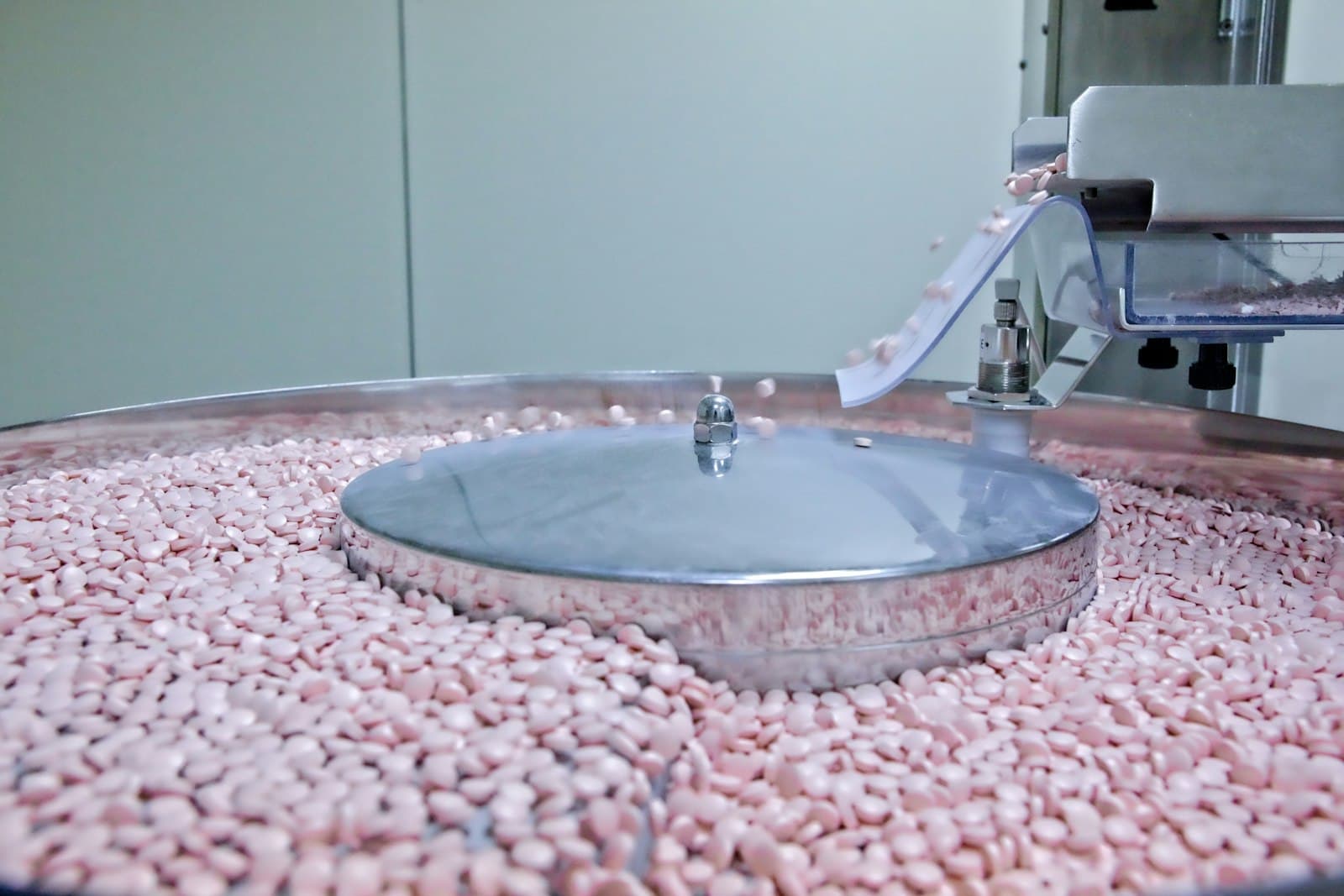
Pharmaceutical effluent is defined by a huge and variable organic load, from a few hundred to over 20,000 mg/L COD, plus a heavy nitrogen burden. Here is what the published plants achieve, the train that handles the swing, and an honest read of what the data does and does not cover.
Pharmaceutical wastewater is one of the most variable industrial effluents there is, and the variability is the design problem. A pharmaceutical plant's effluent can carry a chemical oxygen demand anywhere from a few hundred to over 20,000 mg/L depending on whether the site is formulating tablets or synthesising an active ingredient, and it often arrives with a heavy nitrogen load, high salinity, and a fraction of organics that biology degrades slowly or not at all. A treatment plant sized for the formulation stream will be overwhelmed by a synthesis campaign, and a plant that removes carbon but ignores nitrogen or the recalcitrant fraction will clear one limit and breach another.
This guide is for the operations, engineering, and environmental teams who own the discharge side of a pharmaceutical plant. It covers what makes the effluent distinctive, what the published plants achieve (with an honest read of a thin evidence base), the two archetypes that split the design, the treatment train that handles the swing, the antimicrobial-resistance question, and where these projects go wrong. It is the effluent companion to the high-purity intake question covered in our [pharmaceutical water treatment](/resources/pharmaceutical-water-treatment-usp) guide.
## The decision in brief
- Identify which archetype the site is, then size the biology to the campaign load envelope. Pharmaceutical effluent is high-strength and variable, but the published plants show it is treatable: a median 92% COD removal, 95% ammonia removal on the plants built for nitrogen, and fermentation streams above 26,000 mg/L COD brought under 100. - Budget $0.40 to $3.50 per cubic metre. The cost depends on strength and whether a tertiary stage is needed, and the small volumes typical of the sector keep the absolute spend modest even at the high per-cubic-metre end. - Manage the nitrogen deliberately and provision the tertiary stage before the micropollutant limit arrives. A plant that treats salinity biologically, starves its denitrification, or under-scopes its tertiary stage breaches a limit it could have designed around, in a regulatory area that is tightening faster than any other.
The cost of getting it wrong is specific and recurring: a breach the plant could have designed around, then a mid-life retrofit plus enforcement.
## What makes pharmaceutical effluent distinctive
Pharmaceutical effluent is defined by three features the data supports and two the industry worries about ahead of the data.
The first, and the one the evidence backs most strongly, is a very high and very variable organic load. Across the published cases, influent COD spans roughly 380 mg/L at the tenth percentile to over 21,000 mg/L at the ninetieth, a more than fifty-fold range in a single industry. A formulation plant that blends and coats tablets produces a dilute effluent; a synthesis or fermentation plant producing the active ingredient produces a stream an order of magnitude stronger. The plant has to be designed for the actual process, not the sector.
The second is a heavy nitrogen load. Synthesis routes and fermentation broths carry high ammonia and organic nitrogen, and several published plants show influent ammonia above 100 mg/L. Some synthesis streams are also low in carbon relative to nitrogen, which starves the denitrifying biology and forces an external carbon dose, the opposite of the high-carbon problem most industrial plants face.
The third is salinity and sulphate from synthesis chemistry. Salt-forming reaction steps and sulphuric-acid processes push total dissolved solids and sulphate up, and while the reference corpus is too thin on these parameters to publish a distribution, individual plants make the point: one bulk-drug common-effluent plant barely moved its total dissolved solids (2,460 to 1,900 mg/L) through a conventional biological train, and one fermentation plant carried sulphate above 17,000 mg/L.
The two features the industry watches ahead of the routine data are poorly biodegradable active ingredients and the antimicrobial-resistance risk that antibiotic residues carry. These are real and increasingly regulated, but they are not what a standard COD or nitrogen measurement captures, so this guide treats them as a distinct problem in their own section rather than implying the effluent benchmarks measure them.
[cta:nepti-dark]
## Benchmarks from published pharmaceutical treatment cases
An honest word on the evidence base first. Pharmaceutical effluent is under-published compared with textile or food, and Aguato's corpus for it is small (14 cases) and weighted toward Chinese installations (10 of the 14). So read the numbers below as directional and strongest on COD, where all 14 cases report, and thinner on the other parameters, where five to seven cases do. Every figure is transcribed from a source table, not estimated.
| Parameter | Influent median | Effluent median | Median removal | Cases | |---|---|---|---|---| | COD | 1,701 | 84 | 91.7% | 14 | | BOD | 727 | 39 | 92.5% | 6 | | Ammonia (as N) | 80 | 2.7 | 95% | 6 | | Total nitrogen | 189 | 31 | 86% | 5 | | TSS | 460 | 45 | 78% | 6 |
Concentrations in mg/L. The robust headline is that a well-run pharmaceutical plant removes about 92% of COD, and the well-designed nitrogen plants reach 95% ammonia removal. The more useful number is the COD influent spread: from about 380 mg/L to over 21,000 mg/L across the cases, which is the fifty-fold variability the design has to absorb. The corpus is too thin to publish distributions for total dissolved solids, phosphorus, sulphate, or metals, so those appear in this guide only through named individual plants, never as a benchmark.
One structural fact holds even in a small sample: biological treatment is near-universal (aerobic steps in the large majority of cases, anaerobic in most of the high-strength ones), while membranes are rare. Pharmaceutical effluent is, first and foremost, a high-strength biological-treatment problem, with a tertiary stage added for the recalcitrant fraction. Providers that build these trains are listed under [pharmaceutical water treatment suppliers](/industries/pharmaceuticals) and [industrial wastewater treatment plant suppliers](/industrial-wastewater-treatment-plants).
## Two archetypes: fermentation vs chemical synthesis
Almost every pharmaceutical effluent decision comes down to which of two archetypes the site is.
Fermentation-based production (antibiotics, vitamins, biologics, and the fermentation-derived intermediates) produces a very high-strength but largely biodegradable effluent. The published gibberellin fermentation plant carried COD above 26,000 mg/L and still reached 82.6 mg/L through an anaerobic-heavy train, because the load, though enormous, is food for the biology. The design lever here is anaerobic pre-treatment, exactly as in a high-strength food effluent.
Chemical-synthesis production (small-molecule active ingredients made by organic synthesis) produces a lower-volume but harder effluent: more recalcitrant organics, higher salinity and sulphate, and often a low carbon-to-nitrogen ratio that complicates biological nitrogen removal. The published taurine and fermentation-drug synthesis plants reach good COD and ammonia removal, but they do it with staged anoxic and aerobic reactors tuned for nitrogen, and in the low-carbon cases with an added carbon source. The design lever here is nitrogen management and a tertiary stage for the recalcitrant fraction.
The practical implication is that a site running both, a plant that formulates and also synthesises, has two effluents, not one, and the defensible design either segregates and treats them to their own strengths or sizes the combined plant for the harder of the two.
## The treatment train that works
The train follows the strength and the nitrogen down in order. Equalisation comes first and matters more here than almost anywhere, because pharmaceutical production is campaign-based: the effluent changes character when the plant switches product, and without a large equalisation buffer the biology sees a moving, sometimes inhibitory target.
Anaerobic pre-treatment carries the high-strength fermentation and synthesis loads at low energy, as the gibberellin case shows. Aerobic treatment with staged nitrogen removal (anoxic and oxic zones) then removes the residual carbon and the ammonia and total nitrogen, which is where the low carbon-to-nitrogen synthesis streams need an external carbon dose to drive denitrification. The broader [anaerobic versus aerobic decision](/resources/aerobic-vs-anaerobic-wastewater-treatment) applies here with the nitrogen load as the extra axis.
Tertiary treatment is where the recalcitrant fraction is dealt with. Ozone and advanced oxidation break down the organics that biology leaves behind, and activated carbon or membranes polish the residual. The [advanced oxidation process](/resources/advanced-oxidation-processes-industrial) stage is the one most likely to be under-scoped, because it does not show up as a problem until the biology has done its work and the effluent still carries a recalcitrant COD or a regulated micropollutant. The overall sequence is the same logic as any [industrial wastewater treatment process](/resources/industrial-wastewater-treatment-process), with the campaign variability and the nitrogen and recalcitrant loads as the pharmaceutical-specific decision axes.
## Real installations, with the numbers and the train
Every row is a real facility with a published source in the Sources section. Concentrations in mg/L; the train reads in treatment order. The corpus is China-weighted, which the country column reflects honestly.
| Plant, country | Flow (m3/day) | Train | Headline result | |---|---|---|---| | Fermentation (gibberellin) plant, China | full-scale | Internal-circulation and UASB anaerobic, then anoxic-oxic | COD 26,225 to 82.6; sulphate 17,122 to 80 | | Chinese-medicine and oral-liquid plant, China | 600 | Anaerobic (IC), biological contact oxidation, aerated filter | COD ~9,000 to 55 | | Active-ingredient (taurine) synthesis plant, China | full-scale | Hydrolytic acidification, staged anoxic-oxic | COD 957 to 74; ammonia 51 to 1.6 | | Fermentation-drug plant, Shenzhen, China | 12.8 | Two-stage anoxic-oxic, membrane bioreactor, denitrifying filter | Ammonia 120 to 0.5; total nitrogen 180 to 18 | | Tablet-formulation plant, Bogura, Bangladesh | 5 | Alkaline pre-treatment, activated sludge, sand filter, activated carbon | COD 803 to 223; TSS 573 to 47 | | Bulk-drug common-effluent plant, India | full-scale | Coagulation, anaerobic, aerobic, filtration | COD 1,200 to 180; TDS 2,460 to 1,900 |
Two of these carry the lesson. The gibberellin plant shows that a fermentation stream, however strong, is treatable by an anaerobic-heavy biological train, taking COD from 26,000 to 83 and sulphate from 17,000 to 80. The bulk-drug common-effluent plant in India shows the opposite edge: a full biological train cut COD by 85% but barely touched total dissolved solids (2,460 to 1,900 mg/L), because salinity from synthesis chemistry is a membrane-or-evaporation problem, not a biological one. The Shenzhen plant is the low-carbon nitrogen case, reaching 0.5 mg/L ammonia on a feed lean in carbon by running a membrane bioreactor and a dedicated denitrifying filter.
Nepti benchmarks your own effluent against this corpus and flags where the sample is thin. [Model your discharge and see where it sits against the real-plant distribution in Nepti](/nepti) before you accept a bidder's performance guarantee.
## The API and antimicrobial-resistance question
The frontier of pharmaceutical effluent is not COD, it is the trace of active ingredient that survives conventional treatment, and antibiotics in particular, because sub-lethal antibiotic concentrations in a receiving water select for resistant bacteria. This is the fastest-tightening area of pharmaceutical discharge regulation, and it is worth being precise about what the standard treatment train does and does not do about it.
An honest statement of the evidence: the reference corpus behind this guide measures conventional parameters (COD, nitrogen, solids), not active-ingredient or antibiotic concentrations, so nothing in the benchmarks above should be read as an antibiotic-removal figure. What the wider literature supports is that conventional biological treatment removes some active ingredients well and others poorly, and that the reliable tools for the persistent fraction are the tertiary ones: ozone and advanced oxidation, which break the molecules down, and activated carbon and membranes, which concentrate and remove them. A pharmaceutical plant that expects to face a micropollutant or antibiotic limit should specify a tertiary stage capable of it, and providers that focus on this are listed under [pharmaceutical contaminant removal suppliers](/pharmaceutical-contaminant-removal). The design point is to treat the recalcitrant and micropollutant question as a named requirement at the design stage, not to assume the biology will handle it.
## Capital and operating cost ranges
The table below gives indicative ranges for pharmaceutical effluent treatment across common configurations. Figures scale strongly with the strength of the stream and exclude land.
| Configuration | Scope | Relative capex | OPEX per m3 | Main risk | |---|---|---|---|---| | Formulation discharge | Equalisation, aerobic, filtration | Lower | $0.40 to $1.20 | Campaign variability | | High-strength synthesis or fermentation | Anaerobic, staged anoxic-oxic | Higher | $0.60 to $2.00 | Nitrogen, low C/N, inhibition | | Tight consent or micropollutant | Above plus ozone or advanced oxidation | Highest | $1.00 to $3.50 | Recalcitrant COD, APIs |
Operating cost is dominated by aeration and, on the low-carbon streams, the external carbon dose for denitrification, plus the energy of any advanced-oxidation stage. Because pharmaceutical volumes are often small, the per-cubic-metre cost runs higher than in a high-volume food or textile plant, and the tertiary stage is the swing variable that separates a compliant plant from an over-limit one on the recalcitrant fraction.
## Where pharmaceutical effluent projects go wrong
Treating salinity as a biological problem. The Indian bulk-drug common-effluent plant above ran a complete biological train and still discharged total dissolved solids near 1,900 mg/L, because salt and sulphate from synthesis chemistry do not respond to biology. The lesson is that a synthesis site with a salinity limit needs a membrane or evaporation step, and pretending the biology will handle it guarantees an exceedance.
Starving the denitrification. Low carbon-to-nitrogen synthesis streams cannot denitrify without a carbon source, and a plant that omits the external carbon dose watches its total nitrogen drift above the limit even though its COD is fine. The lesson, visible in the Shenzhen design that got it right, is that pharmaceutical nitrogen removal often needs added carbon, the reverse of the usual industrial problem.
Under-scoping the tertiary stage. A biology-only plant meets its COD and BOD limits and then breaches a recalcitrant-COD, colour, or micropollutant limit that biology cannot reach. Because these limits are tightening fastest, the retrofit of an advanced-oxidation stage lands mid-life at full cost. The lesson is to characterise the recalcitrant fraction at the design stage and provision the tertiary stage for the limit the site will face, not the one in force today.
An honest general caveat runs through all three: the pharmaceutical evidence base is thinner than for other industries, and even a well-documented high-strength fermentation plant elsewhere (a baker's-yeast plant in Estonia) has been shown discharging COD near 2,700 mg/L, out of compliance, on an extreme influent. High strength is treatable, but only with a train built for it.
## Sources
The plant benchmarks and case studies in this guide are drawn from Aguato's pharmaceutical reference corpus of published treatment studies. The corpus is small and China-weighted, which this guide states plainly. Featured studies with resolvable citations:
- Chinese-medicine and oral-liquid plant, China: [Industrial Water Treatment (2019)](https://doi.org/10.11894/iwt.2018-0649) - Active-ingredient (taurine) synthesis plant, China: [Industrial Water Treatment (2024)](https://doi.org/10.19965/j.cnki.iwt.2023-0907) - High-strength fermentation counter-example (baker's yeast, Estonia): [Journal of Environmental Engineering and Landscape Management (2009)](https://doi.org/10.3846/1648-6897.2009.17.189-197)
The gibberellin fermentation plant, the Shenzhen fermentation-drug plant, the Bogura tablet-formulation plant (Bangladesh), and the bulk-drug common-effluent plant (India) are drawn from peer-reviewed journals and delivered-project reports in the same corpus; several are published in Chinese-language engineering journals and are cited by name rather than by link.
## FAQ
### How strong is pharmaceutical wastewater?
It varies enormously. Across published cases the influent COD ranges from a few hundred mg/L for tablet-formulation effluent to over 20,000 mg/L for fermentation and synthesis streams, a more than fifty-fold spread within one industry. This variability is the central design challenge: a plant has to be built for the actual process, because the sector label does not tell you the strength.
### What is the best treatment for pharmaceutical effluent?
For a high-strength fermentation or synthesis stream, the best-practice train is equalisation to buffer the campaign variability, anaerobic pre-treatment to carry the load at low energy, staged anoxic-oxic aerobic treatment for the residual carbon and the nitrogen, and a tertiary stage (ozone, advanced oxidation, activated carbon, or membranes) for the recalcitrant fraction. Formulation effluent is weaker and often needs only equalisation, aerobic treatment, and filtration.
### Does conventional treatment remove antibiotics and active ingredients?
Partly, and unreliably. Conventional biological treatment removes some active ingredients well and others poorly, and it is not designed to guarantee removal of trace antibiotics. The reliable tools for the persistent fraction are tertiary: ozone and advanced oxidation to break the molecules down, and activated carbon and membranes to remove them. A site expecting a micropollutant or antibiotic limit should specify a tertiary stage capable of meeting it rather than assume the biology will.
### Why is nitrogen a problem in pharmaceutical effluent?
Synthesis and fermentation streams carry high ammonia and organic nitrogen, and some synthesis streams are low in carbon relative to that nitrogen. Biological denitrification needs carbon, so a low carbon-to-nitrogen stream cannot remove its nitrogen without an external carbon dose, which is the opposite of the high-carbon problem most industrial effluents present. A pharmaceutical plant that removes COD but ignores the carbon-to-nitrogen balance will breach a total-nitrogen limit.
### Can pharmaceutical wastewater be reused?
Sometimes, but reuse is less common than in food or textile plants, partly because volumes are small and partly because the recalcitrant and micropollutant fraction raises the bar on reuse quality. Where reuse is pursued, a membrane bioreactor or a biological plant followed by membranes produces water suitable for non-product uses such as cooling and cleaning. Reuse economics are usually driven by a discharge constraint rather than by water cost.
### How reliable is the benchmark data for pharmaceutical effluent?
It is directional, not definitive. Pharmaceutical effluent is under-published compared with textile or food, and the reference corpus behind this guide is small (14 cases) and weighted toward Chinese installations. COD is reported by all 14 cases and is the most robust figure; the other parameters rest on five to seven cases each. The data does not cover active-ingredient or antibiotic concentrations at all, so those are treated as a separate, qualitative question rather than a benchmarked one.