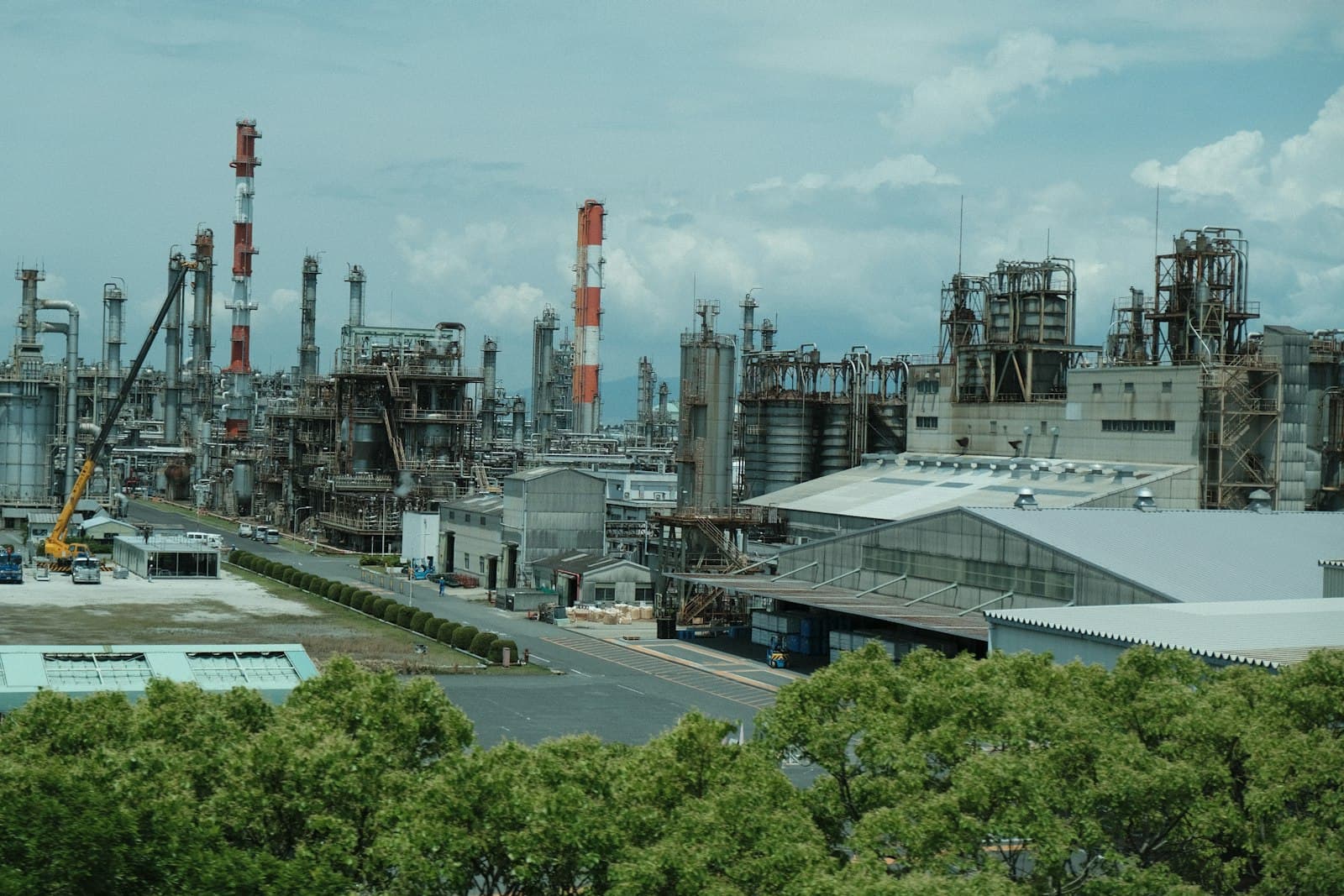
Chemical and petrochemical effluent is the most heterogeneous industrial wastewater there is, from under 100 to over 80,000 mg/L COD, often toxic to the biology meant to treat it. Here is what 45 real plants achieve, the train that handles the recalcitrant and toxic fractions, and the salinity and metals biology ignores.
Chemical and petrochemical wastewater is the most heterogeneous effluent in industry, and that heterogeneity is the whole problem. A chemical plant's effluent can carry a chemical oxygen demand anywhere from under 100 mg/L to over 80,000, laced with organics that biology degrades slowly or not at all, and sometimes with cyanide, phenol, sulphide, or a specific active ingredient that is toxic to the very biology meant to treat it. There is no standard chemical effluent and therefore no standard plant: the treatment train has to be built around the actual stream, and the single most expensive mistake is specifying a general-purpose biological plant against an effluent that is either too recalcitrant or too toxic for biology to handle alone.
This guide is for the operations, engineering, and environmental teams who own the discharge side of a chemical, petrochemical, or fertiliser plant, and for the operators of the common effluent plants that treat mixed chemical-estate wastewater. It covers why chemical effluent defies a standard design, what the published plants achieve, the toxicity and recalcitrance problem, the treatment train, and the salinity and metals that biology ignores.
## The decision in brief
- Expect about 90% COD removal, not a clean sheet. The published plants show a well-designed train reaches about 90% COD removal and can destroy cyanide and sulphide to trace levels, but total nitrogen removal sits at only 40% median. - Biology leaves the hard fractions untouched. Plants without a membrane show a recalcitrant-COD tail up to 1,960 mg/L, and salinity, fluoride and metals are left entirely untouched by biology. On a shared estate plant, the exceedance comes from the one member the design ignored. - Segregate and provision for the binding parameter. Characterise the stream for its toxic, recalcitrant and inorganic fractions, segregate what needs dedicated pre-treatment, and provision the tertiary and salinity stages for the parameter the consent will actually bind on.
The cost of getting it wrong is a plant that meets an easy parameter and breaches a hard one, then a mid-life retrofit that should have been in the original scope.
## Why chemical effluent defies a standard design
Three features make chemical effluent resist a one-size plant. The first is sheer heterogeneity. Across the published cases, influent COD ranges from under 100 mg/L on a dilute inorganic stream to 12,000 at the ninetieth percentile and above 80,000 on a resin plant, and every product line, petrochemical, coke and coal chemistry, fertiliser, plastics and coatings, fine chemicals, produces a different effluent. A number that describes the sector describes no single plant in it.
The second is toxicity and recalcitrance. Chemical streams carry compounds that inhibit or poison biological treatment (cyanide, phenol, sulphide, and specific active ingredients) and a recalcitrant organic fraction that biology cannot degrade at all. The published coke-oven plant carried cyanide at 39 mg/L and sulphide at 149 mg/L into its biology; a paint plant carried a COD of 12,000 mg/L of which a large fraction was recalcitrant. A biological plant that meets an easy consent on one campaign can be knocked over by a toxic slug on the next.
The third is a structural reality of how chemical effluent is actually treated: a large share of it does not go to a dedicated plant at all, but to a common effluent treatment plant (CETP) serving an industrial estate or zone, where the streams of many chemical producers combine. Roughly half the published chemical cases are these mixed-estate plants, and their design problem is different again, they have to be robust to the worst discharge any member sends to the shared sewer. This is the same discipline that governs any [effluent treatment plant](/effluent-treatment-plants) serving multiple dischargers.
The practical implication is that the effluent has to be characterised stream by stream, the toxic and recalcitrant fractions identified, and the plant built around them, because a general biological plant specified from an average sample will fail on the fraction that average hides.
[cta:nepti-dark]
## Benchmarks from 45 published chemical treatment cases
The numbers here come from a corpus of 45 published chemical, petrochemical, and fertiliser treatment cases that Aguato has transcribed from peer-reviewed journals and delivered-project reports, each with paired influent and effluent measurements and the actual treatment train. Two honest caveats: the corpus is China-weighted (about half the cases) and CETP-heavy (roughly half are mixed industrial-estate plants rather than single-product chemical works), so it describes the treated reality of the sector well but under-represents any one specialty chemistry.
| Parameter | Influent median | Influent p90 | Effluent median | Median removal | |---|---|---|---|---| | COD | 1,300 | 12,000 | 80 | 88.9% | | BOD | 968 | 2,325 | 67 | 90.2% | | TSS | 445 | 2,139 | 53 | 91.8% | | Ammonia (as N) | 124 | 570 | 15 | 68.6% | | Total nitrogen | 60 | 238 | 14 | 40.4% |
Concentrations in mg/L. The well-run plants remove COD, BOD, and solids well (median removals near 90%), but two numbers carry the warnings. Total nitrogen removal is only 40% at the median, because chemical nitrogen is often bound in forms biology denitrifies poorly, and a plant that clears its COD limit can still breach a nitrogen limit. And the effluent COD has a long tail: on the cases without a membrane, the ninetieth-percentile effluent COD is 1,960 mg/L, versus 83 mg/L on the cases that run a membrane. That gap is the recalcitrant fraction surviving biology, and it is the single strongest argument in the data for a membrane or advanced-oxidation tail on a recalcitrant chemical stream.
The corpus is too thin on the salinity and metals parameters (total dissolved solids, chromium, copper, iron) to publish distributions, so those appear in this guide only through named individual plants, never as a benchmark. Sulphate and fluoride do carry enough data to report, and both reach thousands of mg/L on the fertiliser and inorganic streams. Providers that build these trains are listed under [chemical and petrochemical water treatment suppliers](/industries/chemicals) and [advanced oxidation process suppliers](/advanced-oxidation-processes-companies).
## The toxicity and recalcitrance problem
What separates chemical effluent from a high-strength food or brewery stream is that its load is not simply large, it is often hostile to the biology. Cyanide, phenol, sulphide, heavy metals, and specific active ingredients inhibit or kill the microbial community, and the recalcitrant organic fraction passes through unchanged.
The published plants show both the problem and the answer. A coke-oven plant took cyanide from 39 to 0.9 mg/L and sulphide from 149 to 12.4 through a staged aerobic, anaerobic, and aerobic train built specifically for those toxins, but its total nitrogen barely moved (475 to 434 mg/L) because the same chemistry that carried the toxins also carried a nitrogen form its biology could not reach. The lesson is that the toxic and inhibitory compounds have to be dealt with by a stage designed for them, either destroyed (cyanide oxidation, sulphide stripping) or removed ahead of the biology, so the biology sees a stream it can actually treat.
The recalcitrant organic fraction is the other half. Where biology stalls at a high residual COD, the tools are the same two that cross the recalcitrant-COD floor in landfill leachate: advanced oxidation, which breaks the molecules down, and membranes, which remove them. The [advanced oxidation process](/resources/advanced-oxidation-processes-industrial) stage is the one most often under-scoped, because the recalcitrant COD does not show up as a problem until the biology has done all it can and the effluent still fails.
## The treatment train that works
The train is assembled around the specific stream, but a recurring backbone holds. Equalisation and stream segregation come first and matter more here than almost anywhere: segregating a toxic or high-strength stream for dedicated pre-treatment, and equalising the rest, prevents a slug of one product's effluent from poisoning the whole plant. Physico-chemical pre-treatment, coagulation and, on oily petrochemical streams, dissolved air flotation, removes solids, oil, and a fraction of the metals and COD, and protects the biology. The [oily wastewater treatment](/resources/oily-wastewater-treatment) approach applies directly to the petrochemical fraction.
Biological treatment, usually an anoxic-oxic or membrane-bioreactor configuration, removes the biodegradable COD and the nitrogen, with the caveat that chemical nitrogen removal is often the weak point. Tertiary treatment, advanced oxidation, activated carbon, or membranes, deals with the recalcitrant COD, the colour, and the specific pollutants biology leaves behind, and it is where a recalcitrant chemical stream is brought over the line. The overall sequence is the same logic as any [industrial wastewater treatment process](/resources/industrial-wastewater-treatment-process), with toxicity management and the recalcitrant tail as the chemical-specific decision axes.
## Real installations, with the numbers and the train
Every row is a real facility with a published source in the Sources section. Concentrations in mg/L; the train reads in treatment order. Named plants are described generically by type and location.
| Plant, country | Flow (m3/day) | Train | Headline result | |---|---|---|---| | Organized industrial zone CETP, Turkey | 24,810 | Coagulation, aerated activated sludge | COD 1,453 to 56; TSS 1,303 to 20 | | Chemical-estate CETP, Uttarakhand, India | 4,500 | Oil trap, equalisation, MBBR, sand filter, activated carbon | COD 883 to 43; oil and grease 75 to 5 | | Coke-oven plant, China | 2,400 | Aerobic, anaerobic, aerobic (built for toxins) | COD 5,167 to 492; cyanide 39 to 0.9; sulphide 149 to 12 | | Natural-gas purification reuse plant, China | reuse | Disc-tube reverse osmosis | COD 207 to 6; sulphate 6,479 to 90 (98% recovery) | | Phosphate fertiliser plant, Tunisia | full-scale | Lime precipitation, biological phosphorus removal | COD 3,600 to 72; phosphorus 14 to 1.1 | | Paint and coatings factory, China | full-scale | Flotation, anoxic-oxic, activated carbon | COD 12,000 to 75 (recalcitrant load) | | Industrial-town CETP, Iran | 600 | Aerated lagoon (no sludge return) | COD 2,188 to 221 (fails permit); nickel barely removed |
The spread carries the lesson. The two well-run CETPs in Turkey and India take mixed chemical-estate effluent to low COD with a coagulation-plus-biological train and, in the Indian case, an activated-carbon polish. The coke-oven plant shows a train built for its toxins succeeding on cyanide and sulphide while failing on nitrogen. The gas-purification plant shows that where salinity is the problem, only a membrane (here reverse osmosis) removes it, taking sulphate from 6,479 to 90 while recovering 98% of the water. And the Iranian industrial-town lagoon shows the failure mode directly: a low-cost aerated lagoon with no sludge return leaves COD at 221 mg/L above its permit, removes only about 30% of its nickel because it has no metals stage, and lets dissolved solids rise across the works.
Nepti benchmarks your own effluent against this corpus and flags the toxic and recalcitrant fractions. [Model your stream and see where it sits against the real-plant distribution in Nepti](/nepti) before you accept a bidder's performance guarantee.
## Salinity, fluoride, and metals: the parameters biology ignores
The parameters that most often force a chemical plant beyond a biological train are the ones biology does not touch at all: dissolved salts, sulphate, fluoride, and metals. The reference corpus is too thin on most of these to publish a distribution, but the individual plants make the point sharply.
Salinity and sulphate run high on many synthesis and inorganic streams, and only a membrane or a thermal process removes them. The gas-purification plant above carried sulphate at 6,479 mg/L and a phosphate-fertiliser stream carried it above 2,000, and in both cases the salinity, not the organics, defined the plant. Fluoride is the priority pollutant of the phosphate and semiconductor-adjacent chemistries: a phosphogypsum leachate in the corpus carried fluoride at 5,000 mg/L, removed to below 1 mg/L only by a dedicated precipitation stage. Metals appear across the corpus (chromium, copper, nickel, zinc) but are under-sampled, and the clearest lesson comes from the plants that lack a metals stage and therefore leave them in the discharge, as the Iranian lagoon did with nickel. The design point is that salinity, fluoride, and metals each need their own stage, precipitation, membrane, or ion exchange, and a plant that assumes the biology will handle them will breach whichever one the consent names.
## Capital and operating cost, and where projects go wrong
Chemical effluent treatment cost spans a wide range because the plants do, from a simple aerated lagoon on a dilute estate stream to a segregated pre-treatment plus biological plus advanced-oxidation plus membrane train on a toxic, recalcitrant, saline synthesis effluent. The honest guidance the corpus supports is that the cost is set by how far beyond a basic biological plant the stream forces the design: a biodegradable, non-toxic stream sits at the low end, while toxicity management, a recalcitrant tail, and salinity removal each add a stage and a cost.
The failure modes recur across the published plants:
Assuming biology can handle a recalcitrant stream. A paint plant reached 75 mg/L COD only because it added an activated-carbon polish; without it, the recalcitrant fraction of its 12,000 mg/L influent would have passed straight through. The lesson is that a recalcitrant chemical stream needs a tertiary stage specified up front, which the no-membrane effluent-COD tail in the benchmark (up to 1,960 mg/L) makes concrete.
Omitting the metals and salinity stages. The Iranian industrial-town lagoon met neither its COD nor its cyanide limit, removed only a third of its nickel, and let dissolved solids rise, because it was a biological system with no chemical or membrane stage for the parameters biology ignores. The lesson is that metals, fluoride, and salinity are separate design problems, not by-products of the biology.
Under-designing a shared plant for its worst member. An ethylene-glycol producer's effluent in Egypt, treated in an estate plant, left the works above the local sewer limit (COD near 1,960 mg/L), because the plant was not built for the strength its catchment actually delivered. The lesson, shared with every CETP, is that a mixed chemical plant has to be designed for the worst discharge its members send, not the average.
## Sources
The plant benchmarks and case studies in this guide are drawn from Aguato's chemical, petrochemical, and fertiliser reference corpus of published treatment studies, which is China-weighted and CETP-heavy, as this guide states. Featured facilities:
- Organized industrial zone CETP, Turkey: [Journal of Environmental Quality (2026)](https://doi.org/10.1002/jeq2.70204) - Chemical-estate CETP, Uttarakhand, India: [Frontiers in Environmental Science (2021)](https://doi.org/10.3389/fenvs.2021.741343) - Coke-oven plant, China: [PLoS ONE (2020)](https://doi.org/10.1371/journal.pone.0243748) - Natural-gas purification reuse plant, China: [Water 15:2259 (2023)](https://doi.org/10.3390/w15122259) - Phosphate fertiliser plant, Tunisia: [Environmental Progress and Sustainable Energy (2014)](https://doi.org/10.1002/ep.11811) - Industrial-town CETP, Iran: [Avicenna Journal of Environmental Health Engineering (2023)](https://doi.org/10.34172/ajehe.5563) - ABS-resin plant, petrochemical complex, Iran: [Environmental Health Engineering and Management (2016)](https://doi.org/10.15171/EHEM.2016.14)
The paint and coatings factory (China) and the ethylene-glycol estate plant (Egypt) are drawn from peer-reviewed journals in the same corpus.
## FAQ
### Why is chemical wastewater so hard to treat?
Because it is extraordinarily heterogeneous and often hostile to biology. Influent COD ranges from under 100 to over 80,000 mg/L across the sector, and chemical streams frequently carry cyanide, phenol, sulphide, specific active ingredients, or a recalcitrant organic fraction that inhibits or resists biological treatment. There is no standard chemical effluent, so the plant has to be built around the specific stream rather than a sector template.
### What is the best treatment for chemical and petrochemical effluent?
A backbone of stream segregation and equalisation, physico-chemical pre-treatment (coagulation, and dissolved air flotation on oily streams), biological treatment for the biodegradable load and nitrogen, and a tertiary stage (advanced oxidation, activated carbon, or membranes) for the recalcitrant fraction and specific pollutants. Toxic streams such as cyanide-bearing coke-oven effluent need a dedicated destruction stage ahead of the biology.
### Does biological treatment remove the recalcitrant COD in chemical effluent?
Only partly. Well-run plants reach about 90% COD removal at the median, but the recalcitrant fraction survives biology, and on the published plants without a membrane the effluent COD reaches as high as roughly 2,000 mg/L. Crossing that floor needs advanced oxidation, which breaks the molecules down, or membranes, which remove them. A recalcitrant chemical stream needs one of those stages specified at the design stage.
### How is chemical wastewater different from other industrial effluent?
Two ways. It is more heterogeneous, every product line produces a different stream, and it is more often toxic to biology, carrying cyanide, phenol, sulphide, metals, or active ingredients that inhibit treatment. It also frequently carries salinity, sulphate, fluoride, and metals that biology does not remove at all and that need dedicated precipitation, membrane, or ion-exchange stages.
### What is a CETP and why does it matter for chemical effluent?
A common effluent treatment plant treats the combined wastewater of many producers on an industrial estate or zone. Roughly half the published chemical treatment cases are these shared plants, and their defining design constraint is robustness to the worst discharge any member sends to the shared sewer. A CETP under-designed for its catchment breaches its limit on the strength one member actually delivers, which is why member-level discharge standards matter as much as the central plant.
### What removes salinity, fluoride, and metals from chemical effluent?
Not biology. Salinity and sulphate need a membrane (reverse osmosis or nanofiltration) or a thermal process; fluoride needs a dedicated precipitation stage (published plants take it from 5,000 to below 1 mg/L that way); and metals need precipitation, membranes, or ion exchange. A chemical plant that relies on its biological stage to meet a salinity, fluoride, or metals limit will breach it, because those parameters pass through the biology unchanged.