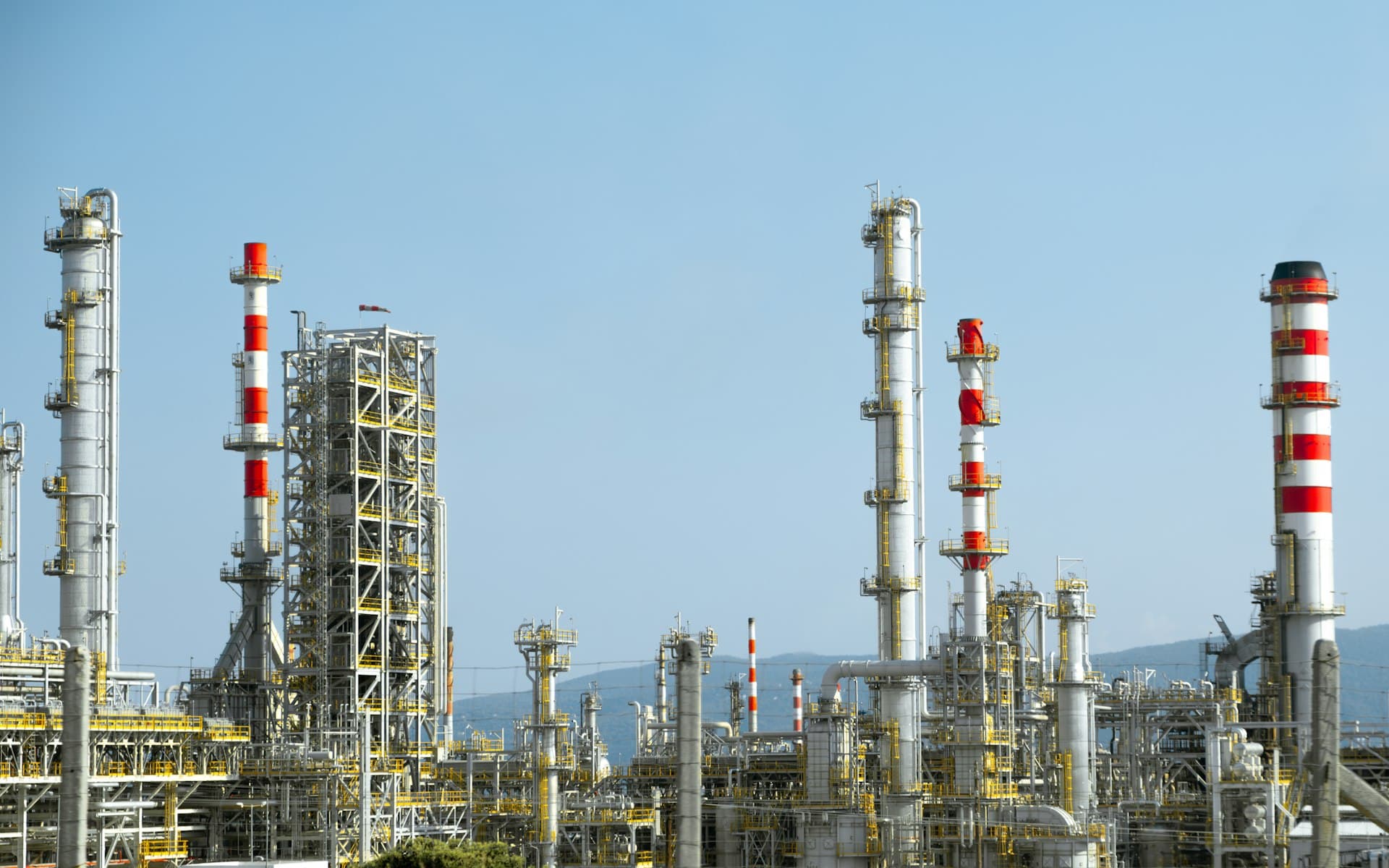
Refineries, food plants, metalworking shops, and ships all generate oily water, but the same separator does not work on all three oil classes. This guide covers the treatment train, the chemistry behind emulsion breaking, and the side-stream costs that ruin most project budgets.
Oily wastewater is the single most expensive industrial effluent to mismanage and the easiest to under-spec. A 1,000 m3/day refinery effluent plant designed around an API gravity separator on a feed that's actually 70% emulsified hydrocarbon costs USD 800,000 to 2,500,000 per year more in chemicals, sludge disposal, and emergency tankering than the same plant designed around an emulsion-breaking train. The mistake is almost never made at the polishing stage. It's made in the feed-water characterisation that decided which class of oil the plant was going to remove, and it's made years before the plant exists.
The right framing is that "oil in water" is three different problems with three different physics. Free oil floats and is easy. Dispersed oil partly floats with help. Emulsified oil does neither and requires a chemistry intervention to break before any separator can touch it. A treatment plant designed around the wrong class delivers compliant effluent for an hour during commissioning and fails for the next 20 years. The [US EPA Effluent Guidelines for the petroleum refining point-source category](dofollow:https://www.epa.gov/eg/petroleum-refining-effluent-guidelines) codify this distinction in their Best Available Technology requirements, you can read the standard, but most operators discover it only after their first consent breach.
This article covers what oil class is actually in industrial effluent, the treatment technology matched to each class, the side-stream costs that consume 30 to 60% of total OPEX and rarely appear in the original budget, and the failure modes that show up in audit findings across refineries, food plants, metalworking shops, and ships. The audience is operators, capital-projects engineers, and ESG / compliance leads who own the long-term water economics, not the construction line item.
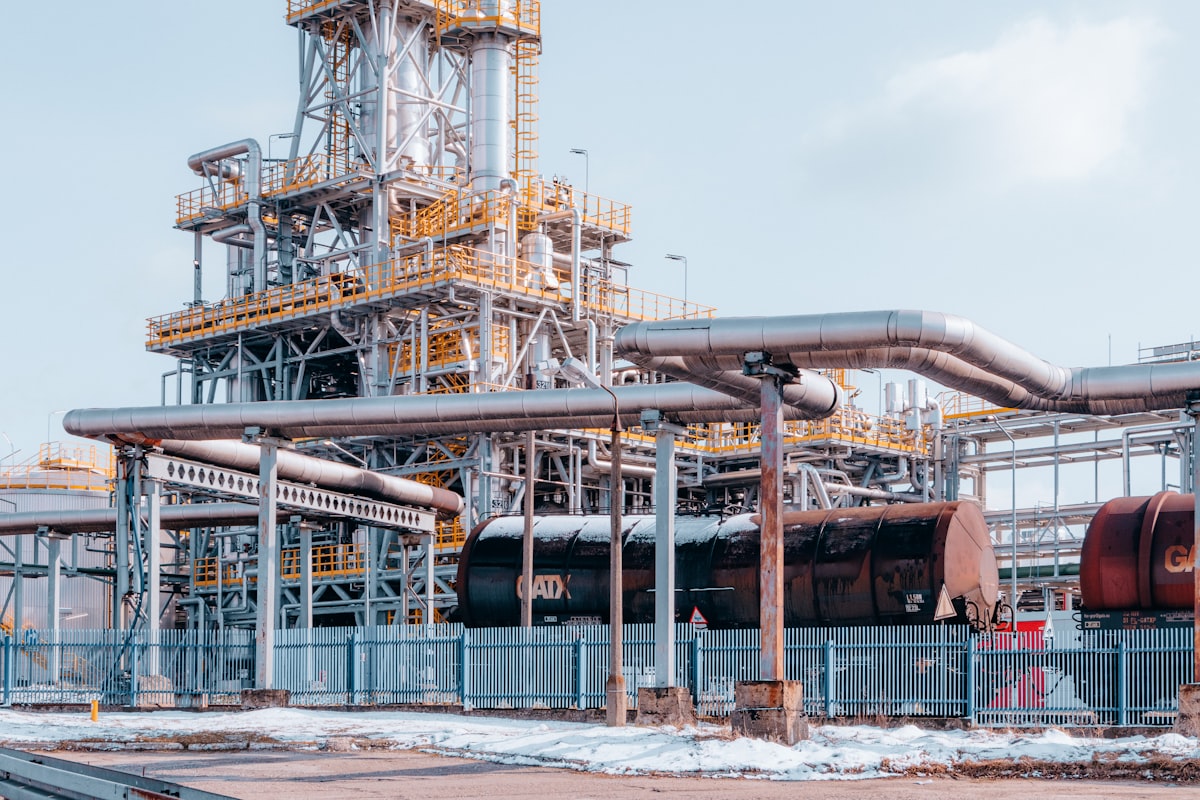
## Why Oily Wastewater Is Three Problems Not One
Industrial effluent containing hydrocarbons is sorted by physics, not by source. The same source, say, refinery process drainage, generates all three classes simultaneously, but in proportions that depend on what's happening upstream that day. A plant runs cleanly for six months and then fails consent the week a process unit goes through an upset that shifts the oil class profile.
The three classes:
- Free oil is hydrocarbon in droplets larger than 150 µm. Stokes' law works, the droplets rise to the surface in 5 to 30 minutes and can be skimmed mechanically. Concentrations in raw effluent run 500 to 50,000 mg/L of total petroleum hydrocarbons (TPH). - Dispersed oil is hydrocarbon in droplets between 20 and 150 µm. Gravity rise takes 2 to 8 hours, which is too slow for any practical separator. The droplets need to be merged into larger ones (with chemistry) or attached to bubbles (with flotation). - Emulsified oil is hydrocarbon in droplets smaller than 20 µm, stabilised by surfactants, process chemicals, tank-cleaning detergents, naturally occurring asphaltenes, or the products of mechanical agitation. The droplets do not separate by gravity at all and require chemical demulsification or membrane filtration.
The plant that handles all three classes is a sequenced train: free oil in the first 30 minutes, dispersed oil in the next 2 hours, emulsified oil in the polishing stage with chemistry plus membranes. Each stage assumes the previous stage delivered its target. Skip a stage, or under-design it, and the entire downstream sequence fails. The pattern is identical to the one in [the step-by-step industrial wastewater treatment process walkthrough](/resources/industrial-wastewater-treatment-process), but the contaminant chemistry is different in ways that defeat copy-paste designs from non-oily plants.
## The Three Classes of Oil
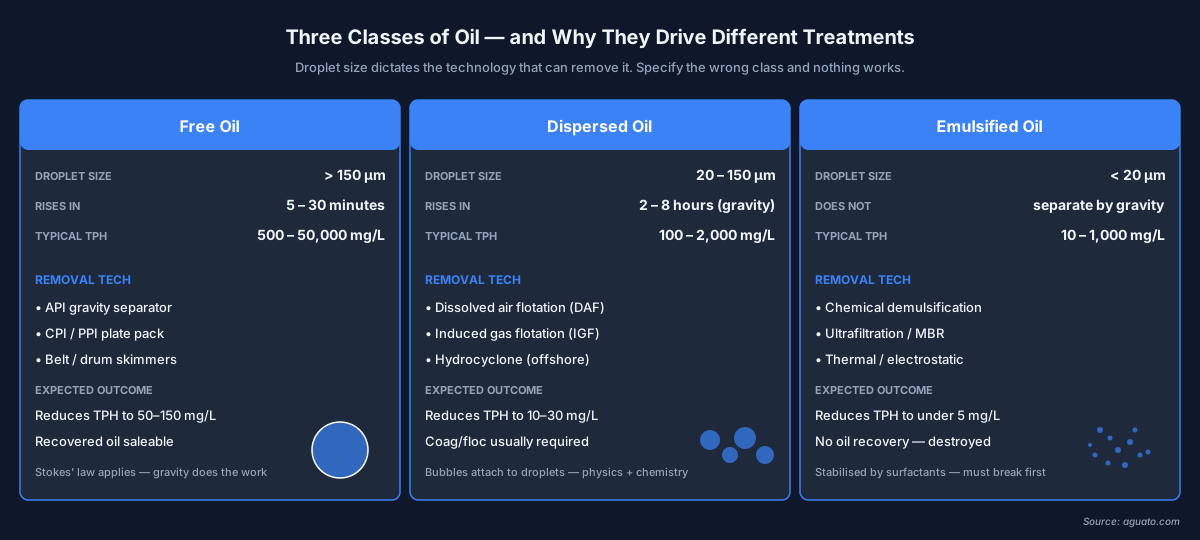
The class distinction is not academic. The [American Petroleum Institute publishes Manual 421 on the design and operation of API separators](dofollow:https://www.api.org/products-and-services/standards), the industry-standard reference for free-oil gravity separation. The standard explicitly states that API separators target free oil only and "do not effectively remove emulsified or dissolved hydrocarbon fractions." Operators who specify an API separator on a feed dominated by emulsified oil are designing to a standard the standard itself warns them against.
What makes the three classes behave so differently:
| Class | Droplet size | Separation mechanism | Chemistry intervention | Achievable TPH | |---|---|---|---|---| | Free oil | > 150 µm | Gravity, Stokes' law | None required | 50 to 150 mg/L | | Dispersed oil | 20 to 150 µm | Bubble flotation or coalescence | Coagulant + flocculant | 10 to 30 mg/L | | Emulsified oil | < 20 µm | Demulsification + membrane | Demulsifier + heat / pH shift | Under 5 mg/L |
The technology jumps in capability, and cost, at each class boundary. Moving from free-oil API separation (USD 50 to 150 per m3/day CAPEX) to emulsion-breaking with UF or MBR (USD 600 to 1,800 per m3/day CAPEX) is a 10x step. Designing the plant around the wrong class either pays the 10x for capability that's not needed, or under-pays by 10x and fails consent.
The single most important pre-FEED decision is the oil-class assay: characterise a representative sample of the actual influent, fractionate by droplet size, and design the train to the dominant class plus a margin for the others. Plants designed without this assay make the wrong choice 60 to 70% of the time.
## The Treatment Train: Sequence by Class
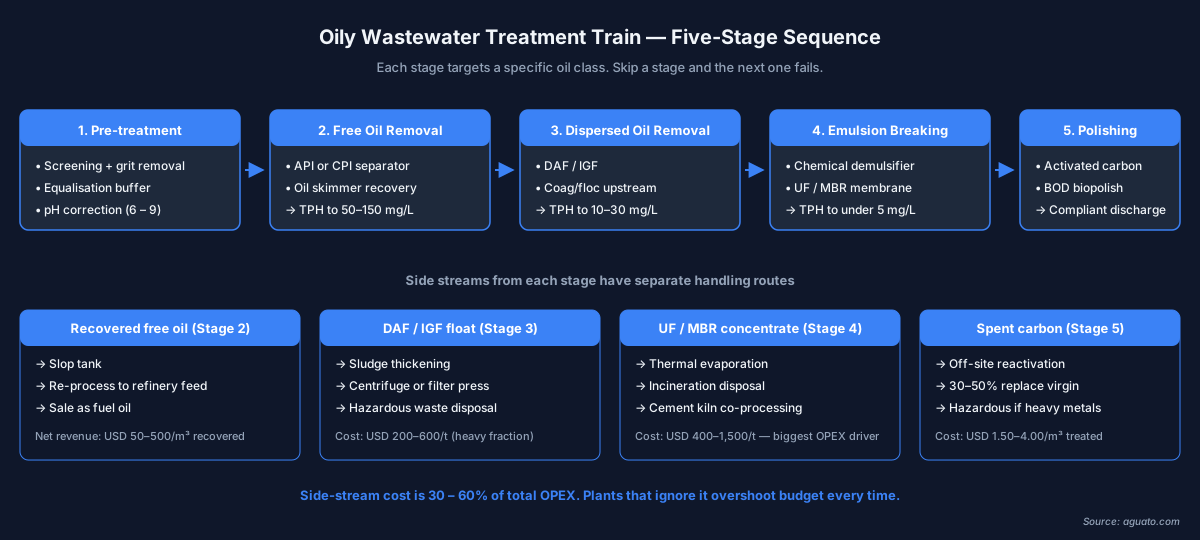
The five-stage train, in order:
Stage 1: Pre-treatment. Coarse and fine screening (rags, plastics), grit removal, equalisation buffer (4 to 24 hours retention to dampen feed variability), and pH correction to 6 to 9. The oil-class composition does not change here, but a free-oil slug not buffered out will overwhelm Stage 2.
Stage 2: Free oil removal. API separator or CPI/PPI plate-pack at 30 to 90 minutes hydraulic retention. Oil is skimmed off the surface and routed to a slop tank for re-processing or sale. CPI plates outperform open API geometry by 2 to 3x throughput per unit footprint and are now standard for new-build refineries.
Stage 3: Dispersed oil removal. Dissolved air flotation (DAF) is the workhorse, micro-bubbles attach to dispersed droplets and float them. Coagulant (alum or ferric) plus polymer flocculant upstream of DAF improves removal by 50 to 80% by destabilising the colloidal layer around the droplets. Induced gas flotation (IGF) is the offshore equivalent, using process gas instead of air, and runs at higher overflow rates per unit footprint. Our [IGF guide for oily water treatment](/resources/induced-gas-flotation-igf) covers the full design and chemical conditioning requirements.
Stage 4: Emulsion breaking. This is where most plants either succeed or fail. The two industrial approaches: chemical demulsification (cationic polymer, acid-shift to break stabilising surfactants) followed by coalescence and separation; or direct membrane filtration ([ultrafiltration](/resources/ultrafiltration) or membrane bioreactor) that physically rejects emulsified droplets without breaking them. UF is faster to commission but more expensive on OPEX. Demulsifier-coalescence is cheaper to operate but requires constant chemistry tuning as feed changes.
Stage 5: Polishing. Activated carbon for residual dissolved hydrocarbons and BTEX, biological polishing for residual BOD/COD if discharge to surface water requires it. The polishing stage is rarely the failure point, but spent carbon disposal at hazardous-waste rates can blow the OPEX budget if not priced into the original plan.
## Free Oil Removal: API, CPI, and Skimmers
API gravity separators are the oldest design in industrial water treatment and still the right answer for the free-oil fraction. The design parameter is vertical rise velocity, typically 4 to 8 m/h for a properly sized separator on refinery effluent, and the chamber dimensions are derived backward from the design droplet diameter (usually 150 µm) using Stokes' law.
Modern installations more often use Corrugated Plate Interceptor (CPI) or Parallel Plate Interceptor (PPI) units. The plate pack increases the projected surface area for droplet rise without increasing the footprint, making CPI 2 to 3x more compact than equivalent open API geometry. Trade-offs:
| Aspect | API separator | CPI / PPI plate pack | |---|---|---| | Footprint | 3 to 5x larger | Compact | | Free-oil removal | 90 to 98% to 50 to 150 mg/L TPH | 95 to 99% to 30 to 80 mg/L TPH | | CAPEX | USD 50 to 150 / m³/day | USD 80 to 250 / m³/day | | Maintenance | Low, annual desludge | Higher, plate cleaning every 3 to 6 months | | Best for | Greenfield refinery, large flow | Retrofit, footprint-constrained sites | | Main risk | Sludge buildup blocks flow | Plate fouling on heavy-asphaltene crude |
Belt and drum skimmers handle continuous oil removal from the separator surface. Replacement cost is low (USD 5,000 to 25,000 per unit) but the recovered oil's value depends on water content, properly skimmed oil at under 2% water sells back into refinery feed at near-crude price; wet oil at 10%+ water becomes a disposal cost rather than a revenue line.
The most common Stage 2 failure: undersized separator + skimmer maintenance lapses → free oil carries to Stage 3 → DAF gets coated → entire downstream train fails. The fix is not a bigger Stage 3; it's correctly sizing Stage 2 to its design droplet velocity. Specifying a separator without measuring the actual feed-water droplet distribution is a common audit finding. [Browse verified oily wastewater treatment providers](/providers) and request scoped proposals from 3 to 5 specialists with refinery, food, or metalworking reference plants matched to your feed type, rather than letting one EPC contractor's preferred package drive the design.
## Emulsion Breaking: Chemistry and Membranes
The emulsion-breaking stage is where the cost curve goes vertical. Two pathways exist; choosing between them is the single biggest CAPEX-vs-OPEX trade-off in the plant.
Chemical demulsification uses cationic polymer demulsifiers (typically polyamines or polyDADMAC at 5 to 50 ppm), often combined with pH shift (acid to pH 4 to 5) to neutralise the surface-active anionic surfactants that stabilise the emulsion. Once destabilised, the droplets coalesce within minutes and can be separated by gravity, DAF, or coalescence beds. Chemical demulsification is CAPEX-light (USD 200 to 500 per m³/day) and OPEX-heavy (USD 0.50 to 2.50 per m³ in chemicals), and the OPEX is feed-sensitive, swinging by 3 to 5x when the upstream surfactant load shifts.
Membrane filtration uses ultrafiltration or membrane bioreactors to physically reject emulsified droplets. UF membranes with pore sizes 0.01 to 0.1 µm reject droplets 100x larger than the pore cutoff. The advantage is consistent rejection regardless of feed chemistry shifts, the membrane does not need to be re-tuned every time the upstream process changes. The disadvantage is CAPEX-heavy (USD 600 to 1,800 per m³/day) plus higher OPEX (USD 0.40 to 1.50 per m³ in energy + membrane replacement), with the membrane life cut sharply by free-oil fouling if Stage 2 leaks.
| Approach | CAPEX (USD/m³/day) | OPEX (USD/m³) | Best for | Main risk | |---|---|---|---|---| | Chemical demulsification + coalescence | 200 to 500 | 0.50 to 2.50 | Stable feed, mature process | Programme drift on feed change | | Ultrafiltration / MBR | 600 to 1,800 | 0.40 to 1.50 | Variable feed, strict TPH limit | Membrane fouling on Stage 2 leakage | | Thermal demulsification | 800 to 2,000 | 1.50 to 4.00 | High-asphaltene crude, viscous emulsion | Energy cost; corrosion | | Electrostatic coalescence | 500 to 1,200 | 0.30 to 1.20 | Produced water, refinery desalter | Conductivity range; entrained gas |
The decision is rarely either-or. Best-in-class plants run a hybrid: chemical demulsification as the primary mechanism, with UF as a polishing barrier that catches the upsets. This gives the OPEX of demulsification on stable days and the consistency of UF on bad days. Total cost is 10 to 20% higher than demulsification alone but 30 to 50% lower than UF alone for the same effluent quality.
[cta:nepti-dark]
## Industry-Specific Patterns
Different industries generate different oil-class profiles, and the treatment plant designed for one rarely works on another.
Refineries. Mixed feed across all three classes; sour-water stripper effluent dominated by emulsified oil + sulphides; desalter effluent dominated by free oil + dispersed; storm-water collection variable. The classic refinery wastewater plant runs API → DAF → biological → UF as the standard sequence, with a sour-water stripper upstream for sulphide and ammonia. Total OPEX runs USD 0.80 to 2.50 per m³.
Food processing, meat, dairy, edible oils. Heavy free oil + free fat (hot side; congeals as it cools), high BOD, high TSS, naturally surfactant-rich (proteins, lecithin). Treatment train usually combines DAF with biological as the core, no API needed. Edible-oil and biodiesel plants have particularly stable emulsions from saponification, the demulsifier programme is process-critical, not optional.
Metalworking, machining, rolling mills, drawing. The dominant fraction is emulsified soluble cutting fluid, intentionally stabilised at the source. Chemistry varies by fluid family (semi-synthetic, soluble oil, straight cutting oil) and the demulsifier must be matched. Membrane (UF) is increasingly the default because it tolerates fluid changes that wreck a tuned chemistry programme. Spent fluid disposal at USD 200 to 600/m³ can outweigh treatment cost, the economic trigger for UF retrofits.
Ship bilge and ballast water. Marine effluent treated under [the IMO MARPOL Annex I standard for oil pollution prevention](dofollow:https://www.imo.org/en/OurWork/Environment/Pages/Oil-Pollution-Prevention.aspx) requires under 15 mg/L oil-in-water at discharge, demonstrated by approved on-board oil-content monitor. The treatment package is compact: coalescer + adsorption polish, certified by class society. Failure of the on-board monitor triggers detention by port-state control, a six-figure operational cost per detention event.
Offshore produced water. The largest-volume oily wastewater stream in the world. Hydrocyclones for primary dispersed-oil removal, IGF for secondary, with reinjection or compliant overboard discharge under regional regulations. The North Sea OSPAR limit is 30 mg/L monthly average oil-in-water; the Gulf of Mexico EPA limit is 29 mg/L daily maximum. Both require continuous monitoring and statistical compliance, a single bad day can trigger reporting. For the full offshore-specific train, hydrocyclones, IGF, nutshell, MPPE, and ceramic UF, plus reinjection-vs-overboard disposal economics and the regulator-watchlist failure modes, see the [offshore produced water treatment deep-dive](/resources/offshore-produced-water-treatment).
## The Side-Stream Cost That Eats the Budget
The headline cost in oily wastewater treatment is OPEX of the main flow path. The cost that actually consumes the budget is the side stream.
Every stage generates a side stream: - Stage 2: Recovered free oil, slop tank to refinery feed; ideally a revenue line (USD 50 to 500/m³ recovered depending on water content) but becomes a cost if water content is too high - Stage 3: DAF / IGF float, concentrated oil + sludge mixture, hazardous waste in most jurisdictions, disposal at USD 200 to 600/t - Stage 4: UF / MBR concentrate, high-TPH, surfactant-loaded reject stream, typically thermal evaporation or incineration at USD 400 to 1,500/t - Stage 5: Spent activated carbon, off-site reactivation at 30 to 50% of virgin cost, or hazardous-waste disposal if metals are present
Total side-stream cost is typically 30 to 60% of the plant's full OPEX. Plants budgeted on main-flow OPEX alone overshoot year-one OPEX by 50 to 150%. The pattern repeats because EPC quotes price the equipment and the chemicals; they don't price the disposal contracts the operator will sign in year one.
The pattern that protects the operator: get firm disposal pricing from accredited haulers in the project region before financial close, and add the disposal contract OPEX into the LCOE calculation. The pattern that destroys the budget: assume "we'll figure out disposal" at commissioning, then discover that the local hazardous-waste landfill won't take the UF concentrate without dewatering, and dewatering costs another USD 200,000 per year on top of the disposal contract. Qualified providers will give you scoped proposals that include disposal pricing, not just equipment + chemistry, so the LCOE is real before you sign.
## Where Oily Wastewater Plants Fail
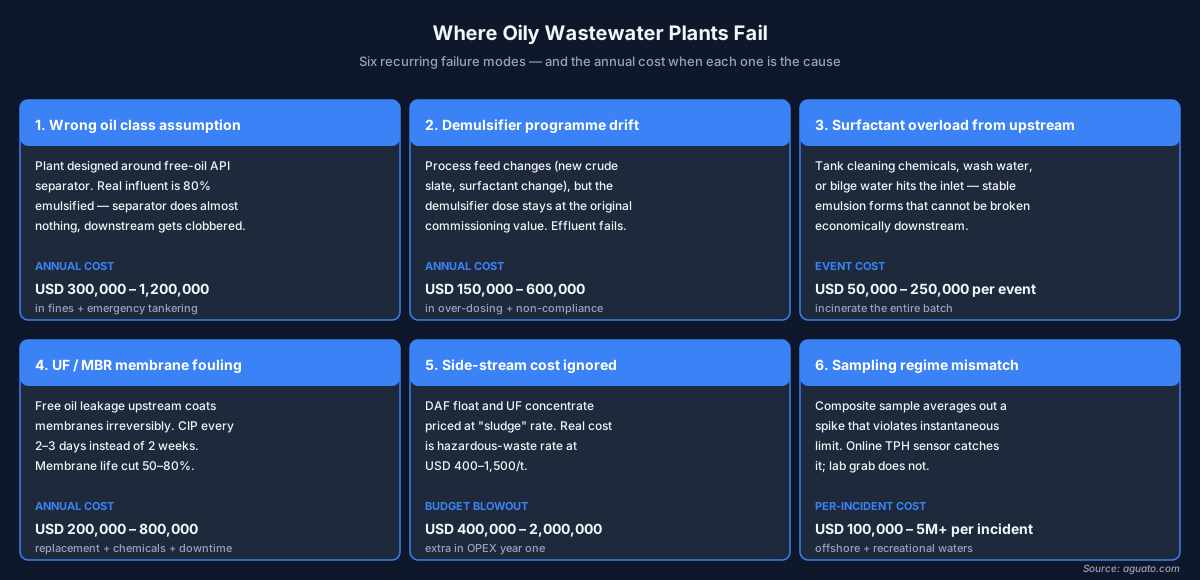
The six recurring failure modes:
Wrong oil class assumption. Plant designed around free-oil API on a feed that's actually 80% emulsified. Cost: USD 300,000 to 1,200,000 per year in fines and emergency tankering.
Demulsifier programme drift. Process feed changes (new crude slate, new surfactant), but demulsifier dose stays at commissioning value. Effluent fails. Cost: USD 150,000 to 600,000 per year in over-dosing and non-compliance.
Surfactant overload from upstream. Tank-cleaning chemicals or wash water hits the inlet and forms a stable emulsion that cannot be broken economically downstream. Cost: USD 50,000 to 250,000 per event to incinerate the entire batch.
UF / MBR membrane fouling from Stage 2 leakage. Free oil coats membranes irreversibly. CIP every 2 to 3 days instead of 2 weeks. Membrane life cut 50 to 80%. Cost: USD 200,000 to 800,000 per year in replacement, chemicals, and downtime.
Side-stream cost ignored. DAF float and UF concentrate priced at "sludge" rate; real cost is hazardous-waste rate at USD 400 to 1,500/t. Cost: USD 400,000 to 2,000,000 OPEX blowout in year one.
Sampling regime mismatch. Composite sample averages out a spike that violates instantaneous limit. Online TPH sensor catches it; lab grab does not. Cost: USD 100,000 to 5M+ per incident in offshore + recreational waters.
The pattern across all six is the same: each fails not because the engineering was wrong on paper, but because the design was matched to a snapshot scenario that wasn't representative of the actual operating envelope. Real oily wastewater engineering is probabilistic, characterise the distribution of feed across all three oil classes and over a full operating year, design the train to the dominant class plus margin, and instrument the discharge so excursions are caught in seconds rather than days.
If you replace one wrong-class oily wastewater plant with the right configuration matched to your actual feed and a realistic side-stream disposal contract, you save USD 600,000 to 3,000,000 per year in OPEX over the life of the asset, and you avoid USD 5M, 50M+ in retrofit and consent-breach exposure on the back end. The biggest cost-of-doing-nothing is letting the EPC contractor specify the same API + DAF package they always sell, regardless of whether your stream needs emulsion breaking, membrane polishing, or marine-grade certification, that single decision is where every seven-figure oily wastewater mistake begins.
## FAQ
### What's the difference between TPH, OIW, and FOG?
TPH (total petroleum hydrocarbons) measures all hydrocarbons captured by a defined extraction method, typically EPA Method 1664 (n-hexane extractable). OIW (oil in water) is the same family of measurements but the term is more common in offshore and marine contexts. FOG (fats, oils, and grease) extends the measurement to include animal and vegetable fats, the relevant metric in food processing and municipal sewage. For compliance reporting, the consent letter specifies which method is required; using the wrong method can give a false-pass on paper while the discharge is actually exceeding the limit.
### Can a single plant handle all three oil classes?
Yes, and it must, because real industrial effluent contains all three simultaneously. The plant is a sequenced train with each stage targeting one class. A single-stage plant (e.g. just an API separator, or just a UF) only works if the feed is dominated by one class, which is rare. Multi-stage trains (API → DAF → UF or demulsifier-coalescence) are standard for refineries, food, and metalworking.
### Why does emulsion breaking sometimes fail even when the dose is right?
Three reasons: (1) the stabilising surfactant has changed because of an upstream process change and the demulsifier no longer matches, (2) pH has drifted out of the demulsifier's effective window, (3) temperature is too low for the chemistry kinetics. Demulsifier programmes need to be re-tuned at minimum quarterly and immediately on any upstream process change. Most plants don't do this and discover the failure when consent is breached.
### Is membrane treatment always better than chemical demulsification?
No. UF is more capital-intensive and has higher energy OPEX. Where the feed is stable and well-characterised, chemical demulsification is cheaper for the same outcome. UF wins when feed variability is high, when the chemistry programme has been hard to tune, or when reuse-grade water is the objective. Best-in-class plants run a hybrid, demulsification primary, UF polishing, and pay 10 to 20% more than demulsification alone for the consistency of UF.
### How much does oily wastewater treatment cost per cubic metre?
The total range across industries and technology choices is USD 0.80 to over 5.00 per m³ treated, with 30 to 60% of the total being side-stream disposal cost rather than the main flow path. A well-designed refinery plant runs USD 0.80 to 2.00; a metalworking plant treating cutting-fluid emulsions runs USD 1.50 to 3.50; offshore produced water runs USD 0.20 to 1.00 because the volumes are huge and the limits are looser than onshore.
### What are the regulatory limits for oil in discharge?
Direct surface-water discharge typically limits TPH or OIW to 10 to 30 mg/L on monthly average and 30 to 50 mg/L on instantaneous. Marine MARPOL Annex I requires under 15 mg/L for ship bilge with continuous monitoring. Offshore produced water under OSPAR requires 30 mg/L monthly average; under US EPA Region 6 NPDES requires 29 mg/L daily maximum. Trade-effluent (foul sewer) discharge is usually less strict but the receiving sewerage works charges by both volume and load.
### What sensors should be installed at the discharge point?
At minimum: continuous TPH or oil-in-water sensor (UV fluorescence or NDIR), pH, conductivity, and flow. For consent purposes, the sensor must be approved by the regulator (e.g. MCERTS in the UK, EPA Method 1664 equivalence in the US). An online sensor catches a TPH spike in seconds; a daily composite grab sample catches it after the discharge has already left the site. Online instrumentation is the cheapest insurance against the seven-figure consent-breach scenarios in the failure-modes section.